
Silverstone double-header could kick-off F1 2020
Preparation is underway for two back-to-back races at the home of F1 if the season requires it
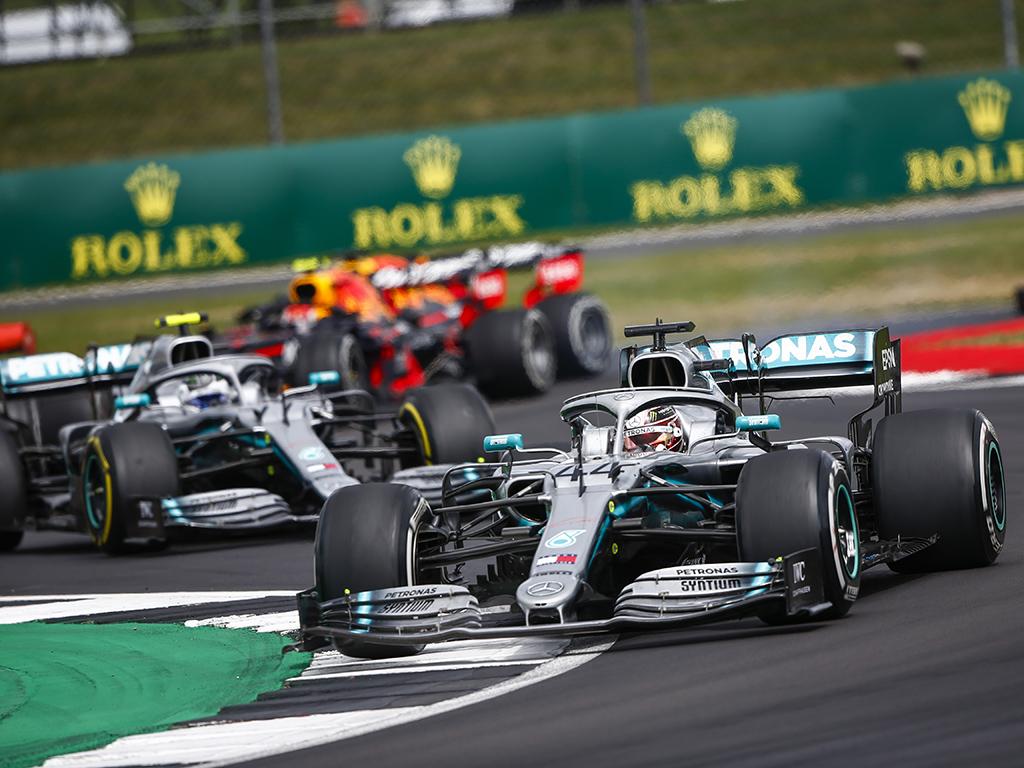
In the list of priorities currently occupying the public's mind, starting the F1 season probably won't be very high up. That said, along with practically every other international sport, there's so much money riding on a condensed calendar that plans for the resumption of play must be hatched at some point - the alternative is too calamitous to think about.
With that in mind, Silverstone has today confirmed preparations are underway for this year's F1 campaign to begin at the home of grand prix racing with a double round. Speaking to The Guardian, MD Stuart Pringle said: "We have discussed all sorts of permutations including hosting two races over one weekend and two races over consecutive weekends." He added: "I have complete confidence in our ability to put on these events. We have a lot of experience, a lot of knowledge, we can turn that on definitely."
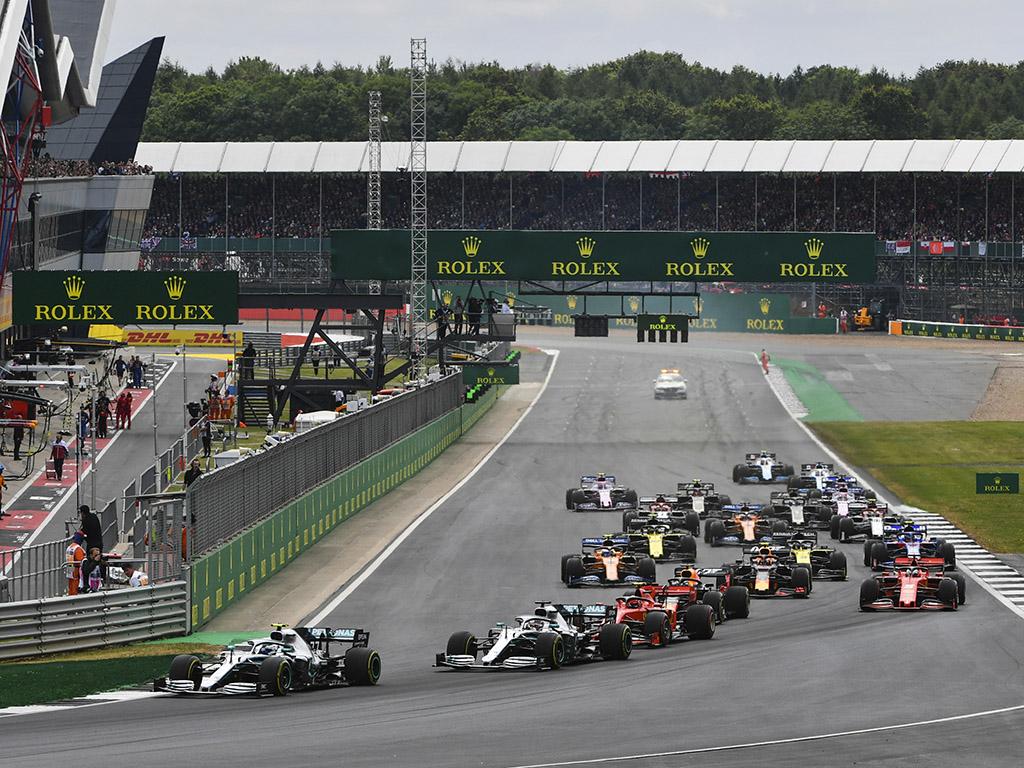
The possibility of a season opener at Silverstone in July isn't as silly as it might sound. Provisionally, the season will commence at Paul Ricard on June 28th; however, given the French government has banned mass gatherings until the middle of July that looks decidedly unlikely. The next round scheduled after France is Austria, on July 5th, with Silverstone then due to host the British Grand Prix a fortnight after that. The F1 Group is currently redrawing the 2020 calendar with race organisers, with a decision expected in May.
On the other hand, Silverstone will have to decide from the end of April whether it will be hosting the GP with spectators, because of the time required to prepare the venue. Should a race (or a pair of races) need to take place behind closed doors and without fans, that requires less time to set up - so May would help. It seems likely that whatever's decided for F1 will have to apply to all races as well - no fans in July would surely have to mean no fans in November as well.
Plenty to be discussed and decided, then. But, as Pringle has also said in the Guardian story, a return to racing needs to be "appropriate", and not distract from the far more pressing issue of dealing with the pandemic. The F1 show must go on, as they say - even allowing for the possibility that no-one is physically there to see it.


Nevermind the certainty that the disease will be spread far and wide to other people.
Allowing the Cheltenham Festival to go ahead on March 10, seems with hindsight to be have been a catastrophic error that propelled the virus across all parts of the country when it was otherwise relatively unwidespread.
A Silverstone GP in July would be exactly the same as the only thing that's changed is that the virus is now more widespread than it was before, but not to the extent that either a mass event wouldn't make any difference or that a significant proportion of the population have immunity (still unknown)
This seems like madness
Nevermind the certainty that the disease will be spread far and wide to other people.
Allowing the Cheltenham Festival to go ahead on March 10, seems with hindsight to be have been a catastrophic error that propelled the virus across all parts of the country when it was otherwise relatively unwidespread.
A Silverstone GP in July would be exactly the same as the only thing that's changed is that the virus is now more widespread than it was before, but not to the extent that either a mass event wouldn't make any difference or that a significant proportion of the population have immunity (still unknown)
This seems like madness
"The minimum number of races needed for a season is eight, as set out under Article 5.4 of the sporting regulations."
"Article 2.4.3.b.i states that in order to qualify as a world championship, the calendar "must include Competitions taking place on at least three continents during the same season."
So I assume F1 is thinking if we can run two races at Silverstone and somehow run six more in two other continents we will meet our contractual obligations.
Nevermind the certainty that the disease will be spread far and wide to other people.
Allowing the Cheltenham Festival to go ahead on March 10, seems with hindsight to be have been a catastrophic error that propelled the virus across all parts of the country when it was otherwise relatively unwidespread.
A Silverstone GP in July would be exactly the same as the only thing that's changed is that the virus is now more widespread than it was before, but not to the extent that either a mass event wouldn't make any difference or that a significant proportion of the population have immunity (still unknown)
This seems like madness
At any event, we're talking about a point in time at which the requirement to slow spread will no longer be as critical as it is today. It's inevitable that sooner or later the virus will find its way in to every corner of the country - the current measures aren't about stopping people eventually encountering the virus, it's simply to stop too many of us encountering it too quickly. Once the NHS is caught up and a critical % of the population have already had it, then arguably the best next step is to return to business as normal as much as possible.
Granted, as of today it seems reckless to group 1000 team employees together just for a race.. but thinking 2-3 months down the line, I doubt it will make any real difference to where the virus travels - because it'll already be there.
The other factor is, with this being a double header, the option is there to have say the UK GP at Silverstone, then the American GP at Silverstone (as an example). There's legalities in that far above my pay grade or understanding, but with my incredibly limited understanding of it, this could work/happen.
Nevermind the certainty that the disease will be spread far and wide to other people.
Allowing the Cheltenham Festival to go ahead on March 10, seems with hindsight to be have been a catastrophic error that propelled the virus across all parts of the country when it was otherwise relatively unwidespread.
A Silverstone GP in July would be exactly the same as the only thing that's changed is that the virus is now more widespread than it was before, but not to the extent that either a mass event wouldn't make any difference or that a significant proportion of the population have immunity (still unknown)
This seems like madness
Nevermind the certainty that the disease will be spread far and wide to other people.
Allowing the Cheltenham Festival to go ahead on March 10, seems with hindsight to be have been a catastrophic error that propelled the virus across all parts of the country when it was otherwise relatively unwidespread.
A Silverstone GP in July would be exactly the same as the only thing that's changed is that the virus is now more widespread than it was before, but not to the extent that either a mass event wouldn't make any difference or that a significant proportion of the population have immunity (still unknown)
This seems like madness
At any event, we're talking about a point in time at which the requirement to slow spread will no longer be as critical as it is today. It's inevitable that sooner or later the virus will find its way in to every corner of the country - the current measures aren't about stopping people eventually encountering the virus, it's simply to stop too many of us encountering it too quickly. Once the NHS is caught up and a critical % of the population have already had it, then arguably the best next step is to return to business as normal as much as possible.
Granted, as of today it seems reckless to group 1000 team employees together just for a race.. but thinking 2-3 months down the line, I doubt it will make any real difference to where the virus travels - because it'll already be there.
There is then the practicality of running with minimum numbers of staff, staff testing and PPE. At the moment we can't even manage any of that for frontline NHS workers. It still takes more than a day to get test results back and there are no reliable anti-body tests at the moment that are quick and easy to use and no one knows whether they give you immunity and if so for how long, to stop you catching it repeatedly. There is a massive shortage of PPE.
Until you can solve all those problems on a daily basis then a GP is just a pipe-dream. Corona has been in the F1 paddock already this year, and this time there has to be a certainty that it isn't there again, every day, and if it is, that everyone is immune.
In the end, the general economic costs mean that people have to get back to work. I work in films & TV and already work is scheduled for June & July - and of course that means a large number of people working closely together. Same as in endless other industries - no reason racing shouldn't be the same.
People will still no doubt be cautious and will need to use common sense. But once the peak is passed we have another 6 months before we expect to see a vaccine, and obviously the country can't cope if everyone spends those 6 months sheltering at home. It's not really an option.
In the end, the general economic costs mean that people have to get back to work. I work in films & TV and already work is scheduled for June & July - and of course that means a large number of people working closely together. Same as in endless other industries - no reason racing shouldn't be the same.
People will still no doubt be cautious and will need to use common sense. But once the peak is passed we have another 6 months before we expect to see a vaccine, and obviously the country can't cope if everyone spends those 6 months sheltering at home. It's not really an option.
If everything is returned back and most, if not all, the restrictions are lifted, we'll see another peak, but this time bigger because it will be built from a bigger base; a greater level of existing infection
Politics aside (whether the Govt actually want to contain this virus or simply to manage us into 'herd immunity'), it's likely that this situation will remain until a vaccine and/or a viable treatment is available. That's not 6 months away, more like 18 months.
I do agree though that economics will play an increasing role in decision-making as the current restrictions are unsustainable for more than a few months.
If everything is returned back and most, if not all, the restrictions are lifted, we'll see another peak, but this time bigger because it will be built from a bigger base; a greater level of existing infection
Politics aside (whether the Govt actually want to contain this virus or simply to manage us into 'herd immunity'), it's likely that this situation will remain until a vaccine and/or a viable treatment is available. That's not 6 months away, more like 18 months.
I do agree though that economics will play an increasing role in decision-making as the current restrictions are unsustainable for more than a few months.
People going back to work and being productive is clearly a major goal - the economy is running in reverse until that point. People in the UK will increasingly return to work, with no doubt some exceptions, in exactly the same way they have in countries that were ahead of us in terms of cases and have since peaked. Because, there is literally no other sustainable option.
Sport these days is a massive, revenue generating industry and like any other, it's unaffordable to shut down for very long. I find it totally conceivable that in the next 2-3 months it will be viable for F1 and most other major sports series to start up again, albeit with new measures to suppress transmission rates and with no fans in the stands.
Certain types of industry; theme parks, pubs, clubs, cinemas etc will probably need to be closed down a lot longer but extended state support for such industries is affordable. But for most industries, including sport which is collosal, they need to get up and running again as soon as possible.
If everything is returned back and most, if not all, the restrictions are lifted, we'll see another peak, but this time bigger because it will be built from a bigger base; a greater level of existing infection
Politics aside (whether the Govt actually want to contain this virus or simply to manage us into 'herd immunity'), it's likely that this situation will remain until a vaccine and/or a viable treatment is available. That's not 6 months away, more like 18 months.
I do agree though that economics will play an increasing role in decision-making as the current restrictions are unsustainable for more than a few months.
People going back to work and being productive is clearly a major goal - the economy is running in reverse until that point. People in the UK will increasingly return to work, with no doubt some exceptions, in exactly the same way they have in countries that were ahead of us in terms of cases and have since peaked. Because, there is literally no other sustainable option.
Sport these days is a massive, revenue generating industry and like any other, it's unaffordable to shut down for very long. I find it totally conceivable that in the next 2-3 months it will be viable for F1 and most other major sports series to start up again, albeit with new measures to suppress transmission rates and with no fans in the stands.
Certain types of industry; theme parks, pubs, clubs, cinemas etc will probably need to be closed down a lot longer but extended state support for such industries is affordable. But for most industries, including sport which is collosal, they need to get up and running again as soon as possible.
The only snag is that without a widespread testing regime and/or antibody tests, I can't see how the Govt is going to be able too gauge the level of infection and any possible community-immunity, especially since the science is still not certain that long term immunity is acquired after infection. The only vaguely reliable stats are deaths and these are 3 - 4 weeks after infection. Tests conducted in hospitals are insensitive, producing significant numbers of false negatives.
Of course, there will be enormous pressure to re-open all sorts of businesses, but sporting events — as Cheltenham subsequently proved — can be major amplifiers of infection. The Govt has (mercifully) hitched its fortunes to the survival of the NHS through this crisis and so it's inconceivable they'd risk it being overwhelmed in a second wave. While it might be true what you say that exposure will reduce the number of hospitalisations, standard SIR modelling shows a long steady decline away from the peak provided interventions are kept in place.
Gassing Station | Formula 1 | Top of Page | What's New | My Stuff