
COVID-19 recovered patients reduced lung function
Discussion


Just a public service announcement for those who think they are indestructible and are happy to have done their bit and stayed at home for 5 minutes to flatten the curve.
https://www.dw.com/en/covid-19-recovered-patients-...
https://www.sciencealert.com/even-those-who-recove...
https://www.sciencenews.org/article/coronavirus-co...
https://www.theunion.org/news-centre/news/serology...
https://www.dw.com/en/covid-19-recovered-patients-...
https://www.sciencealert.com/even-those-who-recove...
https://www.sciencenews.org/article/coronavirus-co...
https://www.theunion.org/news-centre/news/serology...
Edited by R Mutt on Saturday 2nd May 07:28
R Mutt said:
Just a public service announcement for those who think they are indestructible and are happy to have done their bit and stayed at home for 5 minutes to flatten the curve.
https://www.dw.com/en/covid-19-recovered-patients-...
https://www.sciencealert.com/even-those-who-recove...
https://www.sciencenews.org/article/coronavirus-co...
Your first linkhttps://www.dw.com/en/covid-19-recovered-patients-...
https://www.sciencealert.com/even-those-who-recove...
https://www.sciencenews.org/article/coronavirus-co...
"A small study of 12 patients discharged from hospital showed that two or three had reduced lung function. However, it is too early to confirm any long-term effects."
So you first need to get the disease, then have it so bad you end up hospital, and even then you have a 75-80% chance of no reduced function. If you are unlucky enough to beat those odds then no long term effects are yet apparent.
I'll take my chances thanks
 ks it can think again!
vaud said:
Two of those are the same study. 12 patients is not a good sample size. HTH.
I appreciate that, however there was another study I can't find which detected lung damage in a significant number patients with asymptomatic COVID-19 so my issue is with people who wish to inflate the figure for total COVID-19 cases so as to highlight the low death rate as a percentage of overall cases, and thus that is pretty safe for them to go down the pub. Except really they should focus on their chance of catching (and spreading) it rather than simply dying. If you read up on the various viral epidemics, you’ll see that the likelihood of some form of reduced lung capacity is the norm for those that attack the lungs. Pneumonia doesn't normally cause significant long term problems unless it is a serious infection. Further, I was told that, when my father was put on a ventilator for some weeks, that we should expect reduced lung efficiency. He died two days after admission to a normal ward. He had no long term health problems.
That was in the late 70s, so there might have been significant changes to procedures, but from various reports on TV, this has not been eradicated. Perhaps those in the know could help?
That was in the late 70s, so there might have been significant changes to procedures, but from various reports on TV, this has not been eradicated. Perhaps those in the know could help?
m3jappa said:
Without reading it did they have a lung function test before hand?
After years of smoking and being around building dust i can almost guarantee my lung function is lower than it should be. Fortunately (for now) im still alive.
Well a roughly similar death rate there then, somewhere between 0 and 100% but similar to going down the pub and catching Corona there is long term damage which is self inflicted/ avoidable.After years of smoking and being around building dust i can almost guarantee my lung function is lower than it should be. Fortunately (for now) im still alive.
Derek Smith said:
If you read up on the various viral epidemics, you’ll see that the likelihood of some form of reduced lung capacity is the norm for those that attack the lungs. Pneumonia doesn't normally cause significant long term problems unless it is a serious infection. Further, I was told that, when my father was put on a ventilator for some weeks, that we should expect reduced lung efficiency. He died two days after admission to a normal ward. He had no long term health problems.
That was in the late 70s, so there might have been significant changes to procedures, but from various reports on TV, this has not been eradicated. Perhaps those in the know could help?
Chances of ending up on a ventilator then? I know your chances are slim at that stage .That was in the late 70s, so there might have been significant changes to procedures, but from various reports on TV, this has not been eradicated. Perhaps those in the know could help?
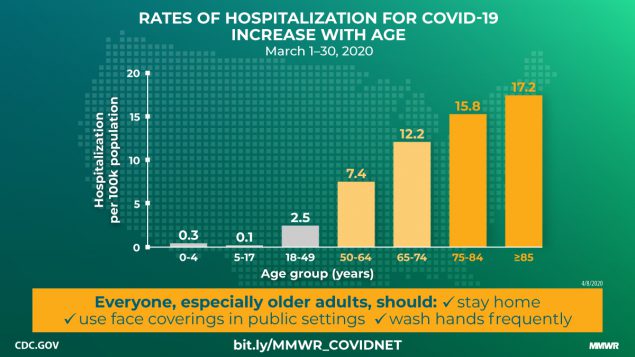
I suppose it would start with an average 7.5% chance of being admitted to hospital.
king arthur said:
grumbledoak said:
And yet 80% of people barely notice they had it!
Source for this? Just because 80% of people don't end up hospitalised doesn't mean they barely notice they had it.https://uk.reuters.com/article/us-health-coronavir...
R Mutt said:
Your can find sources stating anywhere between 20-60% asymptomatic.
https://uk.reuters.com/article/us-health-coronavir...
Can you find sources for your original post with decent sample sizes?https://uk.reuters.com/article/us-health-coronavir...
king arthur said:
Source for this? Just because 80% of people don't end up hospitalised doesn't mean they barely notice they had it.
It's been reported quite widely. 1st hit just now using "coronavirus mild to moderate symptoms statistics" on DuckDuckGo:https://www.medicalnewstoday.com/articles/coronavi...
ETA - I've chased it back for you to CDC
https://www.cdc.gov/coronavirus/2019-ncov/cases-up...
Edited by grumbledoak on Friday 1st May 21:22
Having had COVID-19, I can certainly attest to one of the after affects being reduced lung function. There are a number of other PH sufferera who have seen the same.
A couple of weeks on from the second wave of the virus, I can manage a 15 minute walk tops without my chest getting very tight and getting very breathless. My oxygen sats are slowly recovering, but I was under 90% when they discharged me. You would normally be kept in and given oxygen at this level, but they said the infection risk was too high.
Clearly, the NHS are still learning about the virus, but my GP has said to expect recovery to take at least 8 weeks.
A couple of weeks on from the second wave of the virus, I can manage a 15 minute walk tops without my chest getting very tight and getting very breathless. My oxygen sats are slowly recovering, but I was under 90% when they discharged me. You would normally be kept in and given oxygen at this level, but they said the infection risk was too high.
Clearly, the NHS are still learning about the virus, but my GP has said to expect recovery to take at least 8 weeks.
grumbledoak said:
It's been reported quite widely. 1st hit just now using "coronavirus mild to moderate symptoms statistics" on DuckDuckGo:
https://www.medicalnewstoday.com/articles/coronavi...
ETA - I've chased it back for you to CDC
https://www.cdc.gov/coronavirus/2019-ncov/cases-up...
You realise when they say "mild symptoms" they mean "not needing hospitalisation"? Mild symptoms still means you have a disease which may be as severe as a bad case of flu. It doesn't mean you barely notice it.https://www.medicalnewstoday.com/articles/coronavi...
ETA - I've chased it back for you to CDC
https://www.cdc.gov/coronavirus/2019-ncov/cases-up...
Edited by grumbledoak on Friday 1st May 21:22
king arthur said:
You realise when they say "mild symptoms" they mean "not needing hospitalisation"? Mild symptoms still means you have a disease which may be as severe as a bad case of flu. It doesn't mean you barely notice it.
I've had the flu a couple of times. I spend a day or two in bed, I get bored, and the day after that I go back to work with some Beecham's Lemon. I don't write a book about it. What do you normally do?Gassing Station | News, Politics & Economics | Top of Page | What's New | My Stuff