
2008 2.0 Duratec spark plugs......resisted & non-resisted
Discussion


Hi Folks - I want to try a non-resisted spark plug on our 2008 vintage 2.0 duratec to see if it will intensify the spark. But before I do does anyone know if it will overly stress or damage the wasted-spark coil pack?...…...its being raced, so I really don't care about RFI interference, power takes priority. Am keen to know of your experiences or opinions before I dyno test both plug types.
If it helps engine power is currently around 170bhp, just a blue-printed motor with a stainless exhaust, ITG filter and a re-map, head is not ported as rules don't allow it.
If it helps engine power is currently around 170bhp, just a blue-printed motor with a stainless exhaust, ITG filter and a re-map, head is not ported as rules don't allow it.
knighty said:
Hi Folks - I want to try a non-resisted spark plug on our 2008 vintage 2.0 duratec to see if it will intensify the spark. But before I do does anyone know if it will overly stress or damage the wasted-spark coil pack?...…...its being raced, so I really don't care about RFI interference, power takes priority. Am keen to know of your experiences or opinions before I dyno test both plug types.
If it helps engine power is currently around 170bhp, just a blue-printed motor with a stainless exhaust, ITG filter and a re-map, head is not ported as rules don't allow it.
Wise up.If it helps engine power is currently around 170bhp, just a blue-printed motor with a stainless exhaust, ITG filter and a re-map, head is not ported as rules don't allow it.
"intensify the spark" ??
If you want to know if you can increase the charge burn rate, and hence combust more of your charge at a lower net cylinder volume (and leverage a greater expansion ratio, smaller surface area) then just carry out a dwell duration sweep. Generally, you'll find that with conventional spark plugs with a single discharge path, there is effectively zero correlation between coil energy and power ie once you have enough energy to initiate kernel combustion, then any more energy has no effect.
If you want to know if you can increase the charge burn rate, and hence combust more of your charge at a lower net cylinder volume (and leverage a greater expansion ratio, smaller surface area) then just carry out a dwell duration sweep. Generally, you'll find that with conventional spark plugs with a single discharge path, there is effectively zero correlation between coil energy and power ie once you have enough energy to initiate kernel combustion, then any more energy has no effect.
MaxTorque, many thanks for the constructive reply.
I just can't respond to the other troll like replies.
There are susbstantal gains to be had in the ignition system. I'm not all that familiar with the duratec, just thought I'd ask before I did any damage. Reducing the resistance of the lead and spark plug system all leads up to an intensified spark, whereby you can then run a larger spark plug gap, which does increase power.
I respect the knowledge on here, FYI I'm an engine builder, chartered engineer, worked in engine R&D for 20 years, designed engines for BTCC, WRC, IRL to name a few. I have a 50hp kart engine dyno and SF120E flowbench in my workshop......I'm hardly an amateur guys. I was just looking for some friendly advice.
I just can't respond to the other troll like replies.
There are susbstantal gains to be had in the ignition system. I'm not all that familiar with the duratec, just thought I'd ask before I did any damage. Reducing the resistance of the lead and spark plug system all leads up to an intensified spark, whereby you can then run a larger spark plug gap, which does increase power.
I respect the knowledge on here, FYI I'm an engine builder, chartered engineer, worked in engine R&D for 20 years, designed engines for BTCC, WRC, IRL to name a few. I have a 50hp kart engine dyno and SF120E flowbench in my workshop......I'm hardly an amateur guys. I was just looking for some friendly advice.
Edited by knighty on Sunday 3rd May 17:54
Vizards books sum up the situation quite well with low-resistance plug leads and how to shape the earth strap with a large gap.
Indexing the plugs does have some benefits on some engines buto I'm not a fan of it.
I find most of the problems are associated with platinum and iridium tip plugs. Which have no place in a performance or race motor, they were only designed to get the engine 100k miles between services. They are crap at conducting heat and most are protruding tip, which just scare me.......
You want something like a retracted tip 2.5mm copper core electrode, both aspects are superior at thermal management and will prevent the tip breaking off and destroying the motor, and prevent detonation due to the tip running cooler.......you can then run some huge gaps, which does help power.
Indexing the plugs does have some benefits on some engines buto I'm not a fan of it.
I find most of the problems are associated with platinum and iridium tip plugs. Which have no place in a performance or race motor, they were only designed to get the engine 100k miles between services. They are crap at conducting heat and most are protruding tip, which just scare me.......
You want something like a retracted tip 2.5mm copper core electrode, both aspects are superior at thermal management and will prevent the tip breaking off and destroying the motor, and prevent detonation due to the tip running cooler.......you can then run some huge gaps, which does help power.
knighty said:
Reducing the resistance of the lead and spark plug system all leads up to an intensified spark, whereby you can then run a larger spark plug gap, which does increase power.
not really no. The spark energy is controlled by the coils inductance (for an inductively fire system, rather than a capacitivly fired one) and the current flowing in that coil, this is because the energy stored in an inductor is: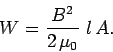
The "resistance" of the transfer media, ie the spark plug lead, mearly allows that energy to flow to somewhere else. The resistance, or more correctly the impedance, of that media is not actually very important, because of the breakdown mechanism of the spark gap, which is what dominates the discharge pulse characteristic.
So, if you want to singificantly and demonstrably boost spark energy, you need to boost coil energy. Due to saturation effects, ultimately that means a greated volume of inductor will be required.
But as i said, this is all irrelevant, first characterise your current system, do the spark energy vs power characterisation sweeps on the dyno and report back!

Gassing Station | Engines & Drivetrain | Top of Page | What's New | My Stuff