
F10 5 series roof bars - illustrated guide & Thule vs BMW
Discussion


I've had a long and quite expensive fact finding mission with roof bars for my F10 saloon and have learnt a lot of important stuff which doesn't appear to be documented anywhere on the internet. I therefore thought it would be helpful to write up what I've found so others can benefit.
I'll cover design differences between Thule and BMW roof bars, how they fit, and end by comparing costs and giving a summary.
For the F10 saloon, both Thule and BMW roof bars use the threaded attachment points set in the F10's roof, which has been standard for most BMWs for many years now:
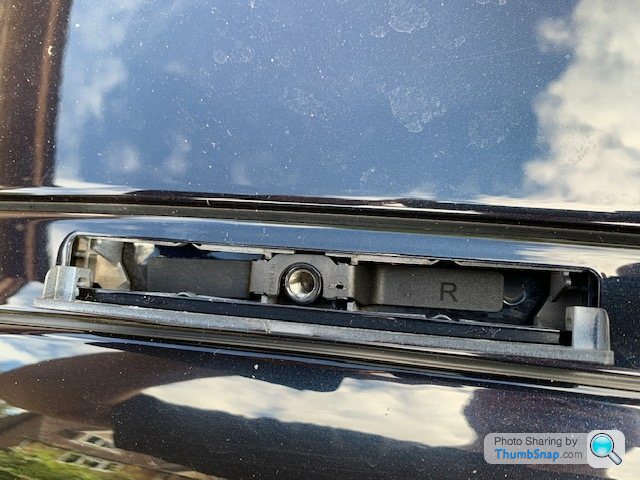
Note in the above photo that I've fitted BMW's protector strips, which glue down and take the load of the roof bars without wearing through the paint and causing rust. Thule don't supply these. There's a slight confusion in the instructions which points out left and right markings - it turns out there aren't different strips for left and right sides of the car, the left and right is for you as you're leaning over the roof - that took me ten minutes to establish, having read the instructions in three languages to work out what on earth they meant!
The use of the threaded attachment points is where the similarities between Thule and BMW end. Both are a very different design:
The Thule kit comes with a tap, and the first step is to tap out the threads in the BMW's roof bar threaded attachment points to a step larger than standard. I can't remember the M number, but it's definitely different. Note that once you've done this you won't be able to fit official BMW bars, which obviously use the standard factory fitted nuts.
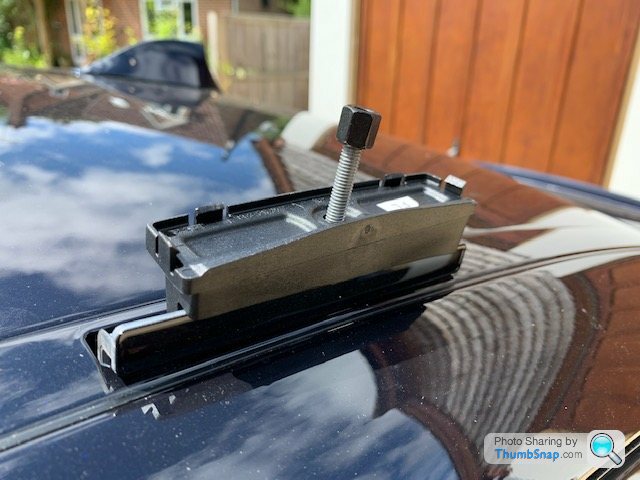
The Thule bars fit with a two step process: you screw studs into each threaded attachment point on the roof with an allen key, then lower the roof bars over these, and then tighten a nut on the mounting feet with a spanner. This is what the assembly, minus bars, looks like, firstly off the roof, and then sat in place:

The problem with this design is that BMW's threaded attachment points are set at a point in the roof that's not horizontal, so when the studs are fitted they splay out, with the tops further apart across the car than the bottoms. What this means is that with the bars set to the correct length when screwed down at the base of the stud, the bars barely fit over the tops of the studs. It's just about possible to find a length that covers top and bottom if you don't fit the studs down all the way. It's one hell of a fiddle, but eventually you can get the roof bars fitted.
The second issue is that the standard studs are made of very soft metal, and I rounded out the hex holes in two studs and had to order replacements - that was just fitting once. If you were doing this repeatedly week after week you'd go through a lot of studs!
When you've finally got everything fitted, separate lockable covers go over the bolts so nobody can steal your roof bars (or, more importantly, what's on them!):

Once fitted, the Thule bars are sleaker and more attractive than the BMW bars. Due to the design though, I think they're intended to be fitted and left in place, not taken on and off the car when needed, which I do to keep the noise down and mpg up (both are significant at speed).
The BMW bars bolt straight down onto the roof in seconds with no tools. The attachment is done via a bolt and a cam, very similar to a quick release wheel on a bicycle; so you tighten the bolt moderately, then flip the cam lever up to secure:


Once secure, lockable covers fold down over the mounting points. Note that unlike Thule, these covers are permanently attached to the bars:

BMW can also supply a bag to store the roof bars in, which isn't just a bag, it has separate compartments for the bars, along with a pouch for accessories (for example, I keep an old credit card for opening the mounting point flaps):


BMW only supply one profile of roof bar, rather than Thule's various options for more aerodynamic design.
BMW bars: £179. Optional bag: £18
I'm a big fan of Thule, having owned their roof bars for two previous cars and a tow-bar bike carrier that I use regularly. However, with the F10 their bars just don't cut it: they're significantly harder to fit, made of poorer quality components, and the covers are separate and easily lost. Furthermore, you have to tap out your car's threaded attachment points, meaning you're stuck with the Thule bars thereafter. For a similar aerodynamic shape of bar, Thule's bars are also more expensive than BMW's own bars. BMW's bars trump the Thule's in lots of ways: they're far quicker to take on and off, the lockable covers are integral, and fitting needs no tools, plus they’re cheaper.
I'll cover design differences between Thule and BMW roof bars, how they fit, and end by comparing costs and giving a summary.
BMW roof bar mounting points
For the F10 saloon, both Thule and BMW roof bars use the threaded attachment points set in the F10's roof, which has been standard for most BMWs for many years now:
Note in the above photo that I've fitted BMW's protector strips, which glue down and take the load of the roof bars without wearing through the paint and causing rust. Thule don't supply these. There's a slight confusion in the instructions which points out left and right markings - it turns out there aren't different strips for left and right sides of the car, the left and right is for you as you're leaning over the roof - that took me ten minutes to establish, having read the instructions in three languages to work out what on earth they meant!
Thule vs BMW design
The use of the threaded attachment points is where the similarities between Thule and BMW end. Both are a very different design:
Thule
The Thule kit comes with a tap, and the first step is to tap out the threads in the BMW's roof bar threaded attachment points to a step larger than standard. I can't remember the M number, but it's definitely different. Note that once you've done this you won't be able to fit official BMW bars, which obviously use the standard factory fitted nuts.
The Thule bars fit with a two step process: you screw studs into each threaded attachment point on the roof with an allen key, then lower the roof bars over these, and then tighten a nut on the mounting feet with a spanner. This is what the assembly, minus bars, looks like, firstly off the roof, and then sat in place:
The problem with this design is that BMW's threaded attachment points are set at a point in the roof that's not horizontal, so when the studs are fitted they splay out, with the tops further apart across the car than the bottoms. What this means is that with the bars set to the correct length when screwed down at the base of the stud, the bars barely fit over the tops of the studs. It's just about possible to find a length that covers top and bottom if you don't fit the studs down all the way. It's one hell of a fiddle, but eventually you can get the roof bars fitted.
The second issue is that the standard studs are made of very soft metal, and I rounded out the hex holes in two studs and had to order replacements - that was just fitting once. If you were doing this repeatedly week after week you'd go through a lot of studs!
When you've finally got everything fitted, separate lockable covers go over the bolts so nobody can steal your roof bars (or, more importantly, what's on them!):
Once fitted, the Thule bars are sleaker and more attractive than the BMW bars. Due to the design though, I think they're intended to be fitted and left in place, not taken on and off the car when needed, which I do to keep the noise down and mpg up (both are significant at speed).
BMW
The BMW bars bolt straight down onto the roof in seconds with no tools. The attachment is done via a bolt and a cam, very similar to a quick release wheel on a bicycle; so you tighten the bolt moderately, then flip the cam lever up to secure:
Once secure, lockable covers fold down over the mounting points. Note that unlike Thule, these covers are permanently attached to the bars:
BMW can also supply a bag to store the roof bars in, which isn't just a bag, it has separate compartments for the bars, along with a pouch for accessories (for example, I keep an old credit card for opening the mounting point flaps):
BMW only supply one profile of roof bar, rather than Thule's various options for more aerodynamic design.
Cost
Thule bars: £180 to £340, depending on options.BMW bars: £179. Optional bag: £18
Summary
I'm a big fan of Thule, having owned their roof bars for two previous cars and a tow-bar bike carrier that I use regularly. However, with the F10 their bars just don't cut it: they're significantly harder to fit, made of poorer quality components, and the covers are separate and easily lost. Furthermore, you have to tap out your car's threaded attachment points, meaning you're stuck with the Thule bars thereafter. For a similar aerodynamic shape of bar, Thule's bars are also more expensive than BMW's own bars. BMW's bars trump the Thule's in lots of ways: they're far quicker to take on and off, the lockable covers are integral, and fitting needs no tools, plus they’re cheaper.
Edited by RobM77 on Saturday 18th July 15:45
Edited by RobM77 on Saturday 18th July 18:28

numtumfutunch said:
Thank you, worth it for knowing about the tapping thing
Life long Touring/estate tart here with a passion for cycling so if I ever switch to saloons I’ll be aware of this
No worries. This was one of the key things I learnt. On my E90 3 series the bolts were the same spec as BMW’s. I can’t understand why they changed it, unless legally obliged perhaps?Life long Touring/estate tart here with a passion for cycling so if I ever switch to saloons I’ll be aware of this
I should really have an estate to be honest, as my car gets used as a van in a regular basis for motorsport, cycling, windsurfing and carrying my cello around. I much prefer saloons for a number of reasons though.
Gassing Station | BMW General | Top of Page | What's New | My Stuff