
Airbus hydrogen fuelled aircraft
Discussion


Some bloke twittering on about "zero carbon aeroplanes" on the news tonight.
Offering a big prize to the first "zero carbon" flight that takes 100 people across the Atlantic and returns them next day.
Yet any fool can see that Hydrogen power is only "Zero Emmissions" from the vehicle, not "Zero Carbon". How much CO2 will need to be released in order to create this Hydrogen and put it into fuel cells? What will the raw materials and processing/manufacturing cost of these "ZeroE" vehicles be to the environment?
Like electric cars, this is just smoke and mirrors while the emissions are just moved, instead of being removed or reduced...
Offering a big prize to the first "zero carbon" flight that takes 100 people across the Atlantic and returns them next day.
Yet any fool can see that Hydrogen power is only "Zero Emmissions" from the vehicle, not "Zero Carbon". How much CO2 will need to be released in order to create this Hydrogen and put it into fuel cells? What will the raw materials and processing/manufacturing cost of these "ZeroE" vehicles be to the environment?
Like electric cars, this is just smoke and mirrors while the emissions are just moved, instead of being removed or reduced...
It keeps crashing.
The use of hydrogen as a fuel for aircraft has been talked about for decades. I remember reading an article in the old "Speed and Power" magazine from around 1973 which showed artist impressions of what a hydrogen fueled Tristar or 747 might look like.
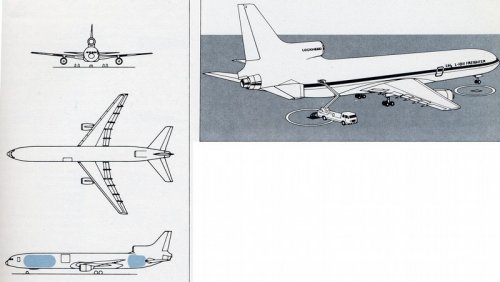
The problem is fuel density. Hydrogen is the lightest and least dense gas there is and even turning it into a liquid (at Minus 253 degrees C) still leaves it requiring huge fuel tanks.
A good example is the Space Shuttle. It's hydrogen fuel tank made up 2/3 of the big orange tank on which the Orbiter sat -

The use of hydrogen as a fuel for aircraft has been talked about for decades. I remember reading an article in the old "Speed and Power" magazine from around 1973 which showed artist impressions of what a hydrogen fueled Tristar or 747 might look like.
The problem is fuel density. Hydrogen is the lightest and least dense gas there is and even turning it into a liquid (at Minus 253 degrees C) still leaves it requiring huge fuel tanks.
A good example is the Space Shuttle. It's hydrogen fuel tank made up 2/3 of the big orange tank on which the Orbiter sat -
Meh. Fuel cells are just too complicated and not powerful enough. Plus the “well-to-wing” efficiency of hydrogen is hopeless compared to battery electric.
They’d be much better off putting the effort into hybrid/battery electric propulsion systems as they’ll always be more efficient and less complicated.
Perhaps making the entire fuselage skin a battery and any other suitable areas is the way forward to pack enough electrical energy onboard. Until battery energy density improves then perhaps have fossil fueled engines with only enough fuel for takeoff and up to cruise, then electric propulsion takes over. That electric propulsion could then also be used to recover some of the aircrafts kinetic and potential energy from engine fan windmilling during the decent to recharge the onboard batteries.
Probably how a hybrid electric aircraft would work, at least initially.
They’d be much better off putting the effort into hybrid/battery electric propulsion systems as they’ll always be more efficient and less complicated.
Perhaps making the entire fuselage skin a battery and any other suitable areas is the way forward to pack enough electrical energy onboard. Until battery energy density improves then perhaps have fossil fueled engines with only enough fuel for takeoff and up to cruise, then electric propulsion takes over. That electric propulsion could then also be used to recover some of the aircrafts kinetic and potential energy from engine fan windmilling during the decent to recharge the onboard batteries.
Probably how a hybrid electric aircraft would work, at least initially.
Might be the case that hydrogen, split from sea water, becomes a way of storing excess power generated by wind turbines in the dead of night.
Hydrogen coming out of oil wells is certainly not zero carbon. But H2 split from water by renewable electricity is (more so).
They could use that...
On the one hand batteries have lower energy density than Hydrogen, but on the other electric motors are super compact whereas the fuel cells attatched to the electric motors in hydrogen powertrains are not compact.
...but are expensive, temperamental, and a bit flaky generally.
The Aeroengine makers have tried out battery only and it just doesn't cut it with the existing battery technology. Not commercially viable.
Only other option is to hybridise the powertrains, and one good bet is hydrogen. Might be the hydrid systems can provide extra power and shield the batteries from excessive drain for short periods, like during take off and landing.
Making it all work together is complex.
But that means they have to give people like me money to help them sort it
Hydrogen coming out of oil wells is certainly not zero carbon. But H2 split from water by renewable electricity is (more so).
They could use that...
On the one hand batteries have lower energy density than Hydrogen, but on the other electric motors are super compact whereas the fuel cells attatched to the electric motors in hydrogen powertrains are not compact.
...but are expensive, temperamental, and a bit flaky generally.
The Aeroengine makers have tried out battery only and it just doesn't cut it with the existing battery technology. Not commercially viable.
Only other option is to hybridise the powertrains, and one good bet is hydrogen. Might be the hydrid systems can provide extra power and shield the batteries from excessive drain for short periods, like during take off and landing.
Making it all work together is complex.
But that means they have to give people like me money to help them sort it
dvs_dave said:
Meh. Fuel cells are just too complicated and not powerful enough. Plus the “well-to-wing” efficiency of hydrogen is hopeless compared to battery electric.
They’d be much better off putting the effort into hybrid/battery electric propulsion systems as they’ll always be more efficient and less complicated.
Given the complete lifecycle efficiency of batteries that seems a very lowly target to give up at.They’d be much better off putting the effort into hybrid/battery electric propulsion systems as they’ll always be more efficient and less complicated.
Just because the technology is immature doesn't mean you should sack off any Hydrogen research.
dvs_dave said:
Until battery energy density improves then perhaps have fossil fueled engines with only enough fuel for takeoff and up to cruise, then electric propulsion takes over.
Or use hydrogen-fueled unmanned tugs to tow the aircraft up to the start of the cruise portion of the flight? Something along the lines of the Short Mercury/Maia composite built before the war, or what is now done with the Pegasus air-launched rocket system.dvs_dave said:
That electric propulsion could then also be used to recover some of the aircraft's kinetic and potential energy from engine fan windmilling during the decent to recharge the onboard batteries.
You don't get something for nothing. Windmilling propellers or fans create lots of drag, particularly if you are extracting energy from them, so you would just have to fly further at cruise altitude before starting a steep decent, as opposed to descending at flight idle from further away.What would save energy is having an electric catapult at major airports to accelerate the aircraft up to take off speed. It wouldn't need to be as aggressive as an aircraft carrier type, as there is more runway available. Likewise an arrester system would reduce the fuel used for reverse thrust, reduce energy lost in braking and could harvest the energy from slowing the aircraft down.
Edited by GliderRider on Wednesday 23 September 17:46
dvs_dave said:
That electric propulsion could then also be used to recover some of the aircrafts kinetic and potential energy from engine fan windmilling during the decent to recharge the onboard batteries.
There is only one point at which "regen" on a plane makes theoretical sense, and that is braking on landing! Conventional aeroplanes already "regen" with 100% efficiency as they descend, turning potential energy into kinetic energy.Airlines have flight paths specifically designed for maximum fuel economy, involving cruise climb then descent at as close to flight idle (the minimum practical thrust setting) as possible
They need to operate at all times at their lowest possible drag configeration, so as much PE gets to KE as possible, and as little as possible is lost to drag.
Anything that reduces their L/D ratio negatively impacts on energy consumption......
yellowjack said:
Some bloke twittering on about "zero carbon aeroplanes" on the news tonight.
Offering a big prize to the first "zero carbon" flight that takes 100 people across the Atlantic and returns them next day.
Yet any fool can see that Hydrogen power is only "Zero Emmissions" from the vehicle, not "Zero Carbon". How much CO2 will need to be released in order to create this Hydrogen and put it into fuel cells? What will the raw materials and processing/manufacturing cost of these "ZeroE" vehicles be to the environment?
Like electric cars, this is just smoke and mirrors while the emissions are just moved, instead of being removed or reduced...
Solar, wind and wave powered hydrogen generation plants are under development. The construction of these will not be zero emissions but the operation of them should be almost zero, assuming they can be made to work on the scale needed.Offering a big prize to the first "zero carbon" flight that takes 100 people across the Atlantic and returns them next day.
Yet any fool can see that Hydrogen power is only "Zero Emmissions" from the vehicle, not "Zero Carbon". How much CO2 will need to be released in order to create this Hydrogen and put it into fuel cells? What will the raw materials and processing/manufacturing cost of these "ZeroE" vehicles be to the environment?
Like electric cars, this is just smoke and mirrors while the emissions are just moved, instead of being removed or reduced...

GliderRider said:
What would save energy is having an electric catapult at major airports to accelerate the aircraft up to take off speed. It wouldn't need to be as aggressive as an aircraft carrier type, as there is more runway available. Likewise an arrester system would reduce the fuel used for reverse thrust, reduce energy lost in braking and could harvest the energy from slowing the aircraft down.
This, but for the fun factor, not the energy efficiency."Welcome aboard your Sunshine holidays flight to Malaga...scream if you want to go faster! Launching in 3..2..1.."
Pachydermus said:
Turn7 said:
Everyone needs an aircraft with Hydrogen in their lives.....

As Eric mentioned it, see also
As for the Space Shuttle Challenger, the accident was caused by a leak in the solid rocket boosters (SRBs). Granted the fire and subsequent structural failures destroyed the hydrogen tank for the main engines, but it wouldn't have really mattered what fuel was in the tank, the result would have more than likely been the same. The decision to make the SRBs in sections was a political one, to enable them to have been built away from the launch sites thus securing jobs at Morton Thiokol in Utah.
The Shuttle suffered a number of catastrophic main engine failures when the engines were under test. It also had a few very near misses when engines shut down just before launch or, on one occasion, when an engine was seconds away from exploding due to a damaged engine bell.
Managing and controlling cryogenic hydrogen is very, very difficult. I struggle to see how you can condense hydrogen as a fuel into a small enough space to make the fuel tank small enough to be practical.
However, on its own, hydrogen is no more dangerous than petrol although I would expect kerosene to be less explosive. Maybe somebody could have actual figures for the relative "bloweyuppiness" (my phrase) of hydrogen versus petrol versus kerosene versus diesel.
Managing and controlling cryogenic hydrogen is very, very difficult. I struggle to see how you can condense hydrogen as a fuel into a small enough space to make the fuel tank small enough to be practical.
However, on its own, hydrogen is no more dangerous than petrol although I would expect kerosene to be less explosive. Maybe somebody could have actual figures for the relative "bloweyuppiness" (my phrase) of hydrogen versus petrol versus kerosene versus diesel.
Hmm. I'm not sure it's as simple as turning all planes green.
I think we need a different approach. It's a lot easier to make fast trains environmentally friendly for example. And no reason why we can't use these and improve them etc, HS2 debacle accepted.
But perhaps short haul flights will be phased out. Maybe we will accept the journey time from London to Aberdeen by train, or from London, the change in France and onwards to Spain?
Some journeys still need to be made by plane. What's wrong with ethanol as a fuel for these? Genuine question!
I think we need a different approach. It's a lot easier to make fast trains environmentally friendly for example. And no reason why we can't use these and improve them etc, HS2 debacle accepted.
But perhaps short haul flights will be phased out. Maybe we will accept the journey time from London to Aberdeen by train, or from London, the change in France and onwards to Spain?
Some journeys still need to be made by plane. What's wrong with ethanol as a fuel for these? Genuine question!
Eric Mc said:
The Shuttle suffered a number of catastrophic main engine failures when the engines were under test. It also had a few very near misses when engines shut down just before launch or, on one occasion, when an engine was seconds away from exploding due to a damaged engine bell.
Managing and controlling cryogenic hydrogen is very, very difficult. I struggle to see how you can condense hydrogen as a fuel into a small enough space to make the fuel tank small enough to be practical.
However, on its own, hydrogen is no more dangerous than petrol although I would expect kerosene to be less explosive. Maybe somebody could have actual figures for the relative "bloweyuppiness" (my phrase) of hydrogen versus petrol versus kerosene versus diesel.
Eric Mc, with regards to petrol vs kerosene/diesel, petrol has a higher auto ignition temperature, but is more easily ignited by a spark or flame. Hydrogen has a higher auto ignition temperature, but can be ignited by a very low energy spark and over a very wide ratio of fuel to air ratios (4% to 75%).Managing and controlling cryogenic hydrogen is very, very difficult. I struggle to see how you can condense hydrogen as a fuel into a small enough space to make the fuel tank small enough to be practical.
However, on its own, hydrogen is no more dangerous than petrol although I would expect kerosene to be less explosive. Maybe somebody could have actual figures for the relative "bloweyuppiness" (my phrase) of hydrogen versus petrol versus kerosene versus diesel.
Hydrogen Properties compared to other fuels
A hydrogen powered aircraft would need to be much larger than a Jet A1 powered aircraft of the same payload capacity, but as the fuel is less dense, the structure could be lighter. A sphere has the maximum volume to surface area. To minimise insulation to volume, the tank should be as spherical as possible, hence the design of the Airbus concept being the shape optimized to contain the largest possible sphere or 'squashed sphere' tank.
Gassing Station | Boats, Planes & Trains | Top of Page | What's New | My Stuff