
Fairey Rotodyne
Discussion


Stumbled by accident across one of these on You Tube last night and realised I had never heard of it - what a fascinating machine. It never ceases to amaze me how the UK was so far ahead in aviation druing that era, even the US wanted to buy them.
It strikes me as an idea which could still work now - why was it never re kindled?
Lotobear said:
Stumbled by accident across one of these on You Tube last night and realised I had never heard of it - what a fascinating machine. It never ceases to amaze me how the UK was so far ahead in aviation druing that era, even the US wanted to buy them.
It strikes me as an idea which could still work now - why was it never re kindled?
Noise.It strikes me as an idea which could still work now - why was it never re kindled?
The Rotodyne is generally considered to have been one of the noisiest aircraft to have ever flown.
I reckon that the noise issue could have been solved with some thought and investment.
It was chiefly killed by the fact that it was a Fairey design which was transferred to Westland when the government forced industry mergers in the late 1950s/early 1960s.
All the helicopter projects of Fairey, Sunders Roe and Bristol were transferred to Westland in 1960 or so. Westland's main plan was to acquire licensing or conduct collaborative projects with foreign companies rather than continue with projects started by companies that had once been their UK rivals.
For the same reason, they didn't want to proceed with developments of the Belvedere.
As far as I can remember, the only home grown project that Westland continued with was the Scout/Wasp - which they had acquired from Sunders Roe.
All other Westland helicopters were based on licensed copies of Sikorsky or Bell designs. Later they collaborated with Sud Aviation/Aerosptiale in France and Agusta in Italy.
It was chiefly killed by the fact that it was a Fairey design which was transferred to Westland when the government forced industry mergers in the late 1950s/early 1960s.
All the helicopter projects of Fairey, Sunders Roe and Bristol were transferred to Westland in 1960 or so. Westland's main plan was to acquire licensing or conduct collaborative projects with foreign companies rather than continue with projects started by companies that had once been their UK rivals.
For the same reason, they didn't want to proceed with developments of the Belvedere.
As far as I can remember, the only home grown project that Westland continued with was the Scout/Wasp - which they had acquired from Sunders Roe.
All other Westland helicopters were based on licensed copies of Sikorsky or Bell designs. Later they collaborated with Sud Aviation/Aerosptiale in France and Agusta in Italy.
aeropilot said:
Lotobear said:
Stumbled by accident across one of these on You Tube last night and realised I had never heard of it - what a fascinating machine. It never ceases to amaze me how the UK was so far ahead in aviation druing that era, even the US wanted to buy them.
It strikes me as an idea which could still work now - why was it never re kindled?
Noise.It strikes me as an idea which could still work now - why was it never re kindled?
The Rotodyne is generally considered to have been one of the noisiest aircraft to have ever flown.
Chucklehead said:
aeropilot said:
Lotobear said:
Stumbled by accident across one of these on You Tube last night and realised I had never heard of it - what a fascinating machine. It never ceases to amaze me how the UK was so far ahead in aviation druing that era, even the US wanted to buy them.
It strikes me as an idea which could still work now - why was it never re kindled?
Noise.It strikes me as an idea which could still work now - why was it never re kindled?
The Rotodyne is generally considered to have been one of the noisiest aircraft to have ever flown.
The only evidence we have for the noise it produced is what you can hear on contemporary newsreel footage - and that won't be realistic as the sound may even have been overdubbed during editing.
I don't think the noise can have been that great. The jets mounted on the rotor tips were quite small - only about the size of a wine bottle. A number of other helicopters had been built using the same principle, Fairey's own Gyrodyne for example and the Fairey Ultra Light - and nobody said a huge amount about the noise they made.
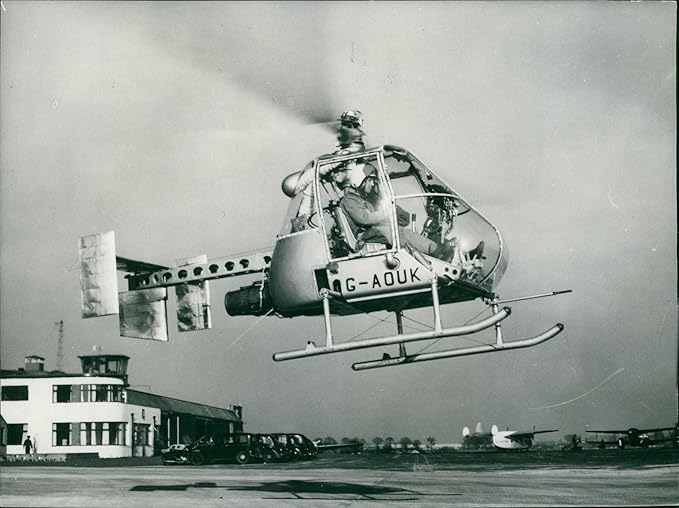

Airfix and Revell both produced kits of the Rotodyne -


I am convinced that the real reason why the Rotodyne was discontinued was because it didn't fit into Westland's plans for their future.
I don't think the noise can have been that great. The jets mounted on the rotor tips were quite small - only about the size of a wine bottle. A number of other helicopters had been built using the same principle, Fairey's own Gyrodyne for example and the Fairey Ultra Light - and nobody said a huge amount about the noise they made.
Airfix and Revell both produced kits of the Rotodyne -
I am convinced that the real reason why the Rotodyne was discontinued was because it didn't fit into Westland's plans for their future.
Eric Mc said:
The only evidence we have for the noise it produced is what you can hear on contemporary newsreel footage - and that won't be realistic as the sound may even have been overdubbed during editing.
I don't think the noise can have been that great. The jets mounted on the rotor tips were quite small - only about the size of a wine bottle. A number of other helicopters had been built using the same principle, Fairey's own Gyrodyne for example and the Fairey Ultra Light - and nobody said a huge amount about the noise they made.
There’s a blue one of those at the Coventry airport museum. I saw it last month and it’s tiny. I couldn’t even make my mind up whether it was a real aircraft or just a model.I don't think the noise can have been that great. The jets mounted on the rotor tips were quite small - only about the size of a wine bottle. A number of other helicopters had been built using the same principle, Fairey's own Gyrodyne for example and the Fairey Ultra Light - and nobody said a huge amount about the noise they made.
As well as the noise problem, there wasn’t really a need for it. The dream was that people would travel from city centres in these fairly large beasts. Even without the blade tip jet noise, they would’ve been pretty antisocial.
This beast was much, much noisier:
https://en.m.wikipedia.org/wiki/Republic_XF-84H_Th...
This beast was much, much noisier:
https://en.m.wikipedia.org/wiki/Republic_XF-84H_Th...
Tony1963 said:
As well as the noise problem, there wasn’t really a need for it. The dream was that people would travel from city centres in these fairly large beasts. Even without the blade tip jet noise, they would’ve been pretty antisocial.
This beast was much, much noisier:
https://en.m.wikipedia.org/wiki/Republic_XF-84H_Th...
I've see that one in person at Dayton.This beast was much, much noisier:
https://en.m.wikipedia.org/wiki/Republic_XF-84H_Th...
Easily one of my favourite museums ever and the only place to see an XB-70.
Tony1963 said:
As well as the noise problem, there wasn’t really a need for it. The dream was that people would travel from city centres in these fairly large beasts. Even without the blade tip jet noise, they would’ve been pretty antisocial.
This beast was much, much noisier:
https://en.m.wikipedia.org/wiki/Republic_XF-84H_Th...
Not only was it noisy, it set up a dreadful resonance which made people throw up.This beast was much, much noisier:
https://en.m.wikipedia.org/wiki/Republic_XF-84H_Th...
Eric Mc said:
Fairey's own Gyrodyne for example and the Fairey Ultra Light - and nobody said a huge amount about the noise they made.
One of the many different jobs my Dad did when working at RAE Farnborough was to take noise measurements of the Fairey Gyrodyne. He was given a leather flying helmet for hearing protection... He considered this particular task to be why he was almost completely deaf in later life. He would say, 'If I can't see your lips, I can't hear you'.I did see somewhere that by the time the Rotodyne was scrapped, there was already a cure for the worst of the noise it made.
Edited by GliderRider on Thursday 1st October 21:23
From various accounts, the "Mk2" Rotodyne Z was going to be considerably quieter, although there are always going to be limits on what you can do, the tip jets were only lit on take-off and landing, so during cruise when the rotor was auto-gyro-ing they were relatively quiet. I suspect that if the US govt had pumped as much money into a Rotodyne-like machine as they did into the V22 / Osprey, then they would have ended up with a faster, safer and more flexible aircraft. After all, they did interesting things with the hovercraft LCAC.
Tony1963 said:
As well as the noise problem, there wasn’t really a need for it. The dream was that people would travel from city centres in these fairly large beasts. Even without the blade tip jet noise, they would’ve been pretty antisocial.
Yes, those Chinooks you see flying around are a collective figment of the imagination; no use to the armed forces at all, they prefer to walk.hidetheelephants said:
Yes, those Chinooks you see flying around are a collective figment of the imagination; no use to the armed forces at all, they prefer to walk.
WTAF are you on about? The Chinook and Rotodyne have very little in common, and the Chinnok isn't really known for transporting commuters from city centre to nearby airport.Gassing Station | Boats, Planes & Trains | Top of Page | What's New | My Stuff