
VW Golf GTI (Mk8) vs. VW Golf GTI (Mk5)
The latest hot Golf meets the first GTI of the modern era

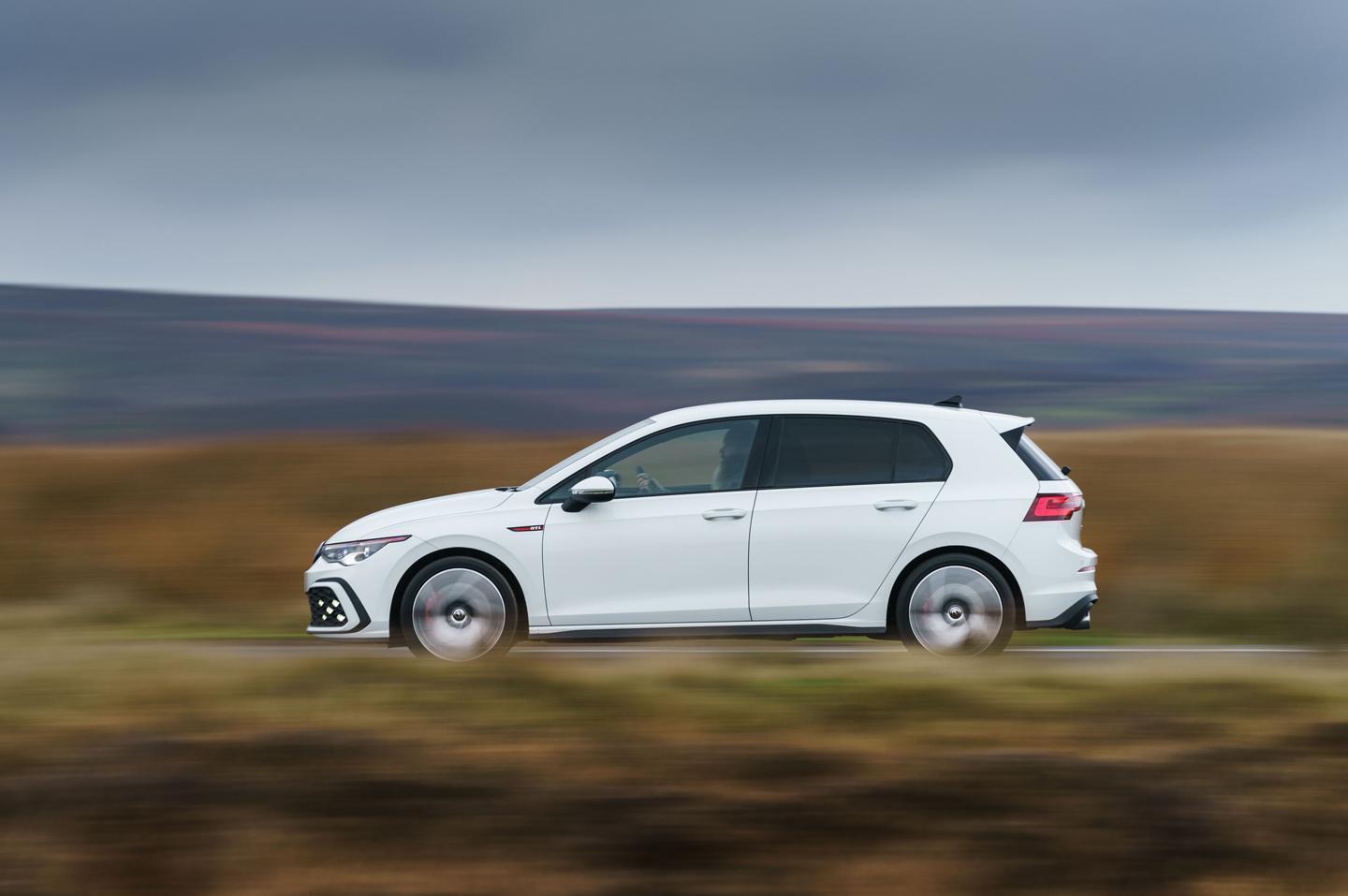
Volkswagen has meddled so little with the basic Golf GTI recipe over the last decade and a half you could almost accuse it of being idle. There’s still a zippy 2.0-litre, four-cylinder turbo engine with good but not class-leading power, and it still drives the front axle only. Buyers choose now as they did back then between manual and dual-clutch gearboxes. The rear of the car is still suspended on a multi-link layout, while the GTI's styling remains very subtle by the standards of the segment.
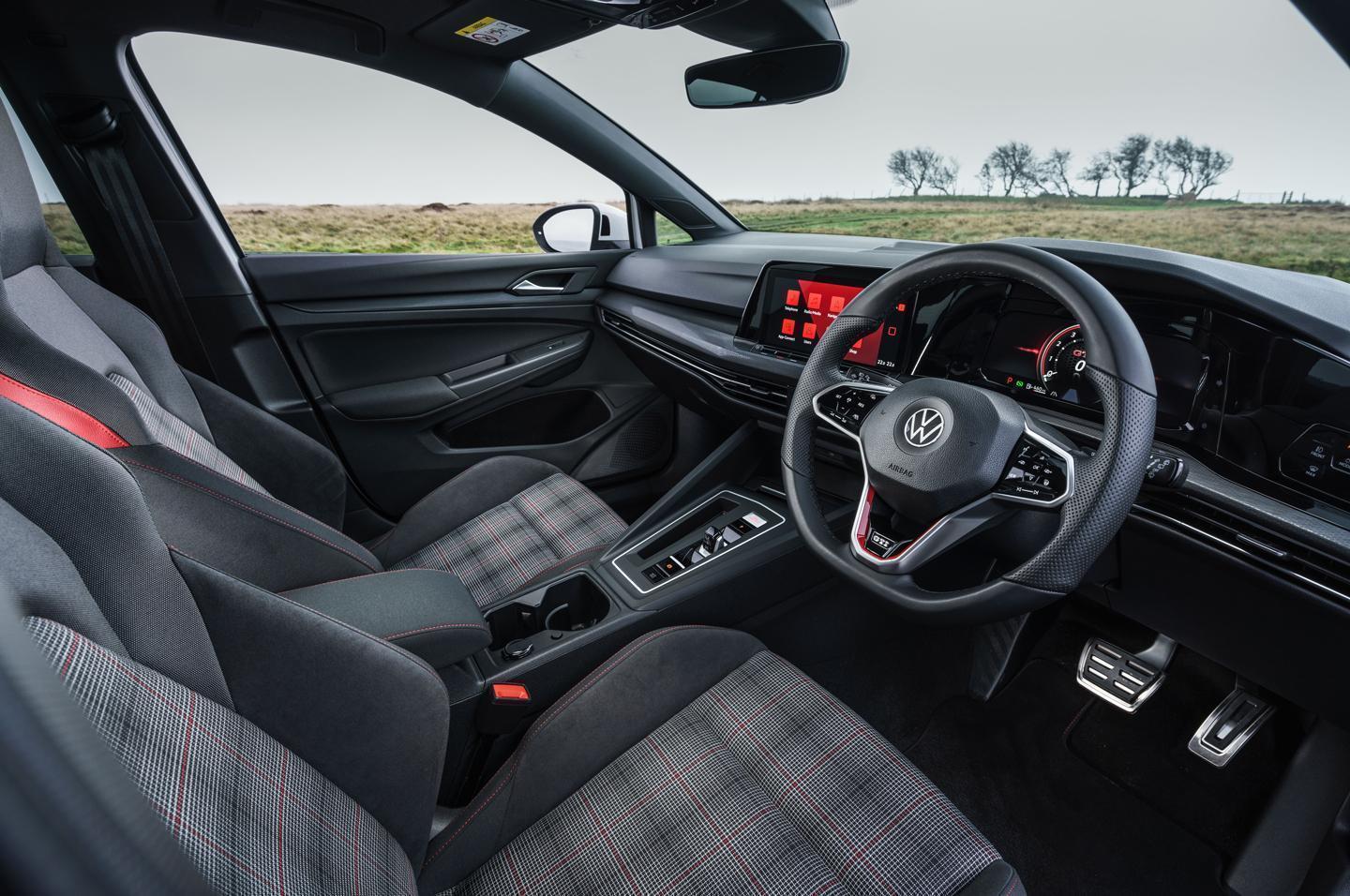
But you can’t have a three-door shell any longer. Within the latest Golf’s cabin, you’ll find glossy screens rather than analogue dials and an ancient dot matrix display. So there has been steady evolution since the Mk5 arrived in 2004 and the Mk8 appeared earlier this year, nowhere more so than in the newest model’s subtle but important shift in emphasis. Now, deep down in its bones, the basic Golf GTI is a more inherently sporting car than earlier versions.
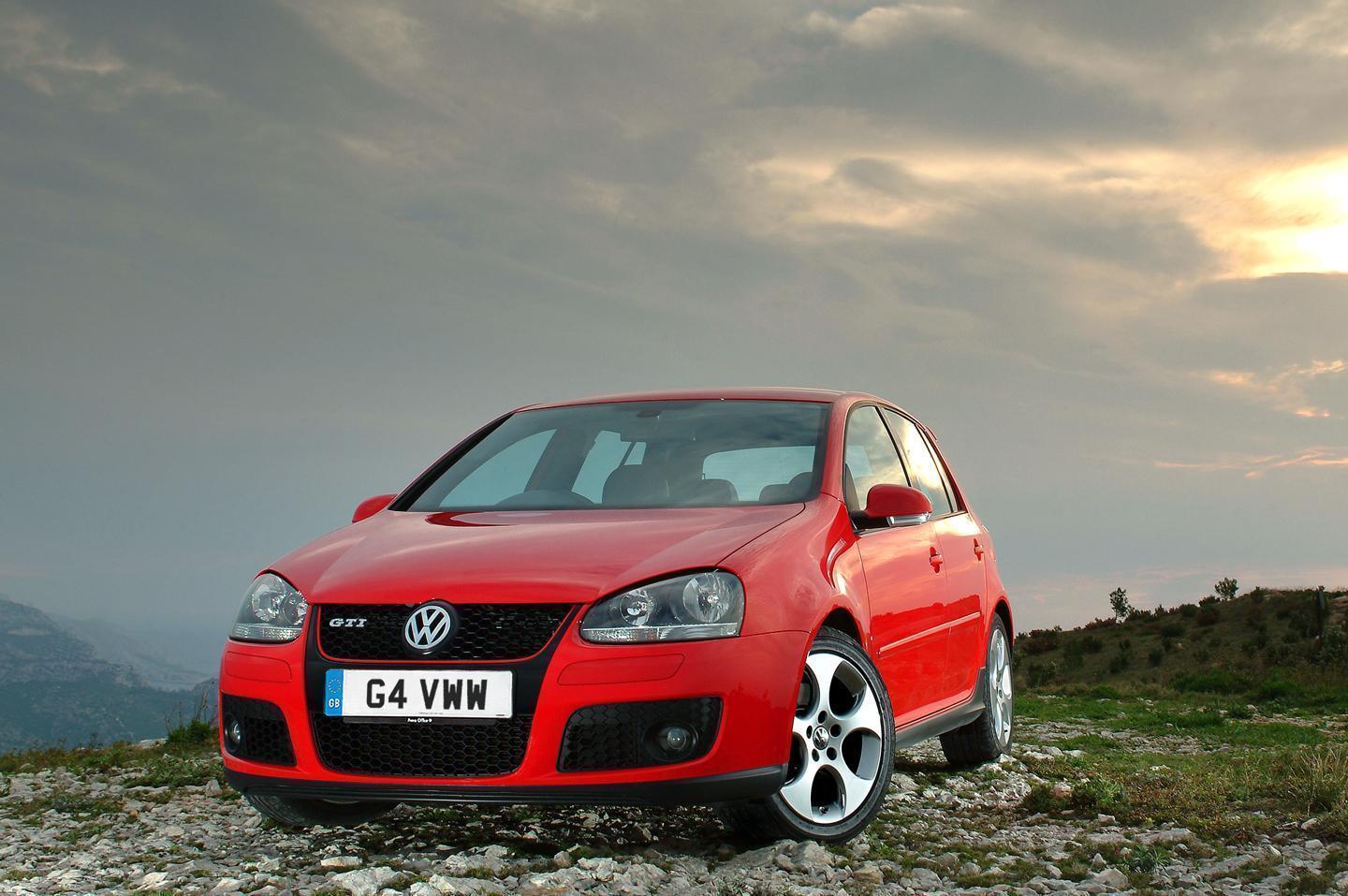
But is it a better one? Others will have their view (and I suspect declaring a preference for anything other than a Mk1 or Mk2 will rile some), but for me, the best Golf GTI so far is the fifth-generation model. It was the Lazarus GTI, the one that reestablished the Golf as the smartest and most broadly capable hot hatch out there. And for my money, it’s the one that does the best job of being classy and effortless one moment, then exciting and rewarding the next.


That was the way I remembered it, anyway. It had been 10 years since I dropped into the low-slung seat of a Mk5 GTI, heard the four-pot fire and settle into its strangely gravelly idle, then felt its gear lever move about in that oily-slick way. What was instantly familiar to me even after all those years was the seating position, which puts you on the deck with what feels like three feet of clear air above. If the Mk5 turned out to be very different to the car from my memories, at least I hadn’t misremembered that.
There’s an underlying tension to its ride quality, but it’s far from being crashy. At A-road and motorway speeds, it settles brilliantly. What’s more, the Mk5 is just as refined as I remembered it being, with better suppression of wind and road noise than any contemporary hot hatch. Meanwhile, the cabin has an integrity to it even now; most affordable performance cars feel brittle inside after 16 years, but not this one.
So far, then, it’s just as I remembered it. But not the steering – I had logged away somewhere in those dusty recesses this vague impression of the Mk5’s rack being grainy and communicative, but I didn’t recall it being quite this transparent. You dial in some lock and immediately have a sense of the grip across the front axle, of the attitude and balance of the car from end to end. There’s also a poise and adjustability about the Mk5 that had drifted from my memory. The grip, control and suppleness over rough surfaces is familiar to me, but this GTI is an altogether more alert and rewarding performance car than I remembered.
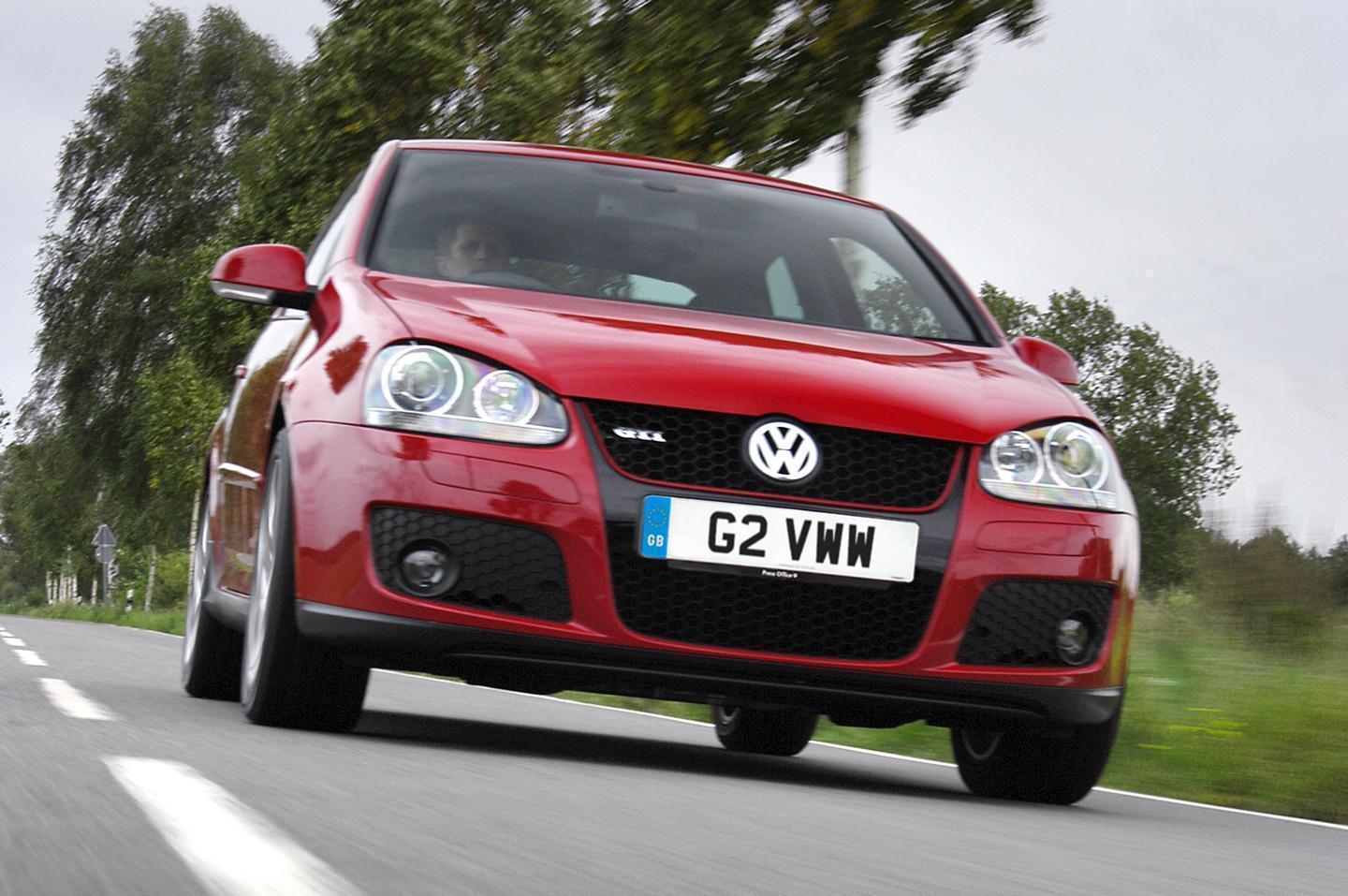
Its turbo engine feels modern even now. There’s strong torque, good response and a reasonably fizzy top end, but the soundtrack is bland – no present day hot hatch would be allowed to leave the factory with so subdued a voice. Even so, this 200hp motor wouldn’t seem out of place in a brand new car, save for the fact that we’ve come to expect a more forceful shove in the back under a wide open throttle.
The new Golf GTI has an additional 45hp, which is only partially offset by a 76kg weight gain. So it does pull harder, but not by much. The basic character of the engine is unchanged, which is to be expected given the Mk8 uses a much evolved version of the Mk5’s motor. There’s still good throttle response and real energy in the upper reaches, but what’s unrecognisable is the sound it makes – that bland soundtrack in the Mk5 makes way for a boomy, bassy score.
Only certain Mk5 GTIs had limited slip differentials, but all Mk8s do. The electronically-controlled item in the new car does such a good job of getting the power down to the road, even a wet one, that you can stand on the throttle mid-corner and just allow the front axle to pull you through. It’s a pity this test car has the dual-clutch gearbox rather than a manual like the Mk5, but I can’t fault the way it functions. It’s smooth in normal driving, then responsive and obedient in manual mode. My feeling is that the paddle-shifter is better suited to the four-wheel drive Golf R (the latest version of which isn’t offered with a manual anyway), while the GTI, its remit more about interaction than outright speed, should have a stick.
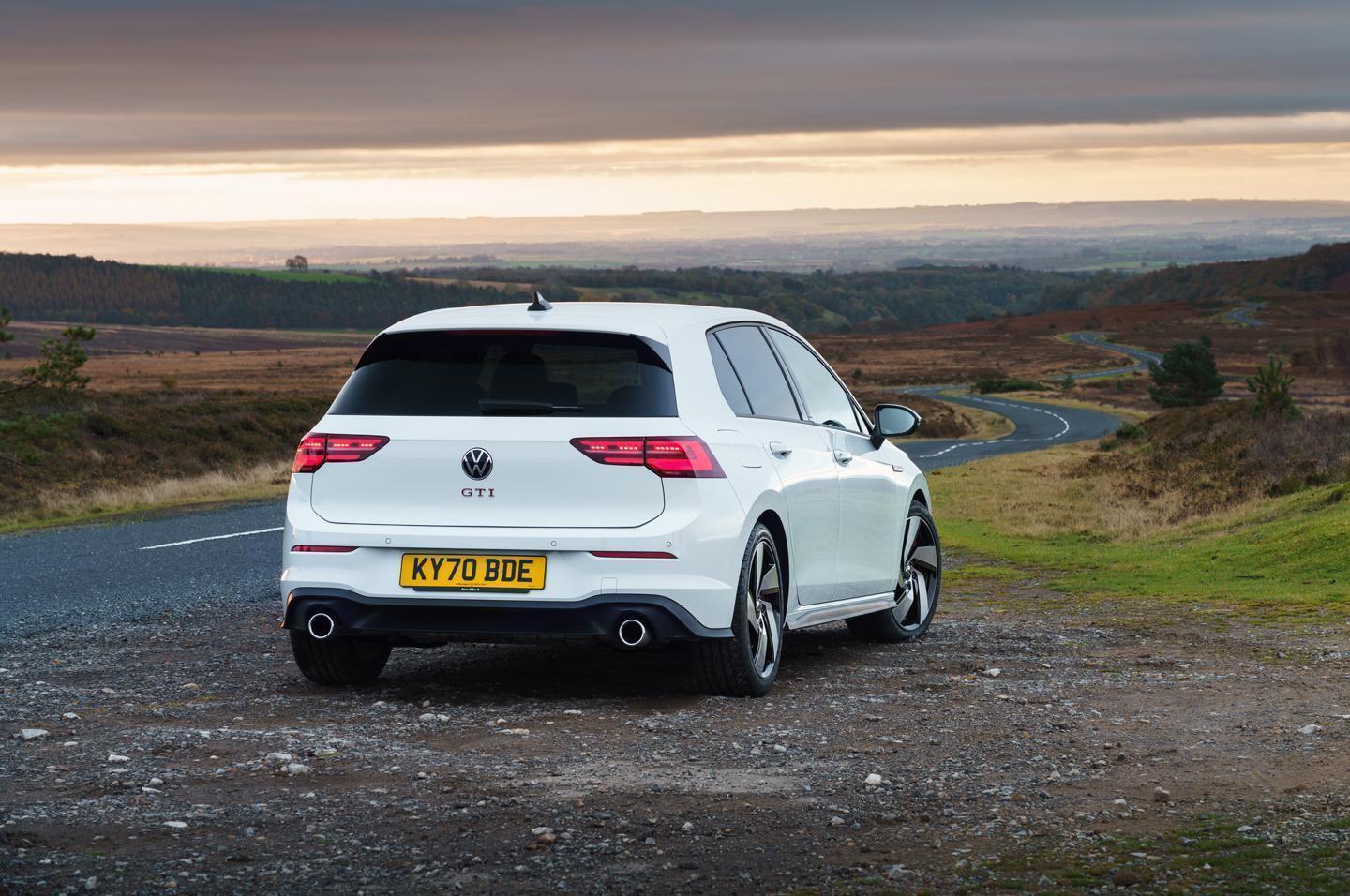
On passive dampers, the Mk8 feels more tautly sprung than I’d like. Its ride isn’t bad by any means and it’s only marginally more connected to the road surface than the Mk5, but it doesn’t take much to erode a key tenet of a car’s character. Having for so long been the most mature and sophisticated car of its type, the Golf GTI no longer leads the way in the sector as far as comfort is concerned. A Honda Civic Type R, thanks to its standard-fit adaptive dampers, actually rides more fluidly. As I said, the GTI is a more sporting car now, and as a result, a little less like a Golf GTI.
Is the trade-off worth it? Not for me, but you can’t argue with the car’s boundless stability, nor the way it clings to the road no matter how hard you fling it at a bend. Outright grip has leapt up since the Mk5’s day, although the new car’s steering isn’t anything like as textured as the old one’s, which means you don’t use every last ounce of it quite so instinctively. It leaves you with a car that’s become faster in every way, a touch less communicative and not quite as effortlessly civilised as it might be.
Most unforgivably of all, the Mk8 has lost the five’s low-set driver’s seat, meaning you neither drop so far into its embrace nor feel like a touring car driver once you’ve done so. To be fair, the Mk6 had lost it as well. It’s hard not to be impressed by the digital instruments in front of you and the widescreen display that glimmers away to the left of it, but in some ways the Mk8’s cabin feels too modern. Fiddly touch sensitive sliders to adjust the heating instead of simple rotating knobs? Some things are best left alone. Volkswagen has built a faster and sharper hot hatch with this latest version, but the Mk5 is the better Golf GTI. Having meddled so little with the basic recipe over a decade and a half, Volkswagen may have meddled too much.
SPECIFICATION | VOLKSWAGEN GOLF GTI (MK5)
Engine: 1984cc, 4-cyls, turbocharged
Transmission: 6-speed manual
Power (hp): 200@5,100rpm
Torque (lb ft): 206@1,800-5,000rpm
0-60mph: 7.2 secs
Top speed: 155mph
Weight: 1,448kg (EU)
MPG: 35
CO2: 192g/km
Price: used from £3,000 (£20,850 when new)
SPECIFICATION | VOLKSWAGEN GOLF GTI (MK8)
Engine: 1,984cc, four-cyl turbo
Transmission: 6-speed manual, front-wheel drive (7-speed DSG optional)
Power (hp): 245@5,000-6,500rpm
Torque (lb ft): 273@1,600-4,300rpm
0-62mph: 6.4 seconds (6.2 to 60)
Top speed: 146mph
Weight: 1,372kg
MPG: 37.2-38.2 (WLTP)
CO2: 168-174g/km (WLTP)
Price: £33,460 (DSG £34,960)


Very interesting read and again shows that the early to mid 2000s was a sweet spot for cars. Very capable, but still rewarding. No wonder values of Mk5 Golf GTIs have started to climb this year. Compared with other stuff like the Mk1 RS Focus and DC2 Integra Type R, the Mk5 is currently conspicuously good value!
And they seem to be reasonably reliable given the time period in which they were produced.
They also feel far quicker than the performance figures suggest!
I had the almost identical Leon FR TFSI and I remember that being a brilliant car to drive. Admittedly mine had a remap and so was about 240ish hp, but the rest of the car was standard and it handled really well.
I don't remember the steering being praised at the time, but I certainly felt it was good and it did have much more feedback than I expected. We did also have a 1.9tdi MK5 prior to that and I don't remember that being very communicative, but still a pleasant steer.
The gearshift wasn't as good as made out though, it was decent but the 5 speed box used in the basic Mk5 Golf is still one of the best shift actions I have come across and much nicer than the 6 speed oddly. I had a 1.4 as a courtesy car and had to drive it over the Lincolnshire Wolds. It was extremely underpowered, but working that gearbox and engine hard just felt fun.
I guess they must be a lot cheaper than good quality controls such as rotary - hence their adoption, but I deeply dislike them - my fear is that companies like BMW will ditch the i-drive style systems and then adjusting things while driving will become a bit of a lottery.
 - and did 50,000 thoroughly enjoyable miles in it over 3 years. In true Golf GTI style it did more things well all at once than almost all the competitors.
Classic interior as well. No wonder values are rising.
Also, the Mk5 Golf chassis was set up I believe by the chap who worked on the Focus Mk1, another reason why its a particularly sweet and well damped set up for the road.
With Mk2 prices in the stratosphere these days, the Mk5 really is THE classic Golf GTI to buy and keep right now
I had a Mk5 and to this day I miss it

The only mod ,because I found the ride on local roads to be a bit hard,was to have fitted Koni FSD shocks .This transforms the ride in terms of comfort and handling. Otherwise I love the car -probably one ,if not THE nicest I've owned, and that includes 2 Integrales, all Cosworths, V12 EType, 2 MK 1 Lotus Cortinas and Elans and Ford RS's .
'Of course it's not perfect -but what car is? But I still love it. I've never been tempted to change it for a newer model although I'm sure that technically and in many ways they will be better all round cars. I'm so thankful that I haven't been in a position where I've HAD to sell it -but that wasn't always the case with some -most -of the above !
Forgot to say....ALL the above were an ex hairdressers cars ! But I worked hard for them ,cherished them ,appreciated them and never took them for granted.
Gassing Station | General Gassing | Top of Page | What's New | My Stuff