
House Prices vs Vanguard S&S ISA
Discussion


I'm relatively happy with my current house, it’s not perfect but I’ve looked at what's available on the market, and it’s going to be hard to beat. I’m also only 1-2 years away from being mortgage-free.
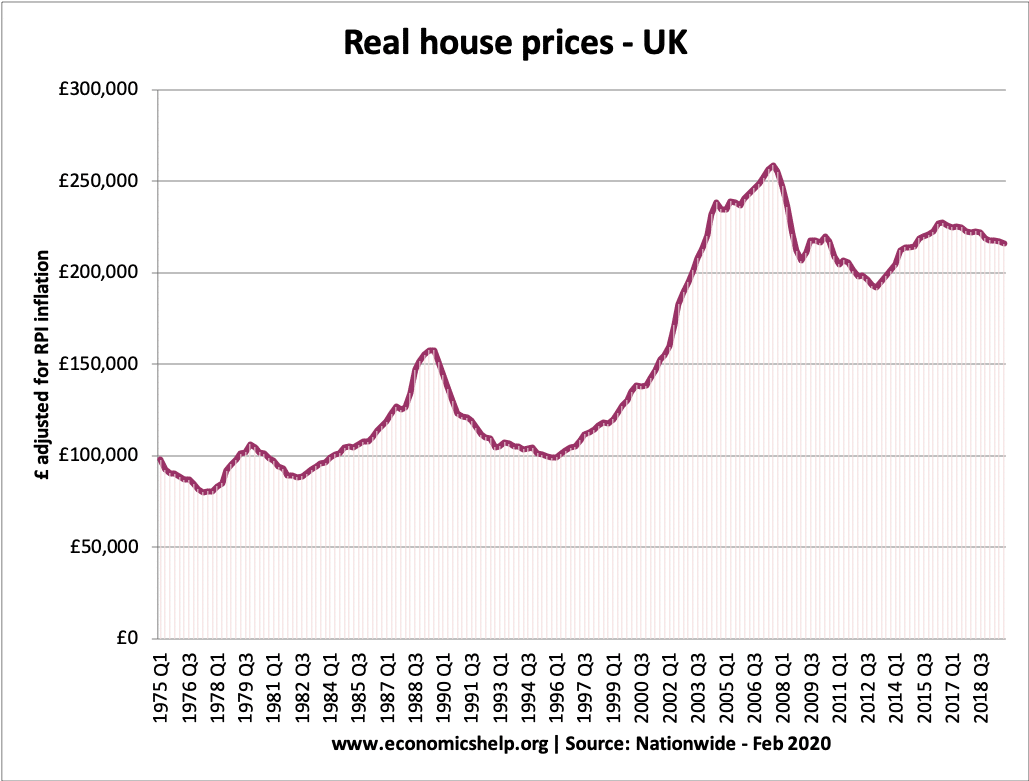
Still, I'm conscious that my net worth will suffer long term if I don’t invest in a more expensive property now, as house prices only go one way.
To mitigate against this, I pay monthly into my Vanguard LS100 any funds I would have spent on a new house (i.e., the increased mortgage repayments).
My theory is that so long as my LS100 matches or outperforms the housing market, I won’t actually be any worse off, but I retain my low living costs and financial independence.
Should I desire to move house, I can just cash in on my ISA (subject to market conditions), knowing that the 'real' cost to move hasn't got more expensive.
Is this a reasonable strategy, or am I being very naive?
Still, I'm conscious that my net worth will suffer long term if I don’t invest in a more expensive property now, as house prices only go one way.
To mitigate against this, I pay monthly into my Vanguard LS100 any funds I would have spent on a new house (i.e., the increased mortgage repayments).
My theory is that so long as my LS100 matches or outperforms the housing market, I won’t actually be any worse off, but I retain my low living costs and financial independence.
Should I desire to move house, I can just cash in on my ISA (subject to market conditions), knowing that the 'real' cost to move hasn't got more expensive.
Is this a reasonable strategy, or am I being very naive?
I think it's a sound plan but and there is always a but...as a fellow investor into the VLS 100 just bear in mind it's been a good few years for Equities in general however that could change and we could go through a few years of the market going the other way. I am not saying that as fact as just don't know what the market will do but as long as you accept the downside risk on high equities exposure and mitigate that risk accordingly then all good. Its not like we have many other viable options to be honest.
While there are no guarantees around future returns past experience suggests an S&S ISA should easily be a much better "investment" than buying a house.
The catch is you can't buy £200k of ISA all at once. But for many people the £20k p.a. ISA allowance is sufficient to cover their realistic savings pattern.
The catch is you can't buy £200k of ISA all at once. But for many people the £20k p.a. ISA allowance is sufficient to cover their realistic savings pattern.
'My theory is that so long as my LS100 matches or outperforms the housing market, I won’t actually be any worse off, but I retain my low living costs and financial independence.'
That's not correct, remember that to buy the property you are, in this case, borrowing money. Hence you are leveraged and the value of that investment is far more than the monthly amount to cover the debt. Therefore IF the property market continues to do well the house value could far exceed the value you would accrue by investing the amount you would otherwise pay to cover the borrowing.
BUT, you are at far less risk if you don't buy a bigger house with a bigger mortgage, the risk of losing your job and not being able to afford the mortgage and the risk of house prices dropping are significant and shouldn't be ignored.
There is no guarantee that property prices will continue to increase especially after the long term financial effects of COVID come home to roost.
IMO buy a bigger property if you want/need to and to live in it, once you have considered all the risks, don't buy a bigger property just as an investment, it might not work out.
That's not correct, remember that to buy the property you are, in this case, borrowing money. Hence you are leveraged and the value of that investment is far more than the monthly amount to cover the debt. Therefore IF the property market continues to do well the house value could far exceed the value you would accrue by investing the amount you would otherwise pay to cover the borrowing.
BUT, you are at far less risk if you don't buy a bigger house with a bigger mortgage, the risk of losing your job and not being able to afford the mortgage and the risk of house prices dropping are significant and shouldn't be ignored.
There is no guarantee that property prices will continue to increase especially after the long term financial effects of COVID come home to roost.
IMO buy a bigger property if you want/need to and to live in it, once you have considered all the risks, don't buy a bigger property just as an investment, it might not work out.
SkinnyPete said:
.....as house prices only go one way.
Over the very long term in the UK they have, but there have been long periods of drops.Unlike investing in shares, you can't sell portions of your property to take profits or de-risk.
Buying a single property also exposes you to very local market risks which you can't mitigate. And properties need maintenance and insurance.
rockin said:
While there are no guarantees around future returns past experience suggests an S&S ISA should easily be a much better "investment" than buying a house.
The catch is you can't buy £200k of ISA all at once. But for many people the £20k p.a. ISA allowance is sufficient to cover their realistic savings pattern.
Exactly. A 5% growth in 500k is better than 30% growth on 20k. It depends on the size. The catch is you can't buy £200k of ISA all at once. But for many people the £20k p.a. ISA allowance is sufficient to cover their realistic savings pattern.
Plus you can’t live in a share portfolio.
This is just my 2ps worth.
Property investing is as much of a gamble as stocks or funds.
However with property there are other big factors to take into consideration, I will list a few.
1. You cant quickly and easily release small portions of its value.
2. There are local issues. Maybe roads, railways, crime, schools etc call all effect the value (up and down) over time.
3. Maintenance. Houses will always need something doing. Small jobs here and there but over time, 20-30 years you are looking at larger costs like kitchens, bathrooms etc. Kitchens can easily be £10-15k at the very least, bathrooms £5k.
4. Taxes. Tax can change at any time (with any investment) but housing is quite heavily taxed. Stamp duty but also council tax. My house over a 20 year period will cost me £60,000 in council tax. Thats pretty toppy in my book.
5. To release the "gain" you are going to have to sell and move to a cheaper property. So many older people end up stuck in a large house because they are used to it and dont want to move - so your gains get locked in and you never end up actually realising that cash.
For me personally, and this is just my view houses are for living in and having a nice quality of life. The actual value is not a factor to me in regards if I buy or not.
BTL / investing in second property is a different ball game - but even more complex these days and again IMHO only really for situations when you have exhausted all other investment routes or if you happen to be able to take a position in niche market or you have access to cheap property with high yields (not many left these days).
If I had 200k sitting in cash right now I would probably invest it in a fund of funds rather than go into a single asset like a property with all the associated costs.
Property investing is as much of a gamble as stocks or funds.
However with property there are other big factors to take into consideration, I will list a few.
1. You cant quickly and easily release small portions of its value.
2. There are local issues. Maybe roads, railways, crime, schools etc call all effect the value (up and down) over time.
3. Maintenance. Houses will always need something doing. Small jobs here and there but over time, 20-30 years you are looking at larger costs like kitchens, bathrooms etc. Kitchens can easily be £10-15k at the very least, bathrooms £5k.
4. Taxes. Tax can change at any time (with any investment) but housing is quite heavily taxed. Stamp duty but also council tax. My house over a 20 year period will cost me £60,000 in council tax. Thats pretty toppy in my book.
5. To release the "gain" you are going to have to sell and move to a cheaper property. So many older people end up stuck in a large house because they are used to it and dont want to move - so your gains get locked in and you never end up actually realising that cash.
For me personally, and this is just my view houses are for living in and having a nice quality of life. The actual value is not a factor to me in regards if I buy or not.
BTL / investing in second property is a different ball game - but even more complex these days and again IMHO only really for situations when you have exhausted all other investment routes or if you happen to be able to take a position in niche market or you have access to cheap property with high yields (not many left these days).
If I had 200k sitting in cash right now I would probably invest it in a fund of funds rather than go into a single asset like a property with all the associated costs.
red_slr said:
This is just my 2ps worth.
Property investing is as much of a gamble as stocks or funds.
However with property there are other big factors to take into consideration, I will list a few.
1. You cant quickly and easily release small portions of its value.
2. There are local issues. Maybe roads, railways, crime, schools etc call all effect the value (up and down) over time.
3. Maintenance. Houses will always need something doing. Small jobs here and there but over time, 20-30 years you are looking at larger costs like kitchens, bathrooms etc. Kitchens can easily be £10-15k at the very least, bathrooms £5k.
4. Taxes. Tax can change at any time (with any investment) but housing is quite heavily taxed. Stamp duty but also council tax. My house over a 20 year period will cost me £60,000 in council tax. Thats pretty toppy in my book.
5. To release the "gain" you are going to have to sell and move to a cheaper property. So many older people end up stuck in a large house because they are used to it and dont want to move - so your gains get locked in and you never end up actually realising that cash.
For me personally, and this is just my view houses are for living in and having a nice quality of life. The actual value is not a factor to me in regards if I buy or not.
BTL / investing in second property is a different ball game - but even more complex these days and again IMHO only really for situations when you have exhausted all other investment routes or if you happen to be able to take a position in niche market or you have access to cheap property with high yields (not many left these days).
If I had 200k sitting in cash right now I would probably invest it in a fund of funds rather than go into a single asset like a property with all the associated costs.
A really helpful post, thank you. Property investing is as much of a gamble as stocks or funds.
However with property there are other big factors to take into consideration, I will list a few.
1. You cant quickly and easily release small portions of its value.
2. There are local issues. Maybe roads, railways, crime, schools etc call all effect the value (up and down) over time.
3. Maintenance. Houses will always need something doing. Small jobs here and there but over time, 20-30 years you are looking at larger costs like kitchens, bathrooms etc. Kitchens can easily be £10-15k at the very least, bathrooms £5k.
4. Taxes. Tax can change at any time (with any investment) but housing is quite heavily taxed. Stamp duty but also council tax. My house over a 20 year period will cost me £60,000 in council tax. Thats pretty toppy in my book.
5. To release the "gain" you are going to have to sell and move to a cheaper property. So many older people end up stuck in a large house because they are used to it and dont want to move - so your gains get locked in and you never end up actually realising that cash.
For me personally, and this is just my view houses are for living in and having a nice quality of life. The actual value is not a factor to me in regards if I buy or not.
BTL / investing in second property is a different ball game - but even more complex these days and again IMHO only really for situations when you have exhausted all other investment routes or if you happen to be able to take a position in niche market or you have access to cheap property with high yields (not many left these days).
If I had 200k sitting in cash right now I would probably invest it in a fund of funds rather than go into a single asset like a property with all the associated costs.
I read the thread with interest as my position is a bit like the OPs. In some ways i'm envious of people with more expensive properties as it seems like a very effective way to invest; massive cheap leverage and virtually no tax implications (save council tax, as you mentioned). I also have a slight FOMO of thinking that if you don't make the leap when you can what if you miss out and can't later.
Saying that, much as per your thoughts, I think I will stay put and let my money support my life choices rather than the other way around. Being stuck in an expensive house, during a recession, needing expensive repairs and watching the house price go down is not a wholly unrealistic, and pretty miserable prospect.
Rob_F said:
red_slr said:
This is just my 2ps worth.
5. To release the "gain" you are going to have to sell and move to a cheaper property. So many older people end up stuck in a large house because they are used to it and dont want to move - so your gains get locked in and you never end up actually realising that cash.
In some ways i'm envious of people with more expensive properties as it seems like a very effective way to invest; massive cheap leverage and virtually no tax implications (save council tax, as you mentioned). 5. To release the "gain" you are going to have to sell and move to a cheaper property. So many older people end up stuck in a large house because they are used to it and dont want to move - so your gains get locked in and you never end up actually realising that cash.
Leveraging / gearing is the thing that is unique to property.
Instead of owning 1 £200k house, take out 75% ltv mortgages and buy 4nr £200k houses
Property marked goes up 50% and (excluding interest, etc) you've actually made 200% profit (£400k profit out of £200k invested).
Be aware however that the opposite is also true if the market dips 50%.
The other thing is that you can rent out your property and make a yield on it as well as a potential capital gain.
There is no "right answer". Research all options, consider your tolerance to risk, make a decision. Just sticking your money in a bank is pretty likely to be one of the worst decisions btw, and yet that's what the majority of people seem to do.
Instead of owning 1 £200k house, take out 75% ltv mortgages and buy 4nr £200k houses
Property marked goes up 50% and (excluding interest, etc) you've actually made 200% profit (£400k profit out of £200k invested).
Be aware however that the opposite is also true if the market dips 50%.
The other thing is that you can rent out your property and make a yield on it as well as a potential capital gain.
There is no "right answer". Research all options, consider your tolerance to risk, make a decision. Just sticking your money in a bank is pretty likely to be one of the worst decisions btw, and yet that's what the majority of people seem to do.
Housing to live in isnt an "investment" per say, in the same way as an S+S ISA is (IMO). An investment is something you buy to use later, be that a pension, general savings or whatever. You buy a house to live in. As the poster above says, how many people get to 65 and sell their properties to release some cash? Very few I expect - hence the rise of "equity release" schemes, AKA taking out a mortgage just before you die so you can keep living in the same property and pay a nice return to some investment company and deprive your kids of their inheritance! First and foremost you should buy a house you want to live in, irrespective of the price and anticipated return.
BTL housing is a good way to pay lots of tax to HMRC - extra stamp duty when you buy it, income tax on all the rent while you own it, capital gains tax when you sell it. It does make a good diversification from equities, but a "get rich quick" scheme it is not. Really the benefits are only when you retire and any mortgage is paid off, as it provides a nice income stream indefinitely, and you can leverage your investment initially.
Stocks in an ISA are the second most tax efficient way to save, second only to pensions. They are also liquid, pay a return, and you can generate good returns if you are active rather than passive.
BTL housing is a good way to pay lots of tax to HMRC - extra stamp duty when you buy it, income tax on all the rent while you own it, capital gains tax when you sell it. It does make a good diversification from equities, but a "get rich quick" scheme it is not. Really the benefits are only when you retire and any mortgage is paid off, as it provides a nice income stream indefinitely, and you can leverage your investment initially.
Stocks in an ISA are the second most tax efficient way to save, second only to pensions. They are also liquid, pay a return, and you can generate good returns if you are active rather than passive.
Groat said:
Condi said:
BTL housing is a good way to pay lots of tax to HMRC
There's something everyone who pays "lots of tax to HMRC" have in common. lots of profits

You pay additional stamp duty up front before you've even had any rental income at all!
AFAIK there is no other business whereby you're paying taxes before even having any turnover? It can't even be offset against costs later on...
Condi said:
I beg to differ...
You pay additional stamp duty up front before you've even had any rental income at all!
AFAIK there is no other business whereby you're paying taxes before even having any turnover? It can't even be offset against costs later on...
Well anything you buy for (almost) any business you're starting from a pencil to a fancy IT system includes VAT doesn't it? Before you've had any income at all.You pay additional stamp duty up front before you've even had any rental income at all!
AFAIK there is no other business whereby you're paying taxes before even having any turnover? It can't even be offset against costs later on...
I don't recall ever paying VAT on a resi property purchase.
Big taxes result from big profits, whether you accept it, want to argue about it, or don't believe it.
As my old accountant used to say "don't whine about your tax. I'll pay it for you ( if you give me your profits )"
VAT can be reclaimed, can stamp duty be reclaimed?
And even if you are making profits, if all those profits are ploughed back into a mortgage then it doesn't feel like you're earning much.
You could very easily end up in a situation as an individual whereby you're paying 40% income tax on the rent, paying off a repayment mortgage, and by the time you've added in a few repairs have negative cash flow for the year.
Revenue is vanity, profit is sanity but cash is king. As my boss used to say, "you can make a loss for years, but you can only run out of cash once".
And even if you are making profits, if all those profits are ploughed back into a mortgage then it doesn't feel like you're earning much.
You could very easily end up in a situation as an individual whereby you're paying 40% income tax on the rent, paying off a repayment mortgage, and by the time you've added in a few repairs have negative cash flow for the year.
Revenue is vanity, profit is sanity but cash is king. As my boss used to say, "you can make a loss for years, but you can only run out of cash once".
Condi said:
VAT can be reclaimed, can stamp duty be reclaimed?
And even if you are making profits, if all those profits are ploughed back into a mortgage then it doesn't feel like you're earning much.
You could very easily end up in a situation as an individual whereby you're paying 40% income tax on the rent, paying off a repayment mortgage, and by the time you've added in a few repairs have negative cash flow for the year.
Revenue is vanity, profit is sanity but cash is king. As my boss used to say, "you can make a loss for years, but you can only run out of cash once".
Actually VAT isn't reclaimed in btl businesses because it's rare for them to register for VAT.And even if you are making profits, if all those profits are ploughed back into a mortgage then it doesn't feel like you're earning much.
You could very easily end up in a situation as an individual whereby you're paying 40% income tax on the rent, paying off a repayment mortgage, and by the time you've added in a few repairs have negative cash flow for the year.
Revenue is vanity, profit is sanity but cash is king. As my boss used to say, "you can make a loss for years, but you can only run out of cash once".
What's "a mortgage"? Oh yeah! I remember them. That was back in the day when it made sense to borrow to buy a btl.
Business people of 57 varieties make plans which result in 'negative cash flow'. Most of them aren't in btl.
What is this "cash" thing? I thought that had been made illegal?
Gassing Station | Finance | Top of Page | What's New | My Stuff