
Dual control TP-40N Warhawk coming to Biggin Hill from USA
Discussion


The Collings Foundation TP-40N Warhawk is coming to the UK to join the 3 x 2-seater Spitfires and the 2-seat Hurricane at Biggin Hill. Will make an interesting addition to the warbird ride program that Biggin Hill offers.
I wonder if this is a leasing agreement with Collings for a set period of time, or the start of a sell off of their fleet following their situation after the report on the B-17G crash in 2019?
I wonder if this is a leasing agreement with Collings for a set period of time, or the start of a sell off of their fleet following their situation after the report on the B-17G crash in 2019?

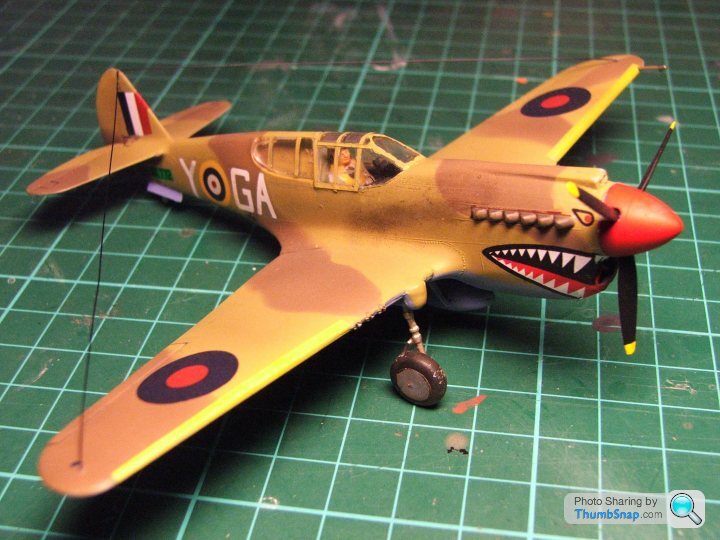

Eric Mc said:
It's a bit of an old clunker of a kit. I originally built one when I was about ten.
In more recent years, Airfix released a newer kit - which is of the earlier version of the P-40.

I have that Tomahawk kit - the first Airfix kit I've bought in over 20 years because I was getting bored in lockdown and I've always had a soft spot for the P-40, especially the earlier H81/Tomahawk versions. In more recent years, Airfix released a newer kit - which is of the earlier version of the P-40.
A very underrated aircraft, whose reputation suffered from a lack of stand-out qualities when it was 'just' adequate in most areas, and for bearing the brunt of things around the world when the Allies were generally not doing well in the grand scheme of things. But by all accounts it was a tough, reliable workhorse which could rack up impressive results when flown properly with a tactical advantage.
LotusOmega375D said:
Warhawk, Tomahawk, Kittyhawk: what’s the difference?
Warhawk was the name given by the US Army to all their versions of the P-40.The early versions used by British & Commonwealth air forces (P-40A, B & C) were called Tomahawk by 'us', and we then changed the name to Kittyhawk for the subsequent versions (P-40D, E & F etc)
LotusOmega375D said:
Warhawk, Tomahawk, Kittyhawk: what’s the difference?
Curtiss called all its single-seat fighter aircraft 'Hawk', going back to the early 1920s. The P-40 story actually starts in 1935 with the radial-engined Model 75 Hawk, designated P-36 by the USAAC.

Curtiss Model 75 Hawk/P-36/H75/Mohawk
Then in 1938 Curtiss stuck the Allison V12 engine on the front of the P-36, creating the Model 81 Hawk, called the P-40 by the USAAC. As the P-40 began entering American squadron service in 1940, with Asia and Europe already embroiled in conflict, the USAAC opted to name the type as the Warhawk for its own service.
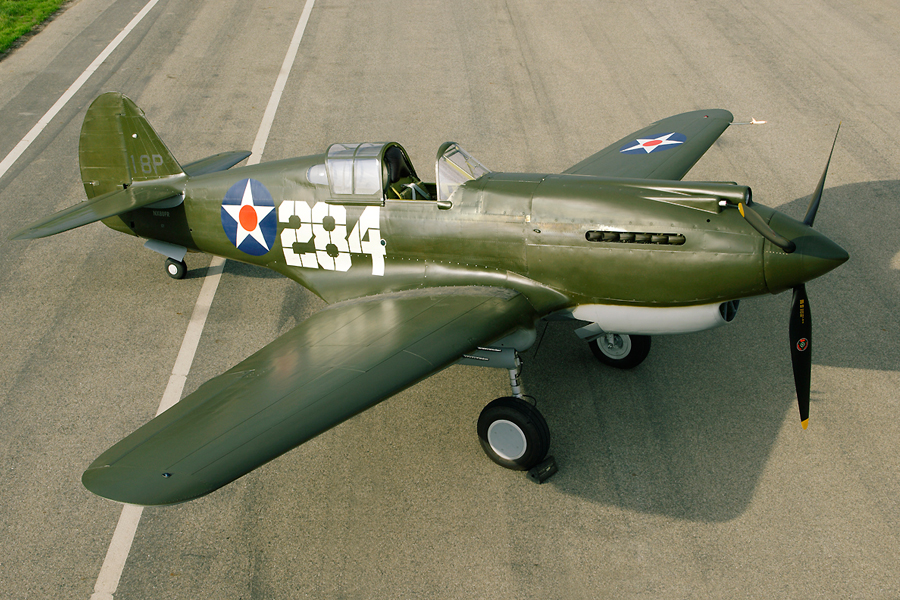
Curtiss Model 81 Hawk/P-40/H81/Tomahawk
When the Anglo-French Purchasing Comission bulk-bought hundreds of P-40s, the French called it the H81 (they had already bought lots of P-36s and called it the H75) and the British (in keeping with our tradition of giving aircraft names rather than model numbers) called it the Tomahawk as a nod to both the Curtiss naming tradition and the aircraft's American origins. For the same reason, the RAF designated the H75s that it acquired/inherited after the fall of France as the Mohawk.
The Hawk 81/P-40/Tomahawk's engine had epicyclic propeller drive gear, which produced a very aerodynamic 'bullet' nose but couldn't handle more than 1000 horsepower without encountering serious rates of in-flight failure. Also, as a design originating in the early 1930s, the P-40 was already becoming outclassed by the latest versions of other fighters such as the Messerschmitt Bf109F, Spitfire MkII and Ki-43. With a fuselage originally designed for a radial engine it was relatively bulky aircraft when compared to other V12-engined fighters and its famous strength and durability came at the cost of excessive weight which, coupled to the Allison engine's somewhat lacklustre output, gave the P-40 a seriously deficient climb rate and poor high-altitude performance for operations in Western Europe.
In the autumn of 1939 the USAAC had already asked Curtiss for a successor to the P-40, custom-designed around the Allison engine. The result was what Curtiss called the Model 86 Hawk and the Army called the XP-46. It was smaller, narrower and lighter than the P-40 and had a more powerful Allison engine (1150 horsepower) with much stronger spur-type reduction gear. It also boasted supposedly more advanced aerodynamics and greatly improved armament (ten guns against the P-40's six). Initial flight tests were very positive, and the RAF placed a provisional order for the type and designated it the Kittyhawk, continuing its established theme of naming Curtiss fighters.

Curtiss Model 86 Hawk/XP-46 prototype
Unfortunately, as the USAAC received reports about air combat over Europe over Poland, France and Britain it became clear that a fighter aircraft without self-sealing fuel tanks, a bullet-proof windscreen and armour protection for the pilot and ammunition was a death trap, so they required that these items be fitted to the XP-46. That pushed the weight up considerably which meant that the XP-46 now had a worse climb rate than the current P-40 (the P-40C/Tomahawk IIB) and barely any improvement in top speed, agility or altitude performance.
Rather than disrupt P-40 production for an aircraft that offered no real improvement, the USAAC asked Curtiss to put the new engine in the front of the P-40. Because of the different reduction gear the powerplant was now several inches shorter and the thrust axis was several inches higher than the older version so the entire front end of the aircraft had to be redesigned. The new powerplant also needed large radiators and oil coolers, so the air intake in the 'chin' had to be deeper. And, incorporating some design features from the XP-46, the cockpit canopy was reduced in height, with the windscreen being raked back and the rear fuselage top line lowered accordingly. With more power, less drag and slightly lower weight, the new Model 87 Hawk was a useful improvement over the Model 81/Tomahawk. The USAAC took it into service as the P-40D (quickly replaced by the much more numerous P-40E) and the RAF adopted it as the Kittyhawk, using the name they had intended for the XP-46.
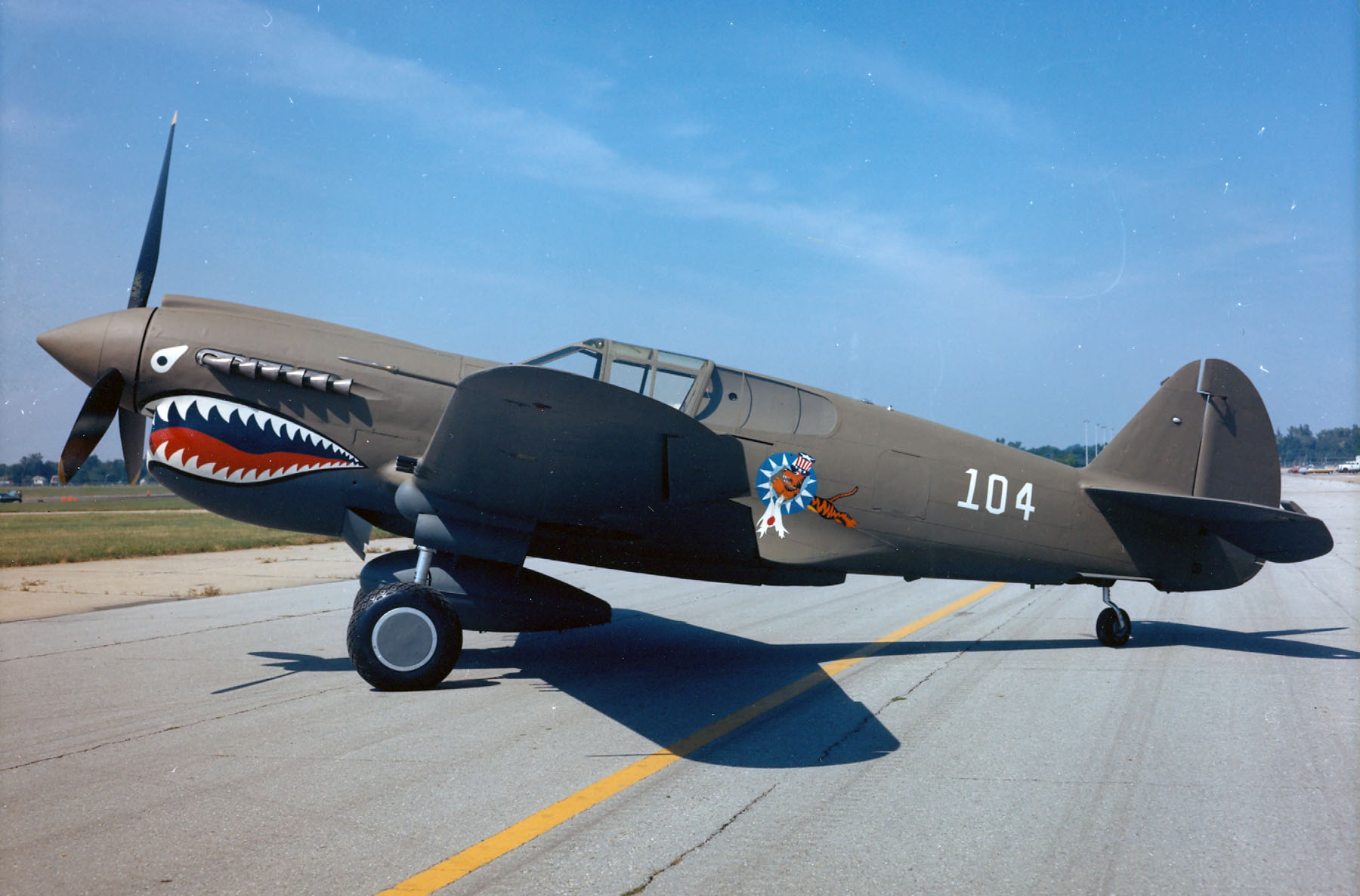
Curtiss Model 87/P-40E/Kittyhawk
Later they did a couple of models with Packard-built Merlin engines in the Model 87 airframe but they were always just treated as variants of the P-40 (for the Americans) or Kittyhawk (for the British and Commonwealth).
Gassing Station | Boats, Planes & Trains | Top of Page | What's New | My Stuff