
Carrera GT - A sunny day's drive
Discussion


The last time I posted about my Carrera GT it was to share the photos from its 12 year engine-out service.
This time I thought I'd write about driving it!
Today was a perfect day for a drive. Beautifully sunny, but not too hot so I could drive with the roof down without turning into a lobster.
It's perhaps 6 months since I have had a proper drive in the car. Lockdowns and winter have, as for us all, intervened.
I put on my pixie boots (as I call them - my very worn Stand21 racing boots, which I wore all the way back in the mid 2000s when racing in the VLN). I know it looks a bit naff to wear racing boots other than in the paddock, but I don't care - and they make a huge difference in being able to really feel and operate the pedals with finesse.
I check tyre pressures, and fluid levels. And then I start slowly, as even though I've done 22,000 miles in the car, it always take a while to dial into its responses; to get used to the super light flywheel when changing gear; and to warm the gearbox through (the engine warms up very quickly, thanks to water / oil heat exchangers).
And I always remember that the car has no drivers aids, beyond ABS and a prehistoric traction control system - if you see the TC light it is usually to tell you have just had a moment!
So what do I love about driving it?
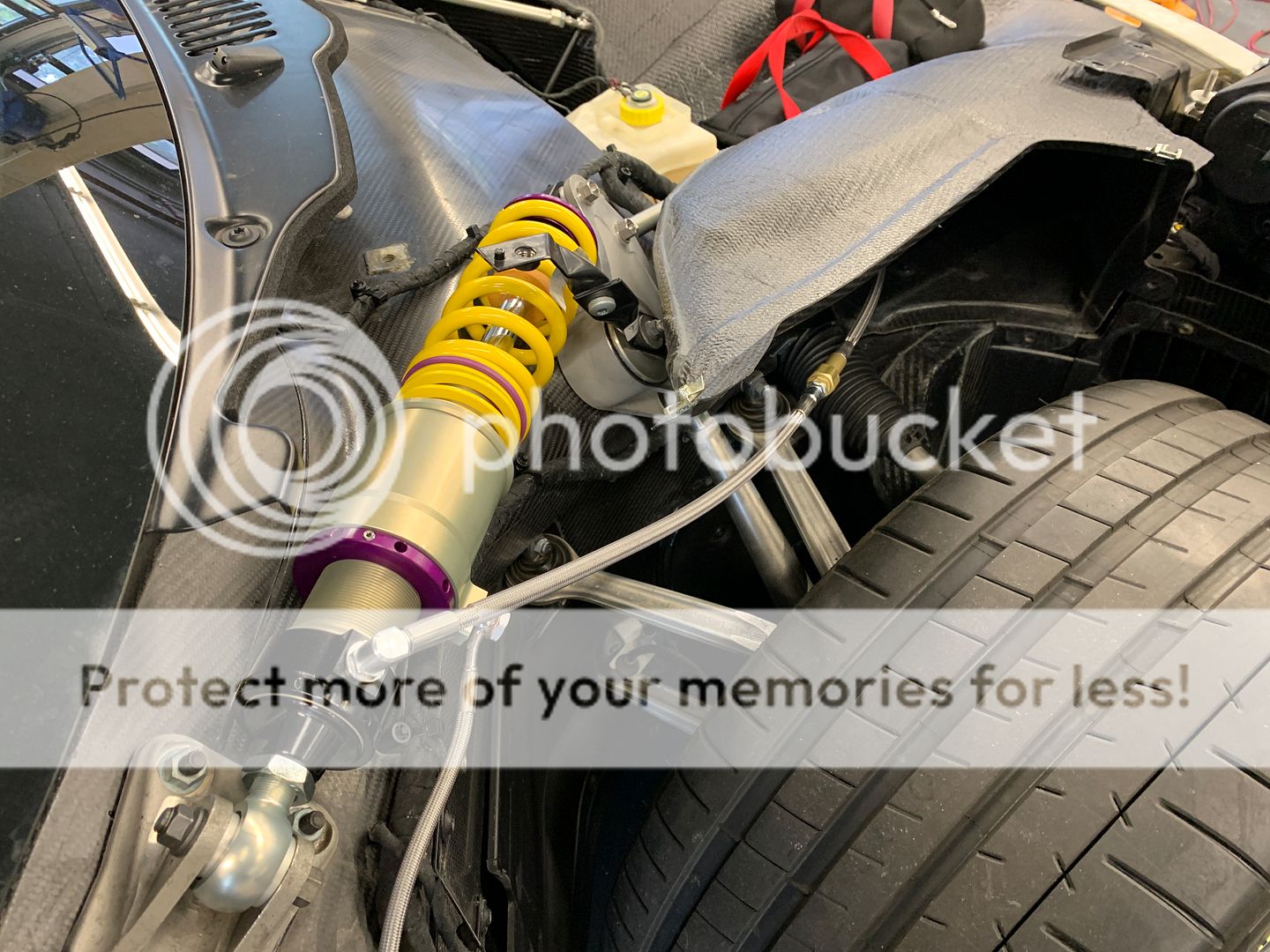
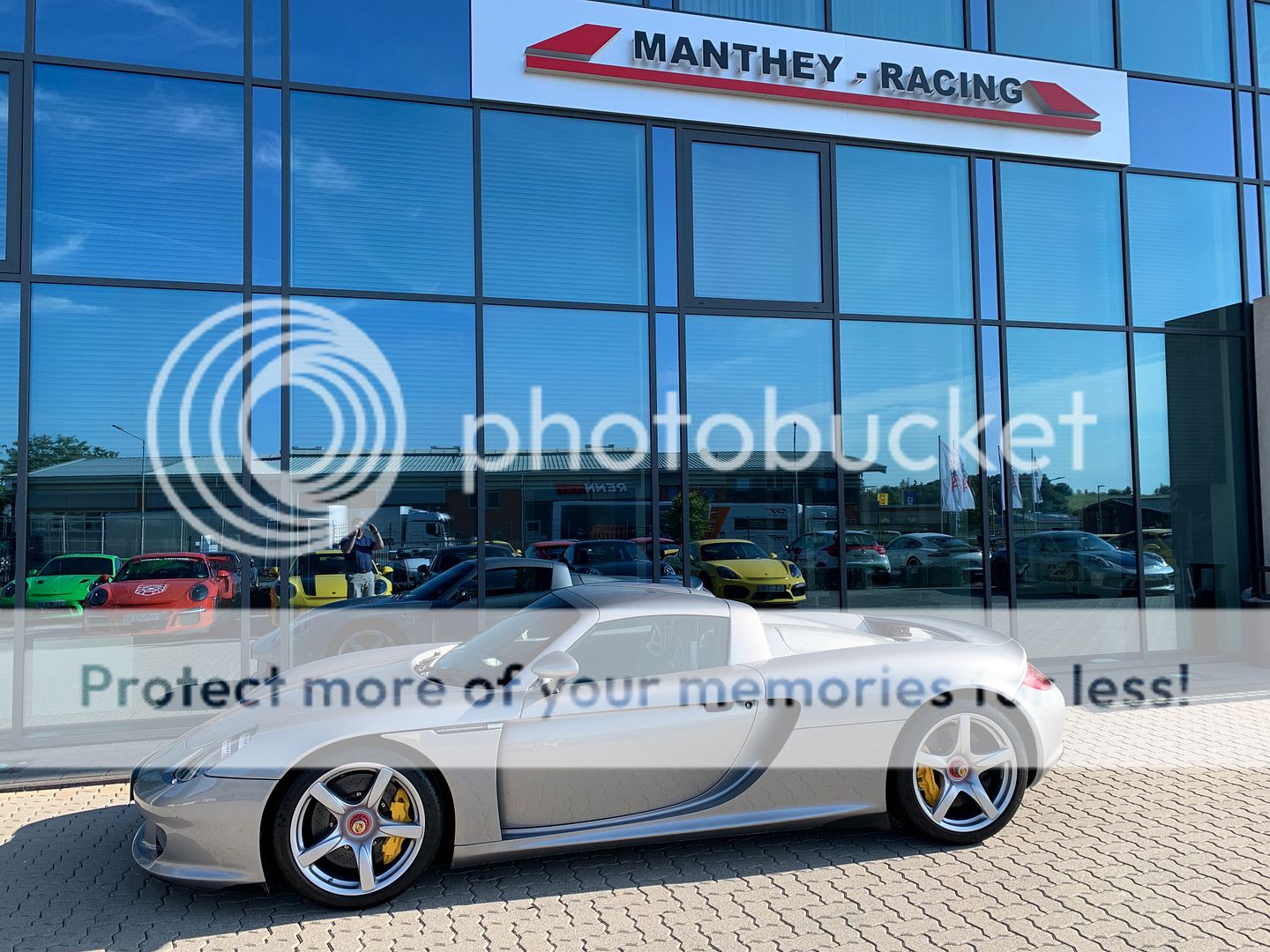
First and foremost it's the way it steers and handles. It's so extraordinarily faithful to the helm, without any rear wheel steer, electronic differentials or brake steer. The rack is not too fast, but it responds immediately. And with its new Manthey Racing KW Variant 3 suspension and set up, there is zero slack. I am conscious of the 43:57 weight distribution; one has to be fraction patient to let rear of the car rotate before applying the throttle - too soon and the car edges a fraction wide (rather like a 911). I love that you have to really think about your inputs.
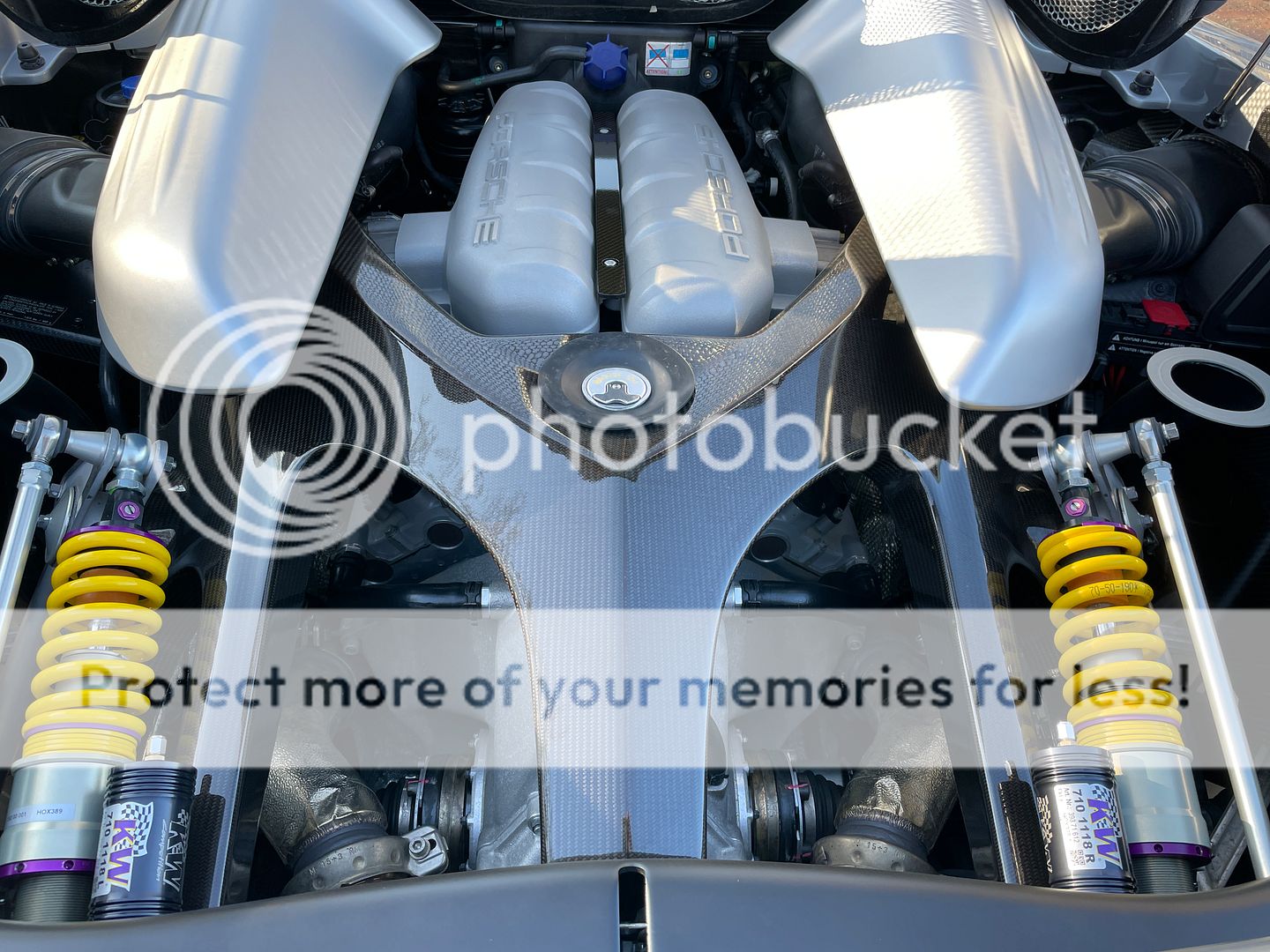
Second, the sensational engine. I've watched a few YT videos recently about the CGT, and commentators compare its performance figures to today's supercars. They are missing the point. The sheer range of the CGT's engine is what makes it so special, and how it changes character through the rev range. There is good low down torque from idle, then an even meatier mid range between 3,500 and 6,000rpm, and then it just goes ballistic for the final 2,000 rpm. There are no turbos, no engine maps to vary the torque in each gear - just awesome character and ballistic propulsion! And every little tunnel I find necessitates a drop down to 2nd or 3rd to hear the Helmholtz resonance at 5,000 rpm, when the car sounds most like a V10 F1 car.
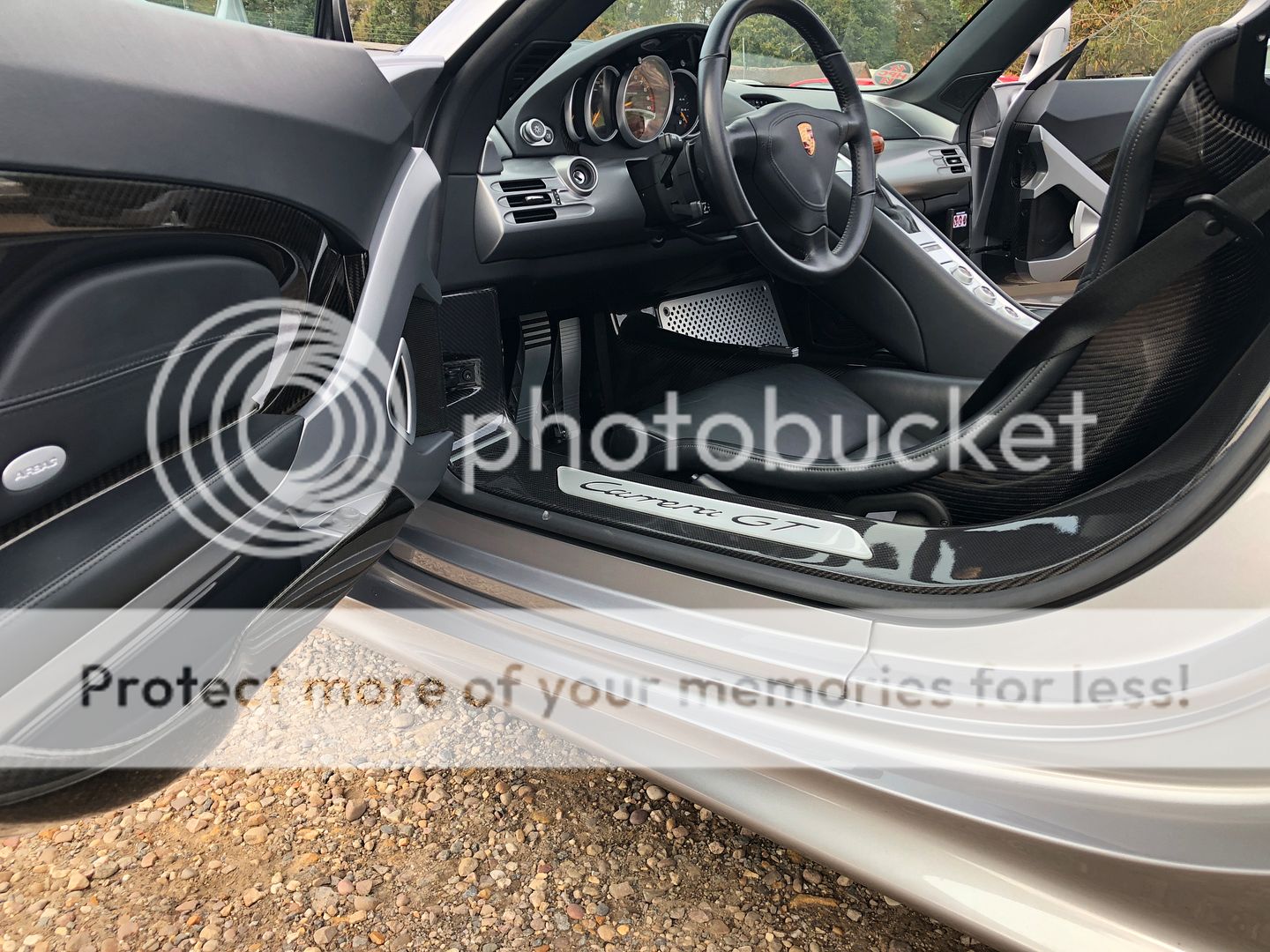
And third, the gearbox and clutch. The car likes to score your every gear change. The clutch is super smooth, but there is almost no flywheel, and so matching revs requires some skill. When, very occasionally, the car scores me a "10" for a gearchange, I smile inwardly. It is so deeply satisfying.
The CGT is still, by a fair margin, the best driver's car I've had the pleasure to pilot. I doubt it will ever be bettered, and I know I am extremely lucky to be able to drive one. It's just perfect.
This time I thought I'd write about driving it!
Today was a perfect day for a drive. Beautifully sunny, but not too hot so I could drive with the roof down without turning into a lobster.
It's perhaps 6 months since I have had a proper drive in the car. Lockdowns and winter have, as for us all, intervened.
I put on my pixie boots (as I call them - my very worn Stand21 racing boots, which I wore all the way back in the mid 2000s when racing in the VLN). I know it looks a bit naff to wear racing boots other than in the paddock, but I don't care - and they make a huge difference in being able to really feel and operate the pedals with finesse.
I check tyre pressures, and fluid levels. And then I start slowly, as even though I've done 22,000 miles in the car, it always take a while to dial into its responses; to get used to the super light flywheel when changing gear; and to warm the gearbox through (the engine warms up very quickly, thanks to water / oil heat exchangers).
And I always remember that the car has no drivers aids, beyond ABS and a prehistoric traction control system - if you see the TC light it is usually to tell you have just had a moment!
So what do I love about driving it?
First and foremost it's the way it steers and handles. It's so extraordinarily faithful to the helm, without any rear wheel steer, electronic differentials or brake steer. The rack is not too fast, but it responds immediately. And with its new Manthey Racing KW Variant 3 suspension and set up, there is zero slack. I am conscious of the 43:57 weight distribution; one has to be fraction patient to let rear of the car rotate before applying the throttle - too soon and the car edges a fraction wide (rather like a 911). I love that you have to really think about your inputs.
Second, the sensational engine. I've watched a few YT videos recently about the CGT, and commentators compare its performance figures to today's supercars. They are missing the point. The sheer range of the CGT's engine is what makes it so special, and how it changes character through the rev range. There is good low down torque from idle, then an even meatier mid range between 3,500 and 6,000rpm, and then it just goes ballistic for the final 2,000 rpm. There are no turbos, no engine maps to vary the torque in each gear - just awesome character and ballistic propulsion! And every little tunnel I find necessitates a drop down to 2nd or 3rd to hear the Helmholtz resonance at 5,000 rpm, when the car sounds most like a V10 F1 car.
And third, the gearbox and clutch. The car likes to score your every gear change. The clutch is super smooth, but there is almost no flywheel, and so matching revs requires some skill. When, very occasionally, the car scores me a "10" for a gearchange, I smile inwardly. It is so deeply satisfying.
The CGT is still, by a fair margin, the best driver's car I've had the pleasure to pilot. I doubt it will ever be bettered, and I know I am extremely lucky to be able to drive one. It's just perfect.

If you could expand a little more on what difference the change of suspension to the KWs has done, would be most appreciated although I suppose it would only really be obvious on track I suppose. Are Manthey running the same spring rate as well on it or is it really just a damper change and the rest remains the same (ride height/springs/any number of other things that goes into suspension!).
thanks
thanks

isaldiri said:
If you could expand a little more on what difference the change of suspension to the KWs has done, would be most appreciated although I suppose it would only really be obvious on track I suppose. Are Manthey running the same spring rate as well on it or is it really just a damper change and the rest remains the same (ride height/springs/any number of other things that goes into suspension!).
thanks
Hithanks
I don't know the change in spring rate over standard I am afraid, but I believe the rates are higher, and this does show in the driving dynamics. There is noticeably less body roll, for example.
Ride height is lowered c. 10mm (but has not caused me any problems on UK B-roads), and of course I did have the lift kit fitted at the same time (which is a lovely installation, raising all 4 wheels - more at the front).
Manthey also applied their geo settings, which noticeably improves turn in, without being too aggressive.
Overall, the car is significantly more responsive to initial turn in; settles mid corner better (with the OEM set up I'd notice a short delay whilst the car "took a set" in the corner - that's gone with the KWs); and has much better high speed body control.
Having driven my car at the Nurburgring, it is just a bit too soft at very high speeds - something Marc Bessing commented upon in his fantastic lap in the car. (Time index 9.45 on the video of his lap. The car did a 7.28. With modern Cup 2 tyres, and the KW set up I would expect the car could do sub 7.10. Amazing for a 16 year old car!)
I would say all of this benefits road performance, as much as on track.
Hope that helps.
So I've been waiting for a while to have a proper go in mine too and that opportunity came last week.....
I'll start at the end. I honestly think that the Carrera GT is a contender for "finest sports car of all time." Yes, I know I'll be accused of "talking up my book" (which is fine) but I had all these opinions BEFORE I bought the car, and when I first drove it back on 2007/2008.
What immediately strikes you about the Carrera GT is the level of responsiveness of every control input coupled with the torrent of (unfiltered) information coming back at you. If you 'think it,' the car does it. nThat in turn, makes for a feeling of absolute control - the machine is responding to everything you're doing, no matter the tiniest input, and of course that then makes for a car that is incredibly involving to drive.
What this responsiveness also does, is allow you to drive with great precision (if you're adequately attuned). So as you get more seat time, and finally find that perfect road, even without trying, you find yourself sinking deeper and deeper into the driving experience.
It's rare to find that perfect road today, but when you do, you find yourself minutely feeling how the throttle is changing the attitude of the rear axle as you slingshot out of the corners and can genuinely begin leaning on the front as the steering weight and loads as you go into them. And you don't need to be a hero to do it. The car is giving you all that info and is sensitive enough to make your inputs count and the systems are mechanical. There's no weird e-diff juggling power that you need to second guess.
It's YOU and it really is unbelievable.
And as you launch out of that corner, you get to experience one of the finest engines ever fitted to a road car. There's so much urge from just 3000 rpm, and it's absolutely flying as you get to 6000rpm, and then beyond that to the redline at 8200rpm, it just goes truly beserk. And while it's blasting up the road, you've got the roof panels off, and it's screaming away making this near-unique howling motorsport scream that only the LFA has ever got close to....
Get somewhere near the redline, hit the clutch, and be FAST with the gearlever, otherwise, because of that super light/super small clutch, the revs will fall away so quickly, re-engaging the drivetrain will cause a jolt. But do it right, and you rifle through the gears in a never ending wave of performance as the next ratio sets up for the next run.
Roof off, on the road, it feels a lot faster than the 612hp would imply. Above 6000rpm, it feels totally nuts. I think, that's for two reasons, i) i've seen 640hp and - 650hp on the dyno (but who knows from car to car and dyno to dyno) and ii) the car weighs circa 1375kg.
The cars features don't add to each other - bringing them together gives an almost non-linear result. They kind of multiply. So the responsiveness is a result of everything - the weight, the engine, the drivetrain, the chassis construction, the steering.
The involvement is because of that response AND the car/driver interface that Porsche got so right. The throttle isn't mechanical (which is welcome because mechanical throttle linkages etc date other superb cars like say the Ferrari F50), the steering isn't electric or overly assisted or even unassisted and even when warm, the brakes need a solid shove, but the clutch is super smooth and well weighted. Again add it all together and you realise it's been done that way to give the driver the best chance of maximising the driving performance of the car whilst ensuring that it really is the driver doing all the work. It has the right level of tech.....
I've not driven a Mclaren F1, so the closest thing I can think of that comes close is the Ferrari F50. The difference is, in the years after F50 going to Carrera GT, carefully deployed automotive tech could improve the driving experience and the F50 would have benefited from some of those things. (like Electric throttle, stronger brakes, a touch more torque). However, after Carrera GT, the tech just pushed the driver out. That's why the Carrera GT is at the very peak of a certain automotive philosophy.
Go back to say an F40 and the tech is a little too old for everything to work harmoniously. The brakes and suspension are bordering on dangerous frankly.
Drive an Enzo, and after you've gotten over the geriatric gearbox (and strangely awful extremely loud engine/exhaust note), it's just nothing like as involving to drive, unless you're parking outside The Lanesborough on Friday. It's fun, don't get me wrong, but.......... not really much more to say.... which is a pity.
It's worth point out the quality of manufacture of the Porsche is something else - you feel like it's a quality car. Mine is 15 years old and NOTHING is rattling or not working and it still looks fantastic - even in boring GT Silver which I never wanted, but realise is a great colour for the car.
Harry Metcalf's review on YT was basically spot on.
Yes that responsiveness and involvement and performance comes at a price, you can't be indelicate otherwise you'll overdrive the car or crash it. Yes the ground clearance is a PITA - I'd love the KW Suspension Lift and Dampers (probably not a good enough driver to notice the benefits of the latter). Yes the handbrake is wedged into an area that has no space so scratches my $5 fake Rolex. The steering wheel is too big and the stalks (are the only part of the car that) feel cheap.
Apart from that I think, objectively, people might come to see this as the next best thing after a Mclaren F1 and purely from a driving point of view, it may even be a better, more complete ultra-hyper-mega car experience.
I'll start at the end. I honestly think that the Carrera GT is a contender for "finest sports car of all time." Yes, I know I'll be accused of "talking up my book" (which is fine) but I had all these opinions BEFORE I bought the car, and when I first drove it back on 2007/2008.
What immediately strikes you about the Carrera GT is the level of responsiveness of every control input coupled with the torrent of (unfiltered) information coming back at you. If you 'think it,' the car does it. nThat in turn, makes for a feeling of absolute control - the machine is responding to everything you're doing, no matter the tiniest input, and of course that then makes for a car that is incredibly involving to drive.
What this responsiveness also does, is allow you to drive with great precision (if you're adequately attuned). So as you get more seat time, and finally find that perfect road, even without trying, you find yourself sinking deeper and deeper into the driving experience.
It's rare to find that perfect road today, but when you do, you find yourself minutely feeling how the throttle is changing the attitude of the rear axle as you slingshot out of the corners and can genuinely begin leaning on the front as the steering weight and loads as you go into them. And you don't need to be a hero to do it. The car is giving you all that info and is sensitive enough to make your inputs count and the systems are mechanical. There's no weird e-diff juggling power that you need to second guess.
It's YOU and it really is unbelievable.
And as you launch out of that corner, you get to experience one of the finest engines ever fitted to a road car. There's so much urge from just 3000 rpm, and it's absolutely flying as you get to 6000rpm, and then beyond that to the redline at 8200rpm, it just goes truly beserk. And while it's blasting up the road, you've got the roof panels off, and it's screaming away making this near-unique howling motorsport scream that only the LFA has ever got close to....
Get somewhere near the redline, hit the clutch, and be FAST with the gearlever, otherwise, because of that super light/super small clutch, the revs will fall away so quickly, re-engaging the drivetrain will cause a jolt. But do it right, and you rifle through the gears in a never ending wave of performance as the next ratio sets up for the next run.
Roof off, on the road, it feels a lot faster than the 612hp would imply. Above 6000rpm, it feels totally nuts. I think, that's for two reasons, i) i've seen 640hp and - 650hp on the dyno (but who knows from car to car and dyno to dyno) and ii) the car weighs circa 1375kg.
The cars features don't add to each other - bringing them together gives an almost non-linear result. They kind of multiply. So the responsiveness is a result of everything - the weight, the engine, the drivetrain, the chassis construction, the steering.
The involvement is because of that response AND the car/driver interface that Porsche got so right. The throttle isn't mechanical (which is welcome because mechanical throttle linkages etc date other superb cars like say the Ferrari F50), the steering isn't electric or overly assisted or even unassisted and even when warm, the brakes need a solid shove, but the clutch is super smooth and well weighted. Again add it all together and you realise it's been done that way to give the driver the best chance of maximising the driving performance of the car whilst ensuring that it really is the driver doing all the work. It has the right level of tech.....
I've not driven a Mclaren F1, so the closest thing I can think of that comes close is the Ferrari F50. The difference is, in the years after F50 going to Carrera GT, carefully deployed automotive tech could improve the driving experience and the F50 would have benefited from some of those things. (like Electric throttle, stronger brakes, a touch more torque). However, after Carrera GT, the tech just pushed the driver out. That's why the Carrera GT is at the very peak of a certain automotive philosophy.
Go back to say an F40 and the tech is a little too old for everything to work harmoniously. The brakes and suspension are bordering on dangerous frankly.
Drive an Enzo, and after you've gotten over the geriatric gearbox (and strangely awful extremely loud engine/exhaust note), it's just nothing like as involving to drive, unless you're parking outside The Lanesborough on Friday. It's fun, don't get me wrong, but.......... not really much more to say.... which is a pity.
It's worth point out the quality of manufacture of the Porsche is something else - you feel like it's a quality car. Mine is 15 years old and NOTHING is rattling or not working and it still looks fantastic - even in boring GT Silver which I never wanted, but realise is a great colour for the car.
Harry Metcalf's review on YT was basically spot on.
Yes that responsiveness and involvement and performance comes at a price, you can't be indelicate otherwise you'll overdrive the car or crash it. Yes the ground clearance is a PITA - I'd love the KW Suspension Lift and Dampers (probably not a good enough driver to notice the benefits of the latter). Yes the handbrake is wedged into an area that has no space so scratches my $5 fake Rolex. The steering wheel is too big and the stalks (are the only part of the car that) feel cheap.
Apart from that I think, objectively, people might come to see this as the next best thing after a Mclaren F1 and purely from a driving point of view, it may even be a better, more complete ultra-hyper-mega car experience.
stefan1 said:
Hi
I don't know the change in spring rate over standard I am afraid, but I believe the rates are higher, and this does show in the driving dynamics. There is noticeably less body roll, for example.
FYI standard spring rates are:I don't know the change in spring rate over standard I am afraid, but I believe the rates are higher, and this does show in the driving dynamics. There is noticeably less body roll, for example.
• Front spring 72,5 N/mm
• Rear spring 83,5 N/mm
Intrax are :
• Front spring 60,0 N/mm
• Rear spring 70,0 N/mm
Ohlins TTX are:
• Front spring 65,0 N/mm
• Rear spring 75,0 N/mm
I'm interested in you can share the KW rates,seems the other players run lower rates than OEM, I've been round the houses on changing out the dampers many times!!
Great write up BTW.
This thread needs to live....
I love hearing about these cars...
Ref springs rates.... I don't know what the KW rates actually are for Carrera GT - but as 993RSR says - sounds as though the rates could be harder or better balanced (gap closed)- BUT in keeping with KW philosophy... the cars weight is carried on its springs - but ride is dictated by the dampers - and so with the ability to control bump + rebound separately, you can really dial in the type of ride and chassis control you want... having the helper springs in there also is a benefit.
From the description by Stefan... this could be what is at work.
Here is a link to the the KW documentation... KW HLS for Carrera GT
References:
F: KW 60-50-170 (Where 60 is the spring rate iirc)
R: KW 70-50-190 (Where 70 is the spring rate iirc)
Helper springs are 5-50-80 all around.
I love hearing about these cars...
Ref springs rates.... I don't know what the KW rates actually are for Carrera GT - but as 993RSR says - sounds as though the rates could be harder or better balanced (gap closed)- BUT in keeping with KW philosophy... the cars weight is carried on its springs - but ride is dictated by the dampers - and so with the ability to control bump + rebound separately, you can really dial in the type of ride and chassis control you want... having the helper springs in there also is a benefit.
From the description by Stefan... this could be what is at work.
Here is a link to the the KW documentation... KW HLS for Carrera GT
References:
F: KW 60-50-170 (Where 60 is the spring rate iirc)
R: KW 70-50-190 (Where 70 is the spring rate iirc)
Helper springs are 5-50-80 all around.
Edited by TDT on Monday 26th April 16:07
stefan1 said:
I don't know the change in spring rate over standard I am afraid, but I believe the rates are higher, and this does show in the driving dynamics. There is noticeably less body roll, for example.
Ride height is lowered c. 10mm (but has not caused me any problems on UK B-roads), and of course I did have the lift kit fitted at the same time (which is a lovely installation, raising all 4 wheels - more at the front).
Manthey also applied their geo settings, which noticeably improves turn in, without being too aggressive.
Overall, the car is significantly more responsive to initial turn in; settles mid corner better (with the OEM set up I'd notice a short delay whilst the car "took a set" in the corner - that's gone with the KWs); and has much better high speed body control.
Thanks for that, much appreciated for taking the time to reply.Ride height is lowered c. 10mm (but has not caused me any problems on UK B-roads), and of course I did have the lift kit fitted at the same time (which is a lovely installation, raising all 4 wheels - more at the front).
Manthey also applied their geo settings, which noticeably improves turn in, without being too aggressive.
Overall, the car is significantly more responsive to initial turn in; settles mid corner better (with the OEM set up I'd notice a short delay whilst the car "took a set" in the corner - that's gone with the KWs); and has much better high speed body control.
P.S if I could also add to 993rsr's post re spring rates though...

TDT said:
This thread needs to live....
I love hearing about these cars...
Ref springs rates.... I don't know what the KW rates actually are for Carrera GT - but as 993RSR says - sounds as though the rates could be harder or better balanced (gap closed)- BUT in keeping with KW philosophy... the cars weight is carried on its springs - but ride is dictated by the dampers - and so with the ability to control bump + rebound separately, you can really dial in the type of ride and chassis control you want... having the helper springs in there also is a benefit.
From the description by Stefan... this could be what is at work.
Here is a link to the the KW documentation... KW HLS for Carrera GT
References:
F: KW 60-50-170 (Where 60 is the spring rate iirc)
R: KW 70-50-190 (Where 70 is the spring rate iirc)
Helper springs are 5-50-80 all around.
Cheers T interesting they all appear to run lower rates than OEM.I love hearing about these cars...
Ref springs rates.... I don't know what the KW rates actually are for Carrera GT - but as 993RSR says - sounds as though the rates could be harder or better balanced (gap closed)- BUT in keeping with KW philosophy... the cars weight is carried on its springs - but ride is dictated by the dampers - and so with the ability to control bump + rebound separately, you can really dial in the type of ride and chassis control you want... having the helper springs in there also is a benefit.
From the description by Stefan... this could be what is at work.
Here is a link to the the KW documentation... KW HLS for Carrera GT
References:
F: KW 60-50-170 (Where 60 is the spring rate iirc)
R: KW 70-50-190 (Where 70 is the spring rate iirc)
Helper springs are 5-50-80 all around.
Edited by TDT on Monday 26th April 16:07
Intrax have done a few GT and will tailor the spring rate to what you want, but that was their suggestion for street/track use.
I really must get round to doing it, the Intrax guy was super helpful and cleary they have a great product, Ohlins are top of the tree for quality and of course KW with Manthey have some great background and data.
At the moment I'm leaning towards Intrax with a UK shop doing the install.
TDT said:
This thread needs to live....
I love hearing about these cars...
Ref springs rates.... I don't know what the KW rates actually are for Carrera GT - but as 993RSR says - sounds as though the rates could be harder or better balanced (gap closed)- BUT in keeping with KW philosophy... the cars weight is carried on its springs - but ride is dictated by the dampers - and so with the ability to control bump + rebound separately, you can really dial in the type of ride and chassis control you want... having the helper springs in there also is a benefit.
From the description by Stefan... this could be what is at work.
Here is a link to the the KW documentation... KW HLS for Carrera GT
References:
F: KW 60-50-170 (Where 60 is the spring rate iirc)
R: KW 70-50-190 (Where 70 is the spring rate iirc)
Helper springs are 5-50-80 all around.
Thank you. That all makes a lot of sense - the spring rates alone probably not telling the whole story.I love hearing about these cars...
Ref springs rates.... I don't know what the KW rates actually are for Carrera GT - but as 993RSR says - sounds as though the rates could be harder or better balanced (gap closed)- BUT in keeping with KW philosophy... the cars weight is carried on its springs - but ride is dictated by the dampers - and so with the ability to control bump + rebound separately, you can really dial in the type of ride and chassis control you want... having the helper springs in there also is a benefit.
From the description by Stefan... this could be what is at work.
Here is a link to the the KW documentation... KW HLS for Carrera GT
References:
F: KW 60-50-170 (Where 60 is the spring rate iirc)
R: KW 70-50-190 (Where 70 is the spring rate iirc)
Helper springs are 5-50-80 all around.
Edited by TDT on Monday 26th April 16:07
Certainly from how the car feels the effect is less body roll, more high speed rebound control and also less agitated by high speed compressions. Altogether just better. I know the kit was developed by Olaf himself driving a customer car (which belonged to a friend and now belongs to a mutual friend!) on the Nordscheife, and I've never had reason to doubt that Olaf wasn't a master at this sort of thing!
stefan1 said:
TDT said:
This thread needs to live....
I love hearing about these cars...
Ref springs rates.... I don't know what the KW rates actually are for Carrera GT - but as 993RSR says - sounds as though the rates could be harder or better balanced (gap closed)- BUT in keeping with KW philosophy... the cars weight is carried on its springs - but ride is dictated by the dampers - and so with the ability to control bump + rebound separately, you can really dial in the type of ride and chassis control you want... having the helper springs in there also is a benefit.
From the description by Stefan... this could be what is at work.
Here is a link to the the KW documentation... KW HLS for Carrera GT
References:
F: KW 60-50-170 (Where 60 is the spring rate iirc)
R: KW 70-50-190 (Where 70 is the spring rate iirc)
Helper springs are 5-50-80 all around.
Thank you. That all makes a lot of sense - the spring rates alone probably not telling the whole story.I love hearing about these cars...
Ref springs rates.... I don't know what the KW rates actually are for Carrera GT - but as 993RSR says - sounds as though the rates could be harder or better balanced (gap closed)- BUT in keeping with KW philosophy... the cars weight is carried on its springs - but ride is dictated by the dampers - and so with the ability to control bump + rebound separately, you can really dial in the type of ride and chassis control you want... having the helper springs in there also is a benefit.
From the description by Stefan... this could be what is at work.
Here is a link to the the KW documentation... KW HLS for Carrera GT
References:
F: KW 60-50-170 (Where 60 is the spring rate iirc)
R: KW 70-50-190 (Where 70 is the spring rate iirc)
Helper springs are 5-50-80 all around.
Edited by TDT on Monday 26th April 16:07
Certainly from how the car feels the effect is less body roll, more high speed rebound control and also less agitated by high speed compressions. Altogether just better. I know the kit was developed by Olaf himself driving a customer car (which belonged to a friend and now belongs to a mutual friend!) on the Nordscheife, and I've never had reason to doubt that Olaf wasn't a master at this sort of thing!
Your current friend who owns the car offered me a ride to sample the KW dampers, will have to take him up on this offer as I will get round to changing the dampers at some point.
Gassing Station | 911/Carrera GT | Top of Page | What's New | My Stuff