
Discussion


Hey, after 5 years of happy 987 Boxster Spyder ownership, have just sold her and put a deposit down on a yellow 987 GT4 just in at OPC Bolton.
It comes with PCCBs which I’m looking forward to but not knowing too much about them (apart from eye watering £££ replacements) can anyone advise what checks I should make sure are done and documentation like proof of disc thickness I should ask for?
It comes with PCCBs which I’m looking forward to but not knowing too much about them (apart from eye watering £££ replacements) can anyone advise what checks I should make sure are done and documentation like proof of disc thickness I should ask for?
I think the best you can do is research the kind of life they’ve had and check the surface finish.
The service history might tell you if the car has been tracked heavily. Eg how many miles per set of tyres and same for pads. Then check the surface finish inside and out for any damage and compare to web photos. Get them to remove the wheels so you can have a really good look.
Then hopefully buy and enjoy!
The service history might tell you if the car has been tracked heavily. Eg how many miles per set of tyres and same for pads. Then check the surface finish inside and out for any damage and compare to web photos. Get them to remove the wheels so you can have a really good look.
Then hopefully buy and enjoy!
I believe the wear of the rotor is determined by weighing it and comparing this to the weight of the new part. There will be a not below figure that when the rotor weighs less than this it will require replacing.
Essentially this is measuring the thermal decomposition of the ceramic disc and unlike a steel disc the thickness does not disclose how much service life is left.
As previously mentioned otherwise check for chips and gouges in the rim which can be caused by trapped stones due to reduced clearance between pccb and rim.
Essentially this is measuring the thermal decomposition of the ceramic disc and unlike a steel disc the thickness does not disclose how much service life is left.
As previously mentioned otherwise check for chips and gouges in the rim which can be caused by trapped stones due to reduced clearance between pccb and rim.
With PCCBs wear is probably less of an issue than damage at lower mileages and you may be able to claim on your insurance if they get chipped or scored, but I'm sceptical that a wear item would be covered and the opposite side surely wouldn't be as they should be replaced in pairs.
I'm in the "avoid PCCBs" camp as you may have guessed, and by your own admission you don't know much about them, so I would suggest you do some research and come to your own conclusions if you're concerned about the cost of replacements.
I'm in the "avoid PCCBs" camp as you may have guessed, and by your own admission you don't know much about them, so I would suggest you do some research and come to your own conclusions if you're concerned about the cost of replacements.
Twinfan said:
I'm in the "avoid PCCBs" camp as you may have guessed, and by your own admission you don't know much about them, so I would suggest you do some research and come to your own conclusions if you're concerned about the cost of replacements.
Indeed and only you can make your mind up if you want them. I too, would be less worried about wear as I've seen cars on over 100k with less than 50% gone. It's the risk of chips/damage to the disks. That said you'll get no brake dust on the alloys.If I found two identical cars with the spec I wanted one had steel and the other PCCB then I'd probably go with the latter but not to the expense of compromising on other options I wanted.
I’ve had pccbs on a couple of past Porsches and really loved them - no problems and all the benefits - especially for road use.
Wear was minimal and any reputable insurer should replace them, in the unlikely event they ever got damaged.
Worst case scenario is they pay for the value of the remaining life.
Sadly, my current Porsche doesn’t have them, and I do notice the difference.
Wear was minimal and any reputable insurer should replace them, in the unlikely event they ever got damaged.
Worst case scenario is they pay for the value of the remaining life.
Sadly, my current Porsche doesn’t have them, and I do notice the difference.
They are not covered under Porsche warranty so I'd be amazed if they are covered by an insurer.
http://www.911uk.com/viewtopic.php?p=1566630
http://www.911uk.com/viewtopic.php?p=1566630
BertBert said:
Koln-RS said:
any reputable insurer should replace them, in the unlikely event they ever got damaged.
er how do you work that out?If a rock goes through the windscreen, paintwork, running gear, etc then one should be able to make a claim, unless an item is specifically excluded.
Neighbour of mine hit a pothole in her Macan, seriously damaging the n/s wheel, tyre and upright components.
Her insurers paid for all new parts, and some matching parts for the offside including both tyres and brake discs
Although not pccbs, they would have been replaced if needed.
Koln-RS said:
Neighbour of mine hit a pothole in her Macan, seriously damaging the n/s wheel, tyre and upright components.
Her insurers paid for all new parts, and some matching parts for the offside including both tyres and brake discs
Although not pccbs, they would have been replaced if needed.
In the UK? Which insurer?Her insurers paid for all new parts, and some matching parts for the offside including both tyres and brake discs
Although not pccbs, they would have been replaced if needed.
All reputable U.K. insurers should cover the whole car against accidental damage . The usual exclusion is tyres and normal wear and tear.
Truth is, they are very strong and won’t suffer damage in normal use. They’ve been optional and standard fitment on most high performance cars for many years and any issues are very isolated.
Most people who have them, or have had them, seem to love them, myself included.
Truth is, they are very strong and won’t suffer damage in normal use. They’ve been optional and standard fitment on most high performance cars for many years and any issues are very isolated.
Most people who have them, or have had them, seem to love them, myself included.
Koln-RS said:
All reputable U.K. insurers should cover the whole car against accidental damage . The usual exclusion is tyres and normal wear and tear.
Truth is, they are very strong and won’t suffer damage in normal use. They’ve been optional and standard fitment on most high performance cars for many years and any issues are very isolated.
Most people who have them, or have had them, seem to love them, myself included.
Brakes are consumables so damage from stone chips while driving, scoring or chipping the disc, could be classed as wear and tear. I don't think it's as black and white as you're claiming.Truth is, they are very strong and won’t suffer damage in normal use. They’ve been optional and standard fitment on most high performance cars for many years and any issues are very isolated.
Most people who have them, or have had them, seem to love them, myself included.
I'll ask again - your Macan example. Was that in the UK? If so, which insurer? It would be good to have more details for reference

Koln-RS said:
All reputable U.K. insurers should cover the whole car against accidental damage . The usual exclusion is tyres and normal wear and tear.
Truth is, they are very strong and won’t suffer damage in normal use. They’ve been optional and standard fitment on most high performance cars for many years and any issues are very isolated.
Most people who have them, or have had them, seem to love them, myself included.
Agreed, though they can be damaged on the road by errant stones getting jammed between the caliper and disc, it's a rare occurrence, it's more much likely the edge of the disc will get chipped when the wheels are removed during service work/repairs or more likely by your local tyre fitter during tyre replacement or a puncture repair. Truth is, they are very strong and won’t suffer damage in normal use. They’ve been optional and standard fitment on most high performance cars for many years and any issues are very isolated.
Most people who have them, or have had them, seem to love them, myself included.
It's imperative the two guide studs provided with PCCB equipped cars are ALWAYS used when removing and refitting the wheels.
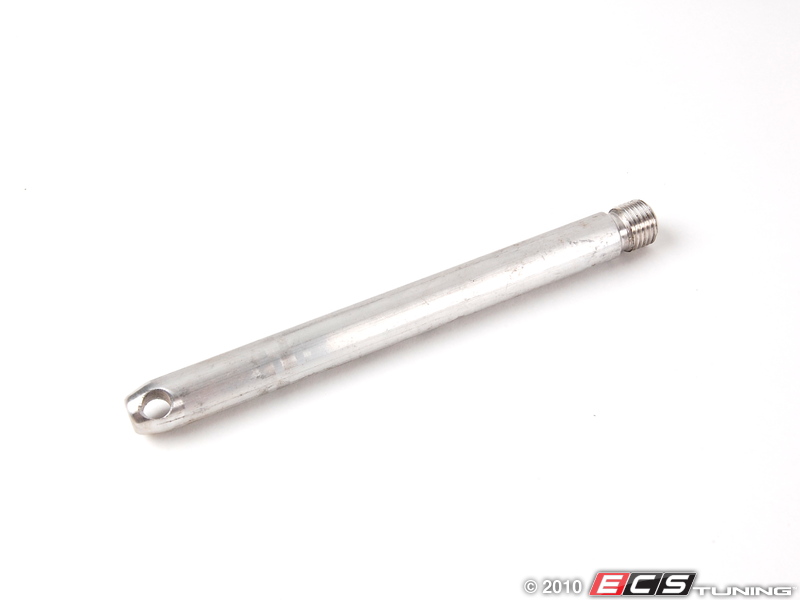
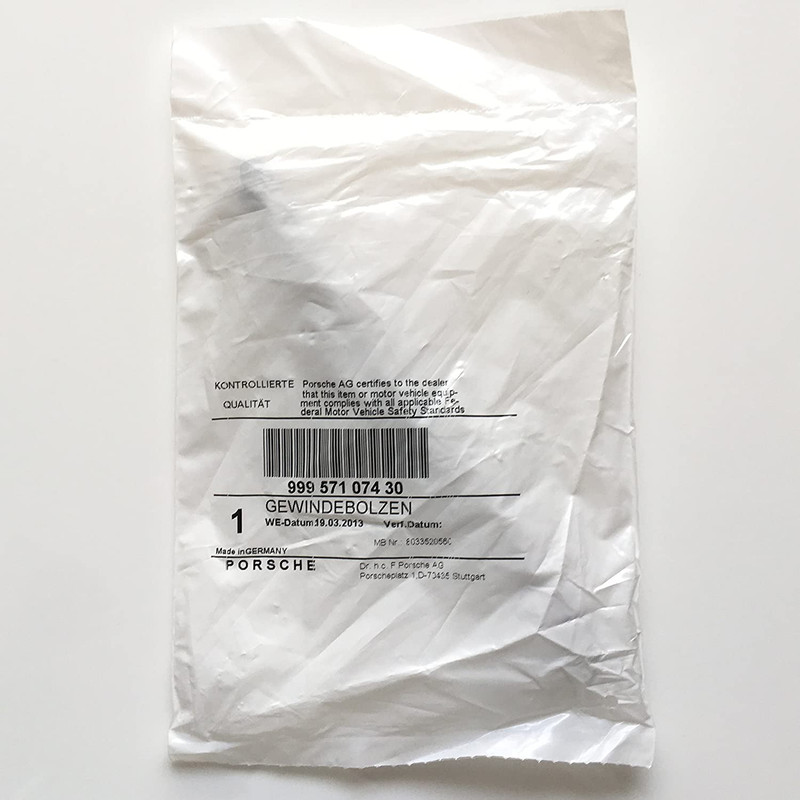
If the guide studs aren't present in the toolkit, buy a pair. They're less than £20, and far, far cheaper than a new pair of discs ...
Edit to add image showing guide stud part number.
Edited by Slippydiff on Monday 8th November 10:17
Armitage.Shanks said:
Might be they paid out as there was likely a chance of reimbursement from the council if a pothole caused that much damage?
I claimed for a wheel, tyre and suspension geometry alignment off the council some 30 years ago. It took them 6 weeks to respond to my initial claim letter, and only after nearly five months of further phonecalls and letters and ultimately the threat of legal action, did they finally agree to pay for a new wheel and tyre (but not the alignment).I imagine insurance companies are now far more aware of how slow/inefficient the council/highways departments are at dealing with claims for pothole damage, and thus are far more mercenary in their dealings with council's legal departments as a result.
Slippydiff said:
Koln-RS said:
All reputable U.K. insurers should cover the whole car against accidental damage . The usual exclusion is tyres and normal wear and tear.
Truth is, they are very strong and won’t suffer damage in normal use. They’ve been optional and standard fitment on most high performance cars for many years and any issues are very isolated.
Most people who have them, or have had them, seem to love them, myself included.
Agreed, though they can be damaged on the road by errant stones getting jammed between the caliper and disc, it's a rare occurrence, it's more much likely the edge of the disc will get chipped when the wheels are removed during service work/repairs or more likely by your local tyre fitter during tyre replacement or a puncture repair. Truth is, they are very strong and won’t suffer damage in normal use. They’ve been optional and standard fitment on most high performance cars for many years and any issues are very isolated.
Most people who have them, or have had them, seem to love them, myself included.
It's imperative the two guide studs provided with PCCB equipped cars are ALWAYS used when removing and refitting the wheels.
If the guide studs aren't present in the toolkit, buy a pair. They're less than £20, and far, far cheaper than a new pair of discs ...
Edit to add image showing guide stud part number.
Edited by Slippydiff on Monday 8th November 10:17


Gassing Station | Porsche General | Top of Page | What's New | My Stuff