
Drivers abandon their electric cars in the snow
Discussion


The snowstorm that swept over southern Sweden yesterday had a major impact on traffic. Lots of driver sitting in stationery traffic, especially on the E6 where stuck trucks were blocking lanes caused many electric cars to be abandoned, says the Swedish Transport Administration.
Even when an electric car is stationary, it draws electricity. People want heat in the cars when they are stuck in queues and in the end the battery runs out and then they have abandoned their cars.
In the interest of consumers, the Finnish newspaper Tekniikan Maailmas has the range of a few electric cars during the winter. Range tests were performed with an outside temperature of -9c.
This is how the range decreased in the winter test compared to the official range:
Kia E-soul: - 27%
Audi E-tron 55 quattro: - 31%
Tesla Model 3 Long Range Dual Engine: - 38%
Mercedes EQC 400 4Matic: - 46%
New Jaguar i-Pace - 59%
Even when an electric car is stationary, it draws electricity. People want heat in the cars when they are stuck in queues and in the end the battery runs out and then they have abandoned their cars.
In the interest of consumers, the Finnish newspaper Tekniikan Maailmas has the range of a few electric cars during the winter. Range tests were performed with an outside temperature of -9c.
This is how the range decreased in the winter test compared to the official range:
Kia E-soul: - 27%
Audi E-tron 55 quattro: - 31%
Tesla Model 3 Long Range Dual Engine: - 38%
Mercedes EQC 400 4Matic: - 46%
New Jaguar i-Pace - 59%
Was going to reply but out of curiosity did a web search using the text above and Reuters, who are generally pretty good with facts, have an article addressing just this:
https://www.reuters.com/article/factcheck-environm...
What I was originally going to reply is that ICE cars still need to run to generate heat, and diesels are actually quite poor at that too. I'd rather be in my EV than my ICE car if it was freezing out, but then I make sure the battery is at a decent level by plugging it in at home overnight.
Just to add on range, my EV claims 280 miles. This summer we were getting a shade over 300 miles out of a charge with pretty normal use, high speed motorway stuff was closer to 280 and no matter how it's been driven we've not seen under 250 miles. Around freezing with no pre-heating we're nearer 250 miles normal driving, next week I'll try that on a longer trip and see how things stand.
https://www.reuters.com/article/factcheck-environm...
What I was originally going to reply is that ICE cars still need to run to generate heat, and diesels are actually quite poor at that too. I'd rather be in my EV than my ICE car if it was freezing out, but then I make sure the battery is at a decent level by plugging it in at home overnight.
Just to add on range, my EV claims 280 miles. This summer we were getting a shade over 300 miles out of a charge with pretty normal use, high speed motorway stuff was closer to 280 and no matter how it's been driven we've not seen under 250 miles. Around freezing with no pre-heating we're nearer 250 miles normal driving, next week I'll try that on a longer trip and see how things stand.
Edited by boombang on Thursday 2nd December 17:52
boombang said:
Was going to reply but out of curiosity did a web search using the text above and Reuters, who are generally pretty good with facts, have an article addressing just this:
https://www.reuters.com/article/factcheck-environm...
I guess that's the difference between a news article and being stuck in an actual real world situation and range testing.https://www.reuters.com/article/factcheck-environm...
Edited by boombang on Thursday 2nd December 17:48
EV's have a pretty drastic drop in range in very cold weather shocker.... tell me something I dont know.
Its all about appropriate use though. And on this one, I would point the finger at the driver not the car. If you know that the range will drop (it tells you clearly on the dash) about the range AND you still go out, good luck. Playing charge bingo in heavy snow or super cold weather is on you.
I live in the foothills of the Sierra Nevada mountains and the ski resorts are opening up. Lots more traffic on the roads as people hit the slopes. Most drivers are responsible and reasonable and are prepared - some way more prepared than others with lifted 4Runners on massive knobby tires for example. The worst? Prius drivers. It has got so bad that the local Sheriff's and CHP now stop them and make sure they are prepared. Its not that a Prius cant drive up a mountain in super cold weather and heavy snow, but its because the drivers dont anticipate the conditions. Low rolling resistance summer tires and a pretty basic traction control system doesnt help. Every time there is a rush for the ski resorts, the sides of the road will be littered with drivers abandoning their cars, the vast majority being Prius'.
Does that mean we should all abandon the use of EV's in winter? Well, if you arent prepared, dont consider what you are doing and the conditions, yes. I used to have a C63S - would I drive up the mountain in winter? Hell no. Inappropriate car. Doesnt mean it couldnt make the journey, but I made a choice. Same goes with EV's in serious cold weather - consider what you are doing, the range you have and what you are trying to do. And if the range drops massively, charge the damn thing.
Its all about appropriate use though. And on this one, I would point the finger at the driver not the car. If you know that the range will drop (it tells you clearly on the dash) about the range AND you still go out, good luck. Playing charge bingo in heavy snow or super cold weather is on you.
I live in the foothills of the Sierra Nevada mountains and the ski resorts are opening up. Lots more traffic on the roads as people hit the slopes. Most drivers are responsible and reasonable and are prepared - some way more prepared than others with lifted 4Runners on massive knobby tires for example. The worst? Prius drivers. It has got so bad that the local Sheriff's and CHP now stop them and make sure they are prepared. Its not that a Prius cant drive up a mountain in super cold weather and heavy snow, but its because the drivers dont anticipate the conditions. Low rolling resistance summer tires and a pretty basic traction control system doesnt help. Every time there is a rush for the ski resorts, the sides of the road will be littered with drivers abandoning their cars, the vast majority being Prius'.
Does that mean we should all abandon the use of EV's in winter? Well, if you arent prepared, dont consider what you are doing and the conditions, yes. I used to have a C63S - would I drive up the mountain in winter? Hell no. Inappropriate car. Doesnt mean it couldnt make the journey, but I made a choice. Same goes with EV's in serious cold weather - consider what you are doing, the range you have and what you are trying to do. And if the range drops massively, charge the damn thing.
Lagom said:
I guess that's the difference between a news article and being stuck in an actual real world situation and range testing.
Logically though if you want heat in a car need something needs to generate that. In an ICE car if the engine is running and you are stationary your economy drops (volume per hour instead of distance per volume), you would get a lesser range than otherwise quoted.Not calling bulls
 t on an EV running out of battery nor range reducing in the cold but assuming some EV drivers got stuck with low battery reserves logic would say some ICE car drivers got stuck with low fuel reserves and were stranded too. Questioning what the point here is maybe - that vehicles have a finite energy reserve and if you are stuck for hours heating that vehicle it will run out?
boombang said:
Logically though if you want heat in a car need something needs to generate that. In an ICE car if the engine is running and you are stationary your economy drops (volume per hour instead of distance per volume), you would get a lesser range than otherwise quoted.
Not calling bullst on an EV running out of battery nor range reducing in the cold but assuming some EV drivers got stuck with low battery reserves logic would say some ICE car drivers got stuck with low fuel reserves and were stranded too. Questioning what the point here is maybe - that vehicles have a finite energy reserve and if you are stuck for hours heating that vehicle it will run out?
But at least if you run out of fuel you can get someone to bring a can out or walk and get some, with an ev that isn’t possible and it’ll need lifting. Not calling bulls
t on an EV running out of battery nor range reducing in the cold but assuming some EV drivers got stuck with low battery reserves logic would say some ICE car drivers got stuck with low fuel reserves and were stranded too. Questioning what the point here is maybe - that vehicles have a finite energy reserve and if you are stuck for hours heating that vehicle it will run out?Geffg said:
But at least if you run out of fuel you can get someone to bring a can out or walk and get some, with an ev that isn’t possible and it’ll need lifting.
Petrol vehicle highly likely (although when I ran out of fuel in one petrol car it killed the pump), in a diesel vehicle it depends on if it is self priming - if not it's time to get the spanners out.Lagom said:
The snowstorm that swept over southern Sweden yesterday had a major impact on traffic. Lots of driver sitting in stationery traffic, especially on the E6 where stuck trucks were blocking lanes caused many electric cars to be abandoned, says the Swedish Transport Administration.
Even when an electric car is stationary, it draws electricity. People want heat in the cars when they are stuck in queues and in the end the battery runs out and then they have abandoned their cars.
In the interest of consumers, the Finnish newspaper Tekniikan Maailmas has the range of a few electric cars during the winter. Range tests were performed with an outside temperature of -9c.
This is how the range decreased in the winter test compared to the official range:
Kia E-soul: - 27%
Audi E-tron 55 quattro: - 31%
Tesla Model 3 Long Range Dual Engine: - 38%
Mercedes EQC 400 4Matic: - 46%
New Jaguar i-Pace - 59%
Do you have any link to the Swedish Transport Administration statement? I couldn't find it, but I don't read Swedish either.Even when an electric car is stationary, it draws electricity. People want heat in the cars when they are stuck in queues and in the end the battery runs out and then they have abandoned their cars.
In the interest of consumers, the Finnish newspaper Tekniikan Maailmas has the range of a few electric cars during the winter. Range tests were performed with an outside temperature of -9c.
This is how the range decreased in the winter test compared to the official range:
Kia E-soul: - 27%
Audi E-tron 55 quattro: - 31%
Tesla Model 3 Long Range Dual Engine: - 38%
Mercedes EQC 400 4Matic: - 46%
New Jaguar i-Pace - 59%
- An electric car sat on a -5degC road will consume a certain amount of electricity to maintain temperature.
- A diesel or petrol car sat on a -5degC road will consume a certain amount of electricity to maintain temperature.
In an EV with a heat pump, I can't imagine the draw on the battery will be above 1 kW even in very cold weather, so an 80 kWh battery will last 80 hours keeping you warm. What does a petrol car use to do the same? I remember driving a Ford once which stated l/hr consumption when not moving instead of MPG. I think it was something like 1 l/h? Hence a car with a 60 litre tank would last 60 hours. This is fairly similar to an EV
I have personally never been stuck in traffic beyond a few hours as far as I can remember, although I am aware that a very small number of people get caught for 12+ hours in snow events. It would seem that you should be fine in both cars, unless you were already running on empty, in which case you will struggle in both cars.
I can't believe that it would be a common event that EVs need to be low loaded/towed away following anything but extreme circumstances.
off_again said:
Its all about appropriate use though. And on this one, I would point the finger at the driver not the car. If you know that the range will drop (it tells you clearly on the dash) about the range AND you still go out, good luck. Playing charge bingo in heavy snow or super cold weather is on you.
Oh I agree a lot is down to the driver however, I doubt anyone was playing charge bingo, mostly commuters, people on their way home from work. Wasn't particularly cold either around -5c. Geffg said:
But at least if you run out of fuel you can get someone to bring a can out or walk and get some, with an ev that isn’t possible and it’ll need lifting.
Really?https://uk.motor1.com/news/545092/zipcharge-go-por...
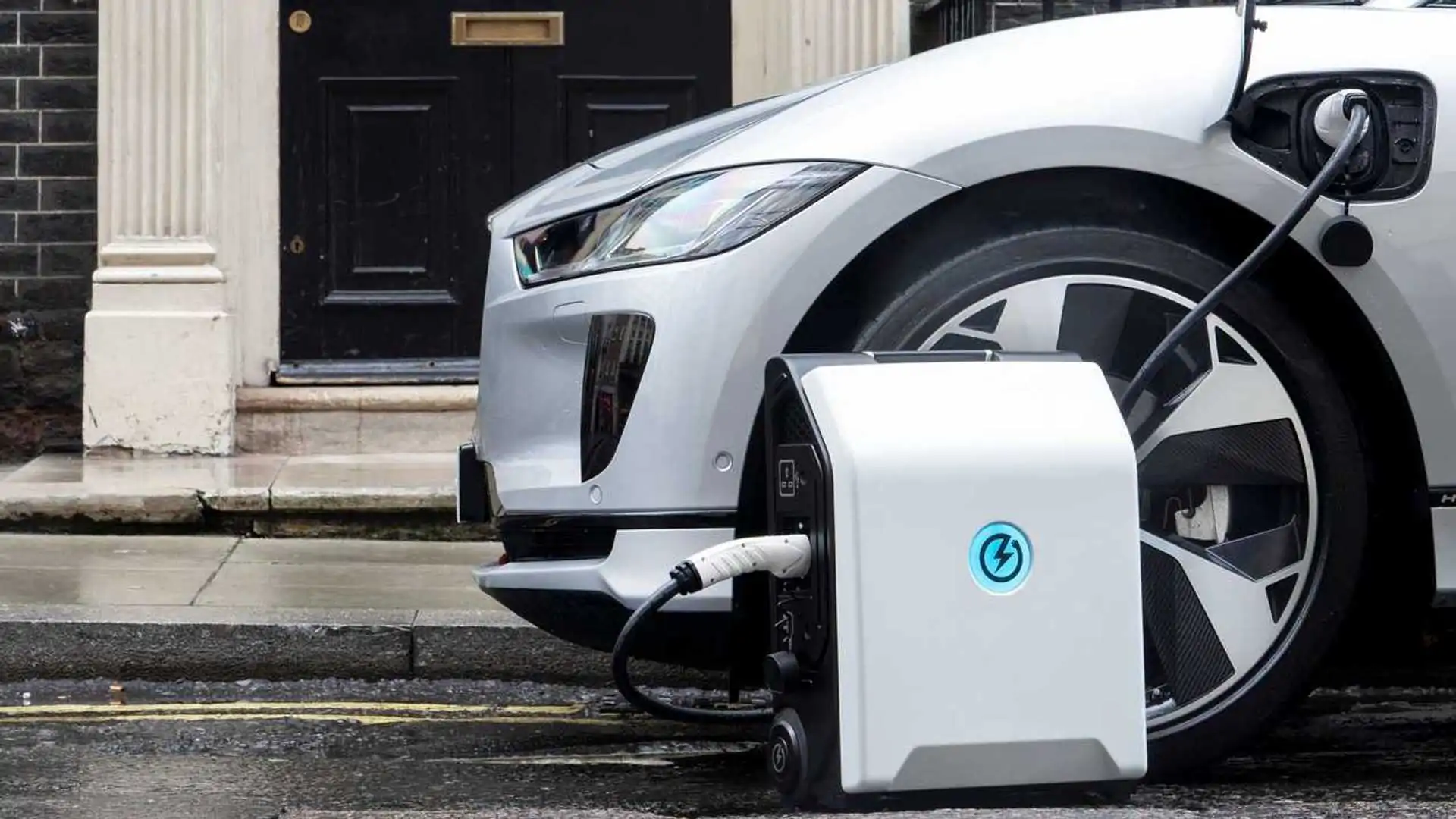
or
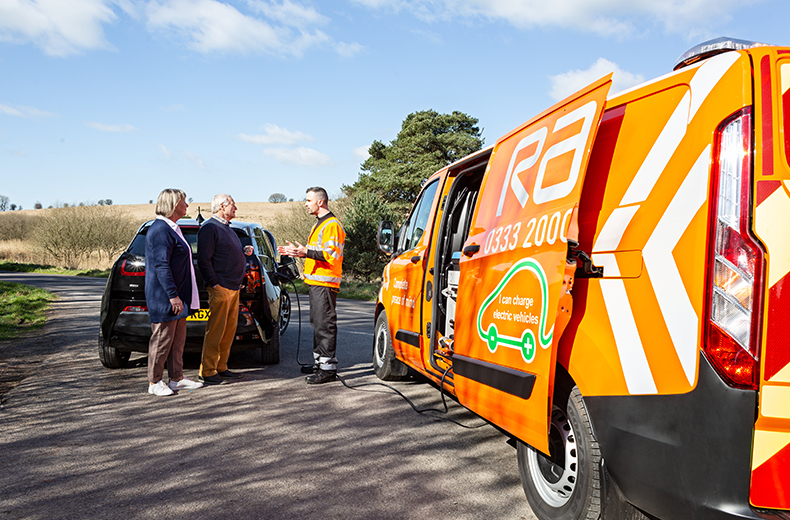
Or vehicle to load on some modern Ev's will allow one EV to charge another.

Edited by SWoll on Thursday 2nd December 18:40
pghstochaj said:
Do you have any link to the Swedish Transport Administration statement? I couldn't find it, but I don't read Swedish either.
Swedish state radio: https://sverigesradio.se/artikel/forare-overger-si...
Lagom said:
off_again said:
Its all about appropriate use though. And on this one, I would point the finger at the driver not the car. If you know that the range will drop (it tells you clearly on the dash) about the range AND you still go out, good luck. Playing charge bingo in heavy snow or super cold weather is on you.
Oh I agree a lot is down to the driver however, I doubt anyone was playing charge bingo, mostly commuters, people on their way home from work. Wasn't particularly cold either around -5c. Yeah, people drove to work, saw their entire battery disappear while it was sat stationary and then didnt realize they couldnt make it home again? Not buying that - range is front and center of all EV's and they bong constantly if it drops alarmingly low. If you get stuck in a jam for hours, you are at risk as much as an ICE at that point. And what do all of the roads agencies in the northern countries say? Carry warm clothing, suitable shoes, something to help dig out your car and safety equipment (flares, lights and water etc). In an EV in a jam, put on a jacket and gloves and turn the thing off..... like you do in an ICE car too.....

A big coat, gloves, hat and seat heater should keep you comfortable for hours without draining the battery if stuck somewhere. You'd think in a country where temperatures can get down to -10 or lower regularly and heavy snow is par for the course they'd be better prepared.
Lagom said:
This is how the range decreased in the winter test compared to the official range:
Kia E-soul: - 27%
Audi E-tron 55 quattro: - 31%
Tesla Model 3 Long Range Dual Engine: - 38%
Mercedes EQC 400 4Matic: - 46%
New Jaguar i-Pace - 59%
Nice to see that if we do have a hard winter our new EV doesn't suffer as much as many. The EQC and iPace numbers are rather eye opening? Kia E-soul: - 27%
Audi E-tron 55 quattro: - 31%
Tesla Model 3 Long Range Dual Engine: - 38%
Mercedes EQC 400 4Matic: - 46%
New Jaguar i-Pace - 59%

Edited by SWoll on Thursday 2nd December 18:56
Lagom said:
Swedish state radio:
https://sverigesradio.se/artikel/forare-overger-si...
No numbers there. Typical baseless anti-EV scaremongering. https://sverigesradio.se/artikel/forare-overger-si...
boombang said:
Was going to reply but out of curiosity did a web search using the text above and Reuters, who are generally pretty good with facts, have an article addressing just this:
https://www.reuters.com/article/factcheck-environm...
What I was originally going to reply is that ICE cars still need to run to generate heat, and diesels are actually quite poor at that too. I'd rather be in my EV than my ICE car if it was freezing out, but then I make sure the battery is at a decent level by plugging it in at home overnight.
Just to add on range, my EV claims 280 miles. This summer we were getting a shade over 300 miles out of a charge with pretty normal use, high speed motorway stuff was closer to 280 and no matter how it's been driven we've not seen under 250 miles. Around freezing with no pre-heating we're nearer 250 miles normal driving, next week I'll try that on a longer trip and see how things stand.
Once the engine is up to temperature, and running why are diesels particularly poor at this?https://www.reuters.com/article/factcheck-environm...
What I was originally going to reply is that ICE cars still need to run to generate heat, and diesels are actually quite poor at that too. I'd rather be in my EV than my ICE car if it was freezing out, but then I make sure the battery is at a decent level by plugging it in at home overnight.
Just to add on range, my EV claims 280 miles. This summer we were getting a shade over 300 miles out of a charge with pretty normal use, high speed motorway stuff was closer to 280 and no matter how it's been driven we've not seen under 250 miles. Around freezing with no pre-heating we're nearer 250 miles normal driving, next week I'll try that on a longer trip and see how things stand.
Edited by boombang on Thursday 2nd December 17:52
A few years ago someone talked about a stationary EV and how long it could keep the occupants warm for in the cold. The cabin heaters typically max out at 6kw, 3kw is likely to be the average draw (imagine sitting in a tiny room with a 3 bar electric fire on full) so that gives about 20 hours for most EVs if starting with a full battery which most EVs do if they charge at home.
Then the range - in weather so bad that moving a few miles is a problem, who cares if the car will only do 130 miles instead of the rated 260 miles? You just want to get somewhere safe. It's like saying on black ice the wheels spin on a Veyron so it can't do 200mph.. why would you want to?
I'm sure some cars run out. I'm sure some slide into ditches. I'm sure some idiots clear a 10 cm square on the snow covered windscreen and try driving.
Then the range - in weather so bad that moving a few miles is a problem, who cares if the car will only do 130 miles instead of the rated 260 miles? You just want to get somewhere safe. It's like saying on black ice the wheels spin on a Veyron so it can't do 200mph.. why would you want to?
I'm sure some cars run out. I'm sure some slide into ditches. I'm sure some idiots clear a 10 cm square on the snow covered windscreen and try driving.
Pica-Pica said:
Once the engine is up to temperature, and running why are diesels particularly poor at this?
Low volumes of fuel with a very low thermal output, especially so at idle. Worst two cases I can remember were working on a remote site and being at Rockingham Stages rally. In both cases an up to temp diesel vehicle was left idling and over the course of a couple of hours the temp dropped steadily off to near cold, the heater sucking the heat out.
Likely less of a problem on 'premium' cars with auxiliary heating (had an A4 and a BMW that had them fitted) but unsure if that's more for heat on startup than idling for hours.
Heres Johnny said:
A few years ago someone talked about a stationary EV and how long it could keep the occupants warm for in the cold. The cabin heaters typically max out at 6kw, 3kw is likely to be the average draw (imagine sitting in a tiny room with a 3 bar electric fire on full) so that gives about 20 hours for most EVs if starting with a full battery which most EVs do if they charge at home.
Then the range - in weather so bad that moving a few miles is a problem, who cares if the car will only do 130 miles instead of the rated 260 miles? You just want to get somewhere safe. It's like saying on black ice the wheels spin on a Veyron so it can't do 200mph.. why would you want to?
I'm sure some cars run out. I'm sure some slide into ditches. I'm sure some idiots clear a 10 cm square on the snow covered windscreen and try driving.
That's really surprised me. A 6kw heater seems huge to have in a car. I have a 2kw heater in a LWB camper van with roughly 4 times the volume of a car and even then it cycles on and off as it gets too hot. I guess the insulation in van is much better than I assumed. Then the range - in weather so bad that moving a few miles is a problem, who cares if the car will only do 130 miles instead of the rated 260 miles? You just want to get somewhere safe. It's like saying on black ice the wheels spin on a Veyron so it can't do 200mph.. why would you want to?
I'm sure some cars run out. I'm sure some slide into ditches. I'm sure some idiots clear a 10 cm square on the snow covered windscreen and try driving.
boombang said:
Pica-Pica said:
Once the engine is up to temperature, and running why are diesels particularly poor at this?
Low volumes of fuel with a very low thermal output, especially so at idle. Worst two cases I can remember were working on a remote site and being at Rockingham Stages rally. In both cases an up to temp diesel vehicle was left idling and over the course of a couple of hours the temp dropped steadily off to near cold, the heater sucking the heat out.
Likely less of a problem on 'premium' cars with auxiliary heating (had an A4 and a BMW that had them fitted) but unsure if that's more for heat on startup than idling for hours.
Back to EV drop off in the winter. Pre-conditioning (battery warming) makes a world of difference. Most EV's can be set to do this ahead of a departure time whilst the car is still plugged in. If you don't do it, a load of extra power is used en-route to bring the battery temp up to the most efficient level.
Obviously there's a limit to how cold it can be before the battery ends up spending a big% of it's power simply on warming itself.. -9c is pretty cold! The Finns need EV's too though so this is a fair enough criticism and a real problem to address imo.
Gassing Station | EV and Alternative Fuels | Top of Page | What's New | My Stuff