
Brake master cylinder failing?
Discussion


Pedal keeps going soft and sometimes will depress almost fully to the floor when car is stationary & rolling slowly to a junction.
I’ve bled the brakes twice, first time there was a tiny bit of air in the rears, checked again a week later, there was nothing.
I’m not losing any fluid and the pads and discs have plenty of life in them.
Would the next logical step be to change the master cylinder?
I’ve bled the brakes twice, first time there was a tiny bit of air in the rears, checked again a week later, there was nothing.
I’m not losing any fluid and the pads and discs have plenty of life in them.
Would the next logical step be to change the master cylinder?
Big Rig said:
Pedal keeps going soft and sometimes will depress almost fully to the floor when car is stationary & rolling slowly to a junction.

The only reason for that without an external leak is air in the system or a failing internal seal in the master cylinder. Air in the system would usually be consistent whereas a failing seal might start intermittently.
Given the cost of brake failure versus the cost of a master cylinder, I'd be replacing that asap even without a positive diagnosis. You've already bled the brakes which was the other possible thing to try.
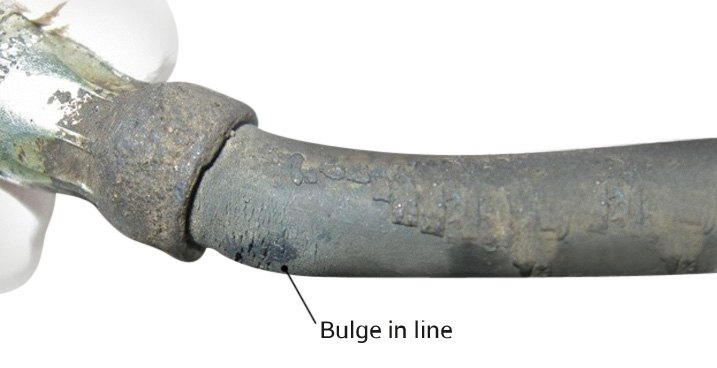
Thanks guys. I’ve checked the lines and can’t see any signs of bulging. The brake fluid is very clean and as mentioned before I’ve never needed to top it up.
I’ll get a master cylinder ordered. I’m not using the car atm as I’m cycling everywhere so it can stay off the road for a while.
I’ll get a master cylinder ordered. I’m not using the car atm as I’m cycling everywhere so it can stay off the road for a while.
Have you physically removed the discs and possibly drums and checked everything is good and working well, any seizing pistons/slave cyls/slide pins can cause all sorts of odd effects, because with such issues pads/shoes need more fluid than normal pressurised to get them to do their jobs, ie with a seizing piston or pins you can be pushing the disc over to meet the other pad rather than the pads equalising at the disc.
If there's noticeable wear lips on discs, this can cause brake pads to retract further than with a good disc, similarly, if drums at the back, are the self adjusters working correctly, do the drums have bad wear grooves.
Any and all of these things can add up taking up a good percentage of your pedal movement before friction material clamps fully against steel, its why when you fit new pads/discs all round on a properly serviced brake system the pedal requires so little movement before applying the brakes.
If there's noticeable wear lips on discs, this can cause brake pads to retract further than with a good disc, similarly, if drums at the back, are the self adjusters working correctly, do the drums have bad wear grooves.
Any and all of these things can add up taking up a good percentage of your pedal movement before friction material clamps fully against steel, its why when you fit new pads/discs all round on a properly serviced brake system the pedal requires so little movement before applying the brakes.
Gassing Station | Home Mechanics | Top of Page | What's New | My Stuff