
Container ships...
Discussion


It places all of the non-value adding areas in a single location on the ship and maximises the productive space for cargo. It also makes construction a lot easier as most ships are built as section and then welded together.
That vessel looks like a rig tender or similar and will need to be very manoeuvrable hence the bridge at the front. A large bulk carrier or container ship does need the manoeuvrability as is spends most of its life in open water and will use tugs to come along side.
That vessel looks like a rig tender or similar and will need to be very manoeuvrable hence the bridge at the front. A large bulk carrier or container ship does need the manoeuvrability as is spends most of its life in open water and will use tugs to come along side.

Starfighter said:
It places all of the non-value adding areas in a single location on the ship and maximises the productive space for cargo. It also makes construction a lot easier as most ships are built as section and then welded together.
That vessel looks like a rig tender or similar and will need to be very manoeuvrable hence the bridge at the front. A large bulk carrier or container ship does need the manoeuvrability as is spends most of its life in open water and will use tugs to come along side.
A god point. I notice polar survey vessels tend to be the same, I guess manouverability being more important than pure cargo/profit.That vessel looks like a rig tender or similar and will need to be very manoeuvrable hence the bridge at the front. A large bulk carrier or container ship does need the manoeuvrability as is spends most of its life in open water and will use tugs to come along side.
I like this channel, and they address this question specifically in this video
https://youtu.be/oP2y1eiu0ac
Thanks
https://youtu.be/oP2y1eiu0ac
Thanks
Modern ships, particularly ones that require the ability to manoeuvre accurately use electric motors in azimuth pods that can independently swivel through 360 degrees. This proves excellent positioning ability, particularly when used in conjunction with bow thrusters.
Azimuth Pods:

This means there isn't a direct mechanical link between the engines and the propeller. Instead the engines drive generators, the power is sent by cables to the electric motors, and therefore the engines can be positioned elsewhere in the vessel.
The ship that you show is a 'Support Vessel' with a flat open aft deck for doing whatever they need it to do (move oil platform anchors, work on pipelines, transport supplies, etc...). The low flat deck doesn't provide much room for engineering space below, so the engines are moved forward, as is the bridge. A good indication of where a ship's engines are located is the exhaust stack, generally directly above.
Modern cruise ships are another good example, they are as big as container ships, but use azimuth pods for a number of reasons. They require good bridge visibility, and the ability to self manoeuvre in ports that might not have tugs available. They also need to run generators to supply vast 'hotel' power. So you might as well have more small(er) engines to supply power as and when required. This also frees up aft space that a vast single propulsion engine would require.
The really large commercial ships (containers, oil, bulk carriers, etc...) make use of that large single engine with a direct drive to a propeller because it makes sense for that style of vessel. It's then natural to place your accommodation and bridge on top of that. They don't require the same 'hotel' power requirements, they don't require the same manoeuvrability because they visit ports with tugs, and having the engine at the aft end keeps it out of the way of the loadspace.
having said that, there are a few container ships that have their accommodation block and therefore bridge placed more centrally, and a smaller block aft with a funnel. These will have better bridge visibility.
Azimuth Pods:
This means there isn't a direct mechanical link between the engines and the propeller. Instead the engines drive generators, the power is sent by cables to the electric motors, and therefore the engines can be positioned elsewhere in the vessel.
The ship that you show is a 'Support Vessel' with a flat open aft deck for doing whatever they need it to do (move oil platform anchors, work on pipelines, transport supplies, etc...). The low flat deck doesn't provide much room for engineering space below, so the engines are moved forward, as is the bridge. A good indication of where a ship's engines are located is the exhaust stack, generally directly above.
Modern cruise ships are another good example, they are as big as container ships, but use azimuth pods for a number of reasons. They require good bridge visibility, and the ability to self manoeuvre in ports that might not have tugs available. They also need to run generators to supply vast 'hotel' power. So you might as well have more small(er) engines to supply power as and when required. This also frees up aft space that a vast single propulsion engine would require.
The really large commercial ships (containers, oil, bulk carriers, etc...) make use of that large single engine with a direct drive to a propeller because it makes sense for that style of vessel. It's then natural to place your accommodation and bridge on top of that. They don't require the same 'hotel' power requirements, they don't require the same manoeuvrability because they visit ports with tugs, and having the engine at the aft end keeps it out of the way of the loadspace.
having said that, there are a few container ships that have their accommodation block and therefore bridge placed more centrally, and a smaller block aft with a funnel. These will have better bridge visibility.
By coincidence I was visiting the Maritime Museum in Hamburg just now (9 huge decks of model ship heaven). I thought of the Great Lake freighters and odd they look. Obviously they have to navigate the lock systems on the lakes:


Immortalised in the Gordon Lightfoot song “The Wreck of the Edmund Fitzgerald”.
Also a few of these on display:

And the aforementioned rig supply vessels etc.
Immortalised in the Gordon Lightfoot song “The Wreck of the Edmund Fitzgerald”.
Also a few of these on display:
And the aforementioned rig supply vessels etc.
Boatbuoy said:
having said that, there are a few container ships that have their accommodation block and therefore bridge placed more centrally, and a smaller block aft with a funnel. These will have better bridge visibility.
I’m at Southampton port fairly regularly and many of the ships are as you describe.

What a museum!
There's a surprising collection of ship models at the Norfolk Tank Museum: http://norfolktankmuseum.co.uk/


There's a surprising collection of ship models at the Norfolk Tank Museum: http://norfolktankmuseum.co.uk/

Well I never! https://ss-shieldhall.co.uk/the-ship/
Great to these veterans still looked after and going.
Great to these veterans still looked after and going.
Simpo Two said:
Well I never! https://ss-shieldhall.co.uk/the-ship/
Great to these veterans still looked after and going.
My old man used to volunteer on there, it's a great day out on one of their sailings. Great to these veterans still looked after and going.
I went on many day trips on the Shieldhall as a kid, then when I was 21 I did the 'Engine Room Experience' - three days as part of the 'black gang'. My days happened to be after a quiet spell for the ship, so across two days we brought the ship from 'cold and dark' to ready for sea, culminating in a short day trip round the Solent. I 'drove' the starboard engine when leaving Southampton, then did an hour in the stokehold managing the boilers, did the rounds with one of the proper engineers (going round all the auxiliary equipment checking temperatures, pressures, oil levels and so on) then had a brief go on the helm coming up Southampton Water. She does not steer well!
I did sign up as a volunteer after that but university then real life kept getting in the way - I made it to one working day and one other trip out before I had to let it slide and now I live 170 miles away. But a fantastic experience and it's a credit to the volunteers who do manage to put the time in to keep her running. She's just been down to Falmouth for a dry dock session.
I did sign up as a volunteer after that but university then real life kept getting in the way - I made it to one working day and one other trip out before I had to let it slide and now I live 170 miles away. But a fantastic experience and it's a credit to the volunteers who do manage to put the time in to keep her running. She's just been down to Falmouth for a dry dock session.
Krikkit said:
Usually it's so the bridge, accommodation block and engineering space for the engines can be stacked on top of each other, maximising cargo space.
Engines on these are under the cargo deck; that one looks to be modified for some other role than platform supply, maybe a wind farm construction role or submersible/dive support.This is what the standard layout looks like.

Edited by hidetheelephants on Wednesday 17th August 10:30
craig1912 said:
2xChevrons said:
She does not steer well!
.
You aren’t wrong, I spent an hour on the helm a couple of weeks ago in the hot weather. It is a good workout as you are continually turning the wheel..
After my go I stayed on the bridge and watched the quartermaster at the wheel, and he clearly knew his stuff because his steering technique was to put on lots of helm in the direction he needed to go, then as soon as the bow started to swing he started winding it back, went past the centre point to put on some opposing rudder to stop the turn and then go back to midships. I was too used to sailing boats where everything's much more responsive and you steer more by pressure than actual movement! Still, all my frantic spinning at the wheel, alternating 20 degrees of rudder on each side as the good ship Shieldhall zig-zagged her way up Southampton Water must have given the steering engine a good workout and probably made the skippers of the Red Funnel ferries swear under their breath...
hidetheelephants said:
Krikkit said:
Usually it's so the bridge, accommodation block and engineering space for the engines can be stacked on top of each other, maximising cargo space.
Engines on these are under the cargo deck; that one looks to be modified for some other role than platform supply, maybe a wind farm construction role or submersible/dive support.This is what the standard layout looks like.
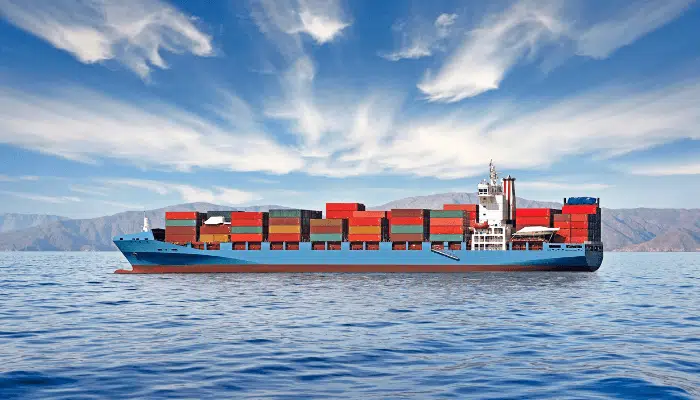
What I was talking about in my original post is this classic container style:
Gassing Station | Boats, Planes & Trains | Top of Page | What's New | My Stuff