
Car Inverter vs Generator
Discussion


Hi all,
Apologise if this is a stupid question, however I live in the UK as was looking into a generator to power my fridge in case of a power outage. I sort of tripped over car inverters and wondered if it was feasible to power a home fridge/freezer from such a device (with engine running).
I wanted to check as the cost of generators is high, plus with added maintenance etc. Given I use my car daily and it is always kept full with fuel it seemed like a possible option in an emergency situation i.e. power out for a day or two, plug each in individually for an hour/two per day to keep temperatures down.
I have checked the watts for my main double fridge, however this is too high, However, I also have a double fridge and chest freezer in the garage and this seems feasible (with my very limited understanding!). If these images display correctly these are the labels on each;
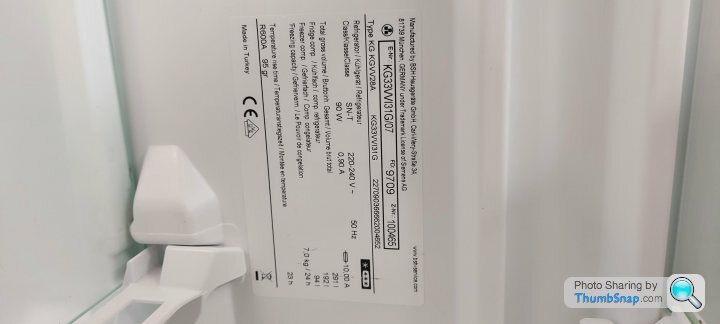

In my pigeon understanding of watts on start-up, it seems you have to factor in 4x running watts to get the compressor to start so the fridge/freezer
is 0.9amps x 240 volts x 4 = 864watts and the chest freezer is 0.8amps x 240 volts x 4 = 768watts.
It therefore seems a 1000w invertor could do the job however, I am no mechanic so wondered if anyone with experience of inverters could enlighten me.
Might be pie in the sky and the only option is a dedicated generator, however look forward to any feedback as could save some pennies!
Apologise if this is a stupid question, however I live in the UK as was looking into a generator to power my fridge in case of a power outage. I sort of tripped over car inverters and wondered if it was feasible to power a home fridge/freezer from such a device (with engine running).
I wanted to check as the cost of generators is high, plus with added maintenance etc. Given I use my car daily and it is always kept full with fuel it seemed like a possible option in an emergency situation i.e. power out for a day or two, plug each in individually for an hour/two per day to keep temperatures down.
I have checked the watts for my main double fridge, however this is too high, However, I also have a double fridge and chest freezer in the garage and this seems feasible (with my very limited understanding!). If these images display correctly these are the labels on each;
In my pigeon understanding of watts on start-up, it seems you have to factor in 4x running watts to get the compressor to start so the fridge/freezer
is 0.9amps x 240 volts x 4 = 864watts and the chest freezer is 0.8amps x 240 volts x 4 = 768watts.
It therefore seems a 1000w invertor could do the job however, I am no mechanic so wondered if anyone with experience of inverters could enlighten me.
Might be pie in the sky and the only option is a dedicated generator, however look forward to any feedback as could save some pennies!
If you decide to go with an inverter, get one that's twice as big as you need - and it probably still won't be big enough. The issue is that although they might output 1000W, they probably won't hold up the voltage accurately under those conditions. Of course your mains supply will always supply the full voltage under any practical load conditions. Your compressor motors will be designed on the assumption they have full voltage available on demand and may be unhappy starting on a reduced voltage. Worst case you may find they stall instead of starting, which could be very damaging.
How often do you have a power cut lasting long enough for a freezer to thaw? The more likely failure mode IMO is a breaker tripping while you're away or don't notice. A temperature alarm is a better way to handle that risk IMO.
How often do you have a power cut lasting long enough for a freezer to thaw? The more likely failure mode IMO is a breaker tripping while you're away or don't notice. A temperature alarm is a better way to handle that risk IMO.
I have run a small tabletop beer type fridge off a leisure battery and 1kw pure sinewave inverter when camping, has absolutely no issue in running it. But it is only a small 60w fridge when running. Your main issue may be the number of amps needed to supply the inverter with enough juice to get it started and keep it running from a standard car alternator. I have run a 750W heater off my inverter but the battery goes flat in less than an hour.
I currently have the setup in my shed connected to a small 100w solar panel keeping it topped up, I worked out I have about 700WHrs in the battery and could keep my whole house running for 2 hours in a power cut. May have to test it on the main fridge and freezer first though.
I currently have the setup in my shed connected to a small 100w solar panel keeping it topped up, I worked out I have about 700WHrs in the battery and could keep my whole house running for 2 hours in a power cut. May have to test it on the main fridge and freezer first though.
Thanks all - seems more hassle than it is worth then.
We live in the countryside and suffer about 2 power cuts a year (luckily none over 4 hours). I just like to be prepared and wanted to check I was not missing an option that would save in cost and maintenance.
I will revert my research back to generators. If anyone has a recommendation, that is preferable low maintenance, I am all ears. The Honda ones seem popular but seem so expensive in comparison to some others. I just really want to be able to run the fridge/freezer in a sustained powercut to save food going bad (we have quite a lot in our freezers).
Thanks again for lending your knowledge on this subject. It is greatly appreciated.
We live in the countryside and suffer about 2 power cuts a year (luckily none over 4 hours). I just like to be prepared and wanted to check I was not missing an option that would save in cost and maintenance.
I will revert my research back to generators. If anyone has a recommendation, that is preferable low maintenance, I am all ears. The Honda ones seem popular but seem so expensive in comparison to some others. I just really want to be able to run the fridge/freezer in a sustained powercut to save food going bad (we have quite a lot in our freezers).
Thanks again for lending your knowledge on this subject. It is greatly appreciated.
Smokey Bubbles said:
..seems more hassle than it is worth then....Thanks again for lending your knowledge on this subject. It is greatly appreciated.
Don't be so quick to accept that you're wrong and others coming forward to tell you that are right. I've asked various questions over the years here and while there are some very, very knowledgable and helpful people in all sorts of sectors, there are also people who are happy to tell you you're wasting your time even trying to discuss a particular solution to an issue.I know because I've put forward questions which have been entirely dismissed, only to see the idea I wanted to discuss being put into practice by manufacturers some time later.
So don't necessarily take no for an answer, just because someone apparently presents themselves as an authority on the topic!
I wouldnt say it was pointless, but a generator you can top up with petrol and carry on, they are just noisy. Cost of inverters has come down some way over the years, had mine over 10 years now and it was a cheap ebay special. I made a box with a socket outlet on it with the inverter and the leisure battery inside. Its quite heavy to lug around. You see adverts for these big portable powerbanks and they look good but quite expensive. I would imagine for £2-300 quid you could make your own like mine and maybe keep it topped up via a battery conditioner, if the battery does go low then hook it up to car and give it a boost.
Bare in mind a 110ah leisure battery can technically hold just over 1Kwh of energy not accounting for inverter losses, so you could run a 200w appliance for about 5 hours without any engines running. Startup currents will take very little of the total stored energy as they are only for less than a second.
Bare in mind a 110ah leisure battery can technically hold just over 1Kwh of energy not accounting for inverter losses, so you could run a 200w appliance for about 5 hours without any engines running. Startup currents will take very little of the total stored energy as they are only for less than a second.
Mikey G said:
if the battery does go low then hook it up to car and give it a boost.
That seems like a hugely inefficient way to charge a battery. A typical battery will only take charge at a few amps and you could be running the car for tens of hours to recharge it. You might even find the car literally can't carry enough fuel to do it in one go.GreenV8S said:
Mikey G said:
if the battery does go low then hook it up to car and give it a boost.
That seems like a hugely inefficient way to charge a battery. A typical battery will only take charge at a few amps and you could be running the car for tens of hours to recharge it. You might even find the car literally can't carry enough fuel to do it in one go.Smokey Bubbles said:
Thanks all - seems more hassle than it is worth then.
We live in the countryside and suffer about 2 power cuts a year (luckily none over 4 hours). I just like to be prepared and wanted to check I was not missing an option that would save in cost and maintenance.
I will revert my research back to generators. If anyone has a recommendation, that is preferable low maintenance, I am all ears. The Honda ones seem popular but seem so expensive in comparison to some others. I just really want to be able to run the fridge/freezer in a sustained powercut to save food going bad (we have quite a lot in our freezers).
Thanks again for lending your knowledge on this subject. It is greatly appreciated.
Good decisionWe live in the countryside and suffer about 2 power cuts a year (luckily none over 4 hours). I just like to be prepared and wanted to check I was not missing an option that would save in cost and maintenance.
I will revert my research back to generators. If anyone has a recommendation, that is preferable low maintenance, I am all ears. The Honda ones seem popular but seem so expensive in comparison to some others. I just really want to be able to run the fridge/freezer in a sustained powercut to save food going bad (we have quite a lot in our freezers).
Thanks again for lending your knowledge on this subject. It is greatly appreciated.
You would have had to sit in the car for hours looking at the temperature and oil pressure gauges/warning lights
GreenV8S said:
Mikey G said:
if the battery does go low then hook it up to car and give it a boost.
That seems like a hugely inefficient way to charge a battery. A typical battery will only take charge at a few amps and you could be running the car for tens of hours to recharge it. You might even find the car literally can't carry enough fuel to do it in one go.hi, on the subject of inverters, I've been looking at getting a small angle grinder. black and decker do a nice 750 watt grinder, and I already have an inverter, which I think is rated at something like 200 watts. seeing as the grinder would only be run in short bursts would this work?
my alternative is a cordless set up which would cost more and be less powerful.
any thoughts anyone?
my alternative is a cordless set up which would cost more and be less powerful.
any thoughts anyone?
len1964 said:
hi, on the subject of inverters, I've been looking at getting a small angle grinder. black and decker do a nice 750 watt grinder, and I already have an inverter, which I think is rated at something like 200 watts. seeing as the grinder would only be run in short bursts would this work?
my alternative is a cordless set up which would cost more and be less powerful.
any thoughts anyone?
A 200w inverter is too small to run a 750w device.my alternative is a cordless set up which would cost more and be less powerful.
any thoughts anyone?
Scrump said:
len1964 said:
hi, on the subject of inverters, I've been looking at getting a small angle grinder. black and decker do a nice 750 watt grinder, and I already have an inverter, which I think is rated at something like 200 watts. seeing as the grinder would only be run in short bursts would this work?
my alternative is a cordless set up which would cost more and be less powerful.
any thoughts anyone?
A 200w inverter is too small to run a 750w device.my alternative is a cordless set up which would cost more and be less powerful.
any thoughts anyone?
Inverters and generators need to be sized for the peak current.
With motor loads like grinders or fridges, you should err on the side of a bigger inverter to allow for the inrush current.
I have successfully run a small angle grinder on one of those cheapo Chinese 800W 2 stroke generators.
I know a lot of people with yachts, a lot of those have inverters to run various things.
Cars, unlike yachts, mostly have complicated control systems on their alternators these days, in the 'Stop-Start' era they began to fit smart alternators with the voltage and current controlled in complex ways. Slapping an extra battery into the system may have variable consequences.
It's a big and complex subject, much debated elsewhere, including in the Homes/DIY section in relation to adding batteries to solar panel systems.
With motor loads like grinders or fridges, you should err on the side of a bigger inverter to allow for the inrush current.
I have successfully run a small angle grinder on one of those cheapo Chinese 800W 2 stroke generators.
I know a lot of people with yachts, a lot of those have inverters to run various things.
Cars, unlike yachts, mostly have complicated control systems on their alternators these days, in the 'Stop-Start' era they began to fit smart alternators with the voltage and current controlled in complex ways. Slapping an extra battery into the system may have variable consequences.
It's a big and complex subject, much debated elsewhere, including in the Homes/DIY section in relation to adding batteries to solar panel systems.
Gassing Station | Home Mechanics | Top of Page | What's New | My Stuff