
Volkswagen Golf R 20 Years | PH Origin Story
The R32 kicked off the 'R' era 20 years ago in style. Does its latest, most powerful descendant measure up?

We’re familiar with the Mk8 Volkswagen Golf R by now and, well, it has good bits and some less good bits. The infotainment and interior quality definitely slot into the iffy column, but I happen to think the Mk8 Golf R is one of the best of the breed to drive. People raved about the previous version. It was the epitome of the all-rounder hot hatch: strong pace, all-wheel-drive dependability and easier to live with than Casper the Friendly Ghost. Of course it was. It was a Golf. That’s what they do. Yet I never found myself wanting one. It didn’t quite serve up enough driving fizz to go with its exemplary cross-country expediency. The Mk8, with its tricky, torque-divvying rear diff, adds an extra dimension – just a bit of adjustable pep. It’s a bit more my thing.
And here's another thing: can you believe the R brand is 20 years old? That caught me by surprise, and to mark the occasion Volkswagen has launched the Golf R 20 Years. It has a few unique tweaks along with some extra equipment to make it special – more on that later – but it’s not a limited edition as such. There’s no target number, it’ll simply be built for a year and then end. Current estimates, based on the uptake so far, put the number of 20 Years specials that will eventually find buyers in the UK at around 500.
Now that’s a significant number. Whether by coincidence or design, it just happens to be the number of Mk4 Golf R32s that came to the UK, and that just happens to be where the R story began. It’s the reason the R 20 Years exists and, as a result, we thought why not make this more than just a Golf R 20 Years review? We’ve got ourselves another PH Origins story.
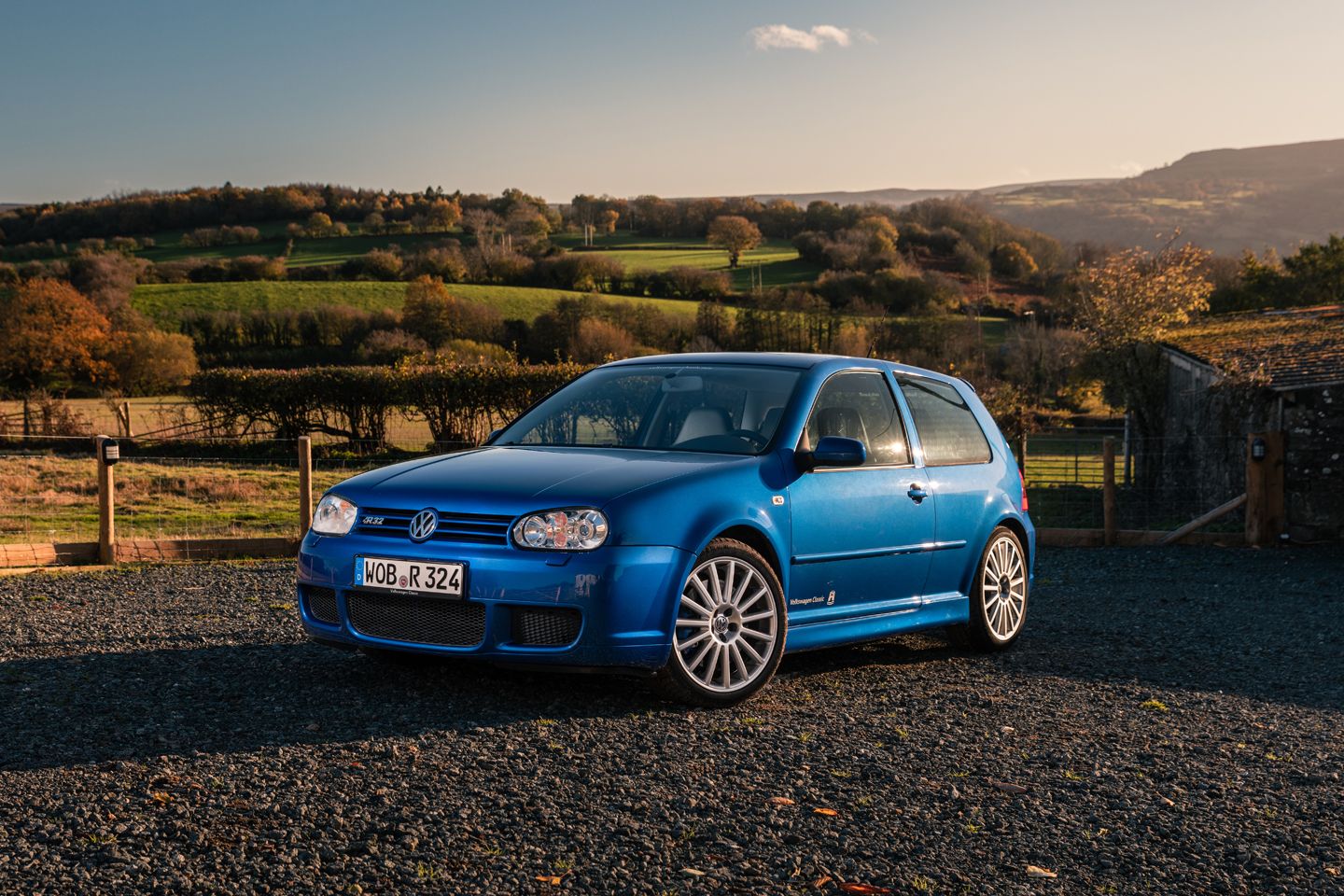

The R32 was a curious car. It was from a time in Volkswagen’s history when, depending on how you look at it, the Golf either came of age or lost its way. On the one hand, the Mk4 Golf was a triumph. It represented the company’s new-found confidence. Still a Golf and still, technically, the successor of the People’s car that kicked Wolfsburg off, but this one was the most upmarket Golf yet.
Volkswagen’s reputation for being a cut above went into hyperdrive, and the Mk4 Golf was its poster child. It looked like a Golf but with a cleaner, classier exterior. And inside it was downright swish. Everything about it – the instruments, the materials, the build – was nearer BMW and Mercedes standards than anything from old rivals like Ford and Vauxhall.
The trouble was the yang to the Mk4 Golf’s newfound yin was that Volkswagen had forgotten about making it drive like a Golf. The Mk3 had begun this downward spiral of stodginess, and the Mk4 compounded it. Arguably, Volkswagen got away with it with the bread-and-butter trims; people were so bowled over by the quality and classiness they generally didn’t mind. But when they slapped a GTI badge on the back this fooled no one. It was heavy and laboured, and as far from a GTI as could be.
So what to do? Well, one thing you could do if you’re a company as rich as Volkswagen was then, was go a bit crazy. Don’t forget, this was the time of peak-Piëch hubris. The period of the flagship Phaeton, and where better to find some va-va-voom for the Golf than that. Now, the Phaeton may have been a hi-tech wonder, but the part that was used to pep-up the Golf was from the no-nonsense school of thought: there ain’t no replacement for displacement. They dropped the Phaeton’s naturally aspirated V6 under the bonnet. A once-humble hatchback for the driveways of Droitwich – not Dallas or Doha, remember – had an engine of equal capacity and cylinders to a Jaguar XJ6. Imagine something like that happening now.

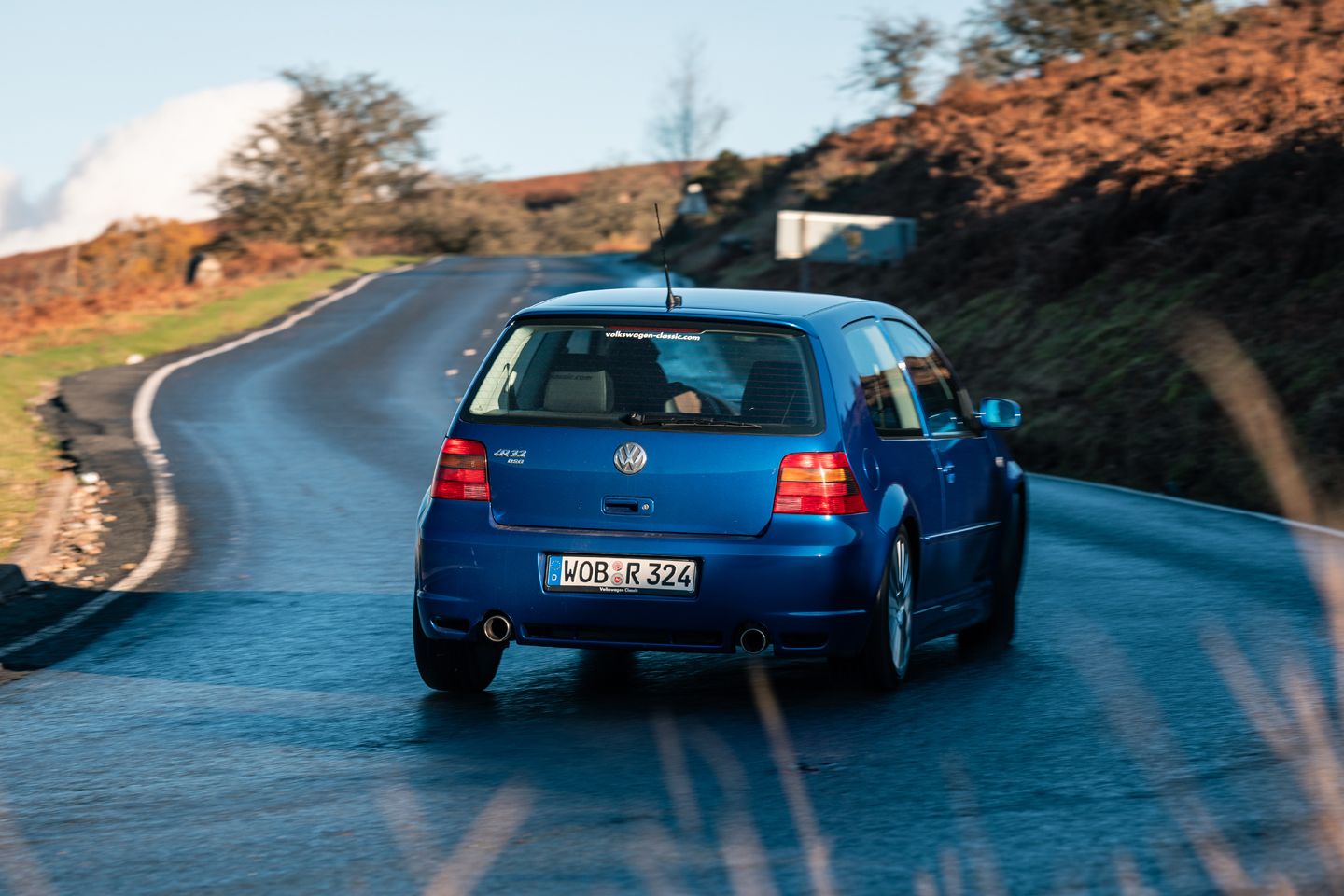
Admittedly, this wasn’t that astounding. We’d already had the Mk3 Golf VR6, and there was a 2.8-litre V6 version of the Mk4 as well. But the R32 went much further. The 24-valve V6 was bored and stroked to the 3.2-litres that created the R32's name. And the R32 came with 4Motion four-wheel-drive, as well as something new and revolutionary: the ‘Direktschaltgetriebe‘. The R32 was the first production car in the world to get a direct-shift gearbox, or DSG as we know it by today. Admittedly, that was just the German-market cars. Over here, it was the Audi TT with the same drivetrain that kicked off the DSG-age, and UK R32 buyers made do with a six-speed manual instead.
It's not just me overstating the significance of the car. Here are some excerpts from the R32’s original press release, and there's more than a hint of puffed-out chest in their tone: ‘Never before has there been a standard Golf with such a powerful engine as the R32. Its 3.2-litre V6 engine gives it a performance comparable to a sports car. With this sporty, top-of-the-range Golf, Volkswagen is introducing luxury-class technology into other markets.’
It was all true, mind. The R32 did have technology from the luxury classes. Electronically controlled climate control, rain-sensing wipers, auto-dimming mirrors, heated seats, xenon headlights and, for the technical cherry on top, GPS-guided satellite navigation. This all added yet more weight, of course, but that didn’t matter anymore because of that V6. The toys were nice, but the R32 is really all about the V6. The 15-degree V6, which is such a narrow vee that it needs just the one cylinder head rather than two. The engine produces 241hp at 6,250rpm, backed up by a very healthy 236lb ft between 2,800 and 3,200rpm. And of course, it delivered the much-needed performance boost: 0-62mph in 6.6 seconds (6.4 for the DSG), a standing kilometre in 26.7 seconds, and a top speed of 153mph.
That's not the end of it. The suspension is by McPherson struts at the front with a multi-link arrangement at the rear – hung off a separate subframe – at a time when most family hatches made do with a cheap twist beam. It's not only a more sophisticated suspension arrangement but it makes room for the electro-hydraulic Haldex diff that energises the rear axle. To sharpen up the R32’s responses, the front and rear anti-roll bars are stiffer, the damping and spring rates higher, and the ride height lower by 20mm over a standard Mk4 Golf’s. The brakes are bigger, too: 334mm discs at the front and 256mm discs at the rear, with blue calipers that sit behind a set of rather gorgeous 18-inch multi-spoke Aristo alloys, which leads me to the looks.


The nice thing about the R32 is it didn't grow stupid bits. It stayed classy looking. If you know what to look for you'll spot one – the extended front and rear bumpers, dark taillights and twin, 3.5-inch exhausts poking out the back – but it's subtle. It’s an approach many German manufactures could perhaps look to revisit today. Inside, it has leather-wrapped Konig sports seats, some chrome edges around the dials and aluminium trim. That's it, really, but it's enough.
Even sitting in it today, the interior looks and feels smart. The quality of the materials is as good as I remember from my days running a Mk4 Golf – a company-supplied GTD rather than an R32, sadly. Even the less salubrious plastics are rubber coated, which gives them a matt finish and makes them more pleasant to touch. If only the current Golf was this good. It has some faults, though. The low-set climate controls and infotainment – both are ergonomic no-nos – and I’m not sure the infotainment system is a hell of a lot easier to use than Volkswagen’s latest attempt. My first thought when I switched it on was it’s on the blink. You know the Windows’ blue screen of death? The graphics look very similar to that, and really demonstrate how much things have moved on in 20 years.
The R32’s chassis set-up feels very of its time, too. The suspension upgrades were a determined attempt to lock down the body, but very little thought was given to compliance. This was a theme with sporty stuff from the VW Group back then – most of its fast cars rode with an uncompromising edge – but it does translate into tight control for the R32 over testing Welsh B roads. And it’s that, along with a bucket-load of 4Motion assurance, that are the cornerstones of the current Golf R’s cross-country coolness.
The R32 does understeer, but there’s a knack to dealing with this: backing the thing in. The R32 really does rotate off the throttle. That tucks the nose in and, once the front has settled, you can hoof it on the exit knowing (mostly) it'll keep going where you've pointed it. Even in the treacherous conditions that we were blessed with, the R32 is like the God of grip summoning traction and firing you from one hairpin to the next. Don’t expect oversteer, though. I tried to provoke some and the most I felt was a slight jink – just a sense that the back wheels were, briefly, pushing a little more than the fronts were pulling.


For the first few miles, I thought the R32 was a little under-braked, but that’s not the case. The brake pedal has a solid, almost dead-weight feel, but it sheds speed effectively. The conditions did mean the stops were less forceful than they would’ve been in the dry, of course. For me, the steering is its weak point. It’s okay through a series of fast sweepers – where you’re not testing the limits of grip and have little more than a quarter-turn of lock applied. Then it's slow but accurate. It's when you arrive at something tighter, needing to get the entry speed right and gauge the grip that you find the problem. It gives you nothing. No hint of the limit. You enter every such bend very wary of carrying too much speed, and only realise you have thanks to that heart-sinking moment as the front scrubs a wider arc than intended. Shout out to Harry, our snapper, who sat at the very edge of a bend asking for "a bit more lean" to liven up the shot. I kept telling him I had no sensation of the grip and that I was genuinely terrified I might take him out, but he insisted. I've never worked out whether Harry is brave or foolish.
Anyway, the most surprising thing about the R32 is its gearbox. This German-registered car has the DSG ‘box, and I thought it would feel a bit clunky, but no. Sure, the initial take-up is grabby but the shifts are sweet and responsive, whether you’re going up or down the gears. Still, while that’s very impressive the engine is the R32’s party piece. V6s aren’t my favourite configuration, but this one is so mechanically smooth it won me over – I could almost mistake it for a straight-six at mid to high revs. It’s only low down, when you get that famous R32 warble, that you can tell in an instant how the cylinders are arranged. By turbocharged standards it lacks torque, but for a naturally aspirated engine it’s torquey enough, pulling handsomely all the way through the rev range. That means you don’t have to rev it hard to get the R32 going, but, because the sound is so saccharine, you can’t help yourself. I found myself ringing it out for the sake of it, and if you happen to be outside as someone else is doing the same it sounds even better.
You know all modern cars feel massive? Well, here’s an odd thing: when I moved to the Golf R 20 Years I hardly noticed the size difference. Surely two decades of crash safety progress would've made a significant difference, but it turns out not. This prompted a bit of research. It’s not that the Mk4 was especially big in its day – in terms of length and width, a Mk1 Focus was very similar or bigger. If anything, it’s that the Mk8 hasn’t grown as much as its rivals. Compared with a modern Focus it’s relatively compact. Still easy to see out of, too, because of its sensibly sized windscreen pillars, and when you’re on the outside, looking at both cars side-by-side, you notice that the latest Golf has stayed pretty, classy and understated.
I’ve already mentioned the cheapness of the interior, and that’s brought into sharp focus by the Mk4’s quality in that department. Then there's the infotainment system - but what's the point in me giving that yet another kicking? At least the software has improved to an extent over the first Mk8s I tried. In those the screen would turn into a river of purple, as if indicating some sort of zombie apocalypse. The only rivers I saw while driving the 20 Years edition were the ones running across the road, so that's progress.


I haven’t told you the price yet, have I? It’s £48,000, or roughly £5,000 more than a standard R. For that you get some blue R badges, and, if you go for Lapis blue paint, black door mirrors and 19-inch wheels. If you go for white bodywork, you get blue mirrors and blue-faced wheels. You also get a rear spoiler, which is part of the standard R-Performance Pack. That also whips away the speed limiter – raising the top speed to 168mph – and adds the drift mode. Inside, there’s real carbon fibre trim for the first time in a Golf and nappa leather sports seats – very good seats; a lot more supportive and comfortable than the R32's. I’m told that if you were to tot it all up, the extra equipment would cost more than five grand.
Some things are unique to the R 20 Years, though. Like, for example, the small power hike that squeezes 333hp from the EA888 2.0 TSI. This means it does 0-62mph in 4.6 seconds – a tenth quicker than the standard car. It comes with a pre-load feature, too, which maintains a constant turbo speed on part throttle to reduce lag. The seven-speed DSG gearbox has also been sharpened up for ‘more feedback’ with firmer changes in Sport and Sport+ modes. Then there’s the (get the sick bag ready) Emotional Start sequence. If you hold the start button down and then press the brake, the engine fires with a bit more aural theatre. I tried this. I really had to listen out for the difference, and afterwards I felt as emotional as a lump of wet coal.
That aside, I like the Golf R 20 Years edition. It’s unfeasibly quick, even for a modern hot hatch, and the engine is so useful thanks to its tsunami of turbo torque, triggered from so few revs. It’s not as characterful as the R32’s V6 – not by a long way – but it’s not boring, either. It parps away under load and pops and bangs on the overrun. The trouble is you know all the fun stuff has been engineered in to mask its natural deficiencies – like the fact that it's not a 'six'. You could say the same about the drift mode, I suppose. That's also gimmicky but does it matter? Not really. It means you can have more than a sense of the back moving; you have some mild (not wild) angles. So, yes, it’s contrived, but it also makes the R come alive. I approve, it must be said.
Despite the added silliness, though, it remains a highly effective tool for the cross-country dash. When you want it to be locked down, it is. The R32’s all-wheel-drive surefootedness lives on, but in the R the tyres dig into wet roads even more effectively – like they have Tarmac-piercing spikes. It retains the feeling of balance and adjustability, on or off the throttle, and now, with the optional DCC suspension fitted to the car I was driving, comes compliance. That takes the body control to new heights and, if you play around with its settings, removes R32’s cart-sprung firmness. It’s comfortable.


You can feel the progression in other ways. The brakes have more finesse about them along with more bite. You can deploy them more effectively on a cold, wet day, leaning on them heavily to begin with and easing off to a trail towards the apex. Then there’s the steering. It’s in a different league to the R32’s, quicker and more accurate, as well as much easier to read. That legibility through the wheel, combined with the R’s extra grip, ramps up the corner entry speeds and your confidence that it’ll stick. And my sense that Harry would live for one more shoot. What you also notice is that the R 20 Years doesn’t feel heavier. If anything, it's sprier than the R32. That had me delving into the press packs again, and, sure enough the Golf R is...heavier. But only slightly: the 2022 car weighs just 3kg more than the original.
Really, what comes across after driving them back-to-back, is two Golfs with almost opposing talents. The R32 feels beautifully made. It’s from a time when budgets were there to be broken, not slashed. It feels almost decadent, especially with that wonderful V6 that now seems like such an alien concept in a car like this. It’s not a pure driver’s car, though; it’s a point-to-point tool, albeit an effective one. The Mk8 Golf doesn’t feel like a money-no-object production. Sitting in the R – even one pushing £50,000 with real carbon trim – you’re surrounded by evidence of cost-cutting. That’s a shame because, as I said at the start, when it comes to the drive, the Mk8 R is the best R yet. It’s nimble, responsive and fills you with confidence, but it's also enjoyable. It's a proper hot hatch. Yet lurking behind its new-found sense of bonhomie, the essence of the R32 unquestionably remains: a classy, practical car that can scythe through the countryside with ease.
Specification | Volkswagen Golf R32 (Mk4)
Engine: 3,189cc, naturally aspirated, V6
Transmission: 6-speed dual-clutch, four-wheel drive
Power (hp): 241hp @ 6,250rpm
Torque (lb ft): 236 @ 2,800-3,200rpm
0-62mph: 6.4sec
Top speed: 153mph
Weight: 1,477kg
MPG: 24.6 (NEDC)
CO2: 276g/km (NEDC)
On sale from: 2002-2003
Price new: £22,000
Specification | Volkswagen Golf R 20 Years (Mk8)
Engine: 1,984cc, turbocharged, four-cylinder
Transmission: 7-speed dual-clutch, four-wheel drive
Power (hp): 333 @ 5,600-6,500rpm
Torque (lb ft): 310 @ 2,100-5,500rpm
0-62mph: 4.6sec
Top speed: 168mph
Weight: 1,480kg
MPG: 36.2 (WLTP)
CO2: 175g/km (WLTP)
Price from: £48,095


It had a completely different character to the S3 of the day and I often drove with the rear seats folded down just to hear more of that V6 sound.
Wish it was a but quicker though. The fuel economy was very poor value for the performance on offer.
Also, says in the text 3kg weight difference but spec shows 1477kg mk4 vs 1555kg mk8? Is the anniversary edition lighter?
It was very nice inside vs the competitors and the engine sounded very good indeed.
But it was a crashy ride, thirsty and not as fast as all that noise suggested it should be.
And agree with the review about zero steering feel... it felt like a liability to drive fast.
Either totally hooked up or understeering... and you never really knew what you were going to gett until you got it!
Nice enough to look back on as a bit of a game changer, but I'd not rush out to buy one now.
And some of the the insane pricing makes that decision even easier.
Replaced it with a breadvan Civic Type R (EP3), which faults not withstanding, I enjoyed a whole lot more and have much fonder memories.
By comparison, you can see where they’ve sewn up the cow’s arse for the hide to make the drivers seat of the MK8. The interior will be full of yogurt pot plastics too, which I guess doesn’t matter as most will be filled with KFC and Mc Donald’s merchandise as they get ragged around Cheshire, driven by a 15 year old on Police Camera Action.
Not desirable at all sadly.
The interior, noise, steering and dry road performance of the 147 GTA was miles ahead as a performance car, as long as you’re don’t continually force under steer on to it like Jeremy Clarkson.
But I’d take the R32 on a wet autobahn over the 147.
We’re there any other V6 hatch competitors then? The S3 was a 4 cylinder with been more under steer than the Alfa.
Come on guys, 32 valves in a 6 cylinder equals 5.3 (recurring) valves per cylinder when wouldn’t it be 24 valves (at 4 valves per cylinder)…?
Look to Porsche for the answer where they are getting 500hp from a 4.0 N/A six cylinder so probably a modern Golf R with a 3.6 V6 would be around 450hp accompanied by a fantastic sound track as it screams it’s way up to 9k revs.
Oh well……
You can argue that the R goes back a lot further. I had a Golf VR6 new back in the early 90s. It was an interesting first effort and a bit of a sleeper.
As @Volare posted, I had a Mk4 GT TDI and loved it: at the time, I didn't quite appreciate how well-built and high-quality it was, especially the interior. It wasn't top-spec (cloth seats without heating, basic air con etc) but I was doing fairly frequent runs from Norfolk to the north of Scotland and it would easily cover the miles and keep me in comfort the whole way.
I looked after it, not manically but kept it looking smart, oil and filter change every 5000 miles etc, but sadly had to get rid due to a change in circumstance.
There don't seem to be too many nice ones about now. Most are either obviously well-used daily runners still chugging on or they are chavved-up: skirts and spoilers with flaking paint, big wheels with gouges all over, darkened windows with the obligatory 'cruiser' stickers, plus billows of black exhaust if it's a diesel. Such a shame.
I'd have the Mk4 over the Mk8.
edited to add: it looks as if the Mk8 has a manual bonnet stay whereas the Mk4 has a single gas strut. Is this another bit of building to a price?
VW are probably tactically ignoring the bug as they wouldn't be creating a 20th anniversary Beetle to celebrate.
Gassing Station | General Gassing | Top of Page | What's New | My Stuff