
Winnebago shows e-Transit eRV2 motorhome
Famed RV constructor envisages van life in a zero-emission Ford Transit...
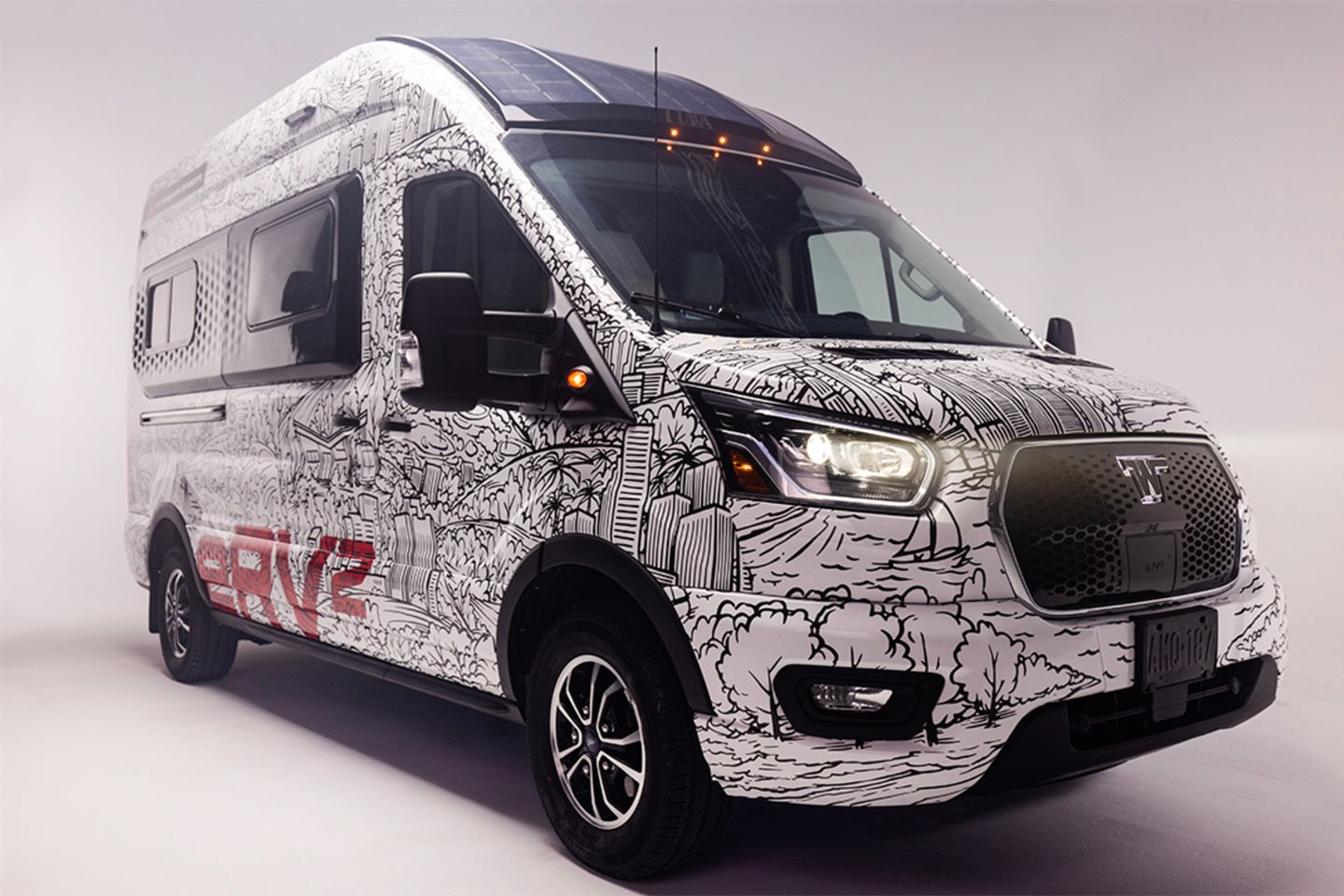
The future of all travel is going to change pretty drastically, from motorsport to air freight, and holiday transport is undoubtedly included in that. While exploring the world by motorhome or RV won’t change - if anything repeated lockdowns has increased everyone's appetite for adventure - the way they’re all powered will have to. The days of new 6.7-litre V8 diesel RVs - like the 2023 Newmar Dutch Star, for your information - are numbered. Into that void may well enter recreational vehicles like this, the Winnebago eRV2 prototype. Yep, Winnebago has made an electric one. And it's a Transit.
Based on the award-winning Ford E-Transit, it's said to be America’s first all-electric, zero-emission motorhome prototype. Which is no small feat. And if you’re worried about range in something designed to cover long distances and weighed down with amenities, you’re not alone. For the moment, a regular E-Transit in the US - i.e., not the actual eRV2 - has an EPA range of 108 miles. Which isn’t much, especially if we assume that EPA ratings are as optimistic as WLTP ones.
Nevertheless, Winnebago says the range is fine for its test programme, and that it is ‘actively pursuing range extension opportunities to incorporate into a future commercial version’. They’re going to have to, really - nobody’s going to want a motorhome with a worse range than a Honda e, especially in the US.
More encouragingly, the eRV2 is backed up with Winnebago’s proprietary IonBlade battery. Developed with Lithionics Battery, it provides power to the house bit; 15,000 usable watt hours is said to be enough for seven days Boondocking (just not very far away, of course), backed up by 900-watt solar capacity. Winnebago even reckons the IonBlade doesn’t take up too much space under the floor. So if you are stuck waiting for charge, the home bit of this motorhome will keep going for a lot longer.
It's some living space, too. Winnebago says the eRV2 is built ‘for maximum comfort and convenience, centered on modern user needs’. So it employs something called Japandi design principles (a mash-up of Scandinavian and Japanese - new to us as well) to promote calm and functionality, the upholstery uses plant-based materials, the flooring is recycled and there’s a Winnebago app to monitor energy management. This is no mere Transit with a hob and a bed. You can even work from motorhome in the eRV2, with wi-fi, charge points and adaptable desk spaces. Though, again, until the battery is upgraded you won’t be that far from home.
“Our primary goal in building the eRV2 was to help people comfortably explore the world around them with less environmental impact,” said Huw Bower, Winnebago president. “The eRV2 embodies our pioneering legacy, representing not only an achievement in design, innovation and sustainability, but also our commitment to continuously evolve with the changing needs of consumers and the world we share.” With prototypes doing real testing with real Winnebago customers right now, it surely won’t be long before the eRV2 goes from Florida RV SuperShow concept - yes, it’s a real thing - to the open road. Hopefully with at least a couple of hundred miles range in it.


And please Zero Emissions ... Do the tyres and brake pads never wear away to dust ?

So you'd be able to travel in this thing but your camping spot would literally be each consecutive charging point.
And compared to the range you can expect from the typical equivalent Sprinter 313 based camper it's a total joke.
It's nice they did a prototype but the only thing they've really managed to demonstrate right now is that you're better off planning to buy something else while it's an option. Or maybe waiting a few years.
So you'd be able to travel in this thing but your camping spot would literally be each consecutive charging point.
Range is pants and I’ve not yet been on a campsite that has proper charging facilities and once parked up and plugged in you’ll be fighting charging the vehicle batteries over stuff like TVs, heating, etc. In a motorhome you’re very conscious of the power you’re using to avoid tripping your supply out and this will only heighten concerns.
Good concept but a way to go yet and as others have said, it’s a comfortable place to sit while your charging your van (for the umpteenth time that holiday)
Gassing Station | General Gassing | Top of Page | What's New | My Stuff