
British-built FCEV platform promises hypercar pace
Looking for a rolling chassis to underpin your fuel-cell start-up? WAE Technologies has just the thing...
Williams Advanced Engineering has been busy of late. Last January it announced that the division had been sold to an Australian mining firm with a view to applying its battery-electric know-how to the troublesome business of transporting millions (and millions) of tonnes of iron ore about the place. A worthy enough cause in the grand scheme of things, but we did wonder if that would be it for WAE and the rather more frivolous business of making human beings go very fast for comparatively short distances.
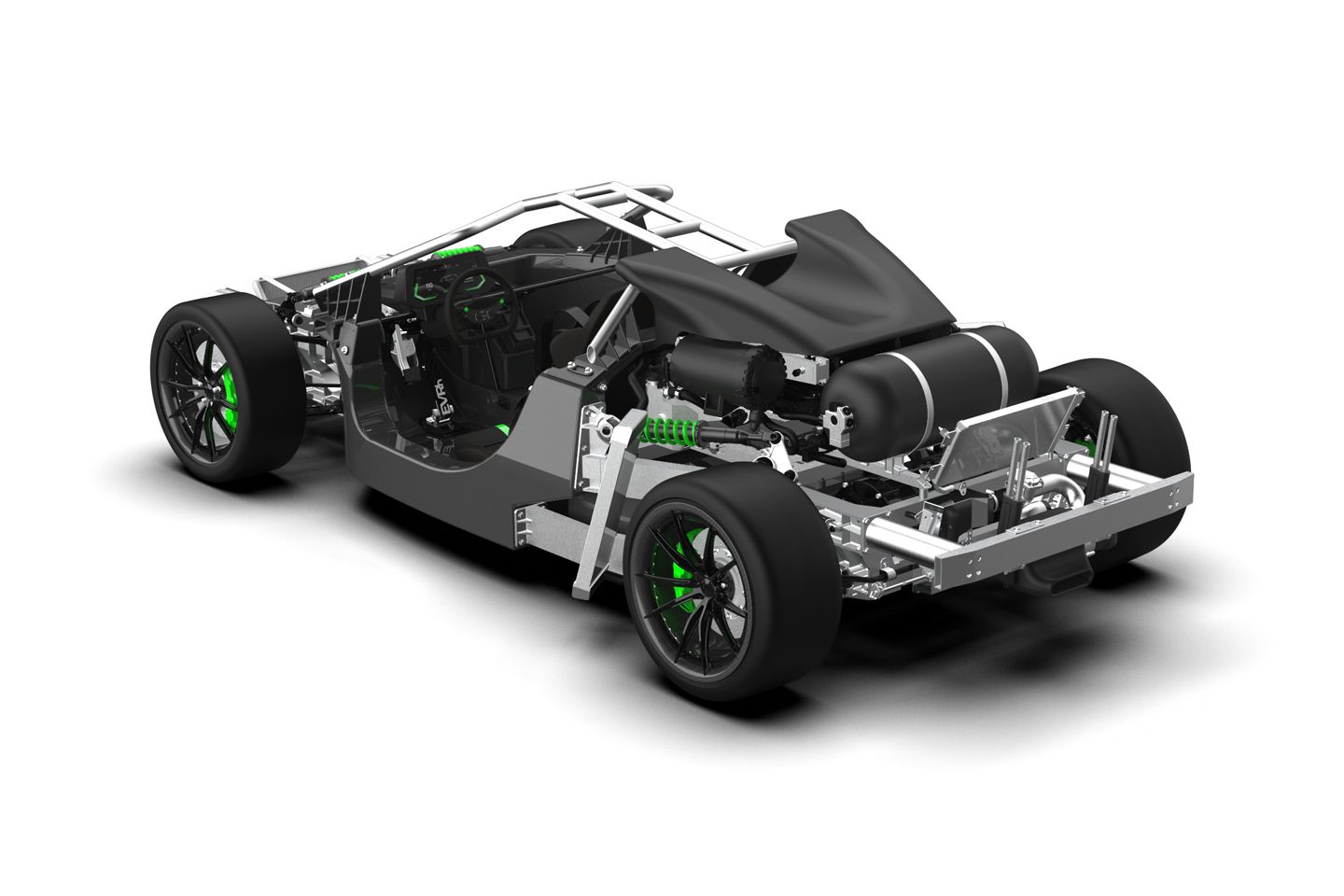
How wrong we were. Not only did WAE reveal a turn-key electric hypercar chassis furnished with 2,200hp last September - and rebrand as WAE Technologies Limited in January - it has now gone one better (at least in terms of technical complexity) by launching a follow-up intended to demonstrate the potential of a hydrogen fuel cell in a ‘high-performance vehicle application’. Effectively WAE has installed an H2 fuel-cell system in the middle of its EVR rolling chassis, allowing ‘for end users to have zero tailpipe emissions driving’ while simultaneously enjoying sub-2.5 second 0-62mph performance combined with a projected range of 600km (373 miles).
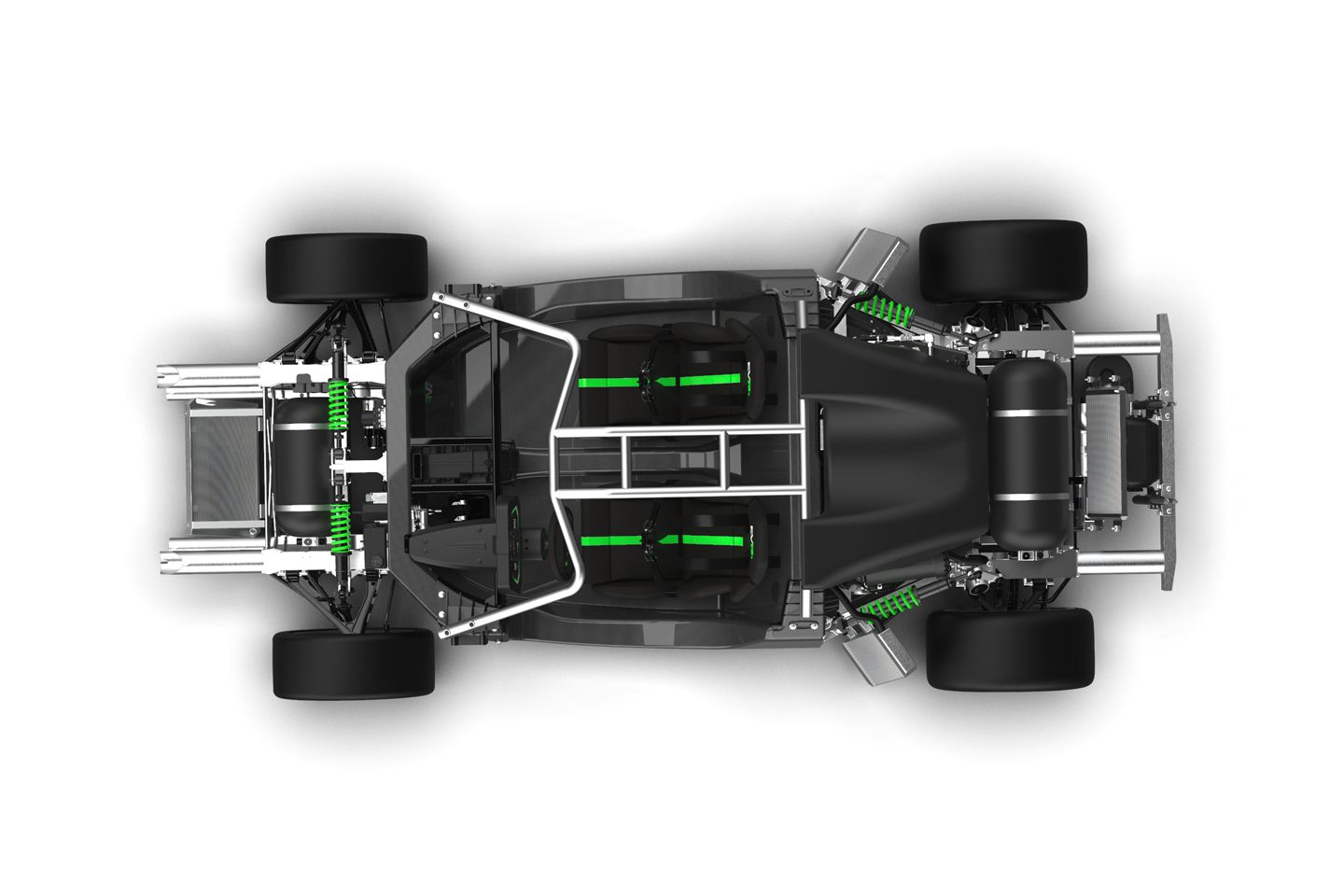
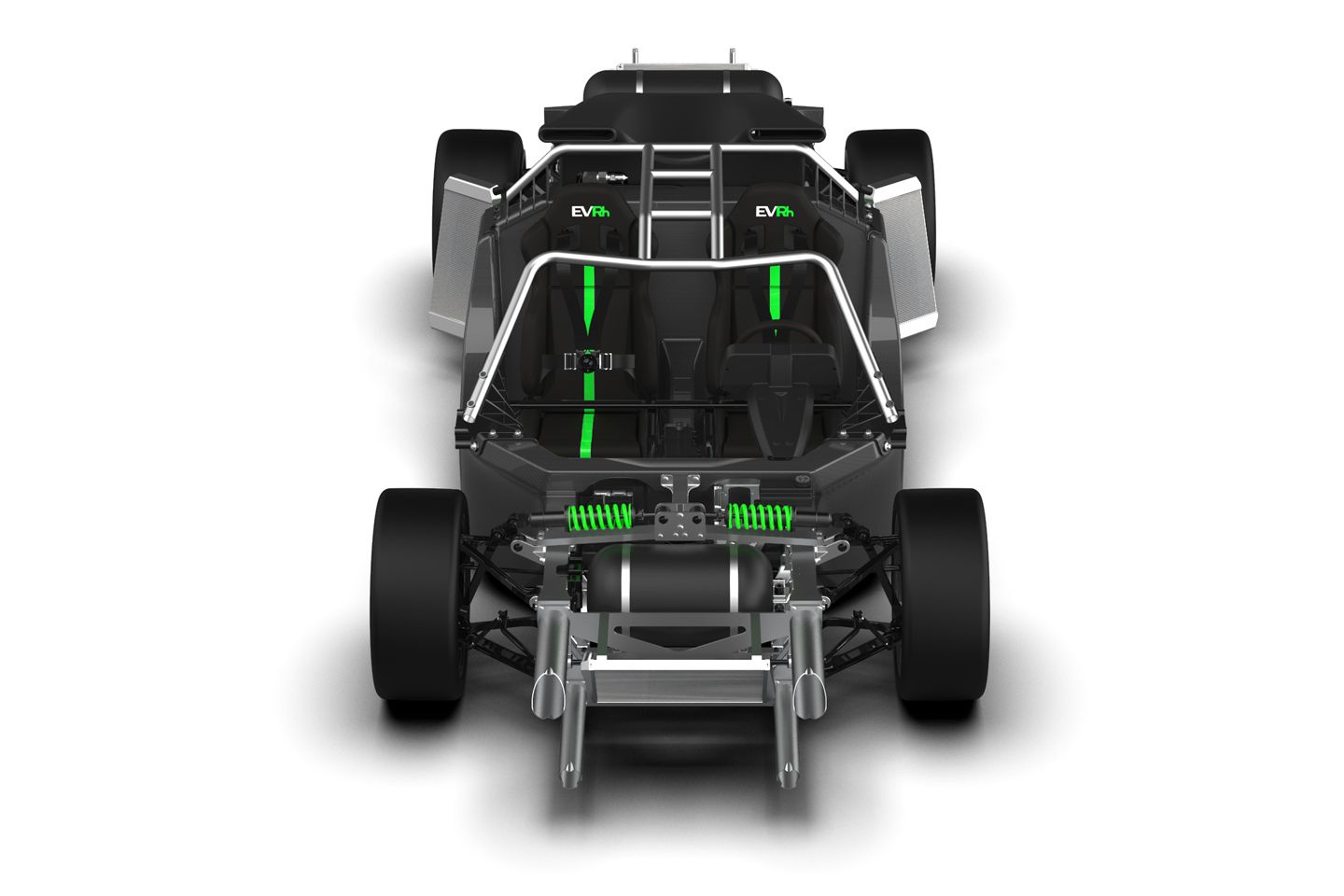
The parallel-hybrid derivative of the original concept has been dubbed EVRh, and has been designed and engineered at WAE’s facility in Oxfordshire. In essence, it promises a similar solution to the battery-electric variant: any OEM or start-up looking for a way to turn an evocative on-paper design into a real-world, hydrogen-fuelled reality need look no further. Alongside knocking years and several zeroes off development costs, WAE reckons its lightweight composite structure offers ‘maximum design flexibility’ and support for both all-wheel drive and rear-drive layouts.

‘Lightweight’ is among the operative words there. WAE has found an unspecified partner to deliver the ‘state-of-art liquid-cooled FCEV battery pack’ capable of outputting 430kW (or 585hp) while providing 120kW of charging capacity. Its expertise has presumably been focused on integrating the system and its associated H2 fuel tank into a platform that includes a two-seat tub and the potential for a vehicle ‘with a mass less than 1,900kg’. In case you’ve spent the last decade snoozing, that figure is impressively small for an EV that’s turning hydrogen and oxygen into forward motion just behind your head.
"Since its inception in 2010, WAE has been dedicated to innovating cutting-edge and transformative technologies across a variety of applications and industries,” said Paul McNamara, Technical Director for WAE Technologies. “EVRh, on display at CENEX LCV for the first time, is another key example of WAE’s capabilities in the development of solutions for zero carbon vehicles, enabling state-of-the-art FCEV vehicles to be brought to market rapidly and cost-effectively.”
WAE declines to say what exactly it means by ‘rapidly’ (presumably it depends on what manner of car you’re hoping to get out of the process) - but its projections for what we assume would be a track-only prospect are rapid indeed. The firm encourages us to envisage a fuel-cell model with ‘an estimated lap time of the Nürburgring in under 7mins 20secs’ which, incidentally (or not) would make it quicker than the Tesla Model S Plaid Track Pack that currently holds the production EV lap record on the Nordschleife. Still some way short of the Rimac Nevera that set the outright 7mins 5secs electric hypercar benchmark over the summer, but WAE reckons ‘continuous enhancements’ are all part of the rolling chassis deal. Let’s hope the phone is ringing off the hook.


Just crack the hydrogen using wind turbines producing energy nobody wants and you solve their intermittency problem. Win win. Even if only one in five petrol stations installed a hydrogen tank the sports car owner could make that work for longer tours.
A 300bhp per ton instant torque machine with a low centre of gravity and perfect weight distribution would be an absolute weapon.
Just crack the hydrogen using wind turbines producing energy nobody wants and you solve their intermittency problem. Win win. Even if only one in five petrol stations installed a hydrogen tank the sports car owner could make that work for longer tours.
A 300bhp per ton instant torque machine with a low centre of gravity and perfect weight distribution would be an absolute weapon.
In a couple of years, Porsche will release a similar car in the form of the Mission X: https://www.porsche.com/uk/mission-x/
Good luck to anyone going down the hydrogen route for these cars, but it seems to me that just adding some extra cells to what is already quite a large battery in the fuel cell car makes more sense, especially as battery energy density improves.
Just crack the hydrogen using wind turbines producing energy nobody wants and you solve their intermittency problem. Win win. Even if only one in five petrol stations installed a hydrogen tank the sports car owner could make that work for longer tours.
It's all down to the initial start up cost to get a H2 project off the ground.
However, once the project is up and running, it is literally a licence to print money.
Flying over Germany on Sunday there were countless thousands of wind turbines not spinning at all because of no wind. But on many days they can spin quite happily but nobody needs the electricity and so it goes to ground or they feather the blades and brake the rotor. If they could be used to produce H2 when nobody needs the electricity then you're getting nearly free H2. Which can be stored and used in HGV's JCB's sportscars and my Comine Harvester.
Seems neat. Ditto for something like a Severn river barrage.
It's all down to the initial start up cost to get a H2 project off the ground.
However, once the project is up and running, it is literally a licence to print money.
It's all down to the initial start up cost to get a H2 project off the ground.
However, once the project is up and running, it is literally a licence to print money.
We are currently shut down for yet another safety assessment. The hydrolyzer is flakey and often out of service, and when they have made hydrogen shipping it to anywhere useful is fabulously expensive: they have to charter a ferry - and has a not insignificant footprint. In general, if you make electricity you should use it as electricity rather than making electricity to turn it into hydrogen to turn it into electricity.
Hydrogen mixed with other things is valid: HVO and the like, but fool cell powered cars? I don't think so.
This serves as further proof. Literally a build-your-own.
This serves as further proof. Literally a build-your-own.
1) 250 GTO a like
2) Diablo VT a like
3) Aston Martin Bulldog alike
4) Ford Indigo a like
You get the idea if the underneath is effective and this seems to off many combinations then a nice body is all you need
Anti EV folk latch on to any article, I was told that the one Yaris GR with its ICE converted to Hydrogen was proof of a Hydrogen based future, nope, its just Toyota hedging its bets as a massive company. Hydrogen fuel cells arent that efficient by the time you have provided fuel, but burning it in an ICE is mental if you are after efficiency.
Occams Razor applies, how many Hydrogen vehicles did you see this week vs how many BEV's, its none vs loads isnt it ?
And then the same folk that bemoan the lack of charging infrastructure for BEVs earnestly tell you, Hydrogen is the future, there are currently 16 places where you can buy Hydrogen for your car in the UK, my nearest one is 1.5 hours and 57 miles away in Rotherham, nearest electricity is in my garage, with charging stations 0.7 miles away at Sainsburys. And they say EV's are convenient for people without a driveway ? Nope, find a charging point or do a three/four hour round trip.
https://www.glpautogas.info/en/hydrogen-stations-u...
But the electric infrastructure isnt there ?
Not even sure some think that Hydrogen cars are even just a BEV with a different battery really, sure some think they will just pump it in and carry on as normal with IC engined cars. Its not any findness for the technology in a lot of cases, its just that dont like EV's and Hydrogen is "Not EV" so must be good.
A one off prototype mega power hypercar platform doesnt exactly foretell the future of motoring in the UK, good luck to them but suspect will probably never hear about it again.
Hydrogen isnt going away, it will have its place but based on evidence so far, its BEV all the way, and its not plain sailing but then change never is.
Has anyone on PH got, had or been in a Hydrogen car ?
This serves as further proof. Literally a build-your-own.
1) 250 GTO a like
2) Diablo VT a like
3) Aston Martin Bulldog alike
4) Ford Indigo a like
You get the idea if the underneath is effective and this seems to off many combinations then a nice body is all you need
I think that's the electric car equivalent of seeing a ferrari and finding out it's really an MR2 replica

Definitely an interesting project but it's not going to be the magic answer to all the downsides with hydrogen.
Other countries look on with a sense of bemusement.
Hydrogen is an intriguing idea but until hydrogen can be made efficiently it seems to be a way to keep traditionalists happy.
Why don't they just make a car of it. Presumably they still have some legacy expertise from F1, the best way to show it off would be to make a flipping car from it. It would not be that big a leap. As it is now, its a nice tech concept looking for a home.
In the UK, these cars are going to spend 95% of their life sitting in a private garage.
None of those garages will have hydrogen refuelling facilities, all of them will have an electrical socket....
I suppose the 100 mile roundtrip to fill it up at least gives the owner somewhere to drive it to.
Gassing Station | General Gassing | Top of Page | What's New | My Stuff