
Skoda Octavia vRS (Mk3) | PH Used Review
In 2013 Skoda launched probably its best vRS yet - does the Octavia still stack up a decade later?
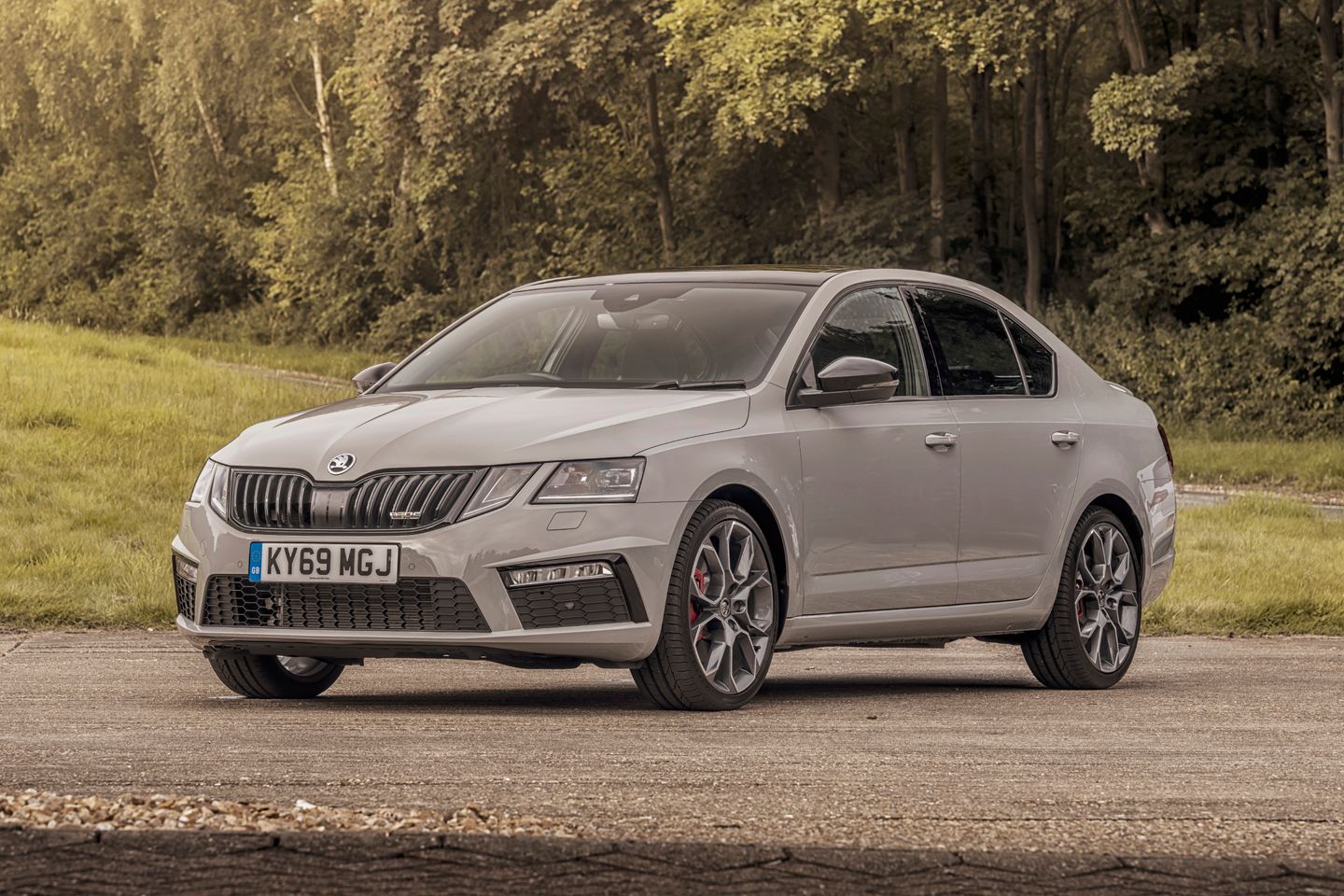
Back then…
It made total sense for the third-generation Skoda Octavia vRS to make its global dynamic debut at the 2013 Goodwood Festival of Speed. We Brits can’t get enough of sporty Skodas, the combination of strong performance, keen pricing and no-nonsense sensibilities so often a winner for a nation of pragmatists. Perhaps it would never be the star of the show at the Duke’s garden party, but taking the vRS to Goodwood got it out in front of a clued-up audience - i.e. exactly the kind of buyer that Skoda attracts.
The recipe for Mk3 vRS was familiar from its predecessors, and had plenty in common with the contemporary VW Golf as well as a good chunk of power - 220hp. The key this time was the switch in architecture, the old PQ35 platform of the previous Octavia switched for VW’s MQB modular toolkit, which made for a lighter yet larger family hatch. The equivalent Golf GTI made significant strides forward from Mk6 to Mk7 - the same was true for the Octavia.
A new engine came in - the now ubiquitous 2.0-litre EA888 turbo - which, though only adding 20hp, improved efficiency; those fresh underpinnings made it a noticeably keener steer; and the new Jozef Kaban-penned design gave the vRS a more confident, assertive look. ‘Business as usual then. And business is good’ was the PH verdict back in the day. There were petrol and diesel engines offered, manual and auto ‘boxes, hatch and wagon - a vRS for all.
There was a facelift in 2016, which brought a new front end that looked quite a bit like a W212-era Mercedes E-Class and 10 more horsepower for the vRS, soon followed by the vRS 245. The 230 saw the Octavia get the VAQ locking diff technology as had been found in the Golf GTI Performance Pack, while the 245 introduced the option of the seven-speed DSG.
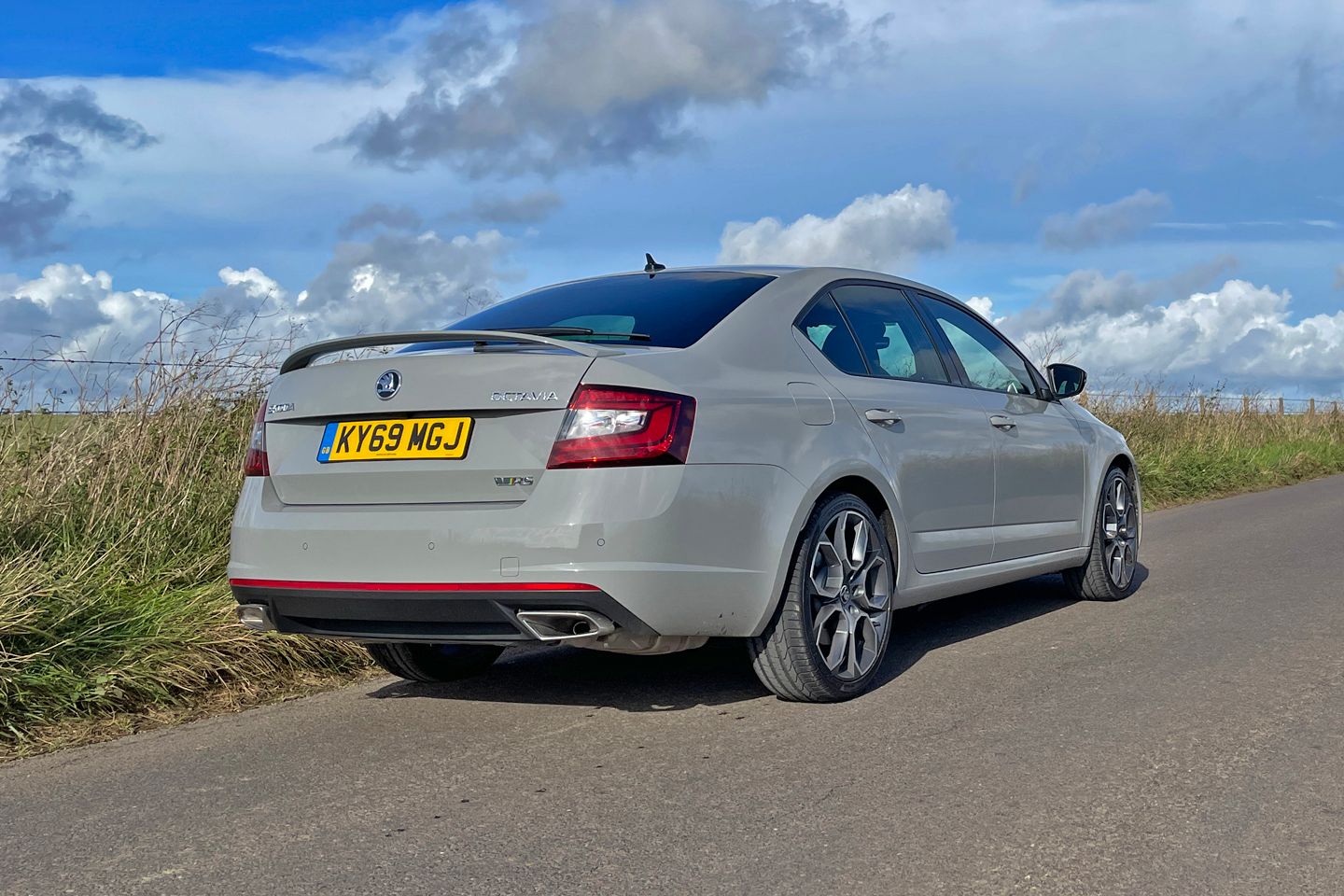
Nowadays…
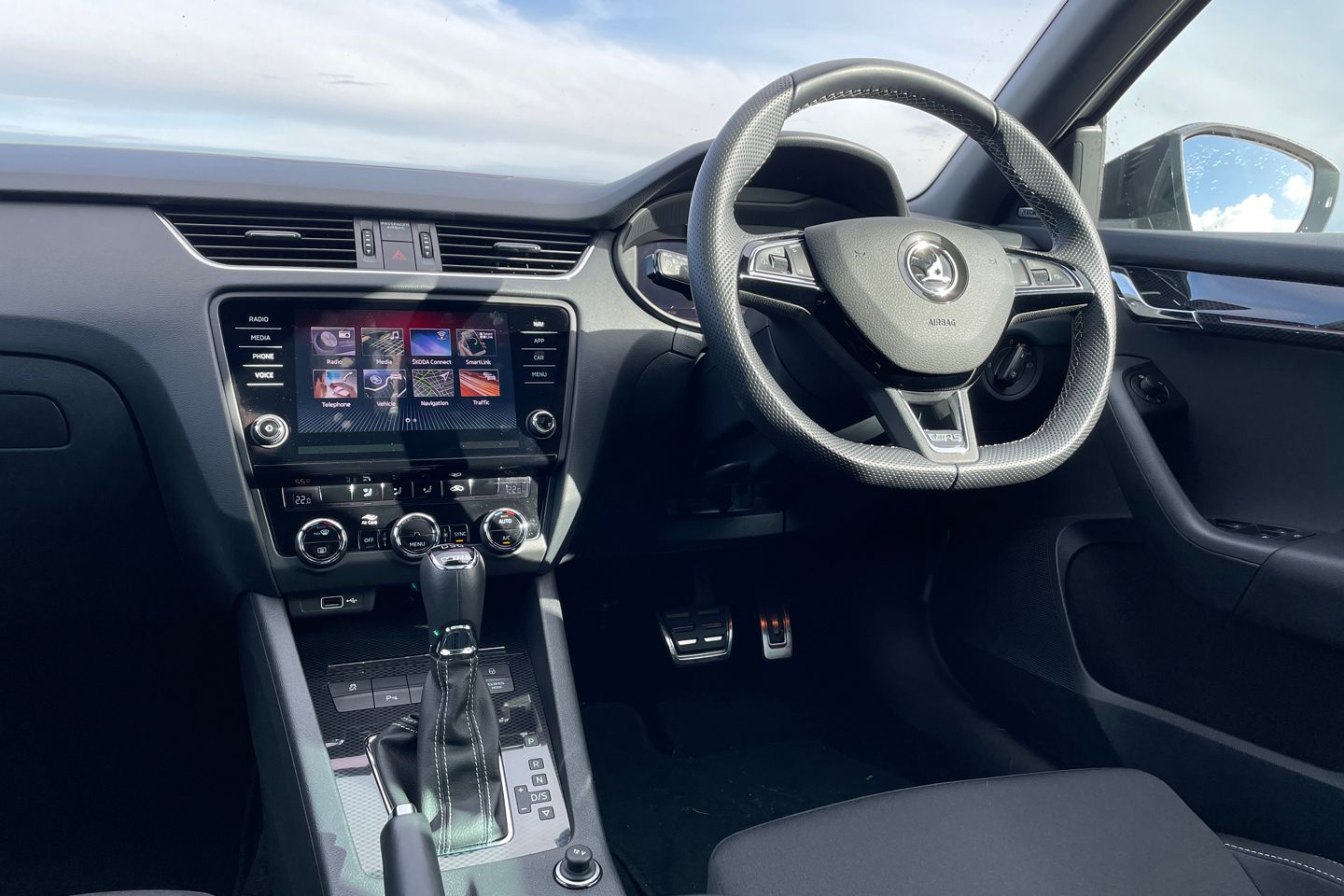
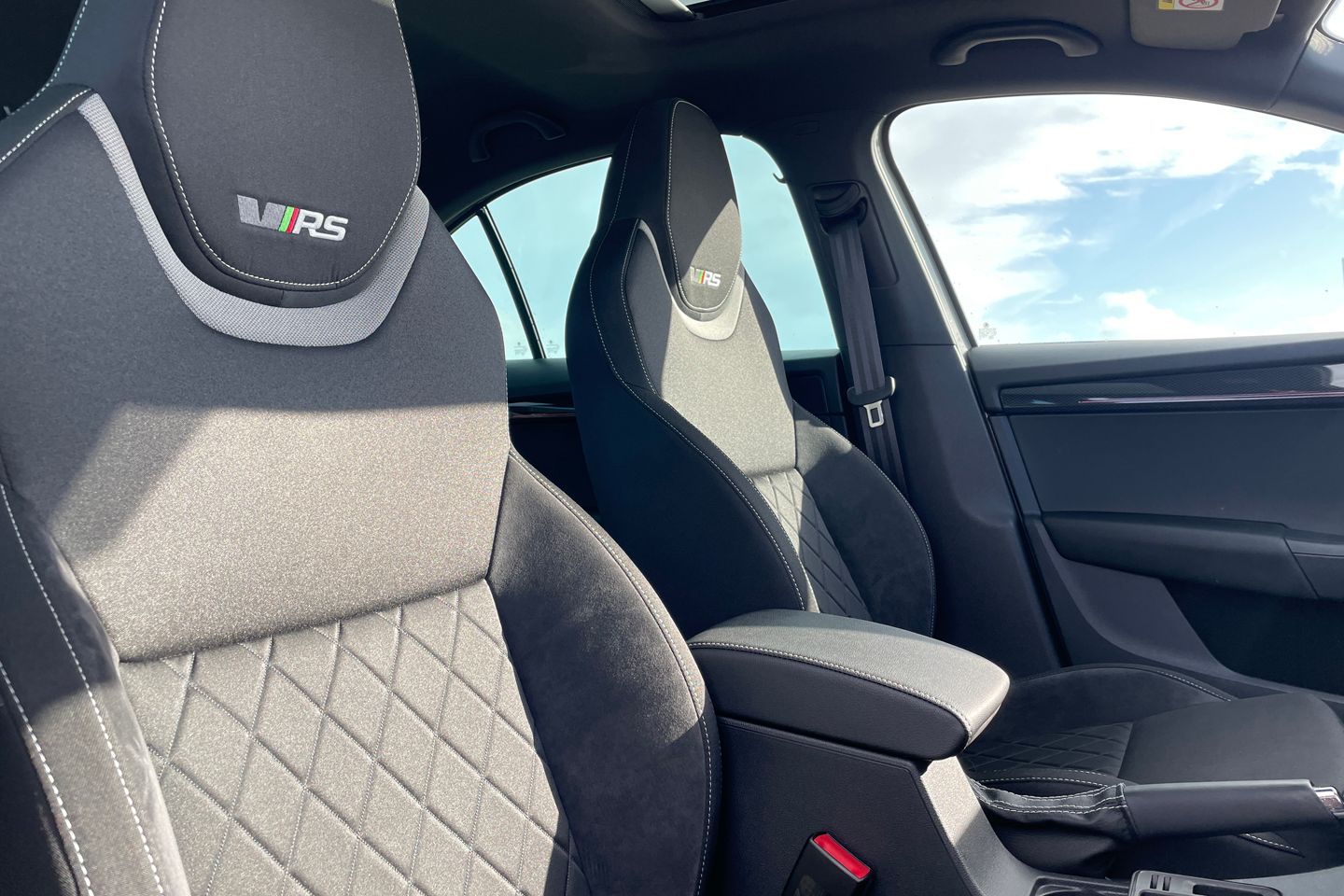
Perhaps the first thing to note about this particular vRS - a very late 245hp car - is how much less annoying it is than a new model. There was an optional Virtual Cockpit by this stage, which feels of limited benefit, but also knobs, and dials, and buttons… for something to deal with every single day, this still feels like the better solution. If, inevitably, a tad less snazzy than something brand new.
Those after an automatic vRS would do well to seek out a facelifted car with the seven-speed - it’s the superior transmission. Still not flawless, with cheap paddles and an occasional reluctance to change down, but a big improvement on the six-speed for responsiveness. It complements the Octavia’s fuss-free nature almost perfectly - stick it in drive, go fast, don’t think too much about it. While carrying a wardrobe.
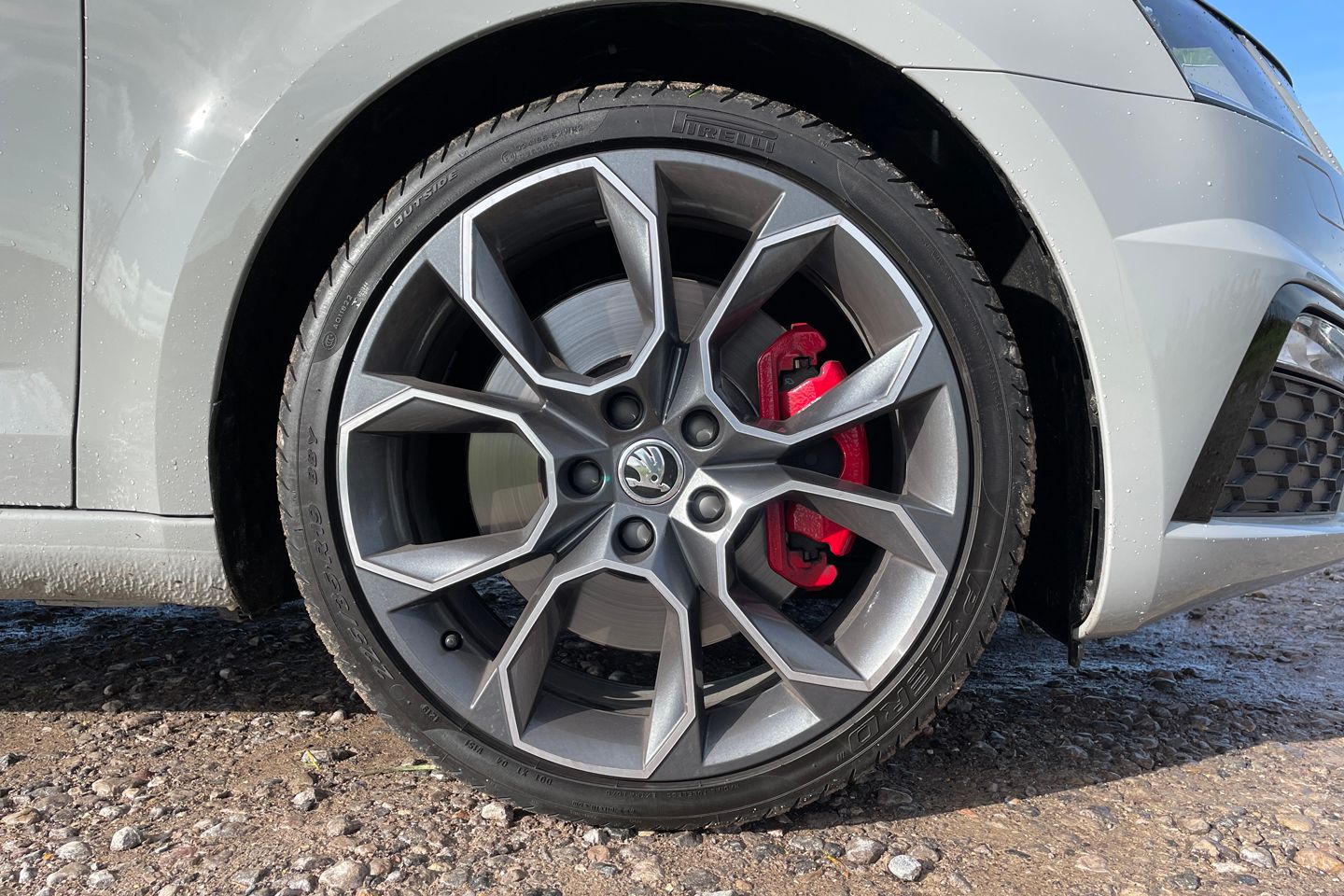
Do think about the drive, however, and there are things to appreciate. The vRS feels lighter and more agile on its feet than the chunky frame might lead you to believe, for which the sub-1,400kg kerbweight can surely be credited. The ride on the optional 19-inch wheels (but without the DCC dampers) is more than acceptable as well. A tad choppy at low speed and not the last word in absolute control, but well suited enough to both cruising and bruising. The modest mass ensures it accelerates nice and briskly, too, a solid 273lb ft wodge of torque working wonders for mid-range muscle.
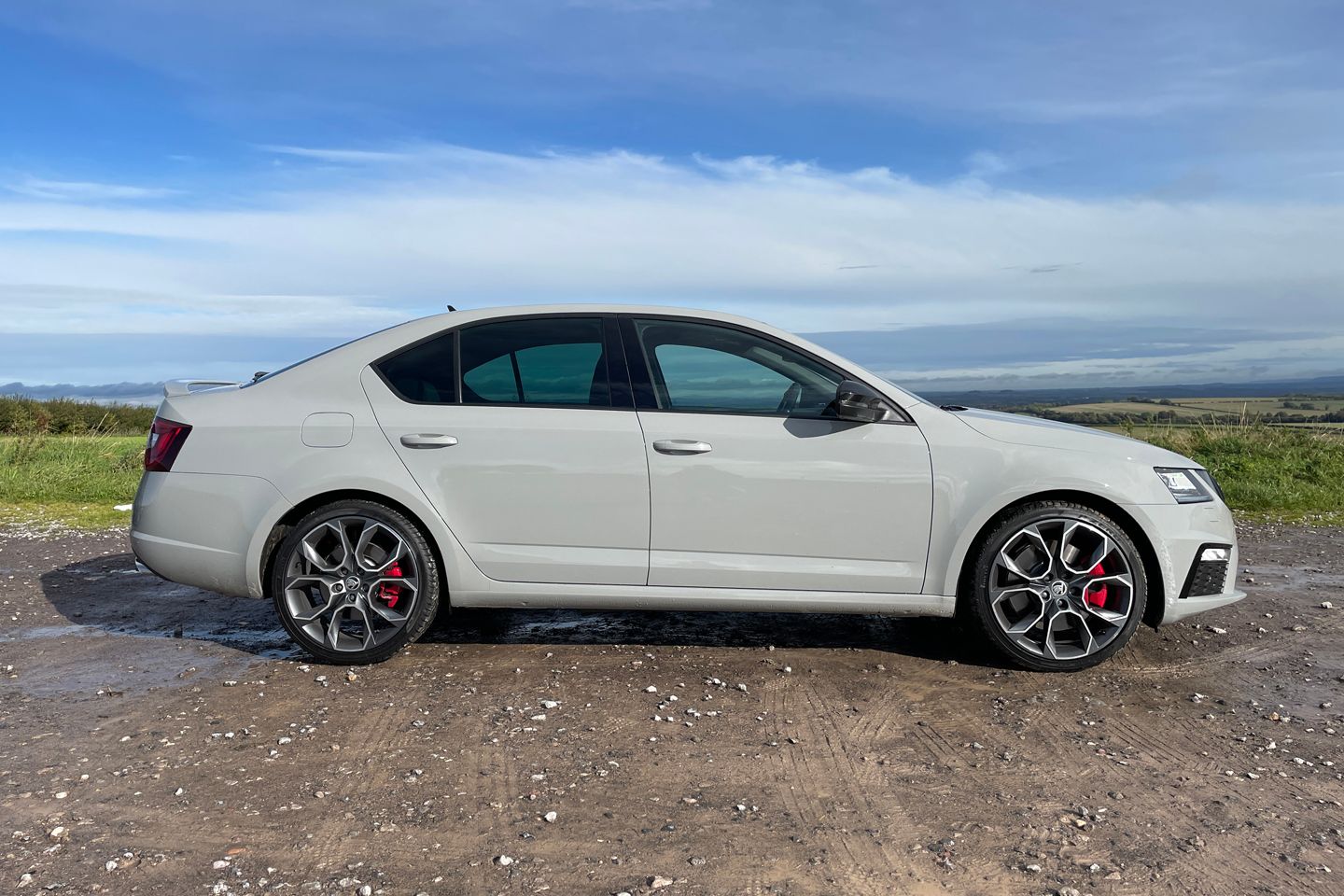
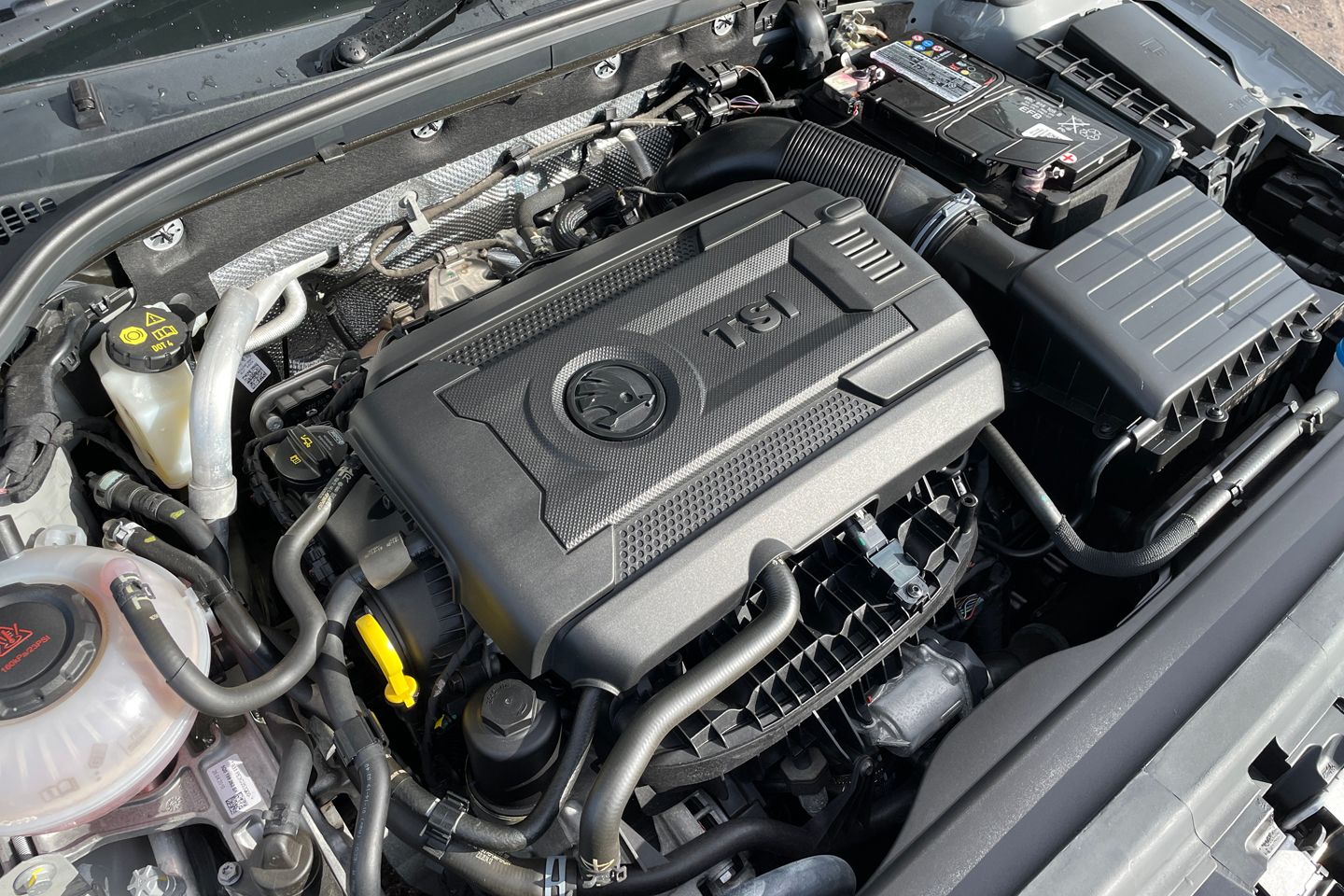
While instinct would suggest a later car with the VAQ would be worth having, it’s not quite the gamechanger that might be hoped for. In greasy conditions there’s more fight from the front end than we’ve become used to with the best FWD cars, doubly frustrating when a flare of wheelspin then convinces the gearbox it needs to change up. The brake pedal can be a tad snatchy, too.
Up to a point then, the vRS is a really sorted car to hustle along, though it certainly has a comfort zone. The modes don’t really help the situation, either, feeling quite binary in their approach and not doing much for confidence: the throttle pedal is on or off, the steering heavy or light, the sound muted or overbearing. There are elements of the newer vRS - chiefly a better-controlled front axle and more finesse to the settings - that have improved this.
But play to the Octavia’s strengths (be patient with the throttle, basically) and it remains a satisfying steer. Not least for its ability to get something this genuinely humongous (590 litres of boot space, dontcha know) down a road at genuine hot hatch speed, while able to (almost) tour like a large saloon as well. Even on this brief refresher drive, the vRS feels like classic sporty Skoda: not exactly unforgettable, but probably very hard to replace as a do-it-all performance car. Especially with all of them out of warranty now - a whole world of tuning options is your oyster…
Should you?
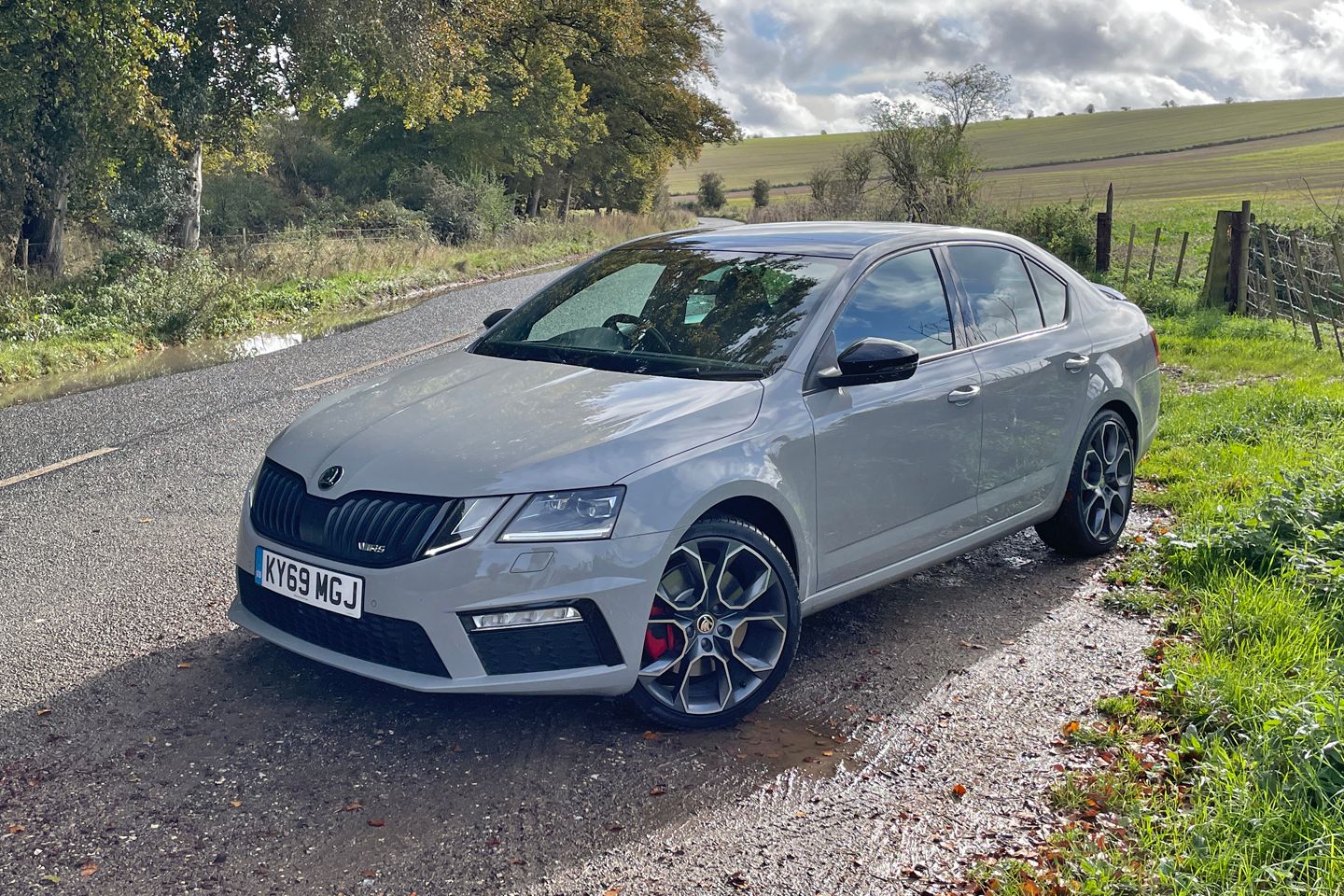
Definitely. There’s very little reason not to. Nothing else is capable of as much under one roof for the money as an Octavia vRS, which is why the model was so popular in the first place. That it boasts handsome looks and a logical interior in its favour only makes its case stronger. The Mk4 is a better car to drive, but this one arguably nails the unpretentious yet unputdownable vRS thing more emphatically.
To that end, in fact, we’d probably seek out a pre-facelift model to get the most out of this vRS generation. The original look is somehow less attention-grabbing but more stylish, and there’s no danger of the interior having been optioned with gimmicks either. It’ll be down a bit of power, but not a noticeable amount. And more is only an ECU flash away.
Whether you should go without the VAQ of the 245 model is a tougher call. It must be improving traction, however the fact a VAQ-equipped car still struggles to put power down makes it feel less than essential. And a vRS isn’t really about on limit thrills, anyway. You’ll live without - go easy on the gas in the lower gears and keep the front tyres fresh.
Though the years since this car was replaced with the Mk4 have wreaked havoc on the used car market, they can still look relatively good value. This run-out Challenge edition wagon from 2019 is loaded to the gunwales with kit, comes in the good green, is low mileage and costs £22k; for £10,000 less than that something like this handsome, early manual estate is available with 70,000 miles. Finally, those after a hatch surely won’t improve on this: a 245hp model, in red, and with the six-speed. There still won’t be much better for £20k to drive home from Glasgow…
SPECIFICATION | SKODA OCTAVIA VRS 245 (2013-2019)
Engine: 1,984cc, turbocharged inline-four
Transmission: 6-speed manual, front-wheel drive (7-speed DSG optional)
Power (hp): 245@5,000-6,700rpm
Torque (lb ft): 273@1,600-4,300rpm
0-62mph: 6.6sec
Top speed: 155mph
Weight: 1,445kg [EU, including 75kg driver]
MPG: 42.8 (NEDC)
CO2: 150g/km (NEDC)
Price new: £27,595 (2017) Price now: from £6,000 (diesel), £8,000 (220hp petrol), £15,000 (245hp petrol)


Ended up buying a 2013 BMW 328i sport estate instead for the same money. A little older, not quite as spacious, but a lot more powerful, far better gearbox and generally felt better made. Still going strong 100,000 miles later....

One of my best mates bought a matching one in white after spending time in mine and has served him well for about 7 years and 100K+ miles, just replaced it with a newer 330D.
If I needed to be super sensible again I wouldn't be against going back to one.
1 The FWD aspect is quite annoying when combined with DSG.
DSG is keen to hang on to high gears so often I'll come up to one of those big roundabouts on a DC at say 30-35 and it will hang on to 5th gear. I go to pull away and there's nothing... press pedal harder ... nothing ... press pedal harder ... suddenly it'll drop to 2nd and hoof it away!
Makes driving in the wet a bit of a chore TBH as it will often spin the wheels up. After a while I got used to just putting it in S mode when approaching roundabouts to avoid this. Apparently can also be sorted with a DSG remap.
2 The other thing is this car is by far the worst I've ever owned for picking up dents. Even the roof and bonnet have been dinged..
Did nothing badly but nothing particularly outstandingly either but they were very reliable and practical. I didn't like the DSG box though or the simply embarassasing farts on the petrol one.
With a more agressively programmed diff on the petrol it would have been quite a decent handler but I think VAG deliberately down tuned it in the Skoda application for brand differentiation reasons.
Decent and capable estates but I've never really missed either.
I’ve had them in bRS flavour right from the Mk1 and loved them, they do what they say on the tin.
The comment about peeling a badge off; on my latest one I was cleaning the wheels when I first had it and noticed the shock absorber had a part sticker on it with an Audi nomenclature and part number…
As others have said, pulling away from a junction near me, on a slight incline and turning to the right induces wheel spin no matter how gentle I am with the accelerator, probably it’s only fault other than the (well known but denied by Skoda) issues with its infotainment centre, which I’ve had cured on 3 cars now by getting them to swap the unit in the glovebox.


https://www.pistonheads.com/gassing/topic.asp?h=0&...
I occasionally get bored and think of what else I might buy for the £11k (ish) I might sell it for but I can't think of anything else as good for the money.
It's a Swiss Army Knife of a car; not amazing at any one thing but very good at lots of things.
Mine has been reliable save for the usual VW group chocolate water pump and a headlight control module which was about £700. The rest are just consumables.
One thing I'd highlight which isn't specific to this Octavia for any car with Lane Assist or similar tech: make sure you take out windscreen cover with your insurance. Mine needed replacing and had I been footing the bill instead of the insurers it would have been well over £1000 for a special screen that needed to calibrated to work with the cameras. No massive problem but certainly a pitfall to be aware of.
People moan about Lane Assist but I don't find it intrusive. It learns to adapt to your driving, which helps a bit.
It's been a long distance tourer, an office- the back seats work surprisingly well as a workspace- an impromptu van, a picnic shelter in the rain where the tailgate has kept hikers' sandwiches dry in poor weather, and a place to keep a lot of kit for my job during the worst of the pandemic.
I don't really need a big estate any more but I just can't see much that fits into my life as well for the same money. If I sold it, I'd feel like I was selling off the family pet.
Just expect all your mates/colleagues/local Scout group etc to call you every time they need to move something big...
Absolutely loved it, was such a great all rounder and I still miss it but needed an even larger wagon. Took it from 15k to 80k without a single issue, it only ever needed routine servicing. Had some great kit, which for a 2013 car, let alone a Skoda, were great. My considerably newer 5 series doesn't have lane assist or park assist which it had. Optional canton sound system was decent too, especially after sound deadening the boot area.
Agree with the article, pre-facelift was peak Octavia VRS. The petrol variants all map to 300ish regardless of the starting amount, virtual cockpit can be retrofitted, and the front end looks are less challenging.
It was the tdi estate when these were around £300 a month leases ( ah.. the good old days)
I remember ticking every option to fill the budget, which was many because Skoda didn't pro-rata the options, unlike BMW
Anyway great car in looks, infotainment, grip on the turn in, lots of space, quick, economical.
But the interior didn't wear well, collected many stones chips. Great value for what you get, but felt the price at times.
Ended up buying a 2013 BMW 328i sport estate instead for the same money. A little older, not quite as spacious, but a lot more powerful, far better gearbox and generally felt better made. Still going strong 100,000 miles later....
Gassing Station | General Gassing | Top of Page | What's New | My Stuff