
Billionaires and debts...
Discussion


Hello clever people
I've read a couple of stories recently about billionaires and repayment of loans to pay off debts.
Couple of examples:
https://www.msn.com/en-gb/money/other/billionaire-...
https://www.bbc.co.uk/news/technology-67599937
"The second is servicing the loans Musk took out to buy Twitter, totalling about $13bn. Reuters has reported that the company now has to pay $1.2bn or so in interest payments every year."
I have some questions:
Who lends all this money?
Are you classed as a billionaire if you have 1 billion in assets but owe 500 million to other people?
Why borrow money rather than using own money/retained profits from other companies they own?
I will think of some other questions too
I've read a couple of stories recently about billionaires and repayment of loans to pay off debts.
Couple of examples:
https://www.msn.com/en-gb/money/other/billionaire-...
https://www.bbc.co.uk/news/technology-67599937
"The second is servicing the loans Musk took out to buy Twitter, totalling about $13bn. Reuters has reported that the company now has to pay $1.2bn or so in interest payments every year."
I have some questions:
Who lends all this money?
Are you classed as a billionaire if you have 1 billion in assets but owe 500 million to other people?
Why borrow money rather than using own money/retained profits from other companies they own?
I will think of some other questions too
The money comes from the markets, pension funds, sovereign wealth funds, private equity, banks the list goes on and on, they borrow billions to make billions, the trick is to get someone to start giving you it in the first place, Elon also sold Tesla stock I believe to raise some capital as well.
AndyC_123 said:
Hello clever people
I've read a couple of stories recently about billionaires and repayment of loans to pay off debts.
Couple of examples:
https://www.msn.com/en-gb/money/other/billionaire-...
https://www.bbc.co.uk/news/technology-67599937
"The second is servicing the loans Musk took out to buy Twitter, totalling about $13bn. Reuters has reported that the company now has to pay $1.2bn or so in interest payments every year."
I have some questions:
Who lends all this money?
Are you classed as a billionaire if you have 1 billion in assets but owe 500 million to other people?
Why borrow money rather than using own money/retained profits from other companies they own?
I will think of some other questions too
The two brothers are, to date anyway, masters of the Leveraged Buy Out. Clearly it's a high risk strategy, entered when rates were low. £9 of debt for every £1 of cash generated, so other things being equal (and operations fluctuate) at 11% interest they make nothing and above, losses. It hasn't stopped them buying planes and a lot of lambo's etc -good luck to them. Lloyds, Natwest, Morgan Stanley financed their Asda deal I think.I've read a couple of stories recently about billionaires and repayment of loans to pay off debts.
Couple of examples:
https://www.msn.com/en-gb/money/other/billionaire-...
https://www.bbc.co.uk/news/technology-67599937
"The second is servicing the loans Musk took out to buy Twitter, totalling about $13bn. Reuters has reported that the company now has to pay $1.2bn or so in interest payments every year."
I have some questions:
Who lends all this money?
Are you classed as a billionaire if you have 1 billion in assets but owe 500 million to other people?
Why borrow money rather than using own money/retained profits from other companies they own?
I will think of some other questions too
Musk didn't want to use all cash for X because it would have required a lot of Tesla shares to be sold. He assumes those will go up in value and sales drag down the stock price and will irritate other shareholders. Seemed a bad idea at the time, spending $40B on a social media platform and turned out to be true. X is worth at least 50% less today. easy come easy go I suppose. What would be worse is having used Tesla stock as collateral and if Tesla plummeted then he'd be margin called and have to sell more and more stock.
These types people are big risk takers perhaps the infallibility complex.
$300milllion every quarter to just service the debt for X. It doesn’t make that in profit so old Elon has to dig deep lol. But he’s still got $200 bill in the bank and apparently he could sell another $100bn of Tesla stock you know if the s t really hit the fan.
The markets obviously think he will turn X around if not he has plenty to cover the debt.
Why buy it with debt. Why not? His other funds are probably working equally hard.
t really hit the fan. The markets obviously think he will turn X around if not he has plenty to cover the debt.
Why buy it with debt. Why not? His other funds are probably working equally hard.
AdamIM said:
The two brothers are, to date anyway, masters of the Leveraged Buy Out. Clearly it's a high risk strategy, entered when rates were low. £9 of debt for every £1 of cash generated, so other things being equal (and operations fluctuate) at 11% interest they make nothing and above, losses. It hasn't stopped them buying planes and a lot of lambo's etc -good luck to them. Lloyds, Natwest, Morgan Stanley financed their Asda deal I think.
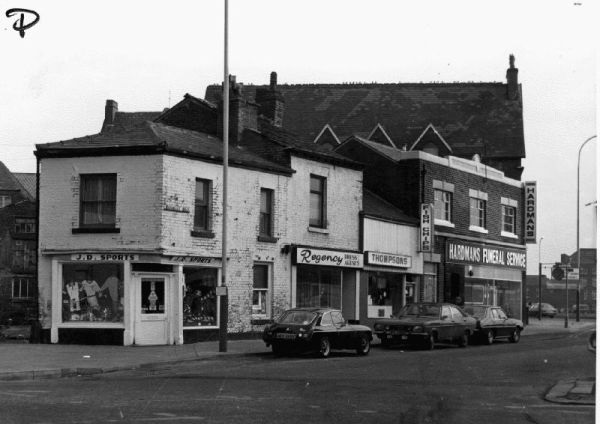
I remember the brothers taking over a single petrol station on Brandlesholme Road, Bury, not that long ago.JD Sports started out with a single shop in Bury in 1982.
AndyC_123 said:
Who lends all this money?
Why borrow money rather than using own money/retained profits from other companies they own?
Rich people always borrow to buy e.g. JayZ, Beyonce recently borroed $52m to buy a xth house.Why borrow money rather than using own money/retained profits from other companies they own?
It's all 'tax avoidance' as the tax rules at the top are there to be exploited, as Donald Tusk made famous in the presidential debate with Hilary Clinton. Selling something means potentially paying tax/capital gains, loans may be tax deductible and can be loaded onto the target.
Elon can borrow money using his Tesla/SpaceX shares as collateral, and also put Twitter's own assets as collateral too.
Edited by JimJobs81 on Wednesday 6th December 19:08
JimJobs81 said:
Rich people always borrow to buy e.g. JayZ, Beyonce recently borroed $52m to buy a xth house.
It's all 'tax avoidance' as the tax rules at the top are there to be exploited, as Donald Tusk made famous in the presidential debate with Hilary Clinton. Selling something means potentially paying tax/capital gains, loans may be tax deductible and can be loaded onto the target.
Elon can borrow money using his Tesla/SpaceX shares as collateral, and also put Twitter's own assets as collateral too.
Don't confuse the Donalds.It's all 'tax avoidance' as the tax rules at the top are there to be exploited, as Donald Tusk made famous in the presidential debate with Hilary Clinton. Selling something means potentially paying tax/capital gains, loans may be tax deductible and can be loaded onto the target.
Elon can borrow money using his Tesla/SpaceX shares as collateral, and also put Twitter's own assets as collateral too.
Edited by JimJobs81 on Wednesday 6th December 19:08
As Donald "Trump" evidences some consider themselves above the rules that the rest of us live by and it's rare when they don't get away with it. It's newsworthy when they don't because it's so rare.
Tusk is a different person with his own issues but not the one that faced off against Hilary.

AndyC_123 said:
I have some questions:
Who lends all this money?
It's not always transparent, if you missed this thread you might be interested in it, but you'll possibly end up with more questions than answers!Who lends all this money?
https://www.pistonheads.com/gassing/topic.asp?h=0&...
I like this series of videos, old now but simple explanations for some things, not that everyone in the above thread would agree with it all either. It should all be simple to understand/explain but it doesn't appear to be.
https://www.youtube.com/watch?v=DyV0OfU3-FU
JimJobs81 said:
Rich people always borrow to buy e.g. JayZ, Beyonce recently borroed $52m to buy a xth house.
It's all 'tax avoidance' as the tax rules at the top are there to be exploited, as Donald Tusk made famous in the presidential debate with Hilary Clinton. Selling something means potentially paying tax/capital gains, loans may be tax deductible and can be loaded onto the target.
Elon can borrow money using his Tesla/SpaceX shares as collateral, and also put Twitter's own assets as collateral too.
It's nothing to do with tax avoidance, it's just cheaper to buy with loans than liquid assets. It's all 'tax avoidance' as the tax rules at the top are there to be exploited, as Donald Tusk made famous in the presidential debate with Hilary Clinton. Selling something means potentially paying tax/capital gains, loans may be tax deductible and can be loaded onto the target.
Elon can borrow money using his Tesla/SpaceX shares as collateral, and also put Twitter's own assets as collateral too.
Edited by JimJobs81 on Wednesday 6th December 19:08
For example, I bank with JP Morgan which offers a facility akin to a mortgage, backed by my investable assets. It's a low-rate loan because the bank holds the liquid assets as collateral, and is therefore low risk.
Alexandra said:
JimJobs81 said:
Rich people always borrow to buy e.g. JayZ, Beyonce recently borroed $52m to buy a xth house.
It's all 'tax avoidance' as the tax rules at the top are there to be exploited, as Donald Tusk made famous in the presidential debate with Hilary Clinton. Selling something means potentially paying tax/capital gains, loans may be tax deductible and can be loaded onto the target.
Elon can borrow money using his Tesla/SpaceX shares as collateral, and also put Twitter's own assets as collateral too.
It's nothing to do with tax avoidance, it's just cheaper to buy with loans than liquid assets. It's all 'tax avoidance' as the tax rules at the top are there to be exploited, as Donald Tusk made famous in the presidential debate with Hilary Clinton. Selling something means potentially paying tax/capital gains, loans may be tax deductible and can be loaded onto the target.
Elon can borrow money using his Tesla/SpaceX shares as collateral, and also put Twitter's own assets as collateral too.
Edited by JimJobs81 on Wednesday 6th December 19:08
For example, I bank with JP Morgan which offers a facility akin to a mortgage, backed by my investable assets. It's a low-rate loan because the bank holds the liquid assets as collateral, and is therefore low risk.
NowWatchThisDrive said:
At the regular HNW level, most of the private banks will do it against equity portfolios and all sorts of other liquid assets to varying extents. In the US a lot of regular retail stockbrokers will also do it although it's never really taken off at that level over here.
Interactive Brokers offer margin loans in the UK that are quite user friendly.Alexandra said:
It's nothing to do with tax avoidance, it's just cheaper to buy with loans than liquid assets.
Let's take Tesla shares as an example. Whilst Elon hold on to the shares, the increase in the stock price is a unrealised gain. Which isn't taxable. If he sells them, he realises these gains and so to tax is due. By not selling the shares, but borrowing, he 'avoids' realising them, and 'avoids' paying the tax.). And any loan interest will be offset.
It’s important not to confuse two things - but at the billionaire level the line is often extremely blurry.
Individuals can borrow money - mortgages, car loans, credit cards, etc., and there are all sorts of good reasons why that lending may be helpful or economically rational.
Companies borrow money - again, for all sorts of reasons, that are sensible and reasonable in a well-functioning economy.
Of course for many extremely wealthy people, the line between what is personally theirs and what is part of the company/companies they own can get a little blurry.
Individuals can borrow money - mortgages, car loans, credit cards, etc., and there are all sorts of good reasons why that lending may be helpful or economically rational.
Companies borrow money - again, for all sorts of reasons, that are sensible and reasonable in a well-functioning economy.
Of course for many extremely wealthy people, the line between what is personally theirs and what is part of the company/companies they own can get a little blurry.
AdamIM said:
The two brothers are, to date anyway, masters of the Leveraged Buy Out. Clearly it's a high risk strategy, entered when rates were low. £9 of debt for every £1 of cash generated, so other things being equal (and operations fluctuate) at 11% interest they make nothing and above, losses. It hasn't stopped them buying planes and a lot of lambo's etc -good luck to them. Lloyds, Natwest, Morgan Stanley financed their Asda deal I think.
Musk didn't want to use all cash for X because it would have required a lot of Tesla shares to be sold. He assumes those will go up in value and sales drag down the stock price and will irritate other shareholders. Seemed a bad idea at the time, spending $40B on a social media platform and turned out to be true. X is worth at least 50% less today. easy come easy go I suppose. What would be worse is having used Tesla stock as collateral and if Tesla plummeted then he'd be margin called and have to sell more and more stock.
These types people are big risk takers perhaps the infallibility complex.
He does use the TSLA stock as collateral. Back in 2017 he had a long line lodged with Merrills who were supplying him with cash to keep everything going. Amusingly when he was bMusk didn't want to use all cash for X because it would have required a lot of Tesla shares to be sold. He assumes those will go up in value and sales drag down the stock price and will irritate other shareholders. Seemed a bad idea at the time, spending $40B on a social media platform and turned out to be true. X is worth at least 50% less today. easy come easy go I suppose. What would be worse is having used Tesla stock as collateral and if Tesla plummeted then he'd be margin called and have to sell more and more stock.
These types people are big risk takers perhaps the infallibility complex.
hing about shorters back then it was his stock that he had agreed to be lent out so as to keep his interest payments down. 
The Twitter deal is also backed by Tesla stock. I think he was blocked from using SpaceX to collateralise any of the debt? Wasn't he also required to sell TSLA stock not just to put some actual real money into that deal but to lodge as security to ensure initial repayments could be met without having to sell down more stock? I can't remember the finer details but remember at the time thinking it was yet another potential toxic spiral by the pro grifter and Trustafarian gambler?
Also consider liquidity.
A loan can be a quicker route to cash than selling art and yachts.
From the OP's original example, it is more straightforward for someone with net worth of a billion to borrow half, than to sell part of a private company,
Those with shares in listed companies have regulatory considerations, and a significant shareholder selling half of their shares in a publicly listed company is unlikely to increase the value of the other half!
Whilst debt has been so cheap for the last decade, why not use it?
A loan can be a quicker route to cash than selling art and yachts.
From the OP's original example, it is more straightforward for someone with net worth of a billion to borrow half, than to sell part of a private company,
Those with shares in listed companies have regulatory considerations, and a significant shareholder selling half of their shares in a publicly listed company is unlikely to increase the value of the other half!
Whilst debt has been so cheap for the last decade, why not use it?
AndyC_123 said:
Why borrow money rather than using own money/retained profits from other companies they own?
A simple and simplistic example below. To give you an idea of why one would leverage a buyout. Buy a company for £100. £90 debt, £10 your own money (equity). Let’s say the company doubles in value.
Return to the debt holder, £90 (and interest during ownership). Return to you as owner, £110, 11 times your initial money (less any interest cost).
Same example with no debt. Return to you as owner, £200. 2 times your initial investment. And you’ve lost the opportunity cost of the £90 previously borrowed.
Gassing Station | Finance | Top of Page | What's New | My Stuff