
Audi wins the Dakar Rally with RS Q e-tron
First ever electrified car to take overall victory finished more than an hour ahead of the chasing pack
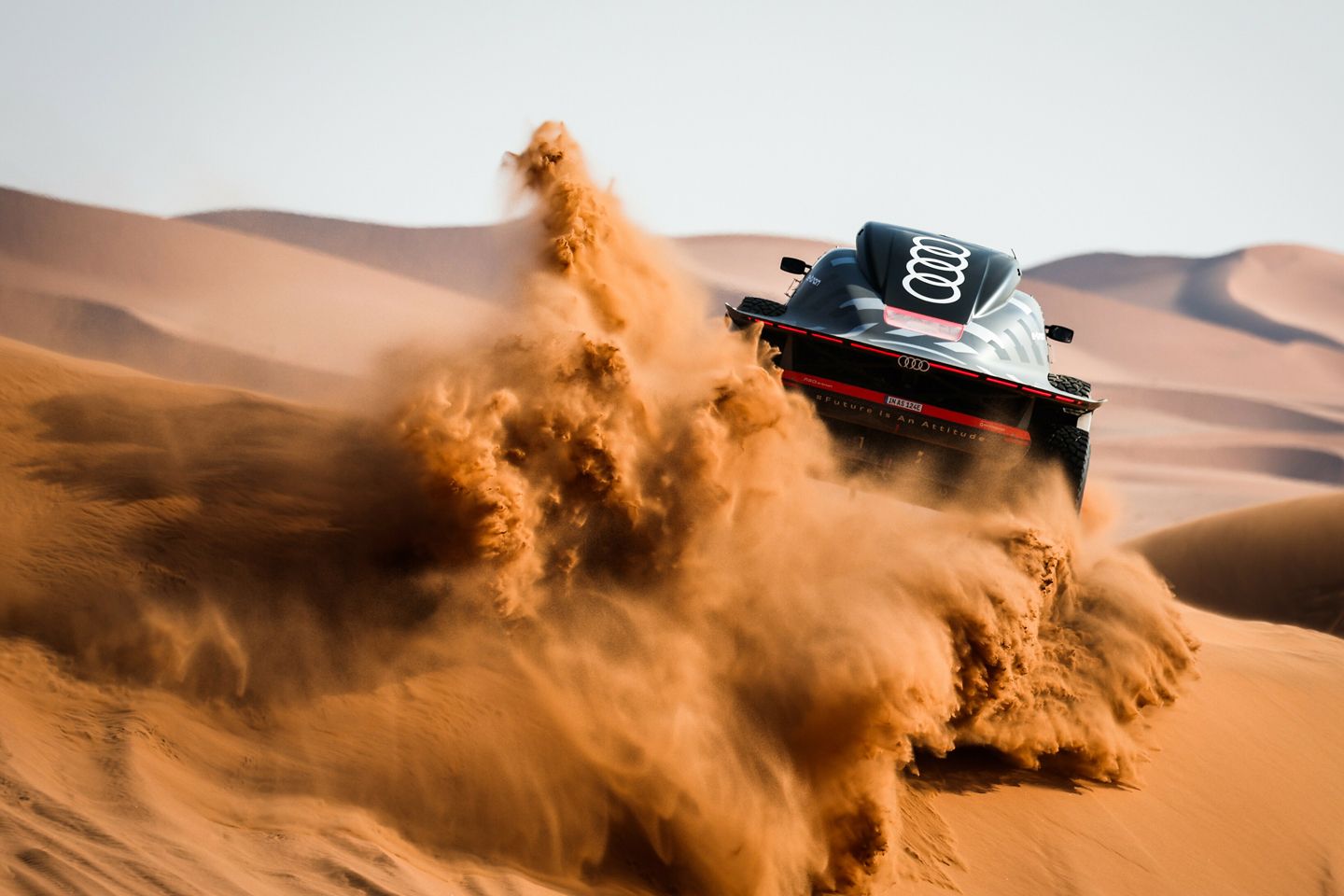
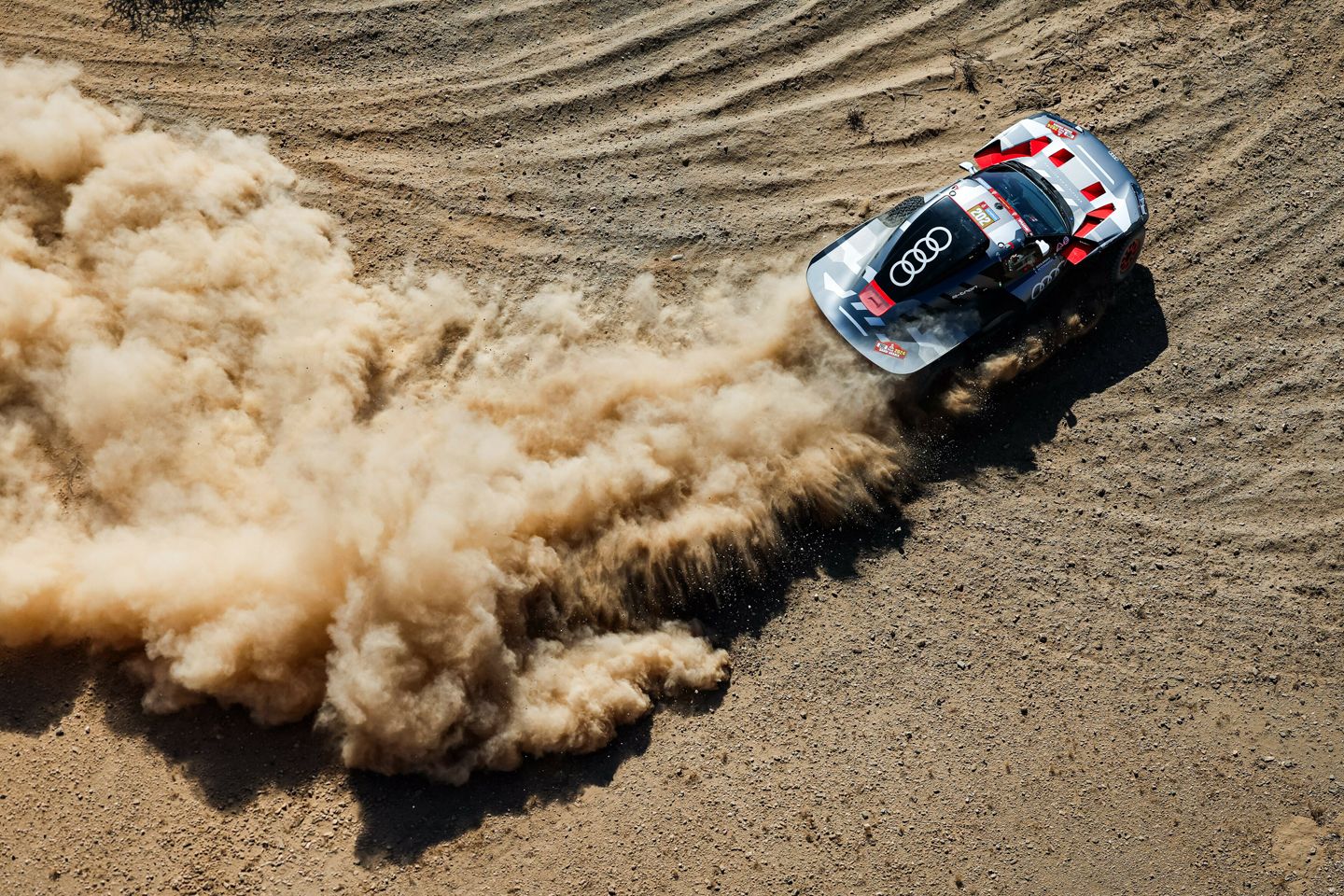
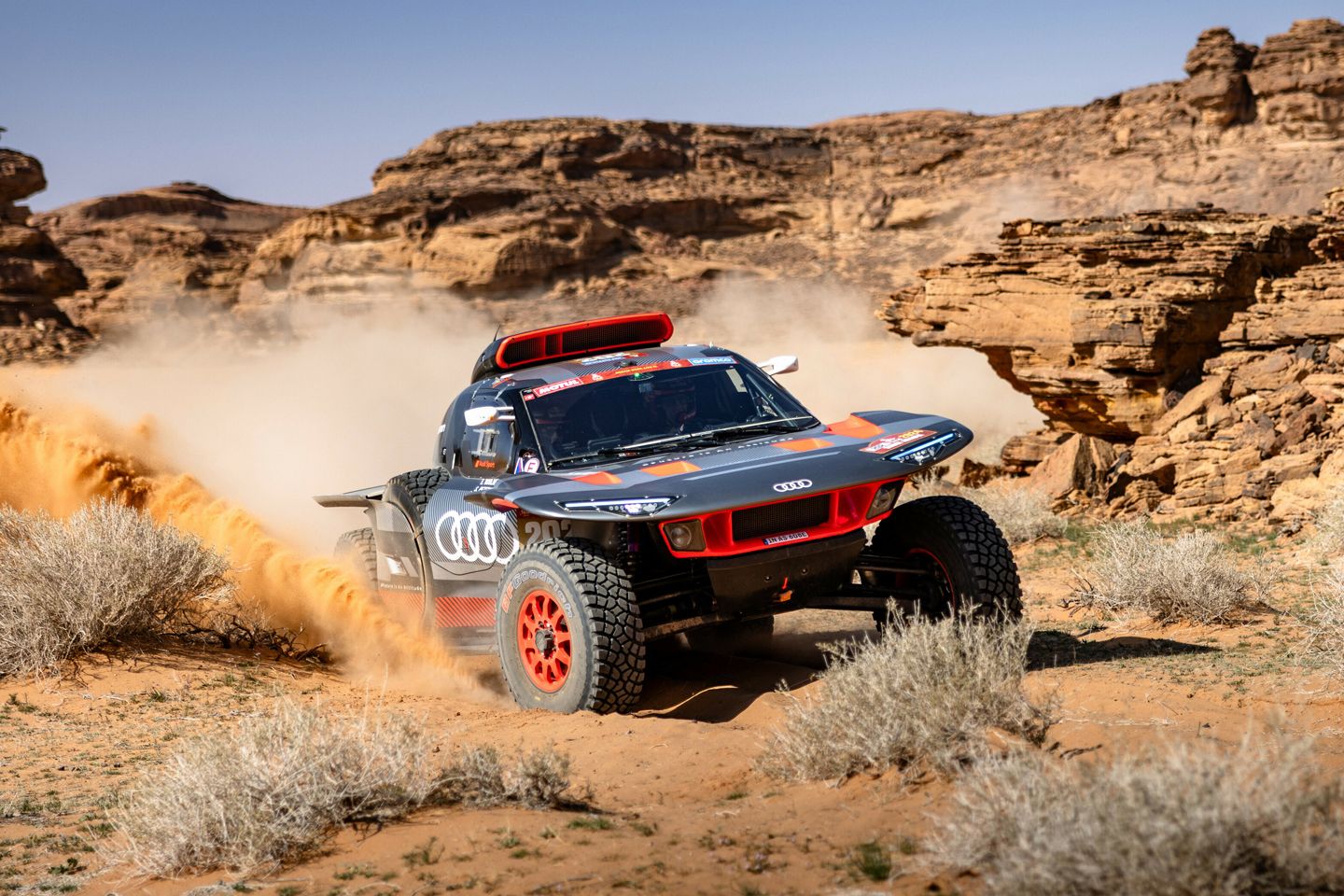
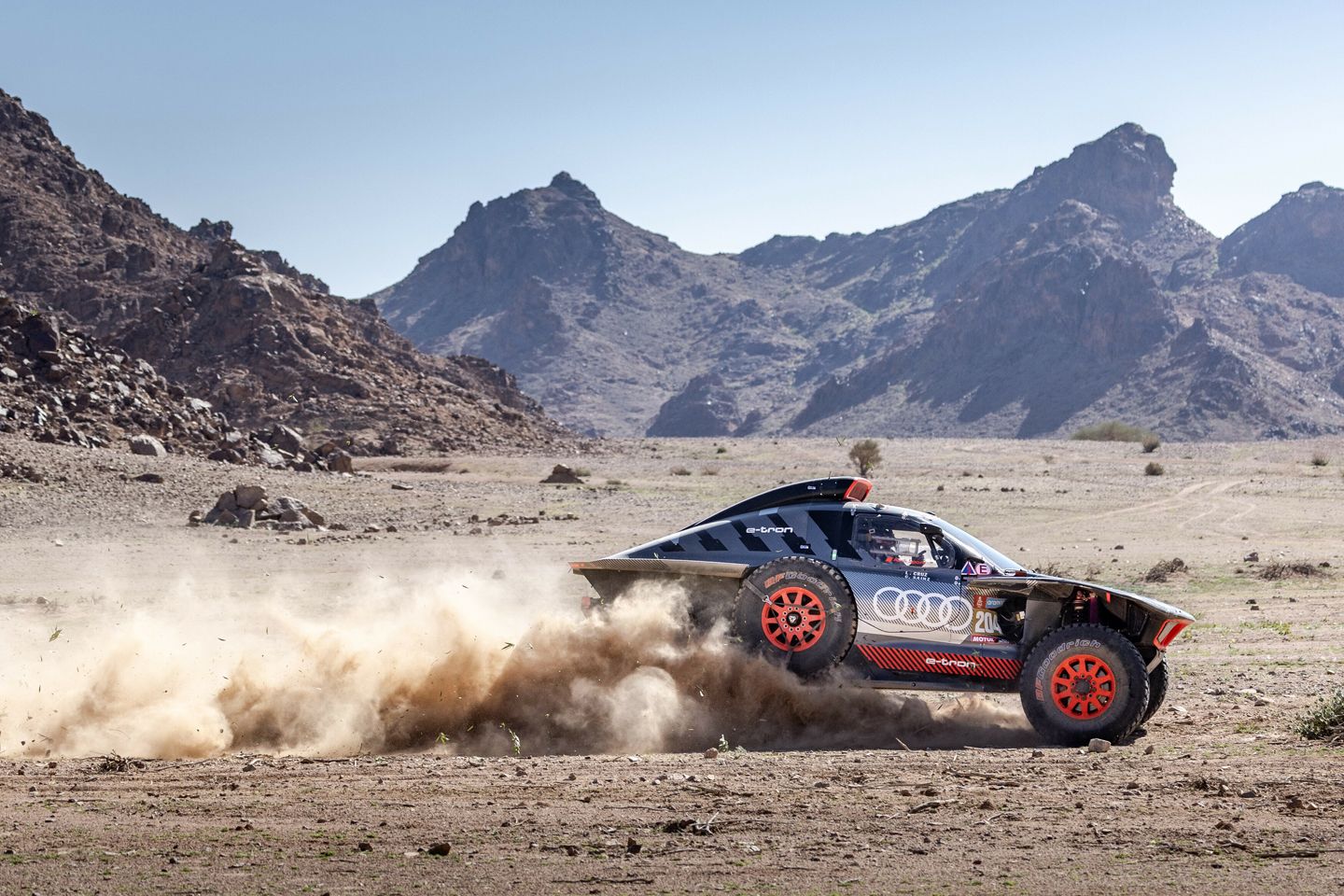
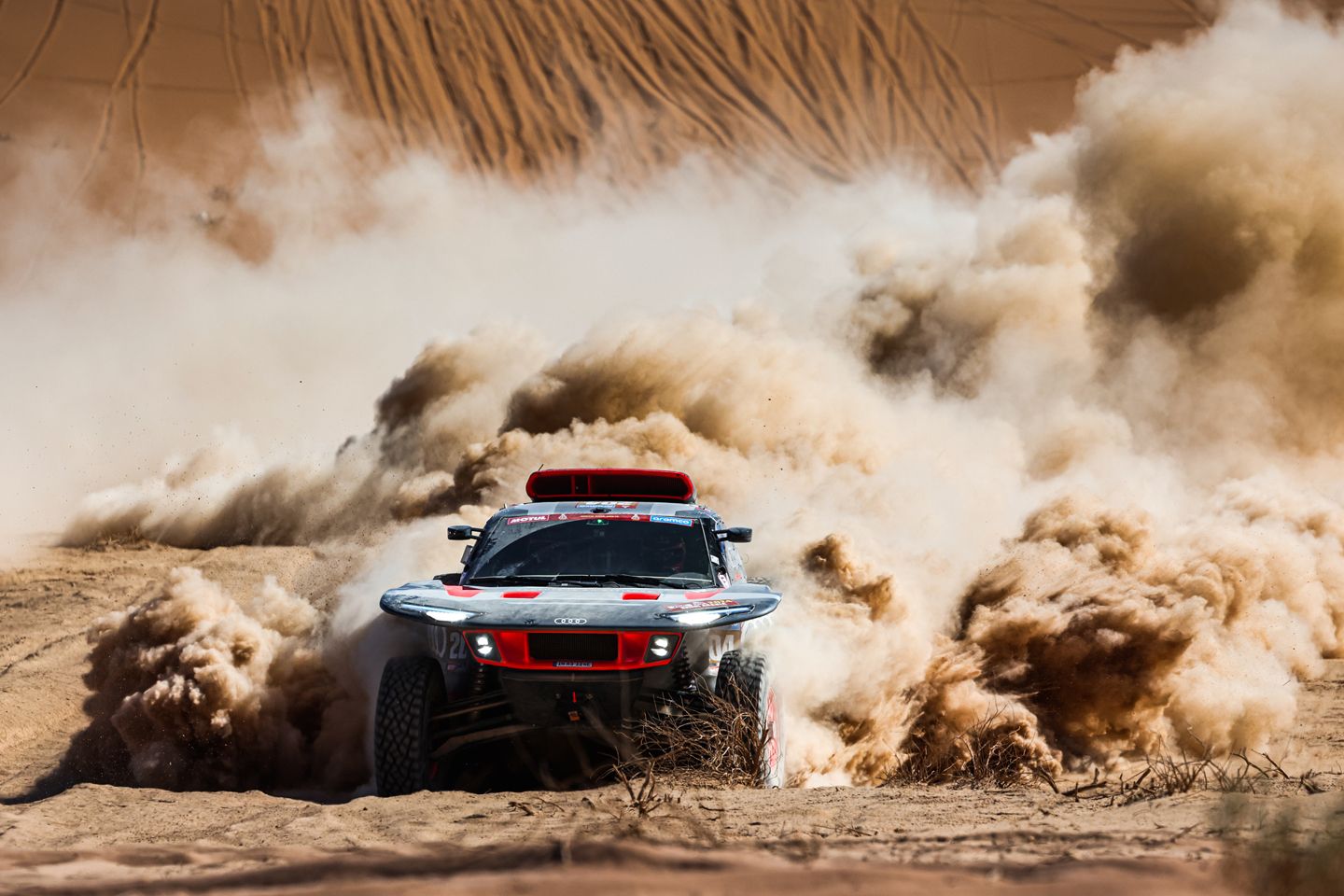
Audi has an incredible history of innovation and success in motorsport, from four-wheel drive in rallying to diesel power in sportscar racing. Now it’s claimed another remarkable first on the Dakar, winning arguably the most gruelling event in motorsport with an electrified car.
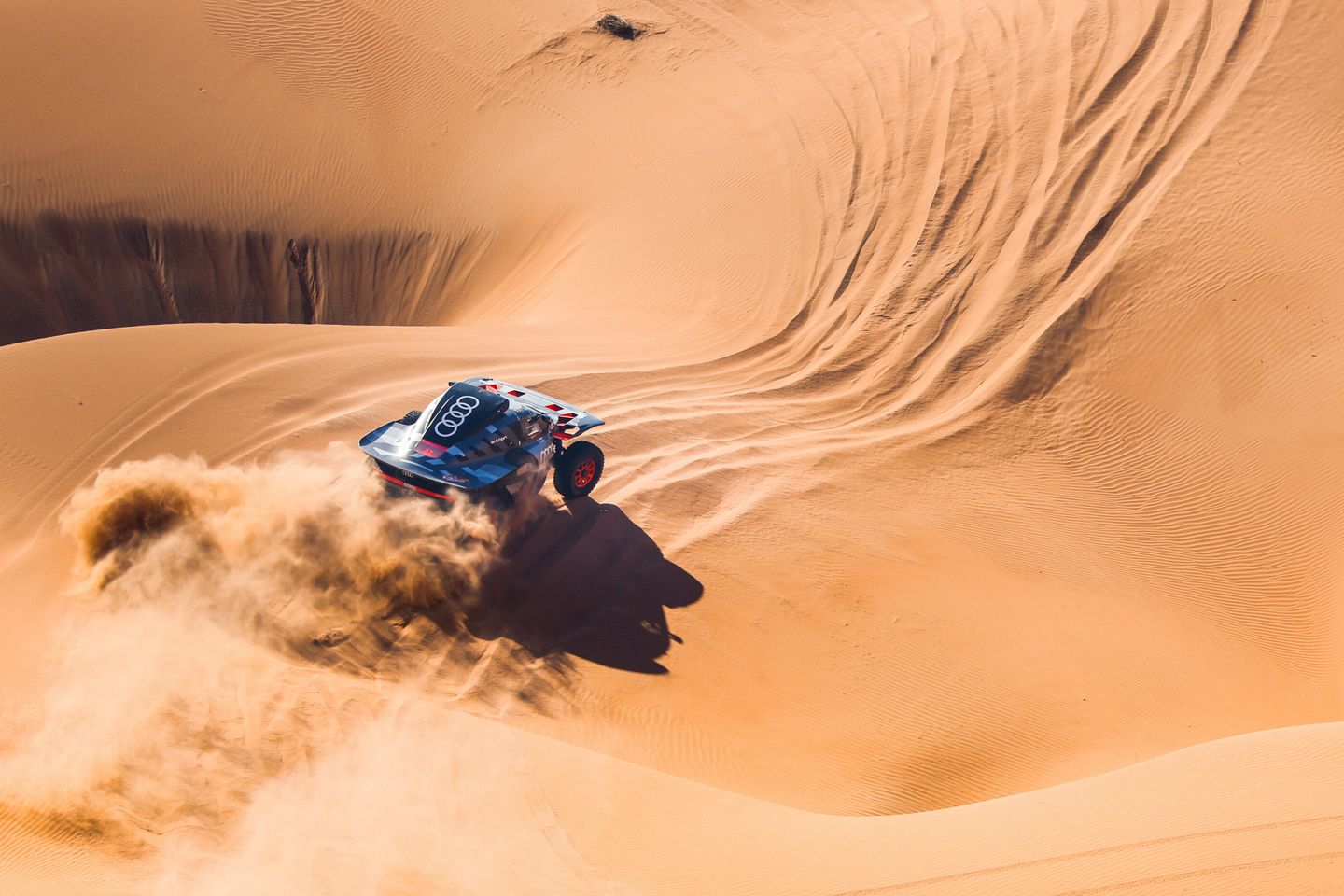
The RS Q e-tron piloted by Carlos Sainz and Lucas Cruz finished 80 minutes ahead of the next closest competitor after 7,883km of off-road racing. Though the Audi is a range extender rather than a pure battery electric vehicle (using a DTM engine to generate electricity, because imagine trying to charge on the Dakar), it obviously represents big progress. Not least because Audi only first attempted this in 2021 - last year’s overall winner was a Hilux. Using something called ‘reFuel’, which is based on residual fuel, Audi reckons the CO2 emissions of the RS Q e-tron were something like 60 per cent lower than a more conventional powertrain.
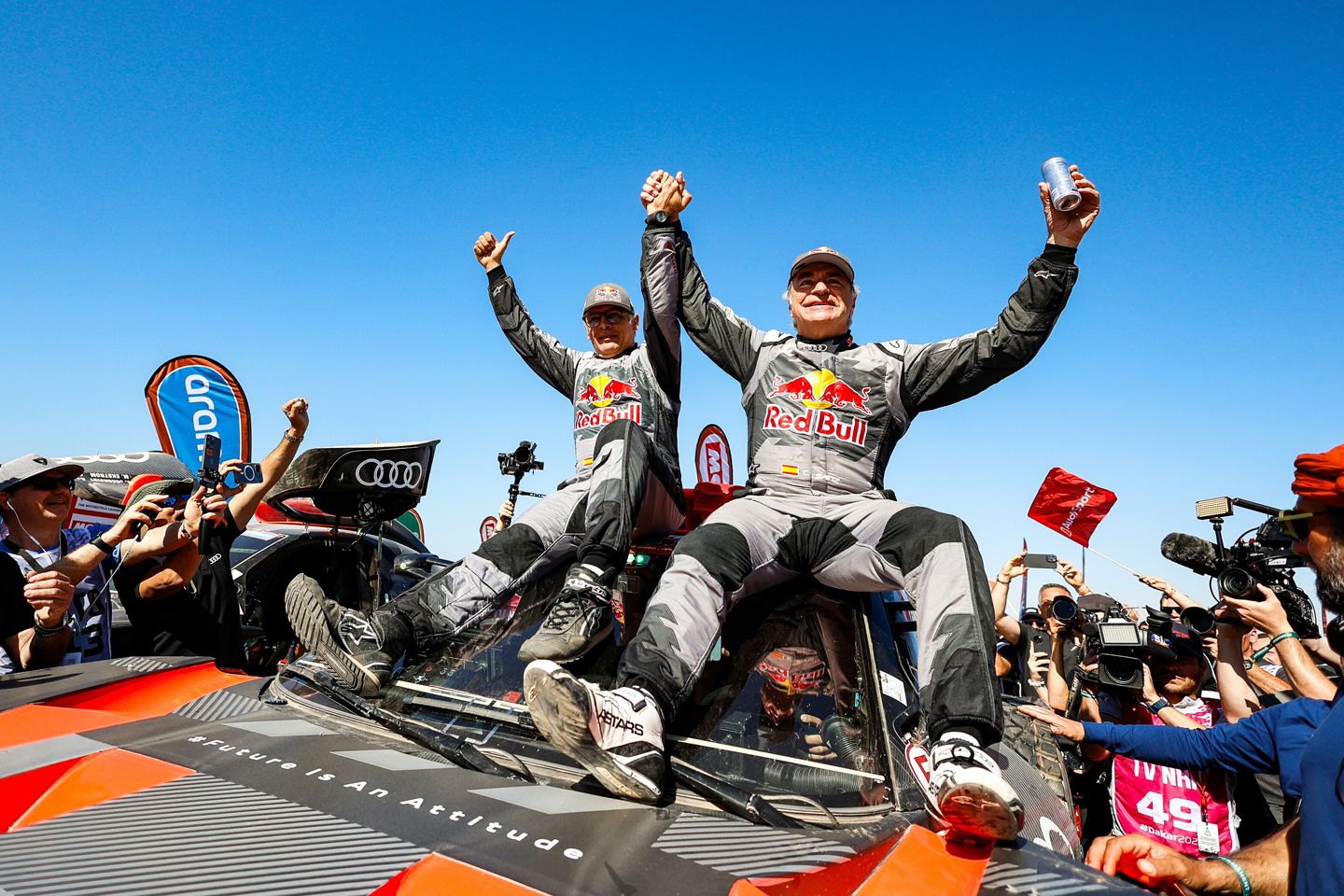
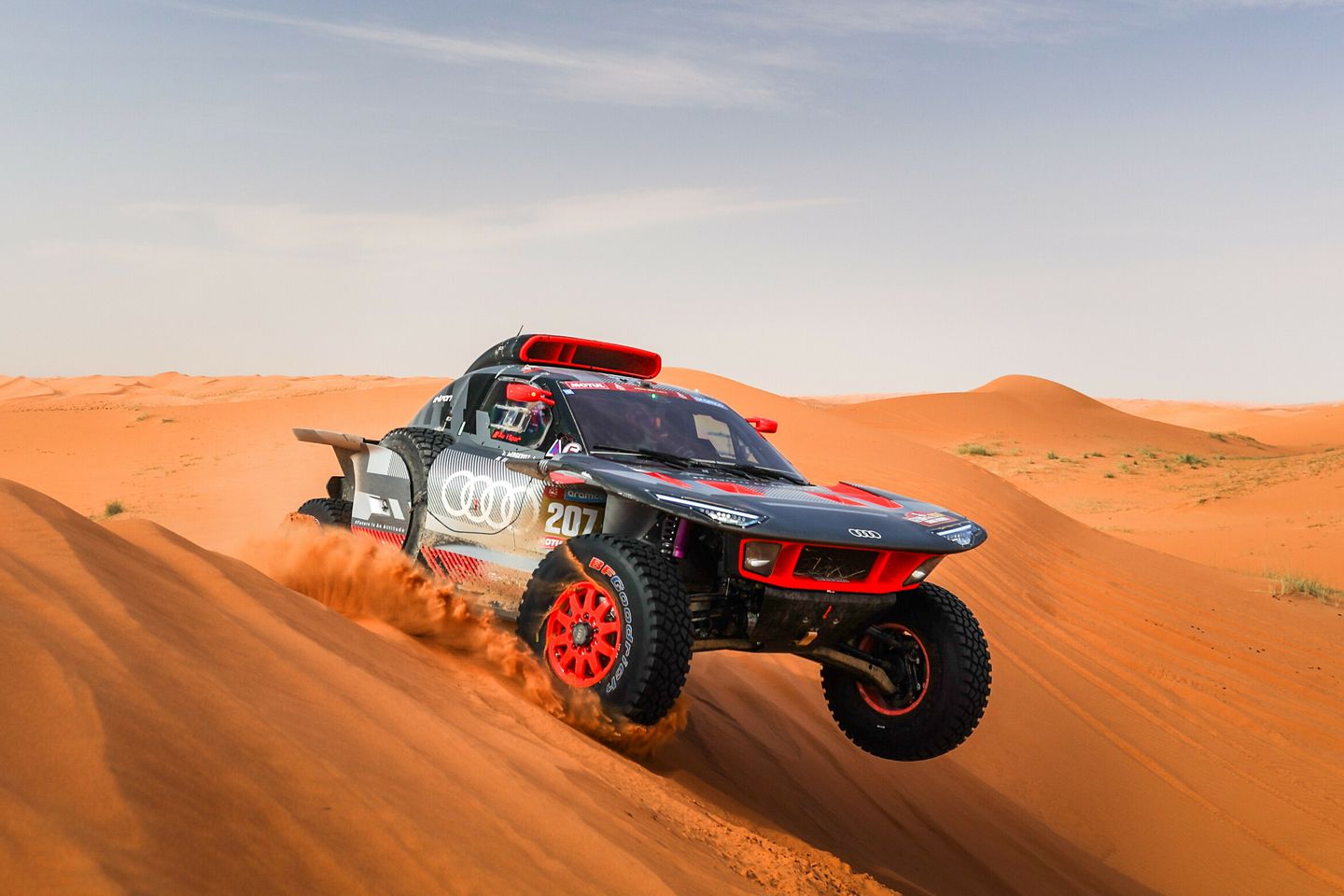
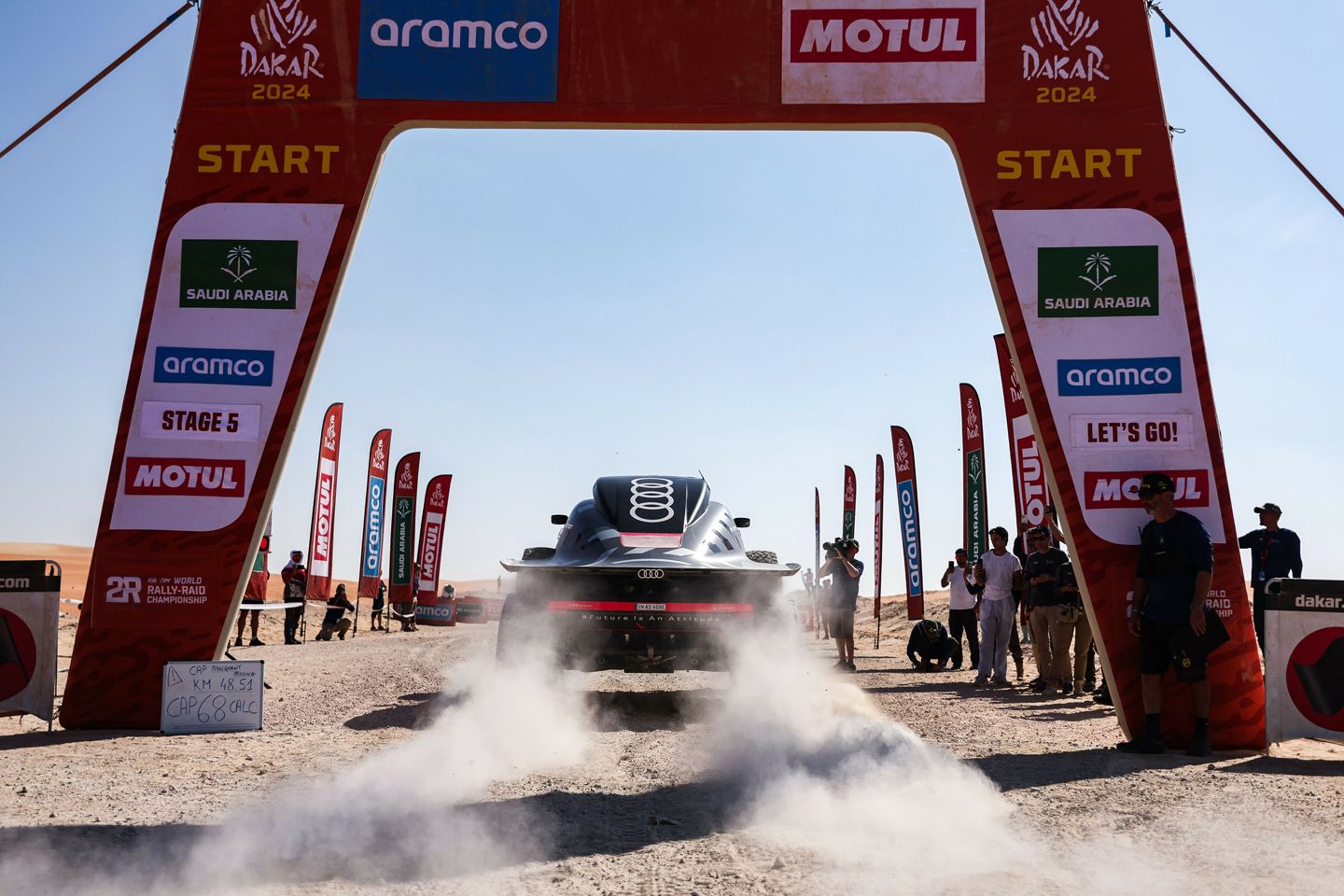
Sainz and Cruz bossed it by the sound of things, assuming the lead on the sixth stage and spending eight days in the lead of the rally. More than 400km in a day was a regular occurrence, with marathon stages thrown in for good measure with limited or no service stops. At 61, it's some achievement from Sainz to fend off opposition from Ford, Toyota and Prodrive.
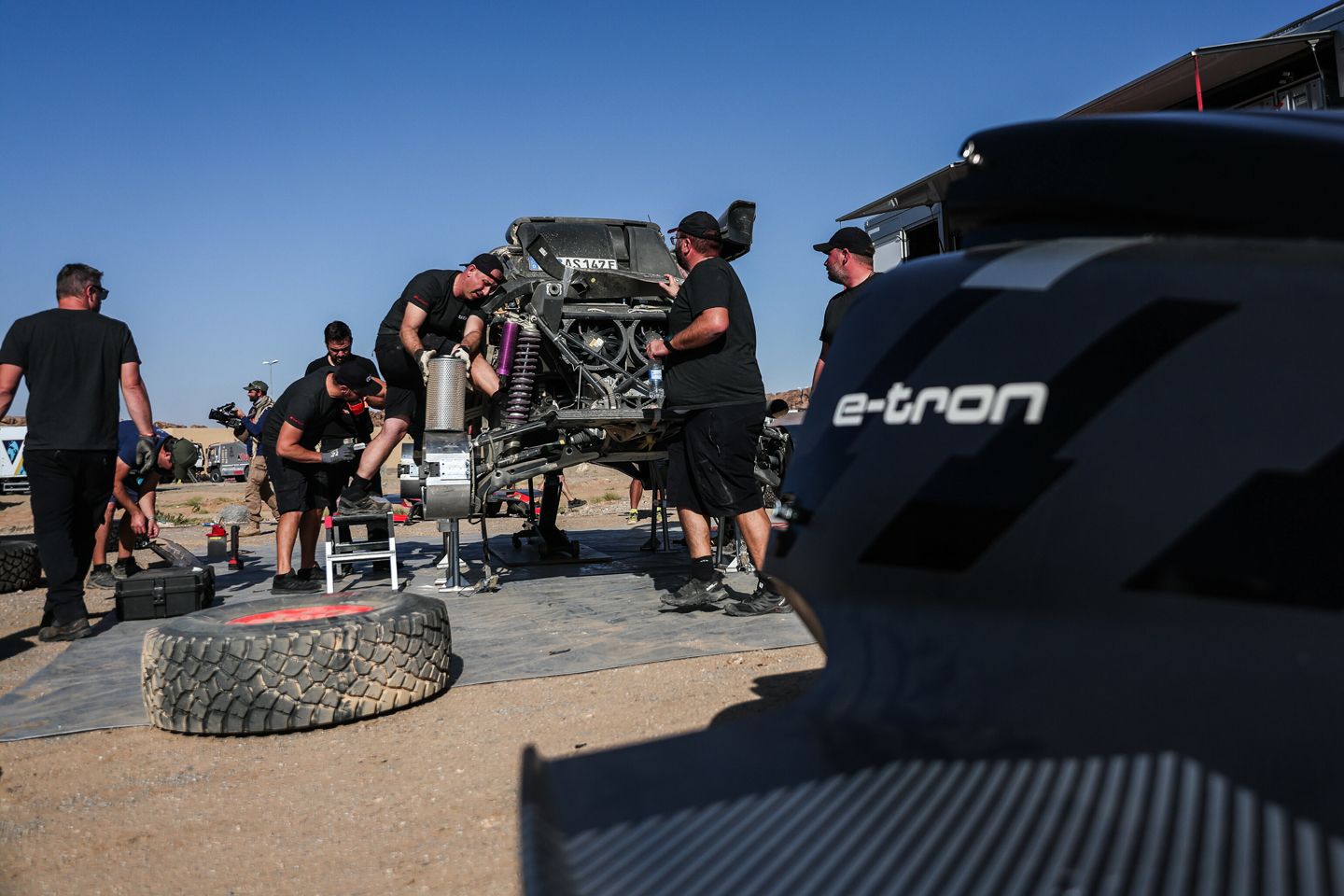
It could have been an even better result for Audi but for issues that befell its other e-trons. Mattias Ekstrom and Emil Bergkvist were second before the rear axle gave up, and the crew of Stéphane Peterhansel/Edouard Boulanger notched up stage victories before hydraulic problems. Still, a win is a win, and there’s nothing to prove off-road prowess quite like a Dakar victory. “That was an overwhelming team performance,” said Head of Audi Motorsport Rolf Michl. “Everyone pulled together to make this historic result possible for Audi. A big thank you to this wonderful team. Today we have written a new chapter for Audi, but also in the history of the Dakar Rally.” You can say that again - might make those Q8 e-tron Dakars a little easier to sell, too…


For some reason I really lost interest when they moved to Saudi from South America, and the ever more prototype-y nature of the vehicles hasn’t helped.
Rally Raid is still a fundamentally cool genre of motorsport, but yeah, I make a lot less of an effort to watch it now than I used to.

And, Carlos 'El Matador' Sainz still winning big events at the age of 61........
An impressive result by Audi, just shows that throwing an enormous budget at a challenge sometimes ends in success


Sainz retorted that Attiyah could think what he likes. Made me chuckle when Attiyah kept on breaking down, arrogant muppet.
Well done Carlos, class act!
Sainz retorted that Attiyah could think what he likes. Made me chuckle when Attiyah kept on breaking down, arrogant muppet.
Well done Carlos, class act!
Found this on the Audi website here: https://www.audi-mediacenter.com/en/press-releases...
'The drive power of the engine-generator units on the front and rear axles is limited to a maximum of 288 kW in total under the regulations. However, the energy converter can only provide a maximum charging power of 220 kW. In extreme cases, therefore, consumption is briefly higher than energy generation. “Something like this is possible for a limited time,” says Lukas Folie. “But over a longer distance, it always results in a zero-sum game: We then have to regulate the power consumption down so that the battery’s state of charge remains within a corridor. The absolute amount of energy available on board must be sufficient to cover the day’s leg'
And by energy they mean 'petrol' (plus the small amount of electricity in the battery it starts the day with)
The Eurosport daily roundups are never on schedule and on late at night so you miss half the recording. I ended up watching most of it on YouTube which is just short daily updates with very little depth.
It's a cool sport, it deserves much better coverage
Found this on the Audi website here: https://www.audi-mediacenter.com/en/press-releases...
'The drive power of the engine-generator units on the front and rear axles is limited to a maximum of 288 kW in total under the regulations. However, the energy converter can only provide a maximum charging power of 220 kW. In extreme cases, therefore, consumption is briefly higher than energy generation. “Something like this is possible for a limited time,” says Lukas Folie. “But over a longer distance, it always results in a zero-sum game: We then have to regulate the power consumption down so that the battery’s state of charge remains within a corridor. The absolute amount of energy available on board must be sufficient to cover the day’s leg'
And by energy they mean 'petrol' (plus the small amount of electricity in the battery it starts the day with)
From the article I'm not quite sure what this means though:
"The capacity of the high-voltage battery is 52 kWh and is therefore sufficient for the maximum expected requirements on each leg of the rally."
Also it's clear that energy recovery is a major part of the design:
"Energy recovery as an important factor
In order to realize maximum efficiency, Audi is also relying on a principle in the desert that has already been used in the Le Mans sports cars and in Formula E: The RS Q e-tron recovers energy during braking. The MGU units on the front and rear axles can convert the rotational movement of the wheels into electrical energy. The aim is to recuperate the maximum energy. The power flow in this reverse direction is not subject to the same power limitations as when accelerating. What sounds so simple requires a complex Intelligent Brake System (IBS). It combines the hydraulic braking function with the electric regenerative brake."
The engine is a range extender though as it is powering a generator as far as I can tell.
https://www.audi.com/en/sport/motorsport/audi-raci...
Found this on the Audi website here: https://www.audi-mediacenter.com/en/press-releases...
'The drive power of the engine-generator units on the front and rear axles is limited to a maximum of 288 kW in total under the regulations. However, the energy converter can only provide a maximum charging power of 220 kW. In extreme cases, therefore, consumption is briefly higher than energy generation. “Something like this is possible for a limited time,” says Lukas Folie. “But over a longer distance, it always results in a zero-sum game: We then have to regulate the power consumption down so that the battery’s state of charge remains within a corridor. The absolute amount of energy available on board must be sufficient to cover the day’s leg'
And by energy they mean 'petrol' (plus the small amount of electricity in the battery it starts the day with)
"The capacity of the high-voltage battery is 52 kWh and is therefore sufficient for the maximum expected requirements on each leg of the rally."
The range-extender can only 'charge' the battery at 220 kW, leaving a deficit of up to 68 kW which will eventually drain the battery.
Simplistically it can go for up to 45 minutes at full power with a fully charged battery.
It would need to then run at lower power settings to recharge, or retrieve kinetic energy by regen, or just not exceed 220 kW for the rest of the leg.
It's all set-up to extract maximum distance from a given amount of fuel by allowing the engine to run independent of the car's speed, eliminate the multi-ratio gearbox and capture any kinetic energy during braking.
I'd imagine it finishes the leg with a near empty battery so the energy in the fuel on board is augmented by the 52 kWh in the battery.
A team effort of sorts.


Gassing Station | General Gassing | Top of Page | What's New | My Stuff