
Lamborghini reinvents the wheel (carrier)
Active adjustment of camber and toe might not sound thrilling, but the reality is. And it's inbound, too
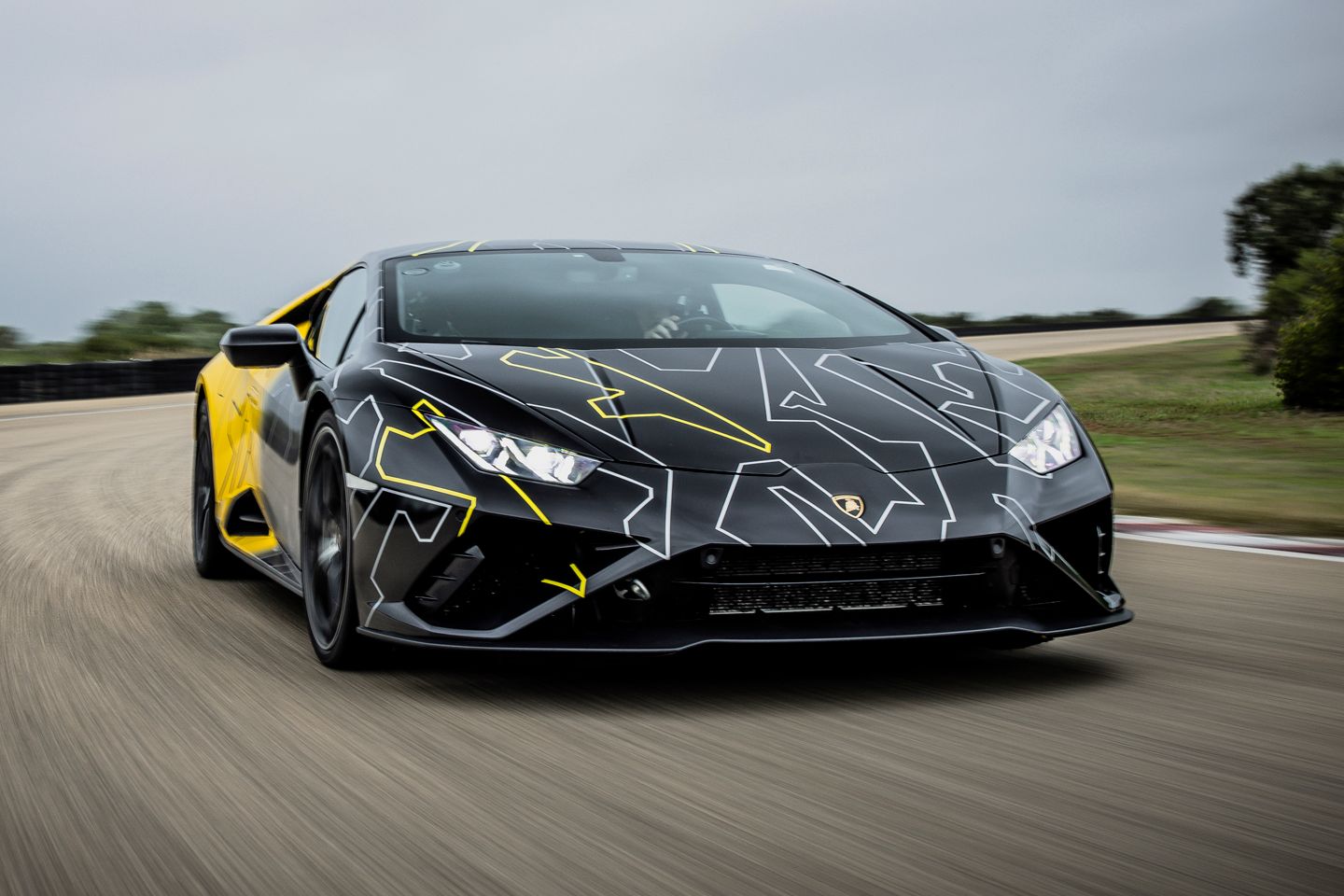
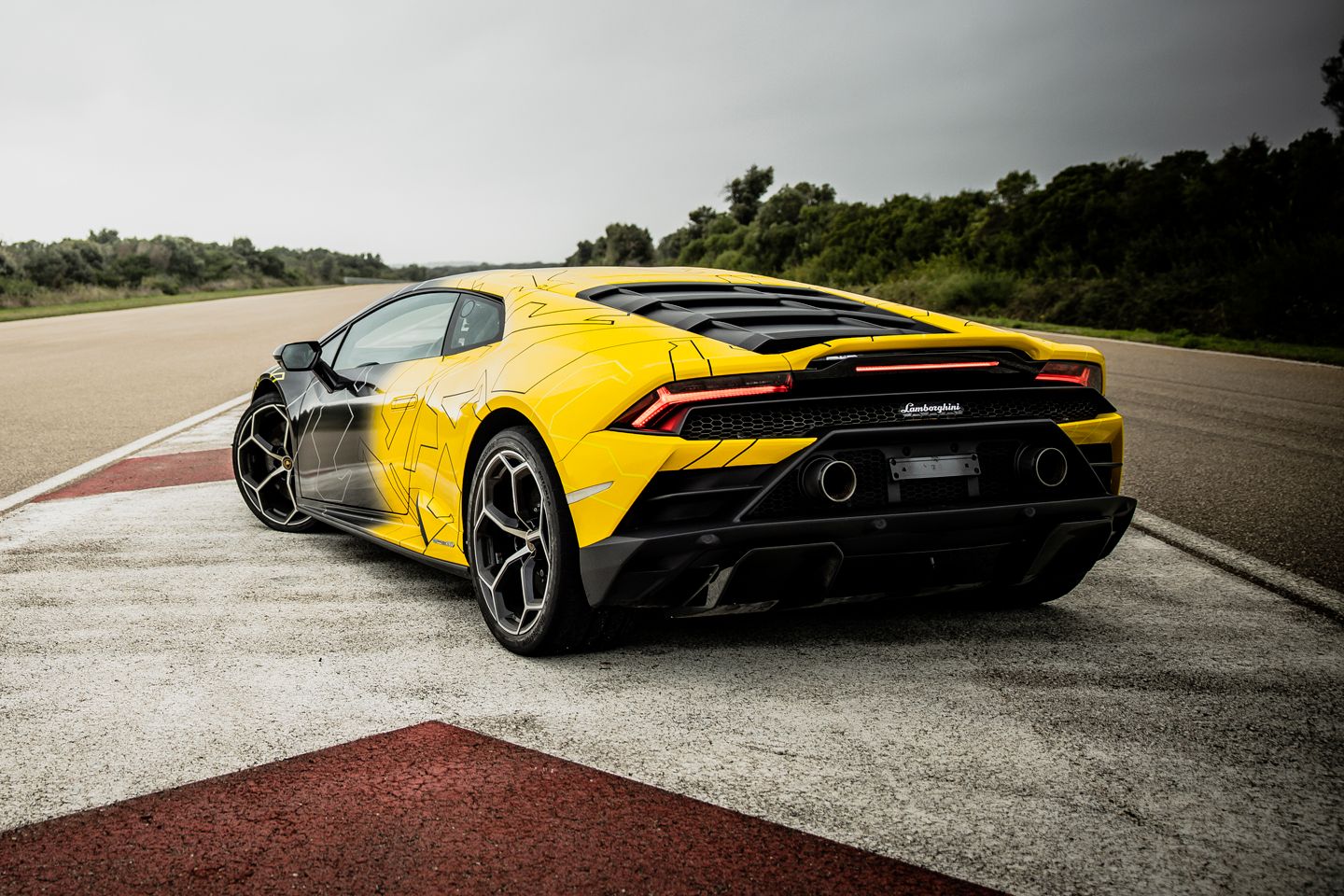
Completely new ideas rarely happen in the car industry. After more than a century most things have been attempted at least once, even if they didn’t stick. But, despite its unthrilling name, Lamborghini’s Active Wheel Carrier is a genuine innovation, one that proves that small changes can have big effects. The system is in prototype form at the moment, fitted to the rear axle of a Huracan test mule wearing a jazzy livery. I got to experience it at Porsche’s huge Nardò proving ground in Italy and can confirm it makes a huge difference.
The basics are deceptively simple. The chance to see the hardware on a table before experiencing it on the car shows that the Active Wheel Carrier looks like a beefed-up wheel hub with two bevel gears between its faces. Turning these, which is done by 48-Volt electric motors on the prototype, mechanically alters the angle between the carrier’s input and output flanges in two separate planes. This gives control of both toe angle (the wheel relative to the direction of travel when viewed from above) and also camber (the side-on angle relative to the body when seen from behind). Both toe and camber can therefore be adjusted when the car is moving.
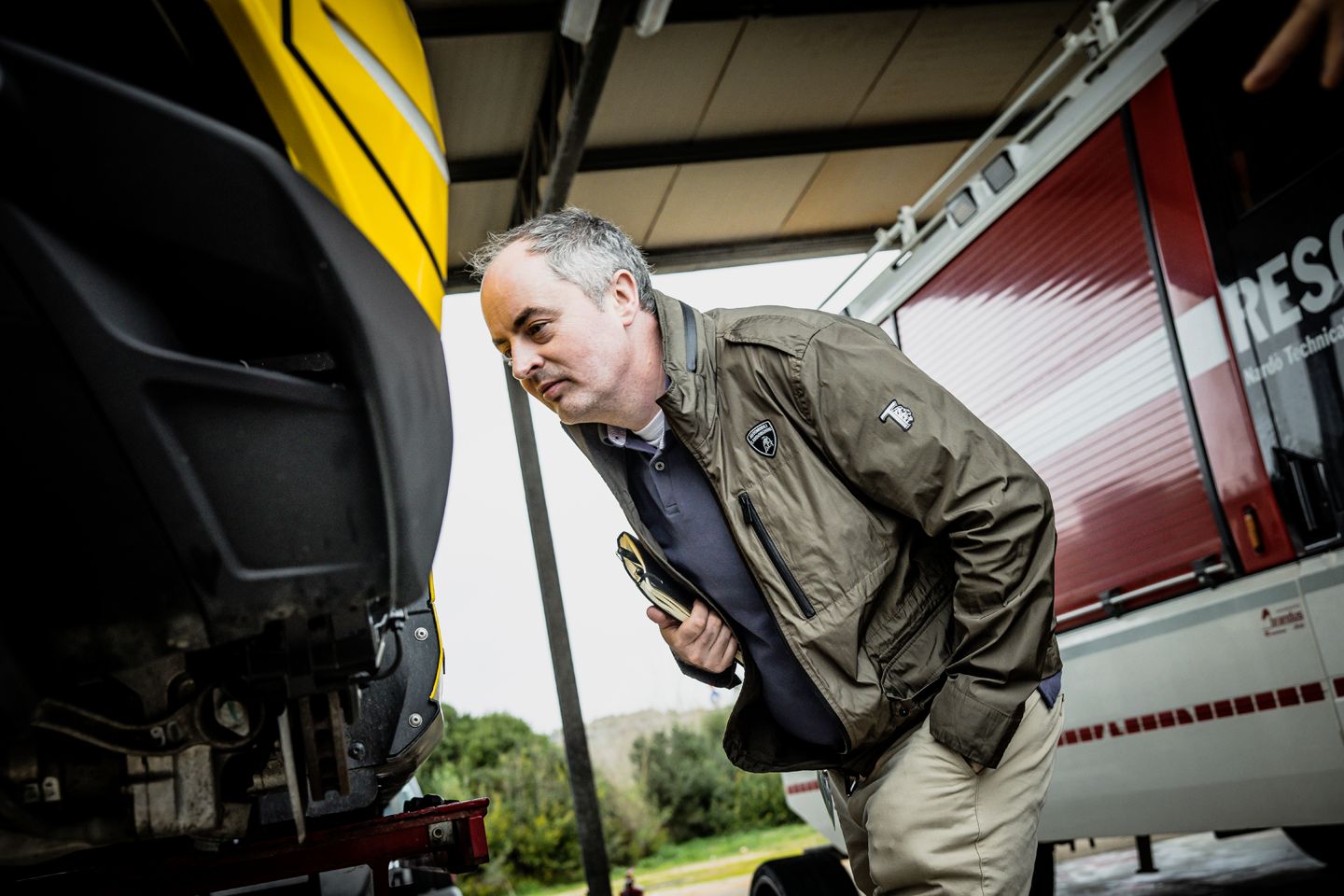
Lamborghini’s Chief Technical Officer, Rouven Mohr, has known about the system for years - he worked with an earlier version during his earlier career with Audi, which holds various patents for it. But Lamborghini has now taken it on, with the prototype system having the ability to deliver up to 6.6 degrees of toe adjustment in each direction, and between 2.5 degrees of positive and 5.5 degrees of negative camber. With the motors able to deliver up to 60 degrees a second of change, that means the most extreme change possible could be made in under a quarter of a second, but most adjustments are only fractions of a degree.
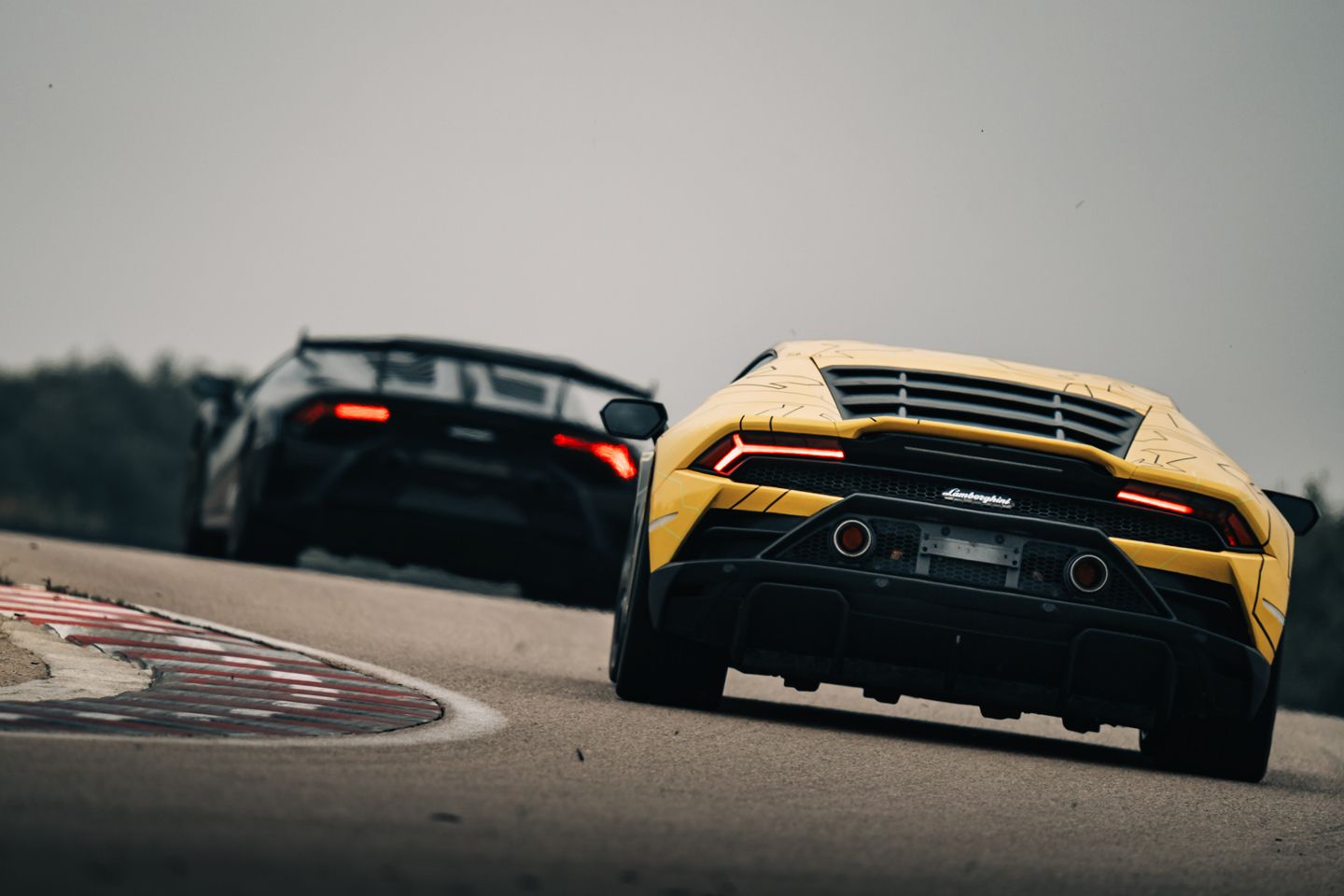

As such, AWC is effectively the missing link of active chassis design. Toe control for rear wheels already exists in the form of active steering systems, which AWC can also deliver. But existing active rear steer systems use racks with links and move both wheels in the same direction. AWC can do that, but it can also deliver toe-in - pointing the leading edges of the wheels slightly towards each other - and toe-out, where they point apart. A small amount of toe-in gives better stability at speed, toe-out a keener turn-in.
But it is active camber control that is more significant, allowing AWC to counter the most basic problem of suspension geometry - that it alters with the forces generated by a car when it turns. Cornering shifts load to the outside tyre through centrifugal force, compressing the suspension and creating roll. This inevitably alters the relationship between the face of the tyre and the road surface, creating (in the case of neutral camber) an uneven contact patch that reduces grip. The obvious way for a suspension engineer to compensate for this is with negative camber, the base of a tyre angled outwards and therefore giving better contact under cornering load. But the downside is that running negative camber reduces traction and is likely to also increase tyre wear.
But the AWC’s ability to juggle camber angles gives it what is, in vehicle dynamic terms, a Get Out Of Jail Free card, with the tyre angled to compensate for roll and therefore maintaining optimal contact. Mohr says that lateral grip increases by up to 25 per cent with the system running. Using it on a production car would allow softer suspension settings without any penalty, and it would even be possible to deliberately run positive camber when cruising - tyres pointing inwards at their base - to reduce rolling resistance and improve economy.

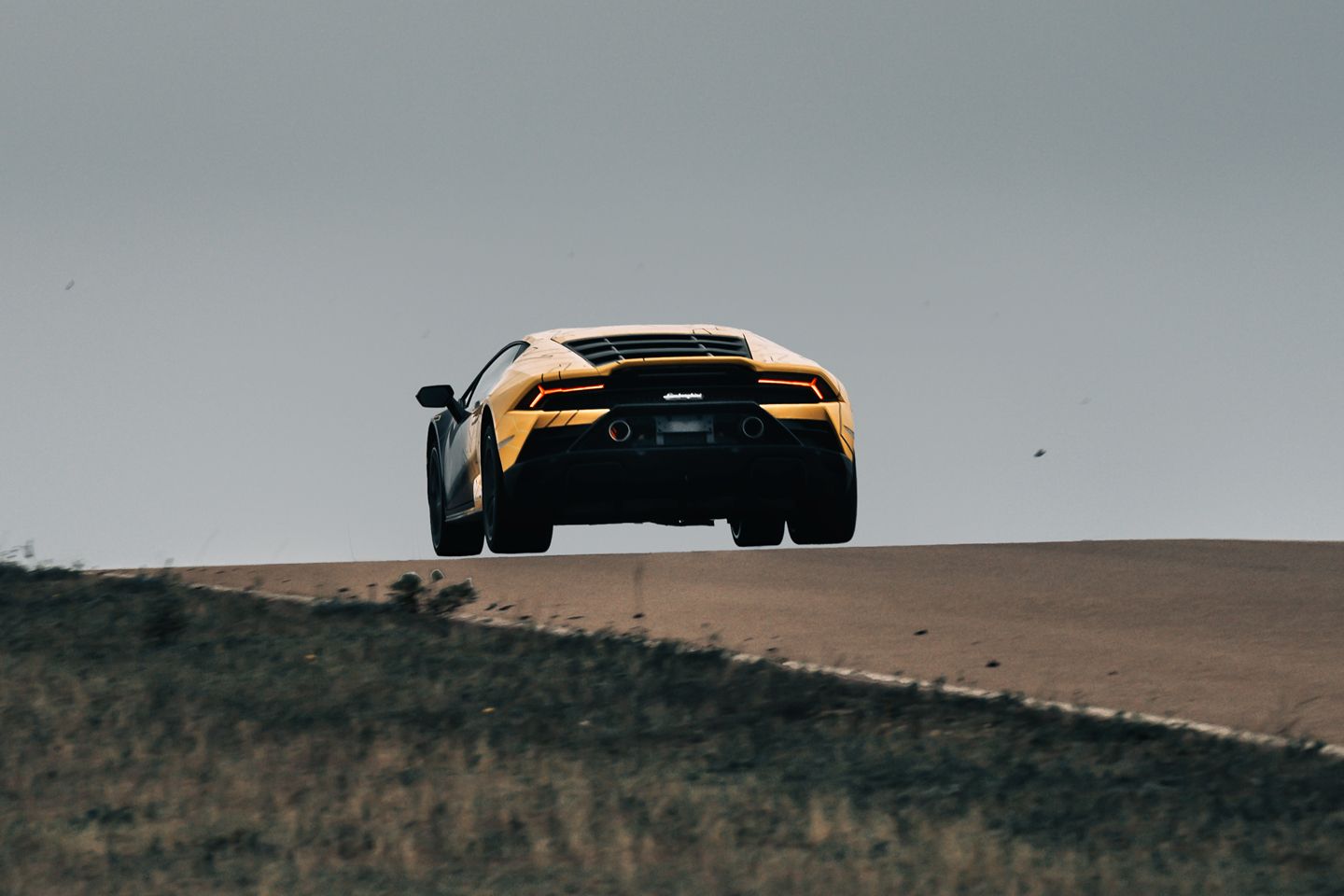
The hardware is actually the easy part, according to Mohr. Controlling the AWC requires a huge increase in a car’s dynamic brainpower, with the need for the management algorithm to work in conjunction with a car’s stability control, torque management and active aero systems. This is why the prototype system is running in a very simple configuration, fitted to a rear-driven Huracan Evo which isn’t running any traction or stability control.
So it makes sense that my first experience of the AWC takes place on Nardò’s enormous steering pad where there is nothing to hit. I start with the system switched off and the prototype Huracan’s rear wheels in their default toe and camber positions. This reveals both that it is easy to push into understeer on cold tyres, but also - with no traction management - that the transition to oversteer takes place quickly when grip runs out. Turning AWC on makes an immediate difference, the back axle immediately delivering much more adhesion. The Huracan feels more responsive, too - the rear steer helping to change direction - and much more stable near the edge of adhesion.
It’s not foolproof, though - a point I prove when rising confidence levels have me pushing too hard and - shortly afterwards - spinning to a standstill. All my own fault, of course - but Mohr does admit that one of the issues his team has faced when testing AWC is this tendency to produce over-confidence. Something I’m glad I discovered on the empty acres of the steering pad rather than Nardò’s considerably less friendly Handling Track, where we’re heading next.


I’ve had several visits to the 3.9-mile circuit in the last few years, most in Lamborghini prototypes. This is where PH got to experience both the Huracan STO and Huracan Tecnica in not-quite-finished form, as well as the Lamborghini Revuelto for the first time. But all of those had working stability control, which the AWC test car does not. Also, it’s just starting to spot with rain when my turn comes around.
Starting with AWC off the striking impression is how much work the Huracan’s stability control is normally doing on slippery surfaces. Without it, there is a tendency to both understeer and oversteer in tighter turns - the first triggered by over-keen entry speeds, the second by getting on the throttle too soon. In faster corners, the Huracan also feels loose, even well short of its tyres running low on grip, and the front end gets skittish under big braking inputs. It’s not wayward or scary, but it’s certainly good at keeping adrenaline levels high.
A second stint with AWC activated reveals the same level of change I felt on the steering pad - as if the rear tyres have grown wider and stickier. The prototype finds much more traction in slow corners, but also turns into them with markedly more enthusiasm. It is much more stable at higher speeds, with the difference most obvious in the hugely fast left-hander that sits at the end of the handling track’s kilometre-long main straight, and which leads straight into the braking zone for the much tighter second turn. The system brings much more confidence even in its unfinished form, the prospect of it being fully integrated into a next-gen dynamic controller promises to be a huge upgrade.


Speaking to Mohr after experiencing AWC reveals that the changes it makes are usually very slight - most camber alterations are just fractions of a degree. But it can deliver multiple corrections each second and the cumulative effect is significant. My fastest lap with AWC on at the Handling Track was 4.8 seconds quicker than with the system off. The difference will diminish with skill and experience, but even one of Lamborghini’s pro drivers is reportedly 2.8 seconds faster at Nardò running with AWC than without it. Mohr says that is a similar margin to the one between regular tyres and track-biased semi-slicks, so a significant difference.
Obviously, Lamborghini would not have put a huge amount of work into developing a system like AWC without the strong belief it would be able to make production. Although officially it is just a prototype for now, it seems likely it will make its debut in the replacement for the Huracan which we know to be coming next year, and which will combine a twin-turbo V8 engine with hybrid assistance. The prospect of this working with AWC, all-wheel drive and active aerodynamics is a fascinating one, although likely not one that will appeal to those who reckon supercars have already jumped the shark in terms of usable performance.
But if Lamborghini can make AWC work, there is also the high likelihood that it will appear elsewhere in the Volkswagen Group, and possibly beyond it.


Didn’t mr Hamilton have something similar on the front wheels on his company car?
Most of all though, does more grip actually equal more fun? Not really. It's been a trend for several years now of course, but how capable do we want cars to actually be? The article talks of over-confidence being an issue, and this just takes the concept further. It is just another means of making cars so good that, when it does go wrong, the poor occupants will be going much faster and will have a much bigger accident. Let's face it, a boggo hatchback is now massively more capable than most drivers, so I wonder just how far we need to go with stuff like this.
I don't doubt that this will see production at some stage and, for some people, it will be very appealing. For me though, it just seems like yet another piece of technology that takes cars away from what I enjoy about driving. I don't want a car that's perfect and that optimises itself for every single scenario. Part of the enjoyment of driving for me is understanding and learning how an individual car behaves and adapting to that. I was lucky enough to compete in a rally recently in an Impreza R4. Having no experience of 4WD rally cars, it was a real challenge to try to learn to drive the car and understand what inputs I needed to make compared to other cars I've driven. The more technology we add, the less we get to do that and, for many enthusiasts, that can only be a bad thing.
Perhaps I'm just getting old though.
A far greater benefit for most will be non performance applications. On the motorway at 70mph you could remove toe and camber when going straight to reduce tyre wear and fuel consumption….. the latter being the point most interesting to manufacturers. On BEV’s with their high weight, if this increases real world range, it could really help. On ICE cars it’s just more to go expensively wrong .

Adding more complexity/cost and unsprung mass, for what I would think would be negligible gains.
I'd much prefer simple, lithe and light.
I agree that the downsides are definitely complexity and cost, but I would say the increase in unsprung mass isn’t a big deal.
Simple, lithe and light? Not sure you are going to buy any modern supercar?
For me though, it just seems like yet another piece of technology that takes cars away from what I enjoy about driving. I don't want a car that's perfect and that optimises itself for every single scenario. Part of the enjoyment of driving for me is understanding and learning how an individual car behaves and adapting to that.

Adding more complexity/cost and unsprung mass, for what I would think would be negligible gains.
I'd much prefer simple, lithe and light.
I agree that the downsides are definitely complexity and cost, but I would say the increase in unsprung mass isn’t a big deal.
Simple, lithe and light? Not sure you are going to buy any modern supercar?
The same is true of this system. Yes, it'll make you faster round a lap, but unless you're racing it or explicitly timing it (forbidden at every track day I've been on) then you'll probably never know the difference.
Mike makes a good point in the article on people thinking that performance from modern supercars is a bit unnecessary. I know this is PH and Speed Matters, so feel free to point me in the direction of Mumsnet, but for context a regular Ferrari 296 GTB absolutely massacres an Enzo around Fiorano. Did anyone ever look at an Enzo and think "if only it were faster?"
I'd much rather supercar makers spent time working out how to make their cars lighter and more engaging rather than throwing technology at them to manage their ever-expanding weight and power outputs.
Gassing Station | General Gassing | Top of Page | What's New | My Stuff