
Cars getting too heavy?
Discussion


Mx5, superminis, small city cars.... but that's not really apples with apples.
The new ferrari f80 weighs 1680kgs, so some 400kgs heavier. Which is actually a pretty good weight these days.
But yes, I'd say with emissions regs getting ever tighter, I'm amazed cars are so heavy, given it takes more effort to get a heavier car moving. However, when up to speed, weight is less important than aerodynamics, which are a lot better than they were 20 years ago.
But, weight certainly means consumables like brakes and tyres are a lot more expensive, and cars ride and handle a lot worse for being so heavy - but the latter doesn't really matter for most family/ commuter cars.
The new ferrari f80 weighs 1680kgs, so some 400kgs heavier. Which is actually a pretty good weight these days.
But yes, I'd say with emissions regs getting ever tighter, I'm amazed cars are so heavy, given it takes more effort to get a heavier car moving. However, when up to speed, weight is less important than aerodynamics, which are a lot better than they were 20 years ago.
But, weight certainly means consumables like brakes and tyres are a lot more expensive, and cars ride and handle a lot worse for being so heavy - but the latter doesn't really matter for most family/ commuter cars.
brillomaster said:
Mx5, superminis, small city cars.... but that's not really apples with apples.
The new ferrari f80 weighs 1680kgs, so some 400kgs heavier. Which is actually a pretty good weight these days.
But yes, I'd say with emissions regs getting ever tighter, I'm amazed cars are so heavy, given it takes more effort to get a heavier car moving. However, when up to speed, weight is less important than aerodynamics, which are a lot better than they were 20 years ago.
But, weight certainly means consumables like brakes and tyres are a lot more expensive, and cars ride and handle a lot worse for being so heavy - but the latter doesn't really matter for most family/ commuter cars.
I'd say poor ride is more the result of manufacturers' obsession with sportiness. And the idea that that equates to a firm ride obviously assuming the roads to be like a billiard table .The new ferrari f80 weighs 1680kgs, so some 400kgs heavier. Which is actually a pretty good weight these days.
But yes, I'd say with emissions regs getting ever tighter, I'm amazed cars are so heavy, given it takes more effort to get a heavier car moving. However, when up to speed, weight is less important than aerodynamics, which are a lot better than they were 20 years ago.
But, weight certainly means consumables like brakes and tyres are a lot more expensive, and cars ride and handle a lot worse for being so heavy - but the latter doesn't really matter for most family/ commuter cars.
(For clarity I mean flat, not green).
As per the latest Harry video, the R5 weighs around 200kg less than the Mini Electric. Germans love heavy cars!
EV database:
Renault: https://ev-database.org/uk/#group=vehicle-group&am...
Mini: https://ev-database.org/uk/#group=vehicle-group&am...
EV database:
Renault: https://ev-database.org/uk/#group=vehicle-group&am...
Mini: https://ev-database.org/uk/#group=vehicle-group&am...
Owners will realise when Car Parks restrict entry.
https://www.cross-safety.org/uk/safety-information...
https://www.cross-safety.org/uk/safety-information...
bloomen said:
I'd be dead interested to know if manufacturers pay any attention to weight saving at all, or completely ignore it and presume that consumers will accept whatever they're lumbered with.
A lighter car is so much better in so many ways and manufacturers know this, but they also know that making a light car will compromise something else. So yes they will pay attention to weight, you would also already know that so you can answer your own question. I used to live in a cul-de-sac which was a level area cutting across a steep hill.
In snow and is, some, at the time heavier cars, 98 Renault Laguna for example, would struggle to stop and make the turn, good brakes and tyres to way to overcome the mass
Can't imagine how a Tesla X or y would manage...
In snow and is, some, at the time heavier cars, 98 Renault Laguna for example, would struggle to stop and make the turn, good brakes and tyres to way to overcome the mass
Can't imagine how a Tesla X or y would manage...
Every day a journey said:
A Fiesta was under that, most superminis will be, but its a strange thing to use as a yardstick as it was a limited run, carbon fibre bodied proto hypercar from what 1984 ?.Dont think a Mclaren is massively heavier despite having modern crash protection, aircon, sat nav, a stereo and fancy suspension, 1460 or so, dont think they are doing too badly to keep the weight gain down to that, and am sure they could strip some out and get it much lighter.
Jimjimhim said:
bloomen said:
I'd be dead interested to know if manufacturers pay any attention to weight saving at all, or completely ignore it and presume that consumers will accept whatever they're lumbered with.
A lighter car is so much better in so many ways and manufacturers know this, but they also know that making a light car will compromise something else. So yes they will pay attention to weight, you would also already know that so you can answer your own question. We can hardly say we're lumbered with it either, we're our own worse enemy. Some might be excited by some special edition that's had a load of sound deading and some features removed for 50% more, but when it comes to everyday cars, the entry-level model is usually lighter than the top spec, but no one is boasting about buying the entry level VW Golf Life because it's 250Kgs lighter than the top spec one.
Can't remember what article it was, but the latest Evo had a line written somewhere about power to weight ratios not telling a full story - i.e. giving a slightly misleading notion that a 500bhp, 1-ton car is essentially the same as a 1000bhp 2-ton car. Maybe in terms of basic performance, but so many other things will be offset - inertia, speed of response, tyre wear, break wear, etc.
Electronics are getting increasingly clever at hiding this (new M5 being a prime example - despite what many predicted, many reviewers actually seem to like it) but I refuse to believe that they can ever hide it completely. Physics is physics at the end of the day, and whilst power assisted systems may make everything feel lighter than it is to the person behind the wheel - to everyone else, if there's 2.5 tons motoring down the road towards something, then it's still going to hit like 2.5 tons.
I've never heard anyone say anything negative about lighter cars. So I don't understand why more manufacturers don't try and pursue that ethos more. It's not wholly unlike someone overweight being urged to get in shape, there's not really any downsides to it at all if the effort is put in.
About the only time I've ever heard someone actually argue the need for additional weight was the chief engineer behind the R35 GTR, who said that the car wouldn't have had the same stability at high speeds if they had shed more weight from it.
Electronics are getting increasingly clever at hiding this (new M5 being a prime example - despite what many predicted, many reviewers actually seem to like it) but I refuse to believe that they can ever hide it completely. Physics is physics at the end of the day, and whilst power assisted systems may make everything feel lighter than it is to the person behind the wheel - to everyone else, if there's 2.5 tons motoring down the road towards something, then it's still going to hit like 2.5 tons.
I've never heard anyone say anything negative about lighter cars. So I don't understand why more manufacturers don't try and pursue that ethos more. It's not wholly unlike someone overweight being urged to get in shape, there's not really any downsides to it at all if the effort is put in.
About the only time I've ever heard someone actually argue the need for additional weight was the chief engineer behind the R35 GTR, who said that the car wouldn't have had the same stability at high speeds if they had shed more weight from it.
J4CKO said:
Every day a journey said:
A Fiesta was under that, most superminis will be, but its a strange thing to use as a yardstick as it was a limited run, carbon fibre bodied proto hypercar from what 1984 ?.Dont think a Mclaren is massively heavier despite having modern crash protection, aircon, sat nav, a stereo and fancy suspension, 1460 or so, dont think they are doing too badly to keep the weight gain down to that, and am sure they could strip some out and get it much lighter.

 king bellend.
Silvanus said:
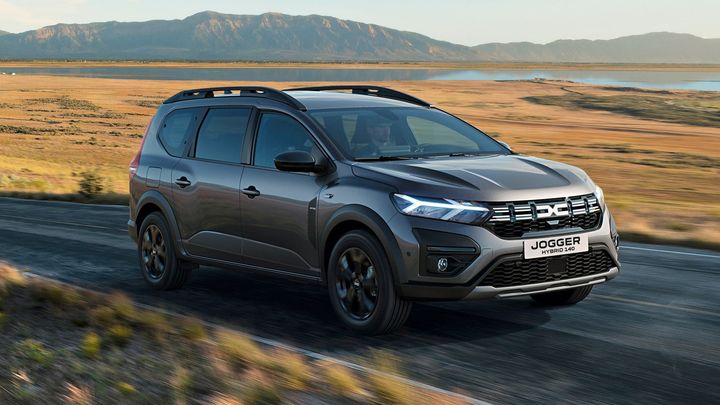
Similar weight to the Dacia Jogger, a 7 seater crossover. Cars are getting too heavy as they're being crammed full of unnecessary tech. 1,205kg
Is the tech that heavy though in the scheme of things ?If you didnt have screens you would have dials, most of the stuff is in software a lot of the time, there are extra sensors and cameras but stuff like that is generally pretty light
I suspect most of the weight is more that cars have got bigger and dont tend to fold in half in a crash, often now 8 or 10 airbags
plus a lot of cars have all wheel drive nowadays and instead of 14 inch or so wheels, often 20 inch wheels with 275 section tyres where in the past maybe a 195 ? 300 plus mm brake disks where there were 200mm disks before, everything tends to have been scaled up.
All the emissions stuff will have hadded weight, a DPF for example is a fairly weighty item.
I reckon weights have peaked now, and potentially as batteries improve you may see the weight coming down, as if a battery loses 150/200 kilos, you can then reduce the size of the motor, the brakes and how robust the suspension needs to be, potentially if the battery is smaller, you need less bodywork to package it in as well.
J4CKO said:
Silvanus said:
Similar weight to the Dacia Jogger, a 7 seater crossover. Cars are getting too heavy as they're being crammed full of unnecessary tech. 1,205kg
Is the tech that heavy though in the scheme of things ?If you didnt have screens you would have dials, most of the stuff is in software a lot of the time, there are extra sensors and cameras but stuff like that is generally pretty light
I suspect most of the weight is more that cars have got bigger and dont tend to fold in half in a crash, often now 8 or 10 airbags
plus a lot of cars have all wheel drive nowadays and instead of 14 inch or so wheels, often 20 inch wheels with 275 section tyres where in the past maybe a 195 ? 300 plus mm brake disks where there were 200mm disks before, everything tends to have been scaled up.
All the emissions stuff will have hadded weight, a DPF for example is a fairly weighty item.
I reckon weights have peaked now, and potentially as batteries improve you may see the weight coming down, as if a battery loses 150/200 kilos, you can then reduce the size of the motor, the brakes and how robust the suspension needs to be, potentially if the battery is smaller, you need less bodywork to package it in as well.
Or it's heavy cars trying to achieve what might be silly-yet-never-used performance requirements which require ever beefier components to meet.... until the next model comes out and those performance requirements need to be incremented upwards to provide a point of difference from old to new. Quick, add some more diameter to those brake discs, strengthen up that chassis, beef up those suspension components....
Gassing Station | General Gassing | Top of Page | What's New | My Stuff