
Cracks in brickwork
Discussion


I'm not sure if I'm catastrophising so i thought I'd try to get the opinion of people who may be far more knowledgeable about this sort of thing.
Due (i think) to moss/algae on the roof the guttering has gradually become more and more blocked, resulting in water overflowing when there's heavy rain. At one corner of my house it turns into a veritable fountain with water spouting all over my neighbour's garden. to cut a long story short I finally managed to get somebody to come round and give me a price for clearing out the guttering, and fixing the gaps. Whilst doing this I noticed some cracks in the brickwork.
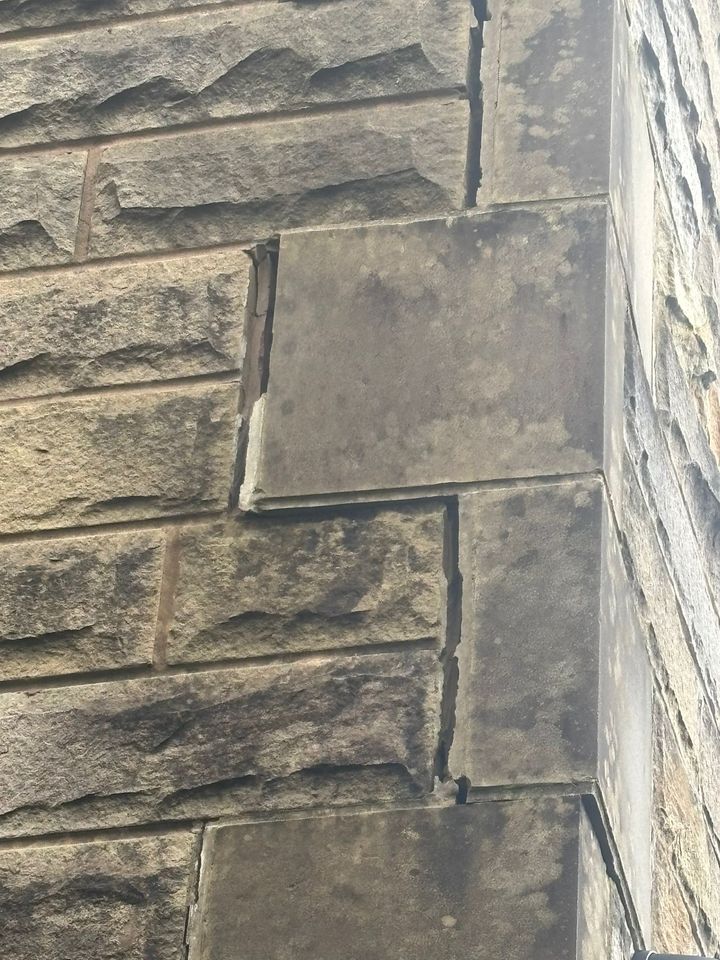
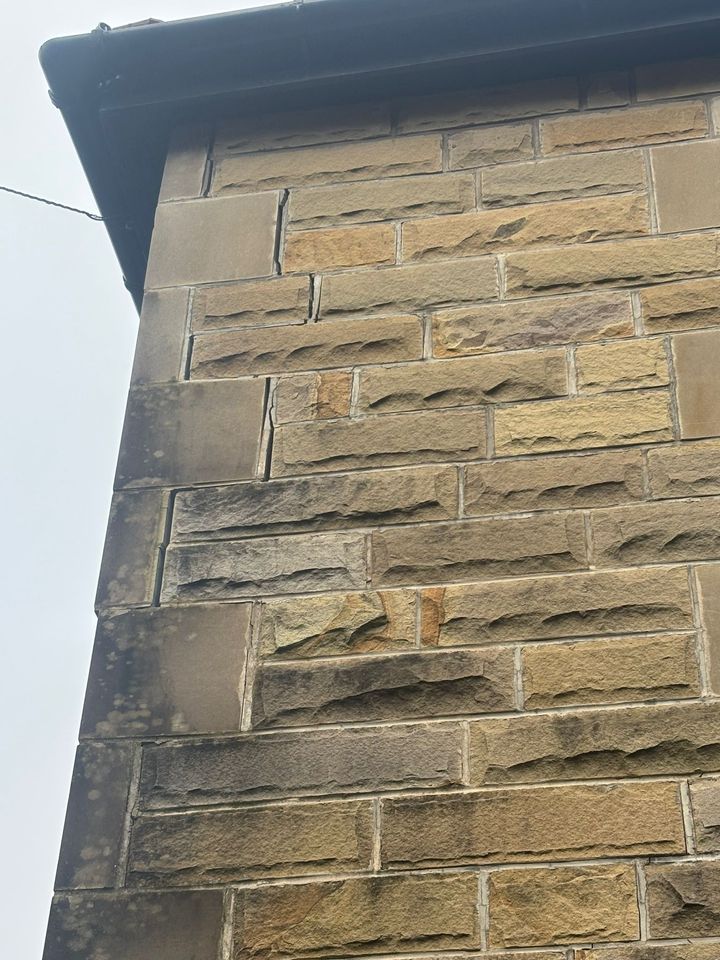
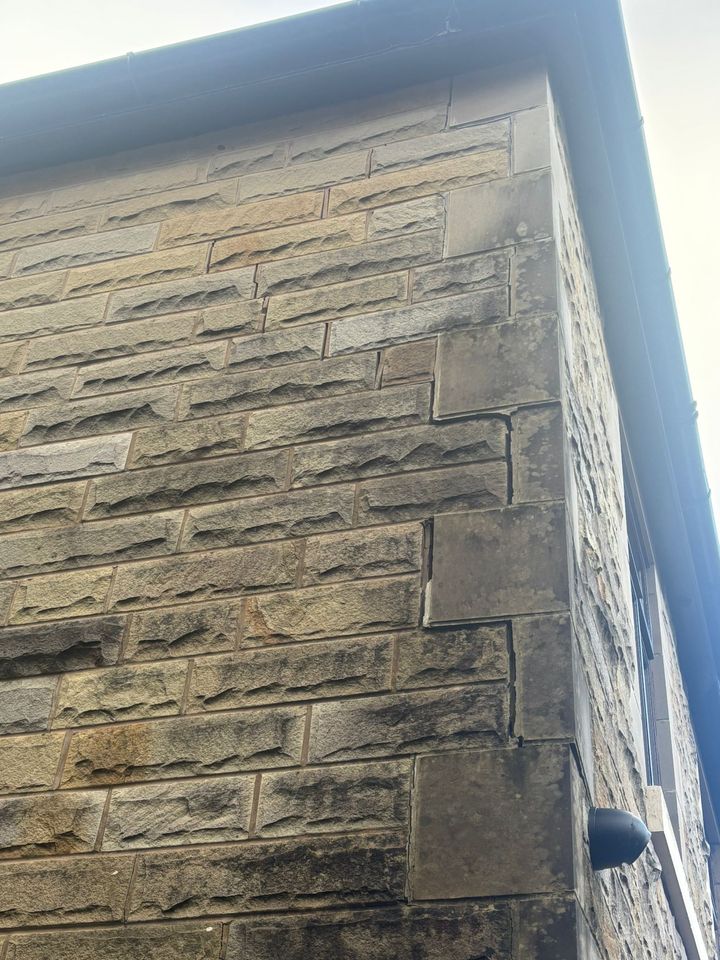
Pictures 1 and 3 are the side facing my neighbour's house (it's an extension and the previous owner built right up to the boundary). Picture 2 is the front facing side.
I think the cracks / movements are fairly obvious. My questions are Is it just pointing that needs doing or is it something more serious?
As usual any comments / advice / suggestions gratefully received
Due (i think) to moss/algae on the roof the guttering has gradually become more and more blocked, resulting in water overflowing when there's heavy rain. At one corner of my house it turns into a veritable fountain with water spouting all over my neighbour's garden. to cut a long story short I finally managed to get somebody to come round and give me a price for clearing out the guttering, and fixing the gaps. Whilst doing this I noticed some cracks in the brickwork.
Pictures 1 and 3 are the side facing my neighbour's house (it's an extension and the previous owner built right up to the boundary). Picture 2 is the front facing side.
I think the cracks / movements are fairly obvious. My questions are Is it just pointing that needs doing or is it something more serious?
As usual any comments / advice / suggestions gratefully received
That's more than just pointing, that's quite significant displacement.
The question is why has that top bit moved? Doesn't look like it's from the ground, just looks like that top corner got pushed out away from both walls? The cracks are just that area unstitching from the rest, both walls look generally intact beyond that?
Wall plates got wet, expanded and that bit of the wall yielded?
The question is why has that top bit moved? Doesn't look like it's from the ground, just looks like that top corner got pushed out away from both walls? The cracks are just that area unstitching from the rest, both walls look generally intact beyond that?
Wall plates got wet, expanded and that bit of the wall yielded?
JoshSM said:
That's more than just pointing, that's quite significant displacement.
The question is why has that top bit moved? Doesn't look like it's from the ground, just looks like that top corner got pushed out away from both walls? The cracks are just that area unstitching from the rest, both walls look generally intact beyond that?
So that side of the house was originally a single storey garage and is now a full extension (Integral garage and utility room downstairs, 2 bedrooms upstairs). The extension was built AIUI in 2006. When we bought the house in 2016 we noticed some vertical cracks in the upstairs and downstairs rooms (hairline vertical cracks on both floors in a straight line). The surveyor said this was just due to the building "settling" and that it was unlikely to get worse.The question is why has that top bit moved? Doesn't look like it's from the ground, just looks like that top corner got pushed out away from both walls? The cracks are just that area unstitching from the rest, both walls look generally intact beyond that?
I'm hoping deeply that this issue is 8nrelated to that

Countdown said:
JoshSm said:
Wall plates got wet, expanded and that bit of the wall yielded?
Apologies for my ignorance but what's a wall plate?For info there's no signs of damp in that bedroom.
However, as said above, that is more than pointing and needs qualified people to look into it. It could be either the extension or the water fall from the gutter, but water flowing from a gutter would normally take many many years to achieve that damage.
Megaflow said:
Wall plate is a piece of timber that is bolted to the top of the brick walls to enable the roof structure to fix to the walls. If that got wet and swelled it could possibly blow the walls like that, but the fact there is no damp inside is likely to be a good sign it is not that.
However, as said above, that is more than pointing and needs qualified people to look into it. It could be either the extension or the water fall from the gutter, but water flowing from a gutter would normally take many many years to achieve that damage.
Thanks However, as said above, that is more than pointing and needs qualified people to look into it. It could be either the extension or the water fall from the gutter, but water flowing from a gutter would normally take many many years to achieve that damage.

To be honest the water from the guttering has been overflowing for years. However I share the general doubts that the issue is water related.
Who do I need to call? is it a normal builder? A structural surveyor? Somebody else?
Countdown said:
Megaflow said:
Wall plate is a piece of timber that is bolted to the top of the brick walls to enable the roof structure to fix to the walls. If that got wet and swelled it could possibly blow the walls like that, but the fact there is no damp inside is likely to be a good sign it is not that.
However, as said above, that is more than pointing and needs qualified people to look into it. It could be either the extension or the water fall from the gutter, but water flowing from a gutter would normally take many many years to achieve that damage.
Thanks However, as said above, that is more than pointing and needs qualified people to look into it. It could be either the extension or the water fall from the gutter, but water flowing from a gutter would normally take many many years to achieve that damage.
To be honest the water from the guttering has been overflowing for years. However I share the general doubts that the issue is water related.
Who do I need to call? is it a normal builder? A structural surveyor? Somebody else?
Depending on roof construction that looks like eaves spread I would get it looked at by a local Structural Engineer https://www.findanengineer.com/
Lotobear said:
How old is the house OP, not that old I'm guessing and presumably of cavity construction?
I'm pretty sure it was originally a 1930's 3-bed semi, then changed to a 5-bed semi in the early 2000s.The walls are stone - tbh I'm not 100% sure if there's a cavity although the window sills are pretty thick.
Its it solid stone ? Or stone cladding ? If its cladding it could be the constant water ingress over a period of time has made it come away. If it’s structural there will be cracks on the inside too ? Difficult to tell really from the limited photos, could be the roof pushing out a bit on that corner too ? Is there a hip there ?
Countdown said:
Lotobear said:
How old is the house OP, not that old I'm guessing and presumably of cavity construction?
I'm pretty sure it was originally a 1930's 3-bed semi, then changed to a 5-bed semi in the early 2000s.The walls are stone - tbh I'm not 100% sure if there's a cavity although the window sills are pretty thick.
from the quoins it looks cavity with a 100mm / 4" outer leaf
Lotobear said:
Countdown said:
Lotobear said:
How old is the house OP, not that old I'm guessing and presumably of cavity construction?
I'm pretty sure it was originally a 1930's 3-bed semi, then changed to a 5-bed semi in the early 2000s.The walls are stone - tbh I'm not 100% sure if there's a cavity although the window sills are pretty thick.

Chumley.mouse said:
Its it solid stone ? Or stone cladding ? If its cladding it could be the constant water ingress over a period of time has made it come away. If it s structural there will be cracks on the inside too ? Difficult to tell really from the limited photos, could be the roof pushing out a bit on that corner too ? Is there a hip there ?
Solid stoneIt will be cavity construction given the age, with a 100mm outer leaf of stone.
If there are no internal cracks then that indicates the external leaf has moved independently of the internal leaf. I would say unlikely to be roof spread given a) age of extension and b) roof spread would feature cracks that widen towards the eaves and c) the roof loads/thrust is taken by the internal leaf which as far as we know has not moved.
It's certainly curious and the only things that occur to me is corrosion of embedded metal in the outer leaf causing an expansive force but this is unlikely given the age (as any such metal would be stainless or else galvanised) or else, perhaps, an absence of cavity ties in this part of the wall causing localised movement of the external leaf due to wind suction (but more of a risk in large panels such as gables) - the stonework however looks well coursed and competently built so this is probably unlikely but not completely impossible.
I will watch with interest but would agree with others - it requires a first hand inspection by a professional and possibly some exposure work.
If there are no internal cracks then that indicates the external leaf has moved independently of the internal leaf. I would say unlikely to be roof spread given a) age of extension and b) roof spread would feature cracks that widen towards the eaves and c) the roof loads/thrust is taken by the internal leaf which as far as we know has not moved.
It's certainly curious and the only things that occur to me is corrosion of embedded metal in the outer leaf causing an expansive force but this is unlikely given the age (as any such metal would be stainless or else galvanised) or else, perhaps, an absence of cavity ties in this part of the wall causing localised movement of the external leaf due to wind suction (but more of a risk in large panels such as gables) - the stonework however looks well coursed and competently built so this is probably unlikely but not completely impossible.
I will watch with interest but would agree with others - it requires a first hand inspection by a professional and possibly some exposure work.
Gassing Station | Homes, Gardens and DIY | Top of Page | What's New | My Stuff