
Mitre angles
Author
Discussion

Purosangue

Original Poster:

1,647 posts

33 months

Yesterday (02:47)
quotequote all

any tips appreciated cutting mitre angles for coving around an IKEA Metod corner wall cabinet , what to set angles on cut saw etc

as illustrated 4 mitres

thanks


GiantEnemyCrab

7,893 posts

223 months

Yesterday (03:02)
quotequote all

BlackTails

2,226 posts

75 months

Yesterday (05:47)
quotequote all
67.5 degrees. Or 22.5 degrees, depending whether you’re measuring the angle from the rest you’re securing the coving against while you cut or the angle from square cut.

Edited by BlackTails on Wednesday 17th December 06:22

mart 63

2,308 posts

264 months

Yesterday (07:05)
quotequote all
Coving angles are difficult to cut, if you haven't got the Coving template. A 90 degree cut is not a straight cut, it's a curved cut. If you cut them straight, you have a lot of filling and it doesn't look good.

Edited by mart 63 on Wednesday 17th December 07:12

loughran

3,135 posts

156 months

Yesterday (07:21)
quotequote all
Best to use a mitre box. No need for curved cuts.

https://www.youtube.com/watch?v=DxMCT5L_rMI

paulwirral

3,698 posts

155 months

Yesterday (08:56)
quotequote all
There’s a guide to cutting coving and cornice on “ plasterceilingroses “ website without the need for mitre boxes or mitre saws .

Simpo Two

90,473 posts

285 months

Yesterday (09:15)
quotequote all
In the OP's case it's either 45 degrees (2x45=90) or 22.5 degrees (2x22.5=45). Then you have to decide f they're internal or external corners.

Just set your saw - I assume you have a mitre saw - as required and use your eyes and brains to work out which way the angle needs to be smile

allegro

1,258 posts

224 months

Yesterday (09:57)
quotequote all
This is really a job for a decent quality mitre saw. cutting these by hand is difficult unless you are experienced, which your question suggests otherwise. 2 part mitre glue will help but these joints are not really ones you want a load of polyfiller in unless you intend to paint. would recommend you pay a local joiner the hours wage it would take him/her.

wolfracesonic

8,626 posts

147 months

Yesterday (11:24)
quotequote all
Are we talking plaster/gyproc coving here, that goes at the wall/ ceiling junction, or an mfc one that goes around the top of the cabinets?

Inbox

1,211 posts

6 months

Yesterday (11:37)
quotequote all
I think getting rid of the cabinet is probably easier...

Mitres in coving are challenging at best for diy as not enough practice.

RGG

931 posts

37 months

Yesterday (11:42)
quotequote all


Just a process suggestion -

Use similar cross section pieces of wood to make the initial cut, which will confirm the angle setting of the cutting tool.

This will mean your final coving doesn't get ruined and wasted.

shtu

4,038 posts

166 months

Yesterday (12:05)
quotequote all
Apart from the "making sure the saw can cut accurately" setup that is often needed, ie, is 45 degrees on the saw's stop actually correct, the joiner that did mine came with a brand-new, fine toothed blade. I would guess it was at least an 80 tooth one.

Purosangue

Original Poster:

1,647 posts

33 months

The material is a hard Polymer 58mm with channel for mood lighting

I have batons to mount the coving to the units they will have to be sprayed white .I've put coving up before on 90 degree etc but not the angles over the corner unit


Purosangue

Original Poster:

1,647 posts

33 months

i have one of these i used for normal coving
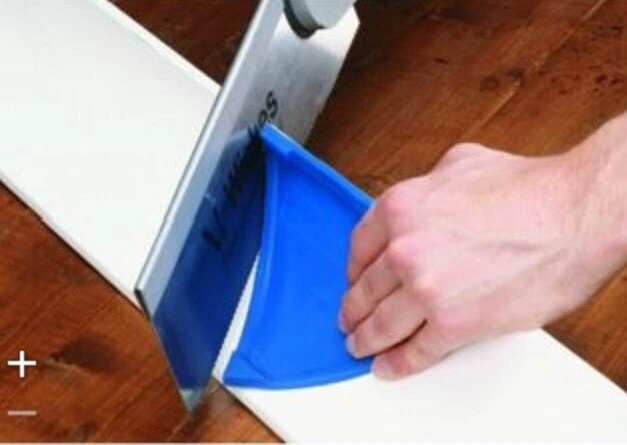


but that would only be good for 90 degree angles ones i used for the lounge
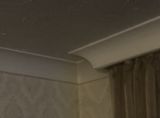

Edited by Purosangue on Thursday 18th December 01:22

The Gauge

5,847 posts

33 months

Are you fitting coving or cornice (to top of wall cupboards)?

I assumed until I saw the photos it would be plaster coving which is very forgiving when cutting angles, but if you're fitting cornice to the top of wall units then the correct angle is more vital (other than using filler).

Simpo Two

90,473 posts

285 months

Purosangue said:
i have one of these i used for normal coving


but that would only be good for 90 degree angles ones i used for the lounge
I see the problem - you have a plastic guide that only does 45 degrees.

Time to get a guide that can do other angles. See https://www.cromwell.co.uk/shop/hand-tools/mitre-b...

wolfracesonic

8,626 posts

147 months

If you have a mitre saw and the back fence is tall enough, you could adapt this method, instead of the proper aluminium blocks, use double sided tape to sticksome timber blocks to the fence.