
McLaren Artura | PH Used Buying Guide
McLaren's first series production PHEV hasn't been without issues - but secondhand, it's now new 911 money...
Key considerations
- Available for £125,000
- 3.0-litre V6 petrol twin-turbo + electric motor, rear-wheel drive
- Not as intimidating as a Super Series and not much slower in the real world
- Has won at least one 'best driver's car of the year' award
- Early cars had their fair share of problems, both software and hardware
- Considerably cheaper used than a Ferrari 296 GTB
Announced in early 2021 and launched in 2022 for deliveries beginning in the third quarter of that year, McLaren's first series production hybrid supercar - the Artura - was aimed straight at Ferrarl's 296 GTB. The name, a mix of 'art' and 'future', could have gone horribly wrong if they'd put the words together the other way. Luckily somebody at McLaren noticed that, so Artura it was.
Powered by a 3.0-litre twin-turbo V6 and an electric motor running through the company's first-ever electronic differential, this mid-engined, rear-wheel driver was the first McLaren to use the company's all-new, in-house designed, Sheffield-built MCLA carbon fibre chassis with a bespoke battery compartment. They gave it a short wheelbase and a nose-down stance to promote a purposeful and at the same time unchallenging 'shrink-wrapped' appearance.
A concerted weightsaving process included a 10 per cent reduction in the weight of the cabling used in the domain-based ethernet electrical architecture, a design that reduced the amount of cabling by up to 25 per cent. Based on its lightest dry weight of 1,395kg, McLaren was able to claim a class-leading power-to-weight ratio of 481hp per tonne for its Artura.
A GT4 race version was launched in mid-2022 featuring a mechanical rather than an electronic rear differential, a Bosch Motorsport control system, modular motorsport electrical harness, fuel cell with extra lift pumps, inboard radiators, a sliding pedal box and plenty more race options like laser ride height and brake infra-red sensors and V-Box telemetry.
A £221,500 Spider version was launched in late 2025 with a roof that deployed in just eight seconds off the keyfob. By that point the regular Artura coupe had risen to £201,400, a significant hike on the new price of £185,500 in 2022 even taking into account the 20hp power boost and other 2025MY Artura range tweaks like enhanced brake cooling and suspension changes that we'll get into in the chassis section.
Optioning an Artura to typical press car level would quickly add £25k to its new base cost, putting it directly in competition with a nearly new 720S. As of December 2025 none of the Arturas that were for sale in the UK had reached the 10,000-mile mark. We found just two cars with price tags below £130k. Both were 2022 examples, the cheapest one being a black car with 2,400 miles at a tenner under £125k.
SPECIFICATION | MCLAREN ARTURA
Engine: 2,993cc V6 24v twin-turbo petrol + 71kW electric motor
Transmission: 8-speed dual-clutch auto inc e-reverse, rear-wheel drive
Power (hp): 585@7,500rpm + 94 electric = 670 total
Torque (Ib ft): 431 overall (@2,250-7,000rpm, electric 166)
0-60mph (secs): 3.0
Top speed (mph): 205
Weight (kg): 1,498 (1,560 convertible)
MPG (WLTP): 50+
CO2 (g/km): 129
Wheels (in): 19 x 9 (f), 20 x 11 (?)
Tyres: 235/35 (f), 295/35 (r)
On sale: 2022-on
Price new (2022): £185,500
Price now: from £125,000
Note for reference: car weight and power data are hard to pin down with absolute certainty. For consistency, we use the same source for all our guides. We hope the data we use is right more often than it's wrong. Our advice is to treat it as relative rather than definitive
ENGINE & GEARBOX
Weighing 50kg less than McLaren's V8 engine, the Artura's all-aluminium 3.0-litre twin-turbo dry sump V6 was notable not only for being McLaren's first direct-injection petrol motor but also for its 120-degree configuration, which was claimed to be a world first for a production V6. That brought packaging advantages, a lower centre of gravity and a stiffer crankshaft permitting an 8,500rpm redline.
The engine produced 585hp at 7,500rpm and maximum torque of 431lb ft across a very wide 4,750rpm range from 2,250-7,000rpm, although these figures did include the electric assistance that was managed to optimise powertrain driveability. Thanks to the electric infill there was no sensation of lag even in the higher gears. Playing devil's advocate there was no sensation of boostiness either, which some think is a non-negotiable part of the McLaren experience. E-mode was powered by a 7.4kWh battery. The car defaulted to this mode from the start, only switching the IC engine on. If the level of battery charge was really low or if you selected a different drive mode.
Even when the engine was on you had to wait for the cats to heat up before the 1,500rpm rev limit was unlocked. You could go at up to 81mph using electricity alone, revised to 75mph in the 2025 Spider, but driving at that speed would sorely test the range, which in normal driving was just 19 miles. Depending on which IC mode was selected the battery could harvest different amounts of recharging power from the engine rather than the brakes. It was chargeable to 80 per cent in 2.5 hours. Outside of electric-only E-mode there were three main Powertrain modes: Track, Sport and Comfort. Comfort maximised range and efficiency, shutting the engine off at speeds of under 40km/h (25mph), while the other two modes threw electricity in the mix to boost low-end response and acceleration.
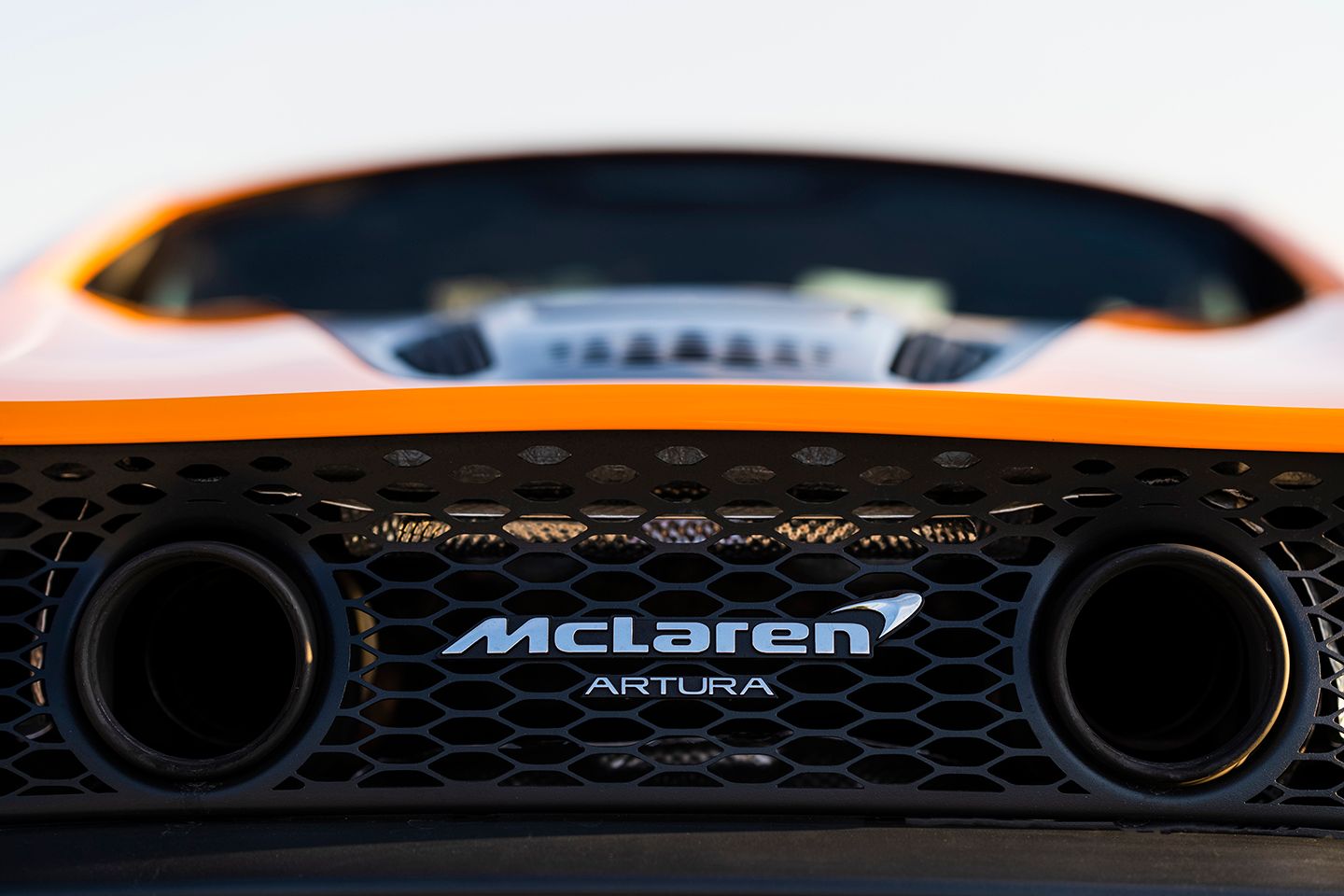
The Artura easily and repeatedly hit its claimed targets of 3.0 seconds, 8.3 seconds and 21.5 seconds for its 0-60mph, 0-124mph and 0-186mph times. Top speed was supposedly limited to 205mph. A sports exhaust was approaching £5,000. If you wanted 'stealth' exhaust tips that was an extra £1,000. The system made a big din right enough but there were more mellifluous engine notes out there. The Artura gearbox started off as a seven-speeder, but for this application McLaren removed the conventional reverse cog and replaced it with an extra forward one. The task of going backwards was then achieved by running the electric motor backwards. This rethink chopped 40mm off the length of the gear cluster.
Shift speed increased by 25 per cent on '25MY cars. Making the most of the WLTP regs, the Artura was rated at 129g/km. McLaren talked about 'more than 50mpg' in its press materials without specifying how (presumably including electric running). Some owners have reported 40mpg plus, again on the same assumption. The ICE reality was mpg in the mid to low 20s if you were enjoying yourself, or low 30s if you were taking it steady. Taking something in the mid-20s as a realistic average, that would give you a range of over 350 miles from the 72 litre (15.8 gallon) petrol tank.
It's fair to say that McLaren hasn't enjoyed the best rep for build quality or reliability over the years. Arturas were warranted for five years/47,000 miles by the factory, with five years/unlimited mileage roadside assistance, so even the oldest car on sale at the end of 2025 will still have around three years of cover left on it. The drive battery was covered for six years/47,000 miles and the body for 10 years/ unlimited mileage.
We have heard about at least one electric motor failure and a few drained 12v batteries, but in fairness the latter is becoming a common issue on quite a few cars these days. Some owners noticed oil leaks in the first 500-700 miles. Coolant pumps have leaked too, in some cases leading to expensive and long-lasting warranty work. Some cars have flagged up messages such as 'hybrid performance decreased, contact McLaren if the problem persists' or 'cannot change drive mode, please restart engine', or maybe the start button didn't work, your odometer had gone blank and there was no 'press brake pedal to start' message.
Sometimes the hybrid system would deny you access to odd-numbered gears. Turning everything off, locking the car, making sure everything was really off and then leaving the vicinity with the fob in your pocket for at least 15 minutes would sometimes, but not always, fix these problems, most of which were software-related. Not always though: sometimes the hybrid performance issue was resolved by topping up the dielectric fluid.
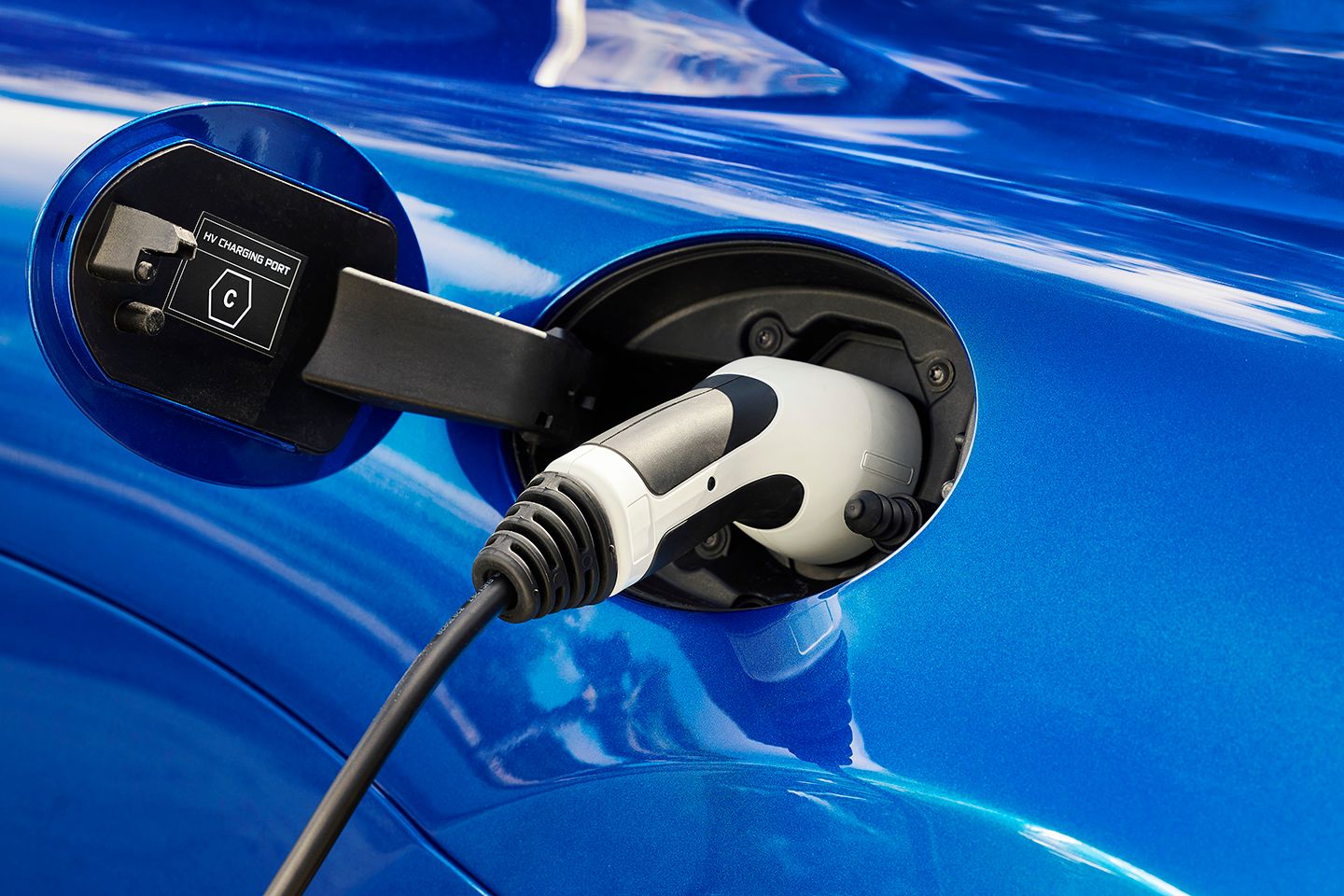
Owners have found that they could minimise software gremlins by charging the drive battery overnight through the HV port rather than relying on the power management system to do it. A side benefit of following that charging regime was that the system pre-heated the engine to 150 degrees Fahrenheit once charging was complete, a useful way of cutting down on mechanical wear caused by cold starts. Experienced owners have been advising others to let the engine stop on its own after a drive rather than powering it off with the start button. You could check whether you were driving in the ideal thermal window for the car by seeing if the engine turned itself off after you'd switched to electric mode for the last half a mile or so of your journey. The battery in the key fob has a reputation for not lasting very long, especially if you were storing it near the car when you weren't using it.
CHASSIS
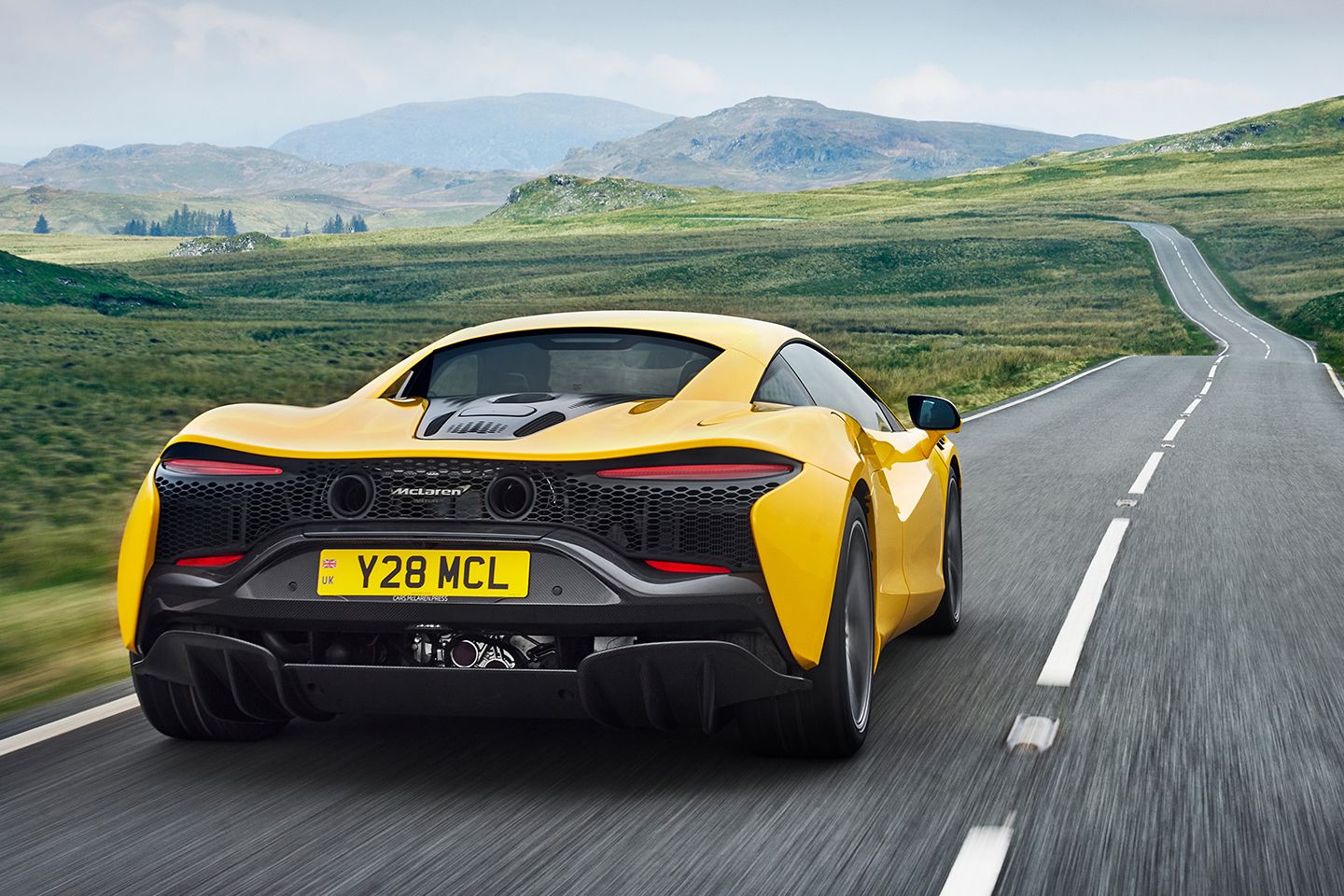
The carbon fibre tub with its new battery pack safety cell and additional crash/ load-bearing functionality weighed 82kg. It had cheaply-replaceable (relatively) aluminium subframes at either end, to which were attached adaptive dampers with Proactive Damping Control (PDC), 600LT-style double wishbones at the front and, at the rear, upper wishbones with double lower links and tie rods ahead of the wheel centres. Augmented by a hydraulic anti-roll system the geometry rear setup delivered extra stability and precision and reduced understeer coming out of corners, according to McLaren.
And so it proved. The suspension certainly worked very well on UK roads. The stability control was very nicely integrated into the powertrain, the electro-hydraulic steering had loads of feel and accuracy, and the Artura was very civilised at low speeds in town. Out of town, it was a belter, beating nine tough rivals to Autocar's 2024 'best driver's car' award at Cadwell Park.
Some found Track mode too jiggly on public roads and Sport felt stiffer than the equivalent mode on say the 570S, but it was still very usable on road or track. Comfort mode was lovely pretty much anywhere. Handling and powertrain adjustment controls were kept separate from each other on either side of the wheel, so you could be precise with your desired mix. The 2025MY revisions brought stiffer engine mounts, new valving for the dampers and a new damper control unit that ran 90 per cent quicker than the previous one. An electronically controlled limited-slip differential on the rear axle locked and unlocked individual rear wheels and made drifting somewhat easier than it had been on previous open-diffed McLarens. Engaging Variable Drift Control reduced your drift angle, but it also reduced the need to dance on the throttle quite so much during drifting. If you set the VDC to (say) 5 it gave the car a nice amount of rotation coming out of corners.
Next-gen Pirelli P Zero tyres gave the Artura the same sort of grip that the 600LT had had with its P Zero Trofeos. Corsa and Winter options were available. Cyber Tyre tech incorporated chips in each tyre to work with the car's stability control systems plus sound-absorption devices on the inside walls to reduce vibration and noise. You could fiddle about with the tyre pressures without triggering the usual TPMS warnings. Standard brakes were carbon ceramics (390mm front, 380mm rear) that worked smoothly and progressively even in town. The bill for special paint on the six-piston front, four-piston rear aluminium brake calipers was nearly £1,600. Forged wheels were £4,500, with 'stealth' finish nearly £1,400 on top of that. Anti-roll bar links have loosened themselves in some cars, damaging the threads.
BODYWORK
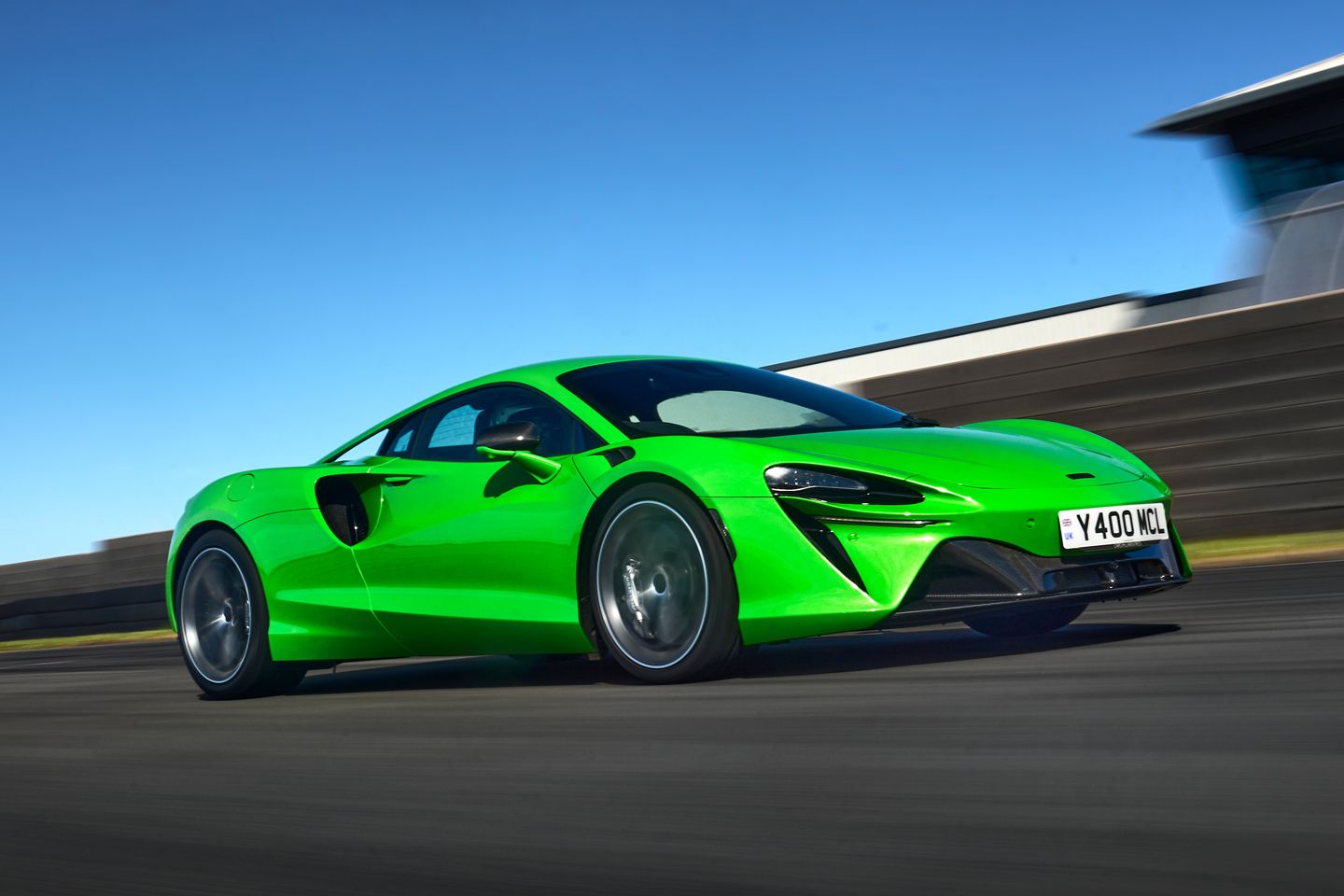
Body panels were a mix of superformed aluminium (bonnet, engine cover) and composite (wings). The windscreen surround was carbon fibre. For a price, MSO would change the material for the front and rear splitters and the door mirrors to carbon fibre, or you could just go for the Black Pack that applied a gloss black finish to the roof, buttresses, door mirror casings, exhaust, 'hot vee' finishers and front wing louvres.
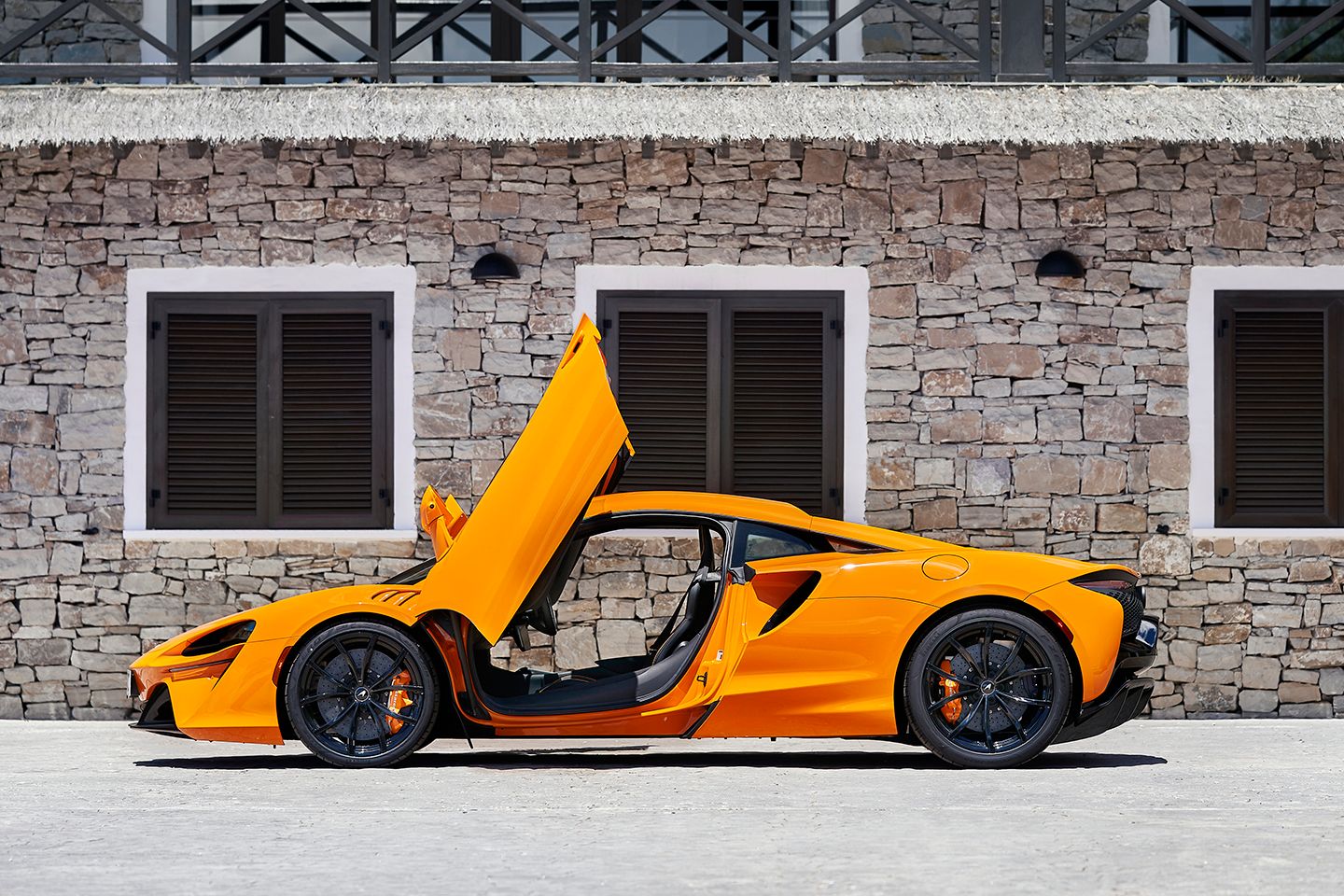
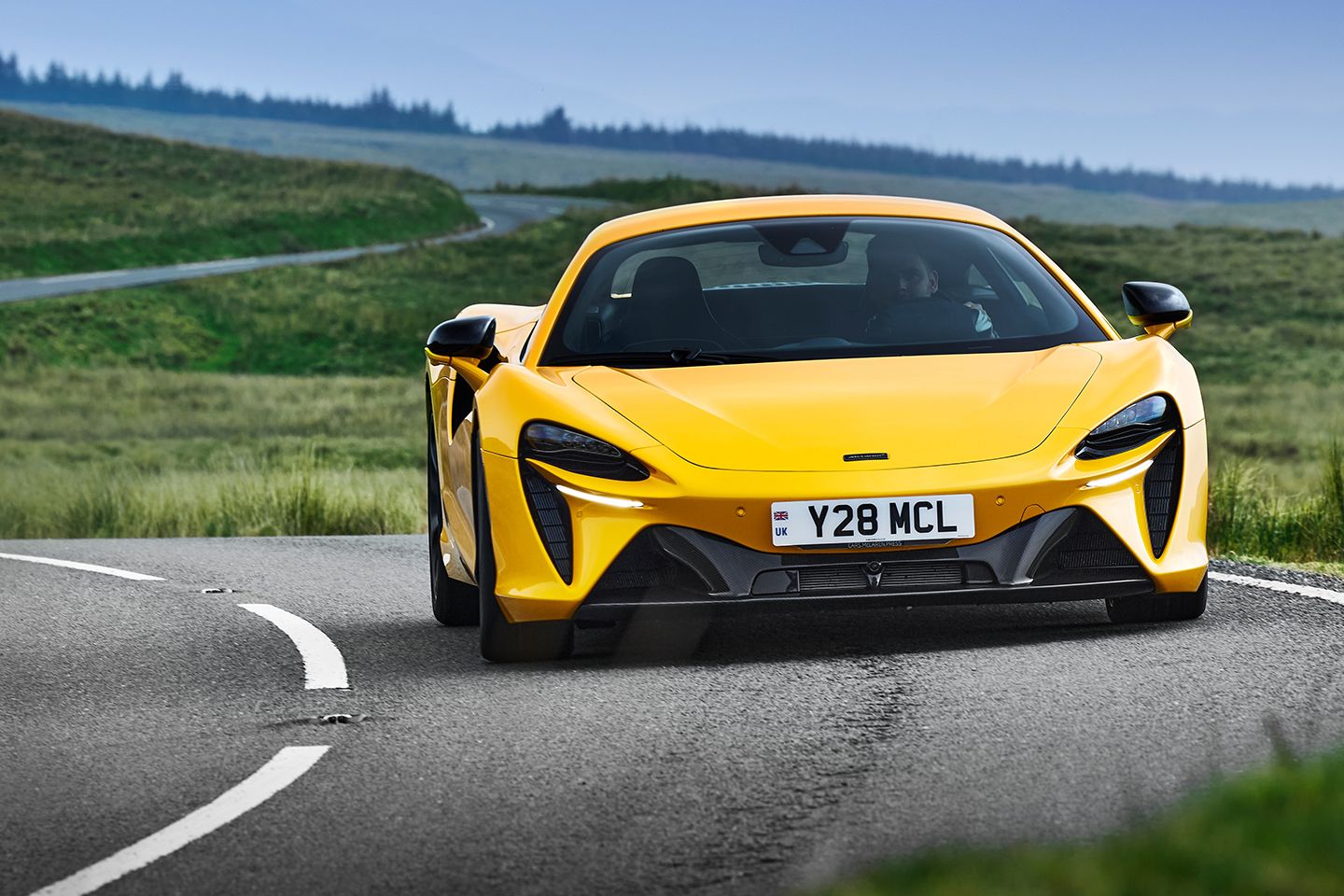
Every vent and orifice on the Artura was there for a reason. The headlights were a bit less goggly-looking than the ones seen on previous McLarens, which some considered to be a good thing. The dihedral doors were suitably supercarish but the windows (and the rear glass on the Spider) could be a bit squeaky in operation. A nose lift was quoted in some stories as standard equipment at launch but the ‘vehicle lift system' now appears to be a £2,200 option.
In the case of the Spider, you would need to be especially vigilant about keeping the 12v battery in tip-top condition if you were planning on doing a lot of engine-off roof demonstrations. One well-known YT reviewer had some difficulties in performing that operation from the fob, though it did seem to work OK from inside the car. McLarens are not unusual in this market for being sensitive to voltage stability. Weakness in this area could generate startup problems through the brake pedal pressure sensor not validating.
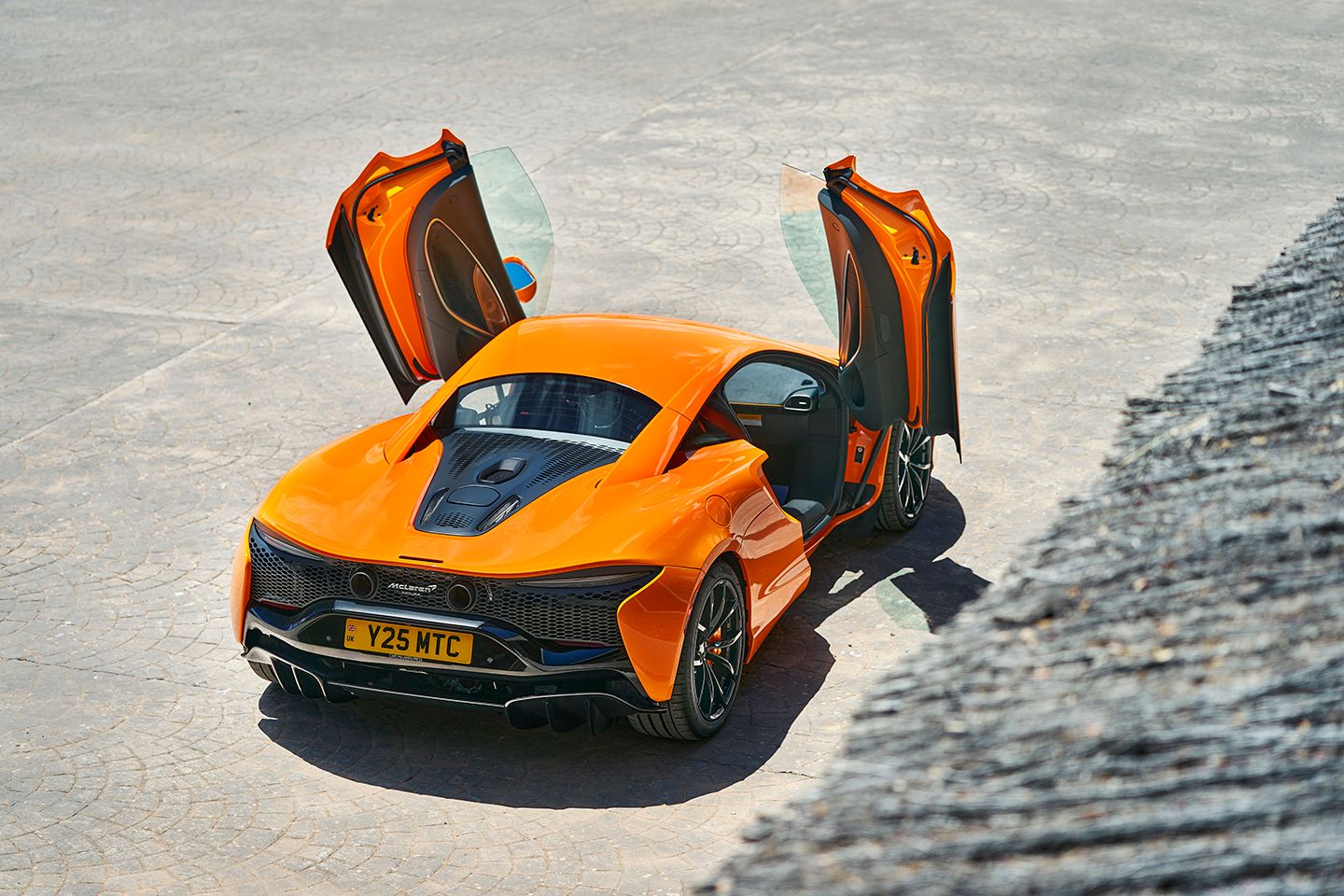
There were 15 colours in the standard range of paints including three model-specific launch colours (Flux Green, Ember Orange and Plateau Grey) with another 16 colours (or any number really) available through the MSO programme. A satin-finish titanium engine cover was £500. The deep and well-shaped front boot was a very acceptable 160 litres, supplemented by a small parcel shelf behind the front seats.
The alarm on Spiders has been known to play up. Sensor replacement is the normal cure, as it has been for the occasional issue with keyless entry. Disabling keyless entry and exit was being recommended by some owners who were finding that with either of these features enabled the car was struggling or failing to lock itself and, as a result of that, to power itself off, leaving cabin lights and screens illuminated. Owners suffering with this issue were having some success with the fritzy locking by making sure the car was turned off before opening any doors. Others were suggesting going for a quick squirt in electric mode and trying again. We're guessing that these issues will have been sorted by now.
The parking sensors were perhaps a bit too keen to continue giving you camera views when you were maybe wishing it would put itself back into the nav or CarPlay screen. It was important to keep an eye on the intakes below the doors as there was no screening to stop plenty of dead leaves getting stuck in there.
INTERIOR
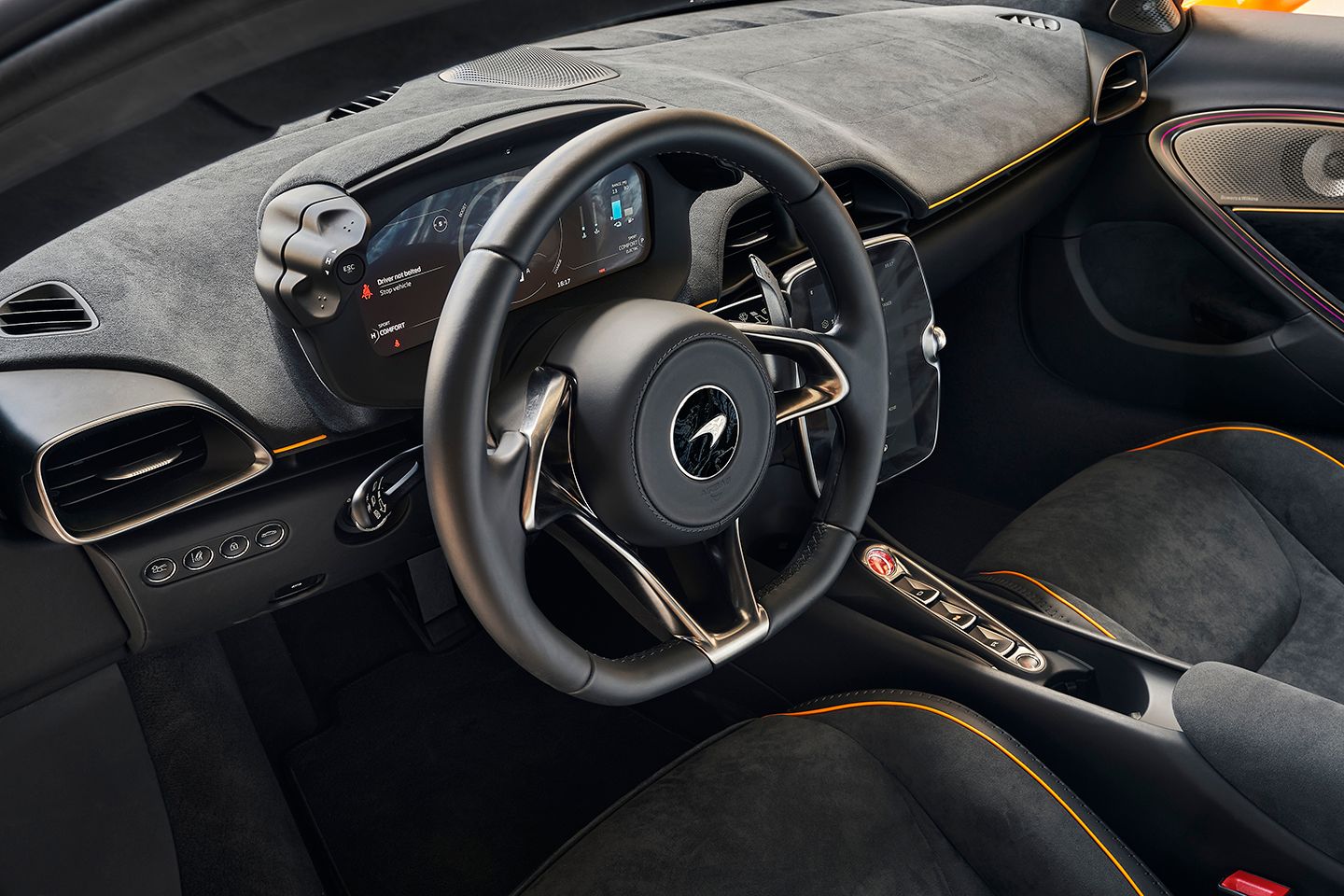
The Bluetooth vehicle key detected when you were approaching your Artura and powered it up to welcome you, with ambient lighting in the doors guiding you in at night. 600LT owners would have recognised the Artura's cabin design. The rim of the steering wheel was pleasingly slender and there were no on-wheel controls affecting your ability to concentrate on the road ahead. The sculpted metal finger controls for drive and suspension modes that sat on either side of the main, sharply-graphicked instrument binnacle were reachable without taking your hands off the wheel.
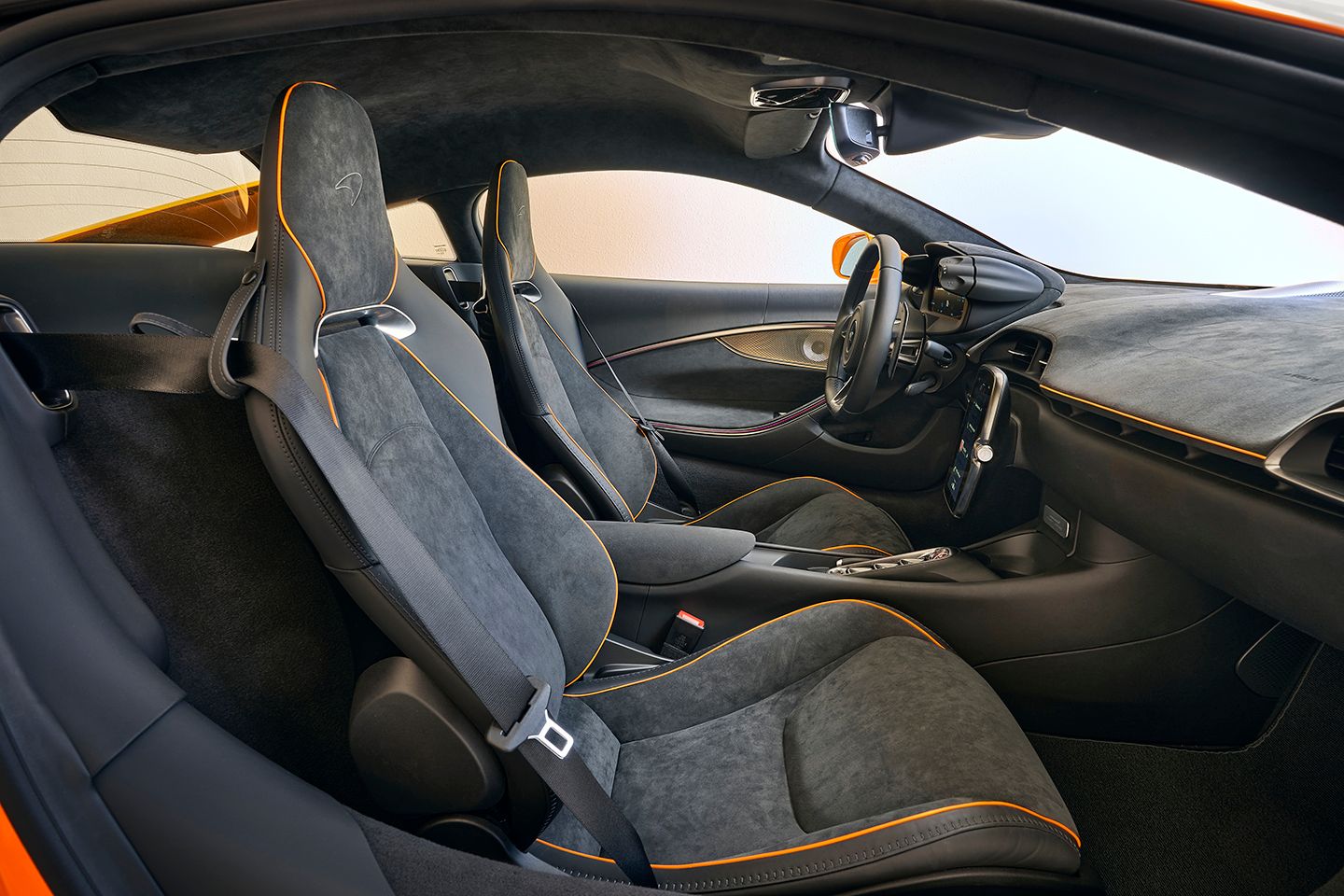
They were lovely to use, too. If you couldn't find a really good driving position that was more likely to be your fault than the car's. The binnacle moved with the steering column and seemed slightly higher than the ones found in other McLarens, giving the sensation if not the actuality of reduced forward visibility, but otherwise it was easy to see out of an Artura. You could choose Comfort, fully-electric 10-way sports at £4,000, or 9.5kg lighter composite Clubsport seats at a surprisingly reasonable £900 (shurely some mistake?). The Clubsports were one-piece, so you couldn't alter their backrest angle independently of the bases, but the patented movement of the seat in an elliptical arc around the same hip point altered your position in a way that seemed to work for most. Shoulder room was good too. The cabin was designed to allow 6ft 4in drivers to stretch out in most directions.
You had two upholders in the coupe (but only one in the Spider) plus USB and USB-C ports in the cubby between the seats. If you did spec the Clubsport perches - a very worthwhile box to tick if you were planning to do any trackdays, and even if you weren't - they came with neat little pockets for your mobile phone. Cabin storage generally was very decent for the type of vehicle, with room for big bottles in the door bins. The Artura's two-screen MIS Il infotainment and connectivity system was new. From a hardware and design point of view the floating screen still looked nice in 2025, but it wasn't exactly lightning-quick in its operation.
Still, over-the-air updates were made possible by the new electrical architecture. Apple CarPlay was available from the start of Artura production, but Android wasn't immediately available on the UK press cars. As far as we're aware, to this day neither are wireless. The Artura's screen has been known to blank out, or not start up for a good few minutes after startup, although it would usually reset itself. Pressing the side button for 30 seconds would sometimes help to nudge it back into action. That was also the suggested fix if Bluetooth or CarPlay had turned themselves off.
Although any McLaren would naturally be classified as a 'driver's car', the Artura had the expected suite of driver aids including intelligent adaptive cruise, lane departure warning, auto high-beam assist and road sign recognition. The eVAC system was claimed to heat and cool quicker than a conventional HVAC. Air con and tyre pressure monitoring systems have played up but again that's hardly unique to McLaren.
Besides Vision and Practicality packs, £4,400 bought the Performance pack that included larger gear paddles, McLaren floor mats and plenty of Alcantara on the dash, steering wheel and elsewhere. Carbonising the external details would cost over £8k. You could also have the steering wheel, paddles and central console in carbon for £2,750. Track telemetry was a £750 extra, nappa leather £5,000. The Technology pack with adaptive cruise, Bowers & Wilkins audio and a 360-degree camera parking system cost £6,000. Although the B&W kit sounded amazing the speakers reflected quite noticeably in the windscreen. There have been reports of annoying rattles from the central dash area.
PH VERDICT
Even in today's super-competitive fast car market, the Artura is a valid choice. It was and remains to this day as quick as anything you might want in the real world. Once you were out on the road the power delivery, traction and roll-tree cornering were brilliant. On a track you would need a very special car to keep it honest.
Although it had more of an 'everyday' aura about it than other McLaren models, the Artura also had a friendliness that would be a good thing for many. Fret not, it still had the McLaren driving DNA, but it came with a greater sense of ease than was sometimes associated with its higher-profile siblings. It was a manageable size for the UK, plus its PHEV-ness gave it the ability to leave home early without disturbing the neighbours. The noise the engine made was OK if not spine-tingling, though you could improve it by fitting a cat-back with a 200-cell high-flow cat. Style is always subjective, but we reckon that a vox pop on the looks of both the coupe and the Spider would result in a significant 'yes please' vote.
In fairly typical McLaren style used Artura values have been less than rock solid, reflecting not only a lingering distrust regarding McLaren reliability/quality but also this market's apparent disinterest in V6s generally and V6 hybrids in particular. That's a bit of a shame as the Artura really works as a sporting two-seater. Still, it's an ill wind that blows nobody any good, and indeed one person's depreciation is the next person's bargain. As mentioned in the overview, the cheapest Artura we found for sale in the UK at the time of writing in December 2025 was a 2,400-mile 2022 car at £125,000. With up to two years and/or the best part of 45,000 miles worth of warranty left that seems cheap - especially when you compare it to a used Ferrari 296 GTB that also launched in 2022. The cheapest one of those we found was a '22 car with over 10,000 miles on it at a fiver under £180,000. The standard UK warranty on a 296 is four years rather than five.
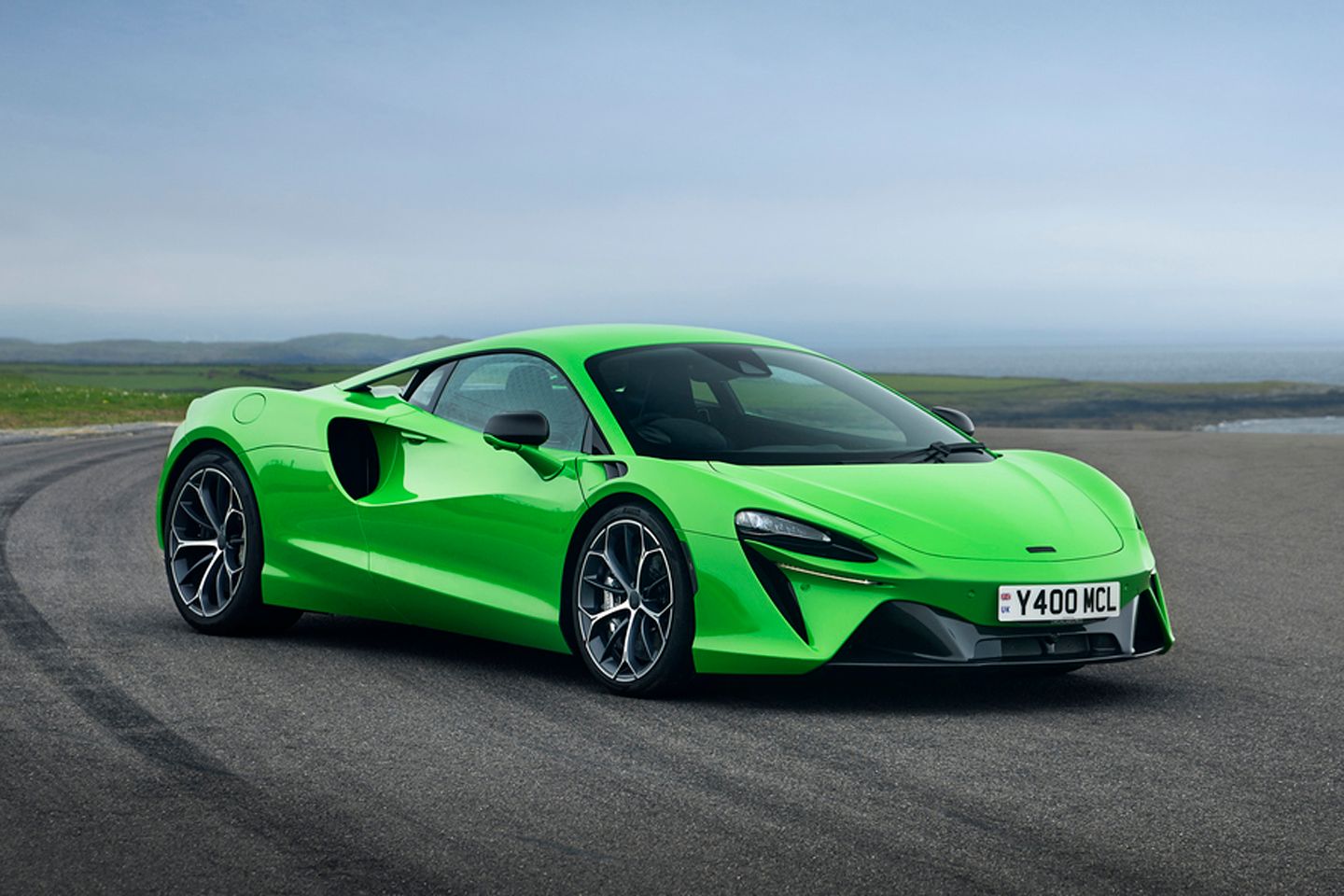
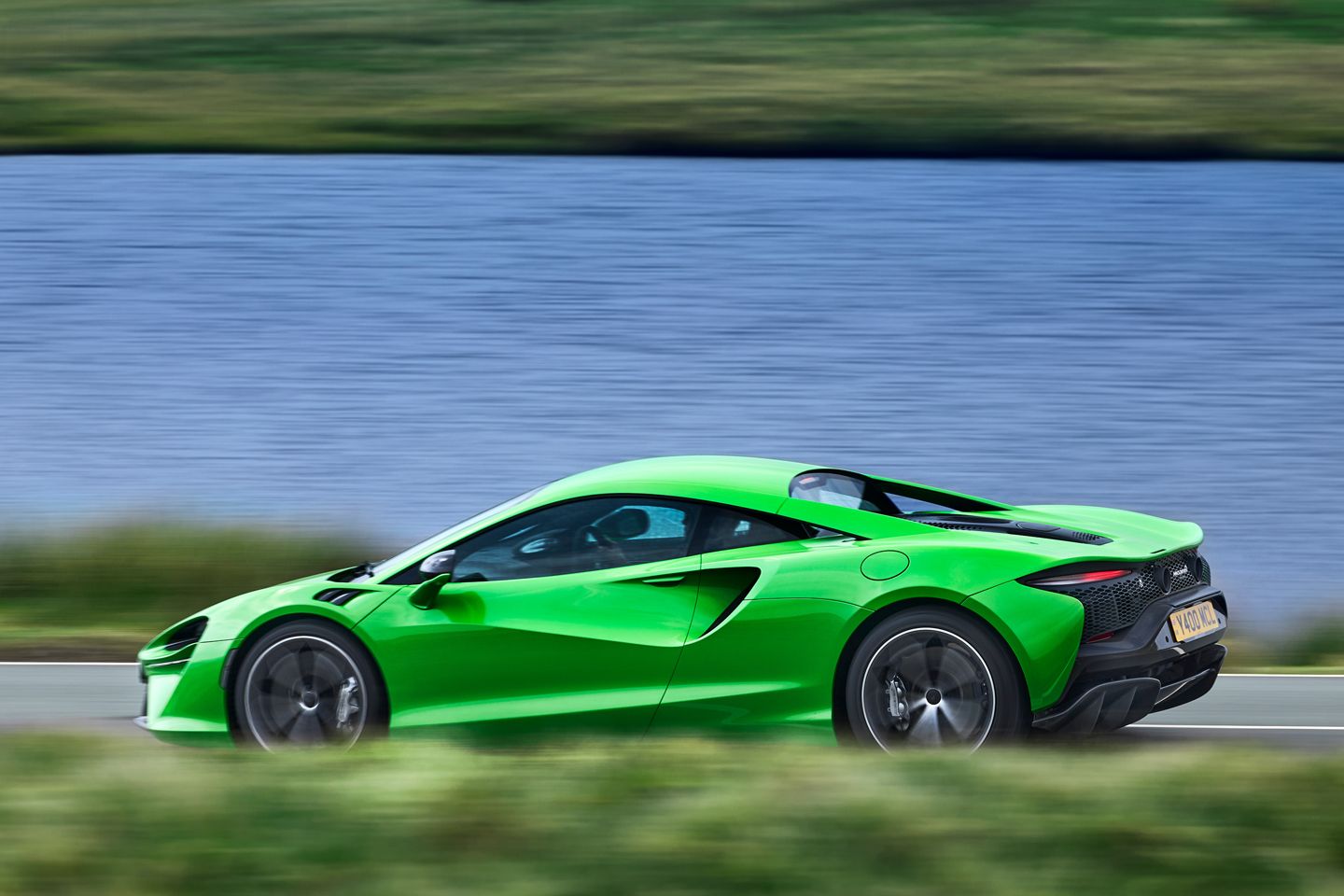
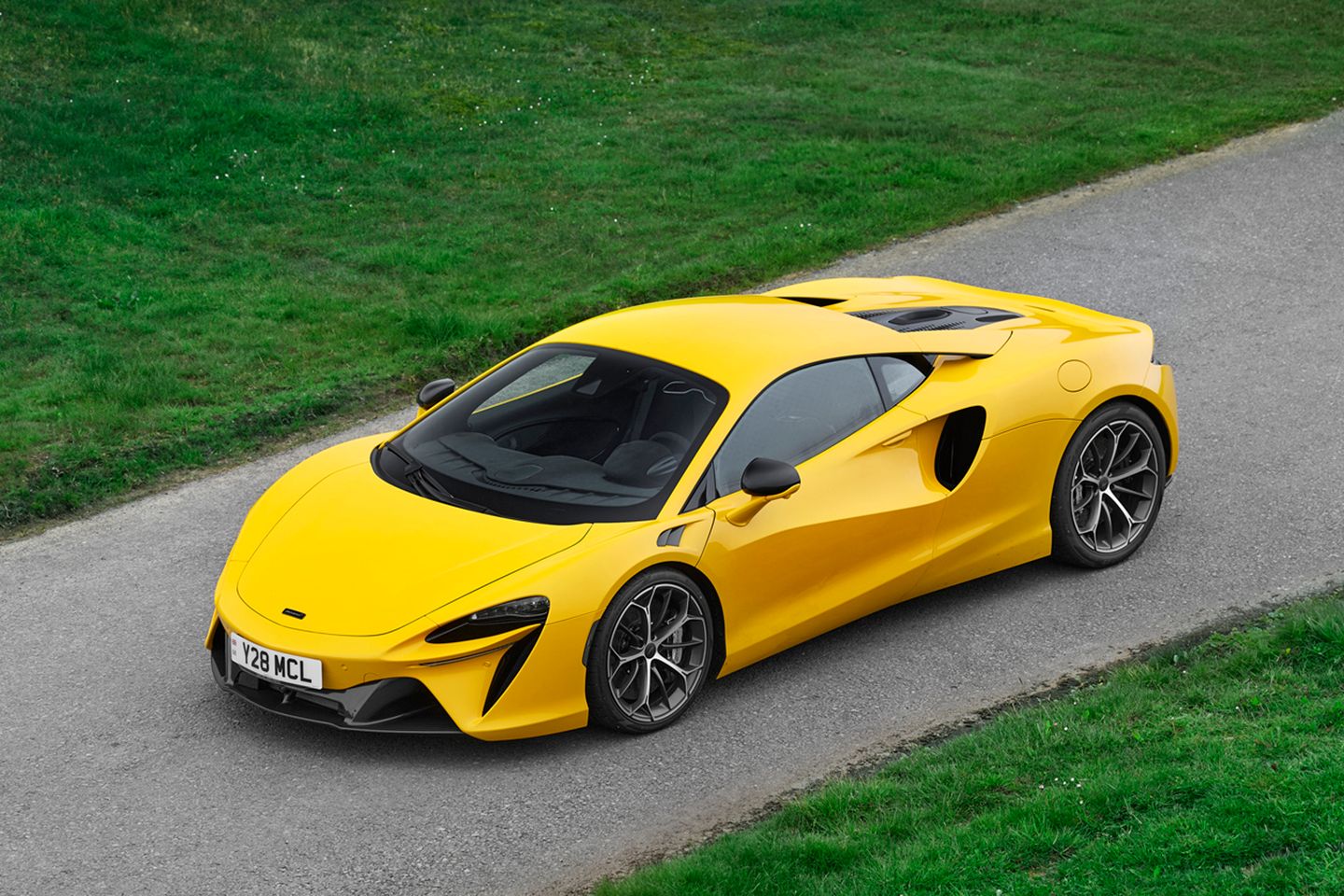
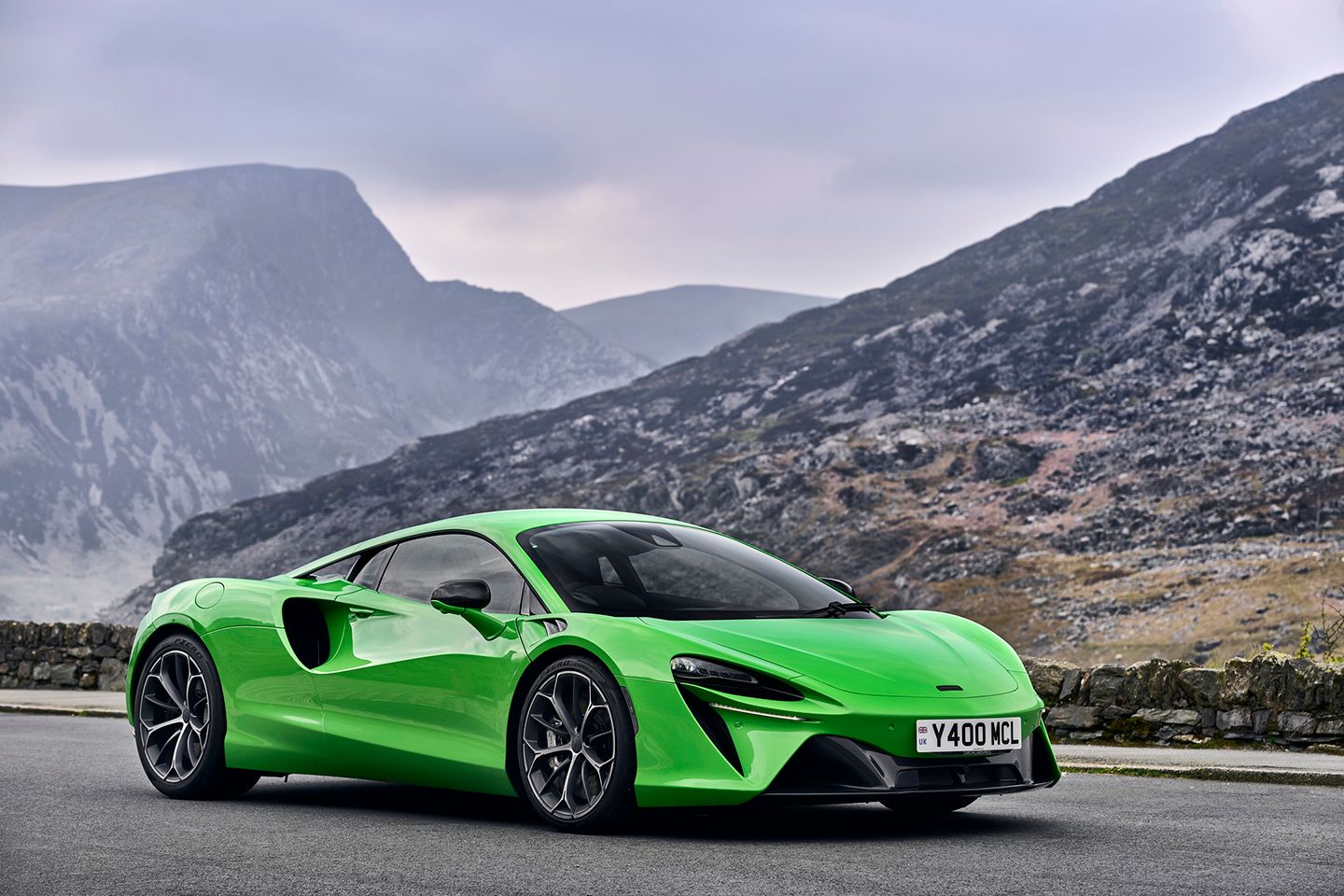
Some say the Artura is quite colour sensitive, and it has even been called bland, but there's also a view that it looks better in the metal than it does on the screen. Some say that the 296 isn't the best-looking car Ferrari has ever made. Takes all sorts, you pays yer money etc. The most affordable Artura on PH Classifieds was this 6,100-mile 2024 coupe in Flux Green at £134,950. The cheapest Spider on PH was this 4,200-mile 2025 car in orange at £169,000. Some McLaren community members have ventured the opinion that 2024-on Arturas suffer from fewer issues than cars built before that date. It’s hard, bordering on impossible, to find owner complaints about 2025 revised cars, but of course you’ll pay quite a bit more for one of them. Here’s a delivery mileage Spider for £215,000.
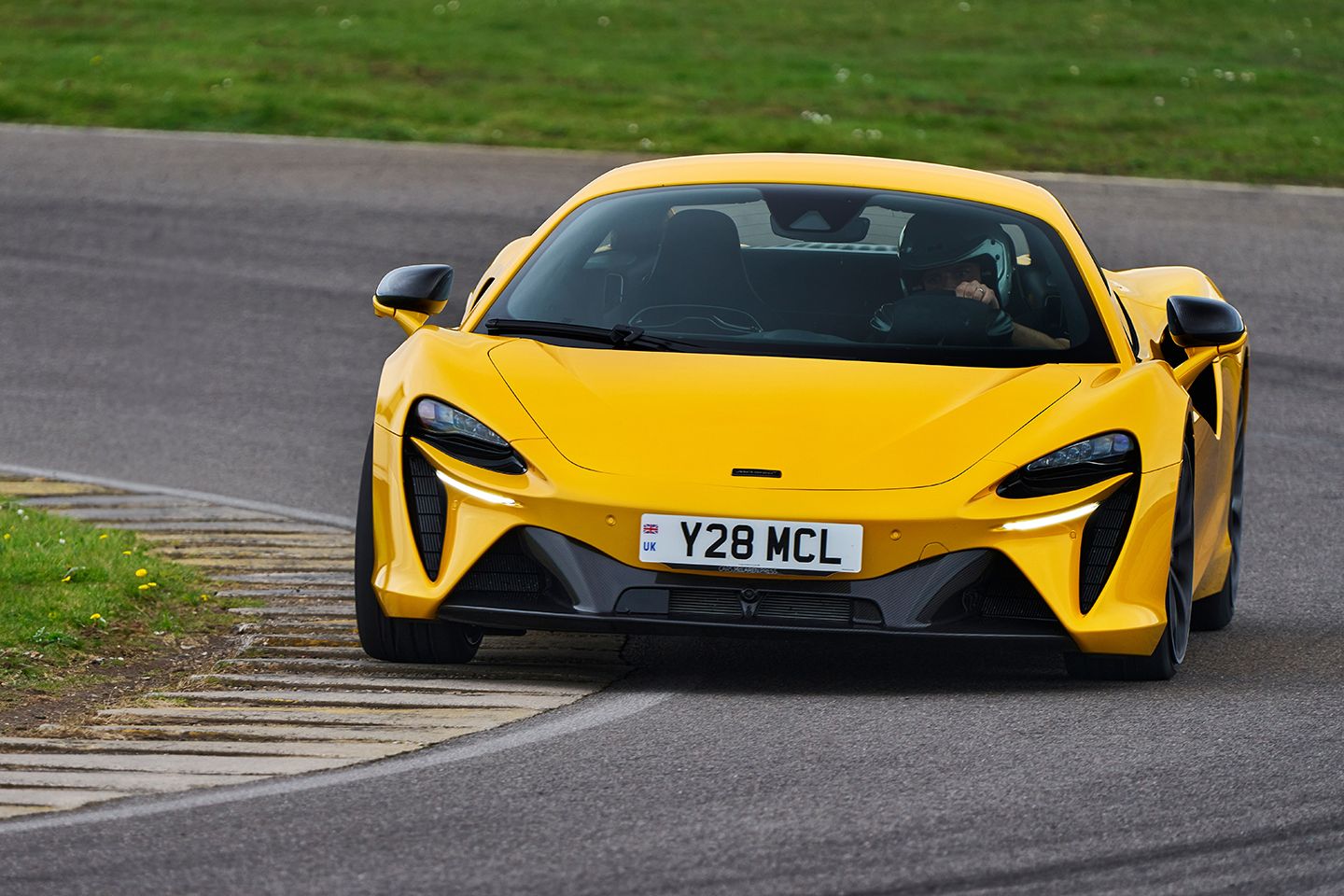


A used Artura is new 911 money.
https://finder.porsche.com/gb/en-GB/details/porsch...
Chatting to a person looking to buy a hybrid supercar, they were focused on getting state of health reports for the hv battery as a number of SF90s were close to 70% of original capacity. I assume it is the same for the Artura so I’d be checking that especially with replacement costs being significant. On battery warranty you have 5 years/unlimited mileage for Ferrari compared to 6 years/45,000 miles for the Artura. 911 and the E-Ray have 8 years/100,000 miles.
TX.
Yet see endless 911s, few lambos, few Ferraris
Be interested to see sales numbers on them. Shame, British, seem to get great reviews.
Even if I wanted one, and there are virtually none that I do, life is too short to have an anxiety generator parked on the drive.

Gassing Station | General Gassing | Top of Page | What's New | My Stuff