
I am glad someone is clearing my cavity
Discussion


We have a ground floor flat with a couple of very cold walls. I had fixed all the damp issues by replacing all the plaster and polygilla walls with original lime plaster. A pain but it worked. But the walls were still cold. The 'experts' tried to sell me everything under the sun. Of course it's the doc, blah blah blah. Anyways in one day 2 builders have removed 20 rubble bags from the cavity walls. In one section it was almost 2m high of sandy crud. Hopefully no more bridging and we will be warm.
Bob_The_Builder said:
We have a ground floor flat with a couple of very cold walls. I had fixed all the damp issues by replacing all the plaster and polygilla walls with original lime plaster. A pain but it worked. But the walls were still cold. The 'experts' tried to sell me everything under the sun. Of course it's the doc, blah blah blah. Anyways in one day 2 builders have removed 20 rubble bags from the cavity walls. In one section it was almost 2m high of sandy crud. Hopefully no more bridging and we will be warm.
How did they get into the cavity?I worked for Birse Construction during my university holidays back in the early 90s. On one site, they were building a hospital and one of the engineers discovered the brickies had dropped a lot of mortar into the cavity where it sat and hardened on the drip tray (is that the right term?). I had to go around the inside and break-out one block in every 3, then reach into the cavity, break-up the mortar (sometimes gently tapping it with a hammer), and pull it out. I couldn't wear gloves because they snagged, so I ended up with hands ripped to shreds. Took me 3 weeks.


Mars said:
How did they get into the cavity?
I worked for Birse Construction during my university holidays back in the early 90s. On one site, they were building a hospital and one of the engineers discovered the brickies had dropped a lot of mortar into the cavity where it sat and hardened on the drip tray (is that the right term?). I had to go around the inside and break-out one block in every 3, then reach into the cavity, break-up the mortar (sometimes gently tapping it with a hammer), and pull it out. I couldn't wear gloves because they snagged, so I ended up with hands ripped to shreds. Took me 3 weeks.
The sign of a cowboy builder, cavity full of crud. I worked for Birse Construction during my university holidays back in the early 90s. On one site, they were building a hospital and one of the engineers discovered the brickies had dropped a lot of mortar into the cavity where it sat and hardened on the drip tray (is that the right term?). I had to go around the inside and break-out one block in every 3, then reach into the cavity, break-up the mortar (sometimes gently tapping it with a hammer), and pull it out. I couldn't wear gloves because they snagged, so I ended up with hands ripped to shreds. Took me 3 weeks.
Drip tray is almost right as that is part of its job. Usually called a cavity tray.
Blocked cavities are very common, one of the first things I look for when diagnosing damp issues in houses of a certain age (cavity battens, fat chance) - and a relatively easy low tech fix. I looked at a group of 12 ex police houses before Christmas that were bing refurbished for the open market - without fail every one was blocked up to at least 2 courses above DPC. The introduction of cavity fill had exacerbated the issue by wicking from the impacted mortar in the base of the cavity.
These will be fairly easy to deal with as the mortar is lime based and quite loose. The DPC has extruded but was otherwise sound so once cleared the wall should dry out. A 'specialist' had recommended cavity mesh membrane to 900mm high internally to all of them!
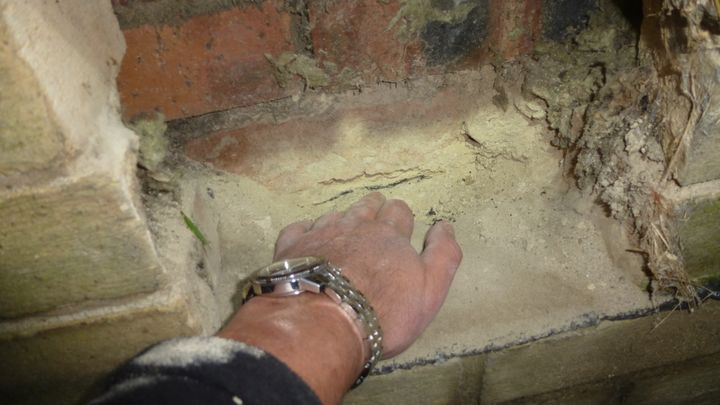
These will be fairly easy to deal with as the mortar is lime based and quite loose. The DPC has extruded but was otherwise sound so once cleared the wall should dry out. A 'specialist' had recommended cavity mesh membrane to 900mm high internally to all of them!
Mars said:
Bob_The_Builder said:
We have a ground floor flat with a couple of very cold walls. I had fixed all the damp issues by replacing all the plaster and polygilla walls with original lime plaster. A pain but it worked. But the walls were still cold. The 'experts' tried to sell me everything under the sun. Of course it's the doc, blah blah blah. Anyways in one day 2 builders have removed 20 rubble bags from the cavity walls. In one section it was almost 2m high of sandy crud. Hopefully no more bridging and we will be warm.
How did they get into the cavity?I worked for Birse Construction during my university holidays back in the early 90s. On one site, they were building a hospital and one of the engineers discovered the brickies had dropped a lot of mortar into the cavity where it sat and hardened on the drip tray (is that the right term?). I had to go around the inside and break-out one block in every 3, then reach into the cavity, break-up the mortar (sometimes gently tapping it with a hammer), and pull it out. I couldn't wear gloves because they snagged, so I ended up with hands ripped to shreds. Took me 3 weeks.
Gassing Station | Homes, Gardens and DIY | Top of Page | What's New | My Stuff