
Can t get top of strut tightened down
Discussion


bayzoo said:
This is the worst design - there s barely any room to put an adjustable spanner on these flats, and even when I do and turn my spanner it doesn t even tighten it just sort of bounces back.
I built the struts and it was a pain getting the first top mount nut on.
Any suggestions?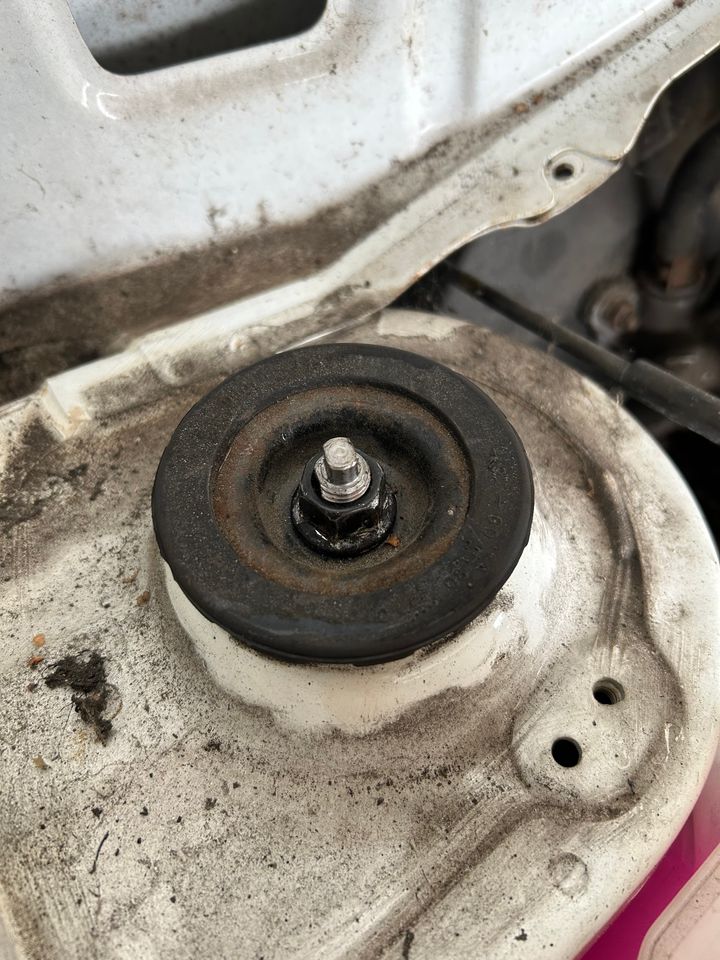
You are turning the nut & holding the spindle top aren't you?I built the struts and it was a pain getting the first top mount nut on.
Any suggestions?
I ask because you seem to be describing the opposite, which will never work.
I took it as meaning he's trying to hold the flats at the top of the damper rod with an adjustable, whilst tightening the nut with a spanner.
Most dampers have a socket for a hex key which makes it easy, particularly with a through drive socket on the nut. I see why the OP is struggling with this. You'd probably find an impact does it up fast enough to not be an issue.
I would suggest mole grips, either on the flats or on an area of the damper rod that never goes in the damper (so won't chew up the seal when you damage the surface finish. It's a bit rough but in reality won't cause you a problem.
Most dampers have a socket for a hex key which makes it easy, particularly with a through drive socket on the nut. I see why the OP is struggling with this. You'd probably find an impact does it up fast enough to not be an issue.
I would suggest mole grips, either on the flats or on an area of the damper rod that never goes in the damper (so won't chew up the seal when you damage the surface finish. It's a bit rough but in reality won't cause you a problem.
Richard-D said:
I took it as meaning he's trying to hold the flats at the top of the damper rod with an adjustable, whilst tightening the nut with a spanner.
Most dampers have a socket for a hex key which makes it easy, particularly with a through drive socket on the nut. I see why the OP is struggling with this. You'd probably find an impact does it up fast enough to not be an issue.
I would suggest mole grips, either on the flats or on an area of the damper rod that never goes in the damper (so won't chew up the seal when you damage the surface finish. It's a bit rough but in reality won't cause you a problem.
Yes I might have to resort to this thanks Most dampers have a socket for a hex key which makes it easy, particularly with a through drive socket on the nut. I see why the OP is struggling with this. You'd probably find an impact does it up fast enough to not be an issue.
I would suggest mole grips, either on the flats or on an area of the damper rod that never goes in the damper (so won't chew up the seal when you damage the surface finish. It's a bit rough but in reality won't cause you a problem.
Peter T said:
Are you sure that it is not at is tightest? If it is then no amount of force will do the nut up more.
I’ve just up underneath the control arm and there is a few mm between that black cap thing and the mounting point on the main car body so it must have to turn more.I’m starting to think I’ve not tightened down the top mount but when I built the strut. I did this on my civic a few years back and it was dead easy!
A locking adjustable spanner combines an adjustable with the locking cam of mole grips and often works well for those small flats on the end of the shaft, to let you clamp down on them more firmly - being so small, the standard open spanners the right size are quite likely to flex even with pretty low torque to resist it turning with the nut.
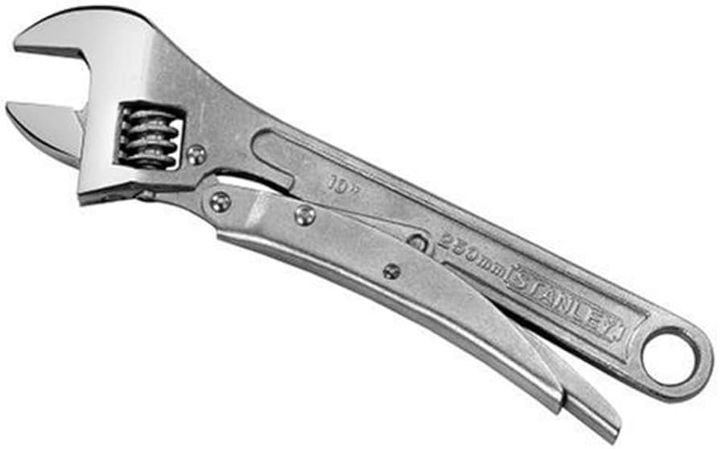
And an offset ring spanner can give more room to work with them:
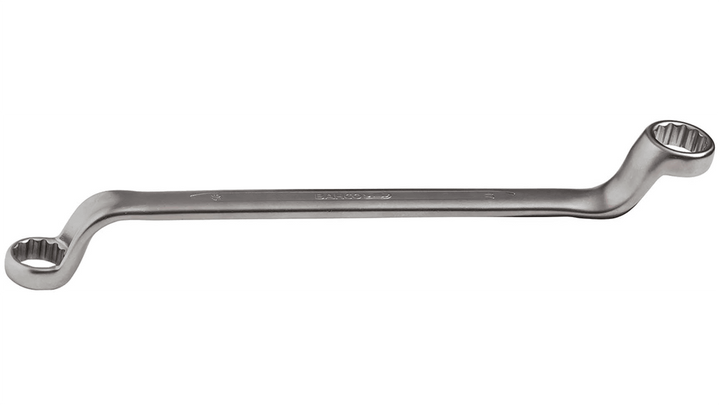
And an offset ring spanner can give more room to work with them:
bayzoo said:
Peter T said:
Are you sure that it is not at is tightest? If it is then no amount of force will do the nut up more.
I ve just up underneath the control arm and there is a few mm between that black cap thing and the mounting point on the main car body so it must have to turn more.I m starting to think I ve not tightened down the top mount but when I built the strut. I did this on my civic a few years back and it was dead easy!
bayzoo said:
This is the worst design - there s barely any room to put an adjustable spanner on these flats, and even when I do and turn my spanner it doesn t even tighten it just sort of bounces back.
Almost nothing is designed to be tightened with an adjustable spanner - they're a convenient "better than nothing" way of doing some jobs, but really an "only in an emergency" tool. There are specific tools for accessing sunken fasteners like this. I used a box spanner when I was doing mine because I had one (and my strut tops take an allen key), or there are special sockets that have a hole in the side so you can hold the top with something. A ring spanner shown above will sometimes work, but it depends on the angle of the drop, that might foul on the surround just as your adjustable does.Crafty_ said:
pass through socket instead ?
That's helpful when you have an allen socket on the top of the damper rod, probably not here though. As an aside, if you have an angle grinder and a deep socket it's easy enough to make your own. I have a few that I ground a couple of flats on to fit a big spanner. It's been a long time since I've needed one though as modern cordless impacts are so good.E-bmw said:
In that case, are you sure there shouldn't be a washer/spacer that you have missed that would take up that gap & so you now have the nut fully down onto the end of the threaded section?
I think that I may not have tightened the first top mount but far enough, so the other nut and bracket don’t go down far enough…. I’m going to take apart and have a look.Can I check - when building struts, when you put the top nut on before releasing the spring compressors, are you meant to snug the nut all the way down or do this after the springs are released?
I did the latter and it was very difficult to tighten down (did this for my Honda a few years back and that was easier)
Yes, assemble the strut fully whilst the spring is compressed, ensuring that the damper rod has fully entered the spring top plate and the top mount & bearing etc. Sometimes these have a step and/or a 'D' profile, ensure that these are not preventing everything snugging down correctly.
This is the sort of tool for preventing the damper rod from turning, the other end is a standard female ⅜" drive square.
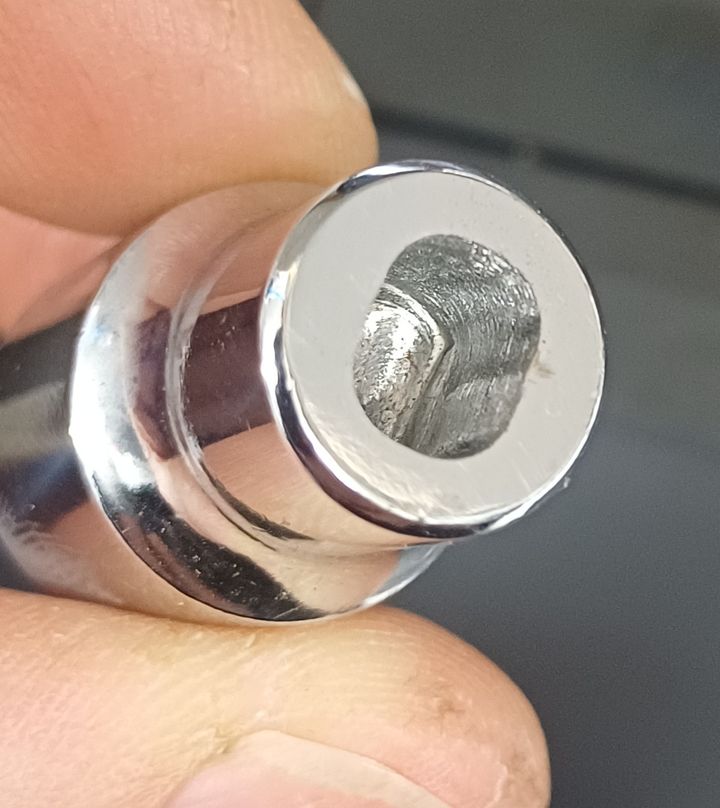
As mentioned by others, a variety of offset ring spanners, 'drive-through' sockets, and even box-spanners might be necessary depending on the application.
This is the sort of tool for preventing the damper rod from turning, the other end is a standard female ⅜" drive square.
As mentioned by others, a variety of offset ring spanners, 'drive-through' sockets, and even box-spanners might be necessary depending on the application.
TwinKam said:
Yes, assemble the strut fully whilst the spring is compressed, ensuring that the damper rod has fully entered the spring top plate and the top mount & bearing etc. Sometimes these have a step and/or a 'D' profile, ensure that these are not preventing everything snugging down correctly.
This is the sort of tool for preventing the damper rod from turning, the other end is a standard female ?" drive square.
As mentioned by others, a variety of offset ring spanners, 'drive-through' sockets, and even box-spanners might be necessary depending on the application.
Thanks - I’ve had a quick google and that tool doesn’t seem to pop up but I may be using the wrong name for it. This is the sort of tool for preventing the damper rod from turning, the other end is a standard female ?" drive square.
As mentioned by others, a variety of offset ring spanners, 'drive-through' sockets, and even box-spanners might be necessary depending on the application.
I’m hoping a rebuild will solve the issue - I’ll post back here an update. Thanks for all of your help, much appreciated.
Gassing Station | Home Mechanics | Top of Page | What's New | My Stuff