
Porsche 928 S | High Mile Club
We say 'high mile' - if you join the 928 club, sky's the limit
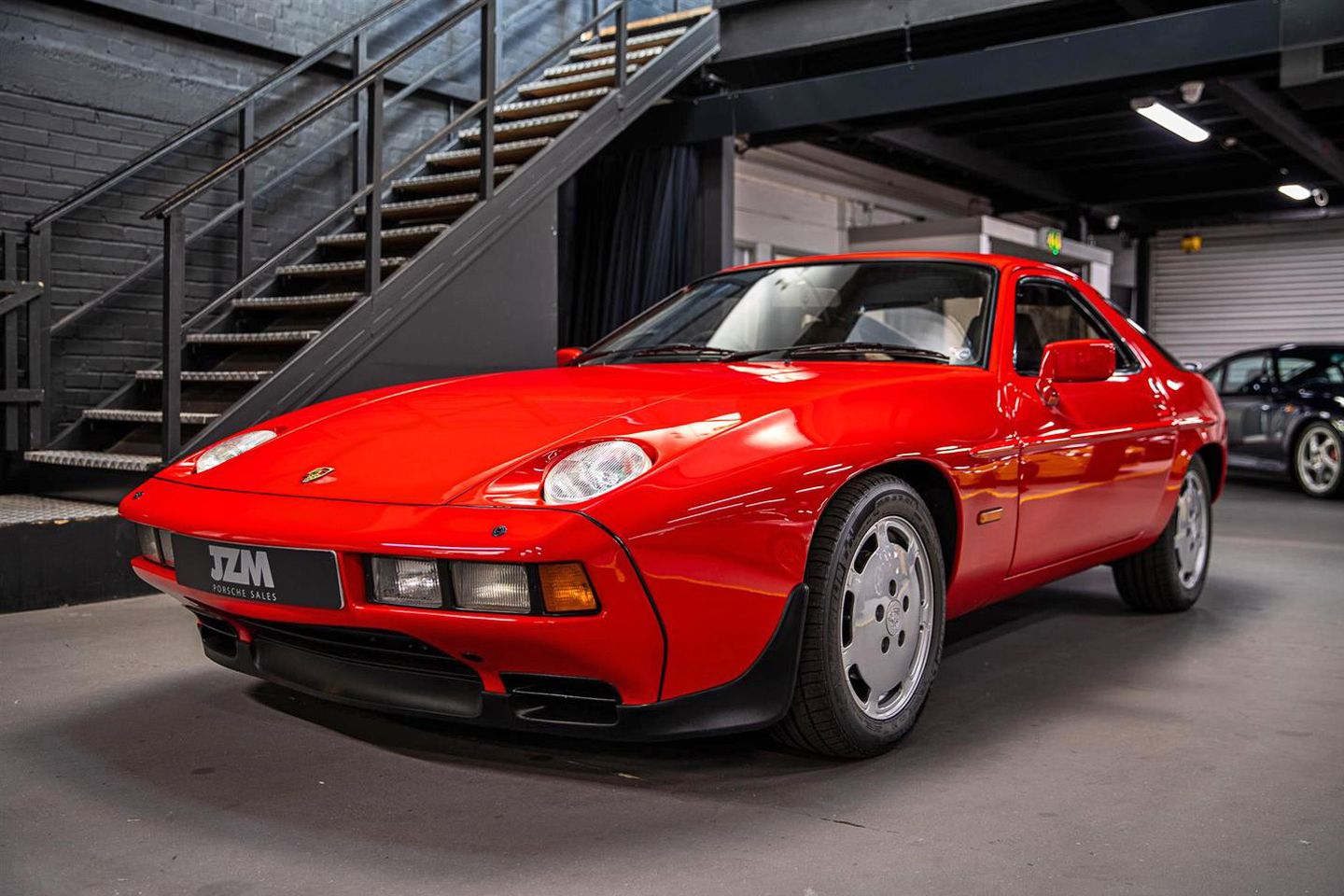
Cast your mind back to the mid-‘70s. Porsche's board, led by Ernst Fuhrmann, had concluded that the rear-engined 911 was an evolutionary dead end — too noisy, too tricky at the limit, too dependent on a layout that belonged to the previous decade. The future, they decided, was front-engined, water-cooled and V8-powered. The 928 was that future: aluminium body panels over a steel monocoque, a rear transaxle for weight distribution, pop-up headlamps that made it look like nothing else on the road. It won European Car of the Year in 1978. The only sports car ever to do so, before or since. And then the buying public politely ignored it in favour of the car it was meant to replace.
We know how the story ends. The 911 got better, the 928 got cancelled in 1995, and Porsche's transaxle era became a footnote. But Porsche footnotes don’t tend to obey the same rules as those of a lesser carmaker; they might ebb and flow in value, yet they accrue fans regardless. And then, decades after they were sold new, they become a source of fascination to anyone who was a child at the time, who now finds themselves with the means to revisit the whole transaxle family - 924, 944, 968 - and suddenly take their pick.
This particular car is one of the earliest UK-delivered 928 S models. The S introduced a larger 4.7-litre V8 producing 300hp and 284lb ft of torque, mated here to the dog-leg five-speed manual that became rarer as Porsche’s auto improved. Black full leather interior, electric seats, sunroof help make it note perfect. Plus someone has fitted a Porsche Classic Radio and JL Audio sound system, which is the kind of thoughtful modernisation that suggests an owner who actually drove the thing rather than mothballing it.
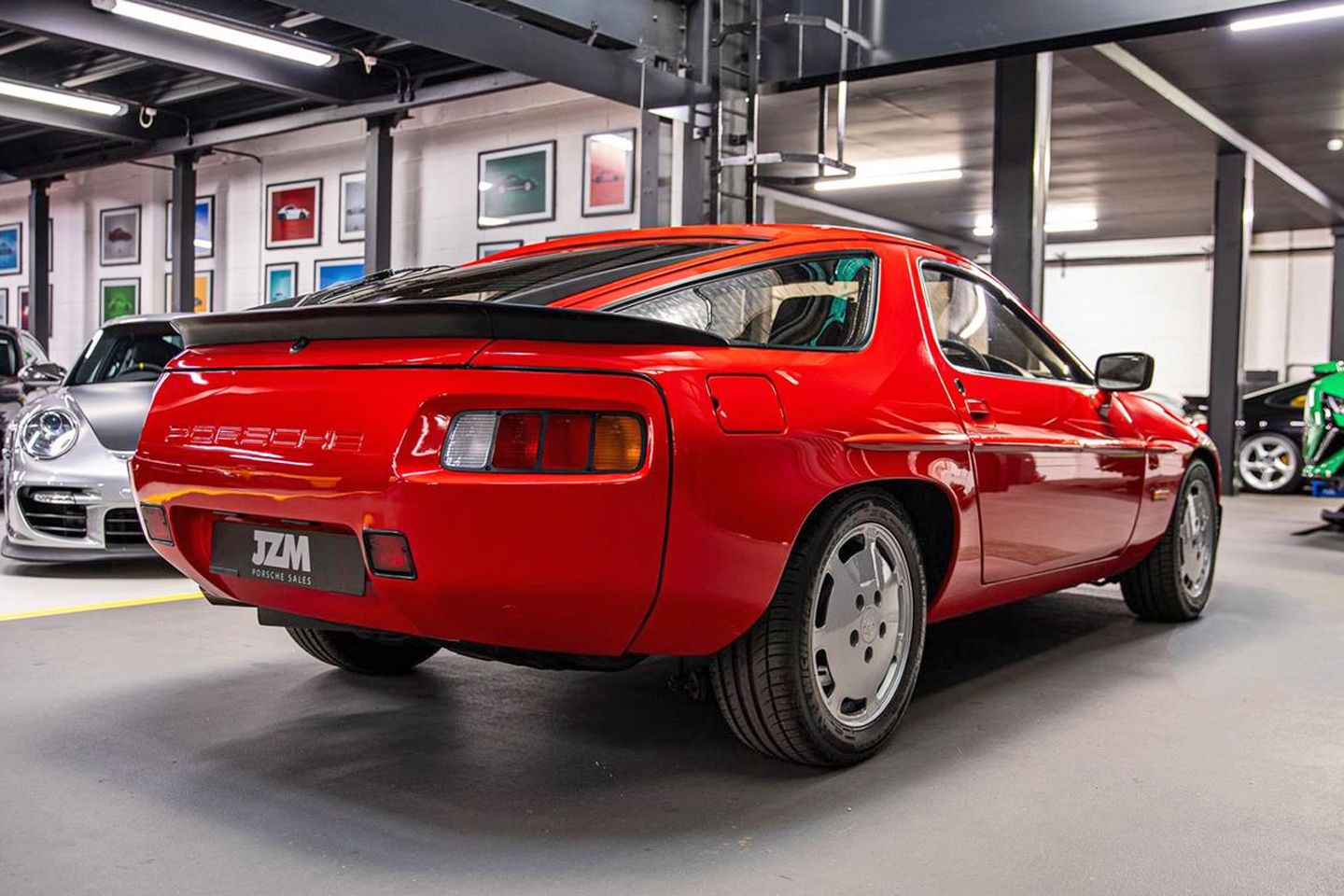
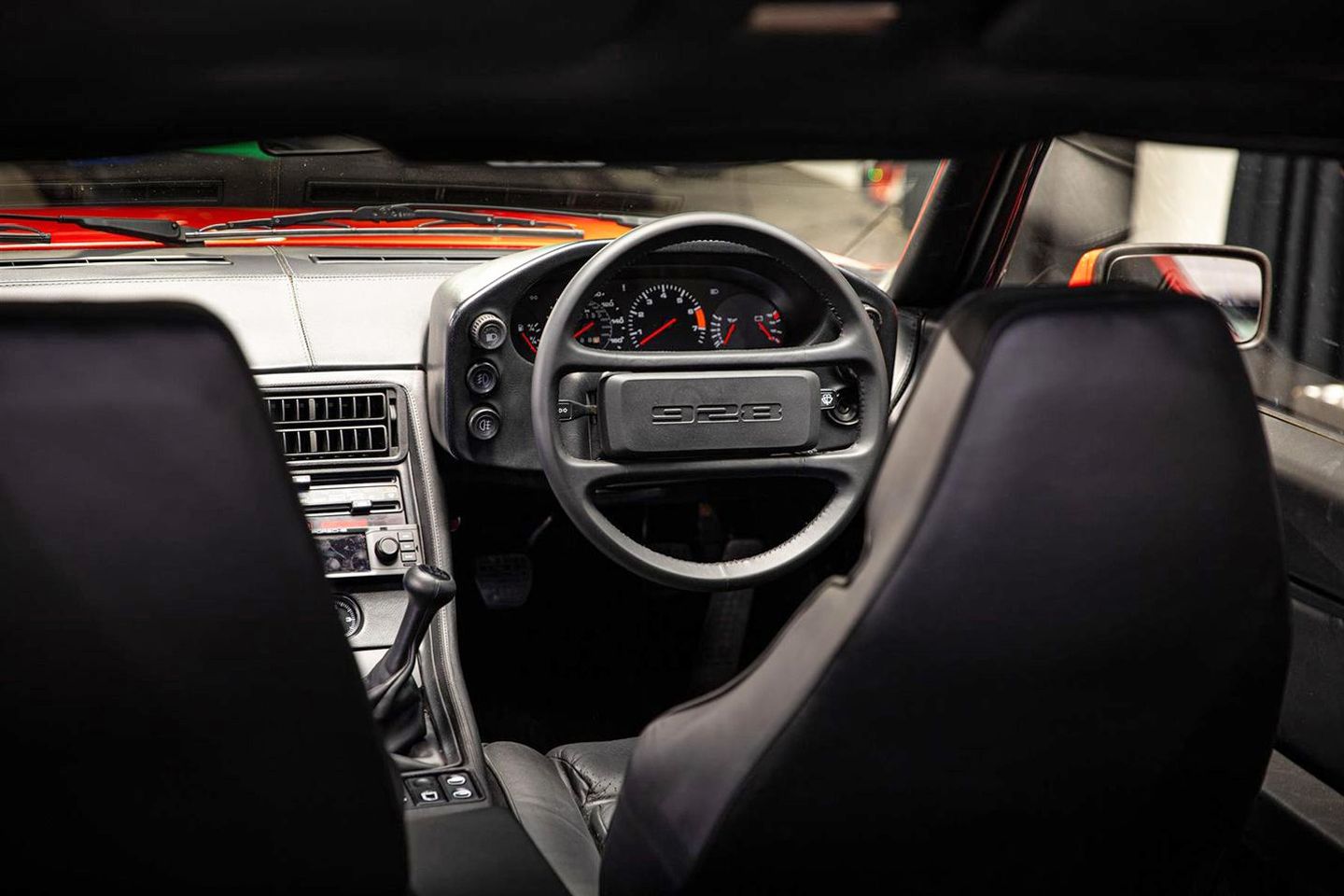
And drive it they did. Nearly 150,000 miles is not unheard of in 928s - these were built for autobahn work, after all - though not every car of its vintage has been treated to £100k in documented service and maintenance invoices. Probably it’s safe to conclude that this is the sort of daily that someone adored enough to keep spending money on long after loved ones (and accountants) would have told them to stop. It's described as turn-key ready, which is easy to believe.
There are caveats to the 928 experience, of course. The vacuum-operated systems are notoriously fiddly, electrical gremlins potentially lurk in any car of this vintage and complexity, and parts costs for a low-volume, aluminium-bodied GT car from the early ‘80s probably aren't for the faint of heart. This is what makes a well-kept, documented 928 so attractive: without the reassurance of paperwork, you might find yourself taking a header into a money pit with pop-up headlamps.
The kicker is the asking price. Granted, the 928 is some distance from its dirt-cheap days, but nor is it as expensive to buy as the car it was meant to kill. Even without haggling, £35k for a front-engined Porsche V8 grand tourer with a dog-leg manual, proper provenance and the enduring loveliness of Guards Red doesn’t seem like too high a price to pay. The 911 won the war, sure. But the 928 makes an interesting counter-argument for itself even now.
SPECIFICATION | PORSCHE 928 S
Engine: 4,664cc, V8, naturally aspirated
Transmission: 5-speed manual, rear-wheel drive
Power (hp): 300
Torque (lb ft): 284
CO2: N/A
MPG: N/A
Recorded mileage: 141,155
Year registered: 1980
Price new: N/A
Yours for: £34,900
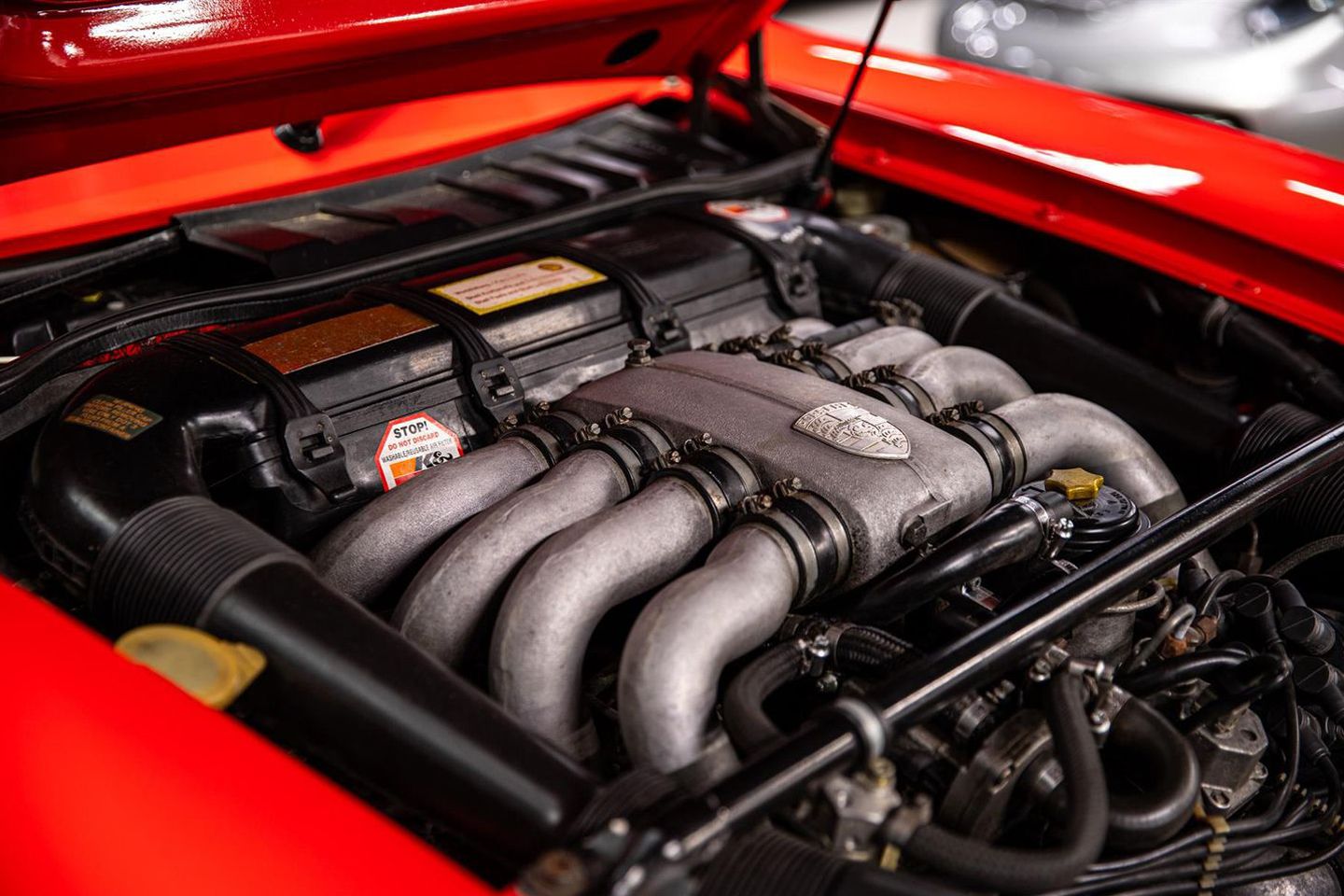


They seem very complex and fiddly to keep in spot on condition though. Both of them are always off to the garage for this and that to be sorted. I think the basics are solid enough but all the ancillary stuff is very complex and not that well engineered. Just look at the belt runs
 . They both leak various fluids like an old tractor
Any owner is only likely to do a thousand or two miles or year at most so extremely unlikely that they will have a terminal failure unless they keep the car for another 50 years.
I'd be more concerned about rust than anything else.

He or she will have ploughed up and down the motorway network for 3 years, drumming up business and racking up 20k per year. So that's 60k, give or take. In style and comfort, doing what it was designed for.
The car will have been sold at 3 years old and replaced by a BMW 635 CSi. Or one of those new-fangled Bentley turbo jobbies, if they were doing very well.
The subsequent owners have therefore covered 80k miles in the following 43 years. 2k per year.
How is this a high mileage car?
1986 S2.5 for me please, S4 chassis improvements with the 16V V8.

Engines are solid and impressively well engineered. Yes, they have uber long cambelts but the change interval is 4 to 5 years and the S engine is non interference, so not the end of the world if it goes.
They really are not complicated or expensive to maintain. But, they do not like deferred maintenance, so you need to keep on top of them.
These things were designed and built by the engineers, who locked the accountants in a dungeon for 20 years
That price is fair given investment, condition and demand for decent S manuals.
They don't really rust. The main body is galvanised and the panels are aluminium. Odd bit of galvanic here and there but easy to prevent with paste or fibre washers (front wing fixings by the indicator repeater are worst culprits).
Very under appreciated.

Gassing Station | General Gassing | Top of Page | What's New | My Stuff