
BMW, Toyota kick off renewable fuel pilot scheme
Theoretically, there is a way forward for petrol - now we just need some real-world proof it works at scale
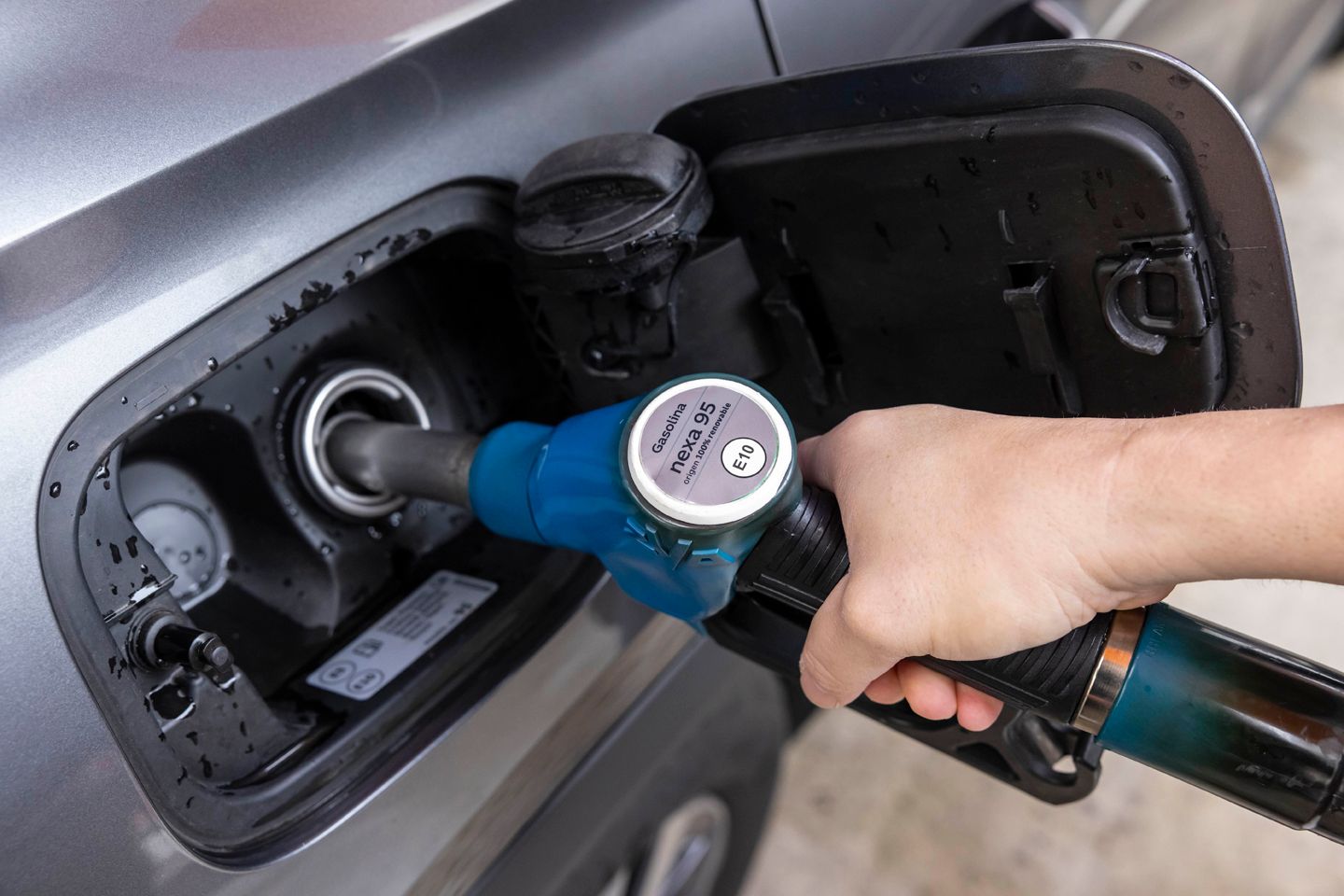
You might think that 100 per cent renewable gasoline is the classic great white hope; hypothetically possible, but not really likely or practicable or profitable at scale. Well, BMW, Toyota, Bosch and Repsol beg to differ. They’ve just launched a six-month initiative in Spain to provide real-world evidence that such fuel - specifically Repsol’s Nexa 95 petrol - is sufficiently available via current infrastructure to support a fleet of unmodified vehicles.
Repsol’s what now? Nexa 95 was a new one on us, too, but apparently the Spanish petroleum giant has been studying the problem for the last 20 years and has come up with a petrol of ‘100 per cent renewable origin’ which is already available in 1,600 service stations. It is not, clearly, a more newfangled (and difficult to produce) synthetic petrol, but rather a product of organic waste, including things like biomass and used cooking oil.
This does not make the resulting fuel CO2 neutral, of course, but the upside (as we’ve been told previously with renewable sources) is that because the CO2 released in their use is equal to the CO2 originally absorbed by the organic matter when alive, Repsol claims a 70 per cent reduction in emissions compared with conventional gasoline. Moreover - and this really is the trick - it can manufacture Nexa 95 at ‘an industrial scale’, and has been doing so since it announced the technological breakthrough last year.
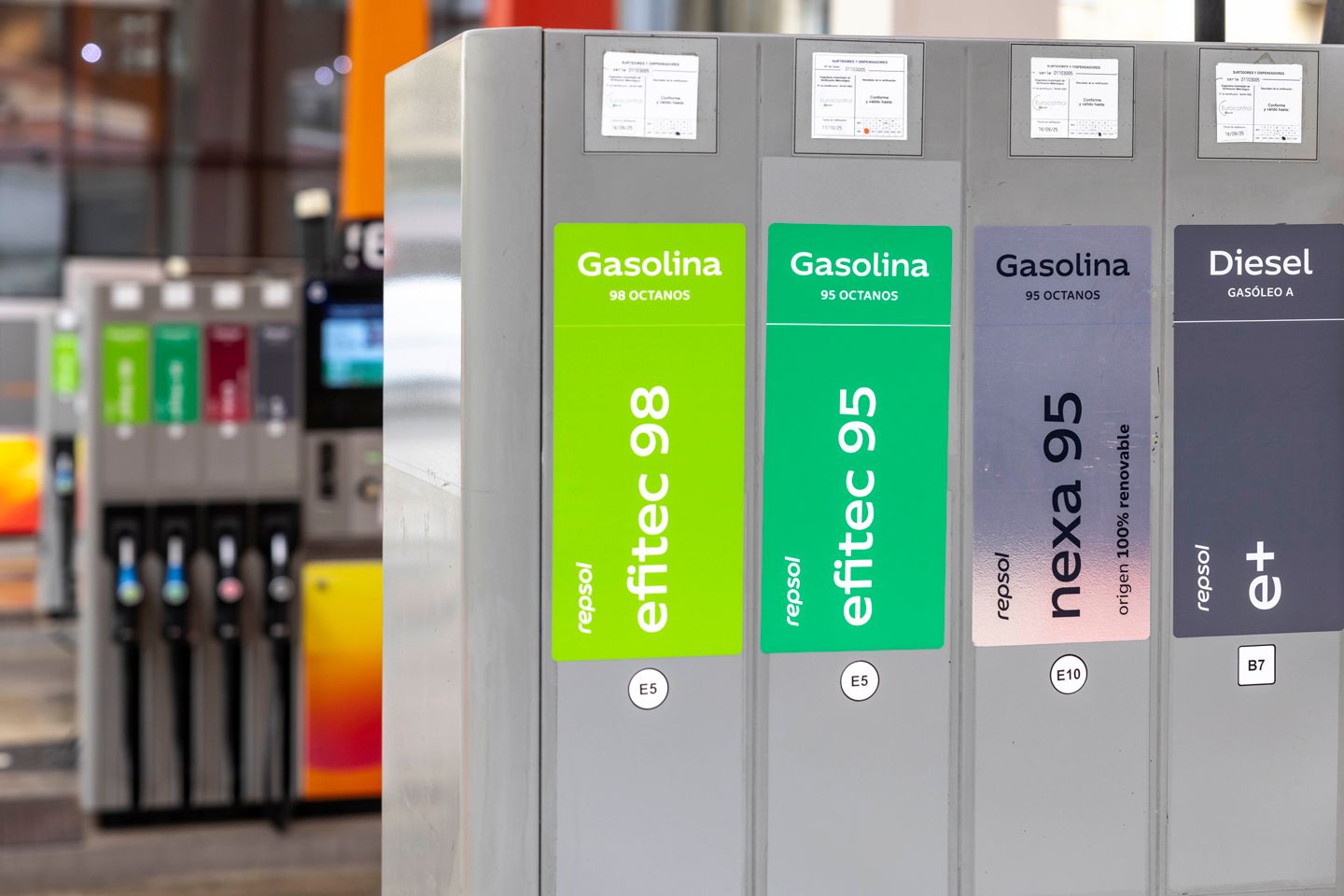
As you can imagine, Repsol would very much like the role of renewable fuels to be recognised at a regulatory level (unsurprisingly, it mentions accelerating their widespread use via ‘a favourable tax framework’) and especially with how it might pertain to the future of combustion engines. It is this latter aspect that has doubtless helped it receive the support of Toyota and BMW, two global carmakers very much at the forefront of the petrol-ain’t-going-nowhere movement, and well used to collaborating.
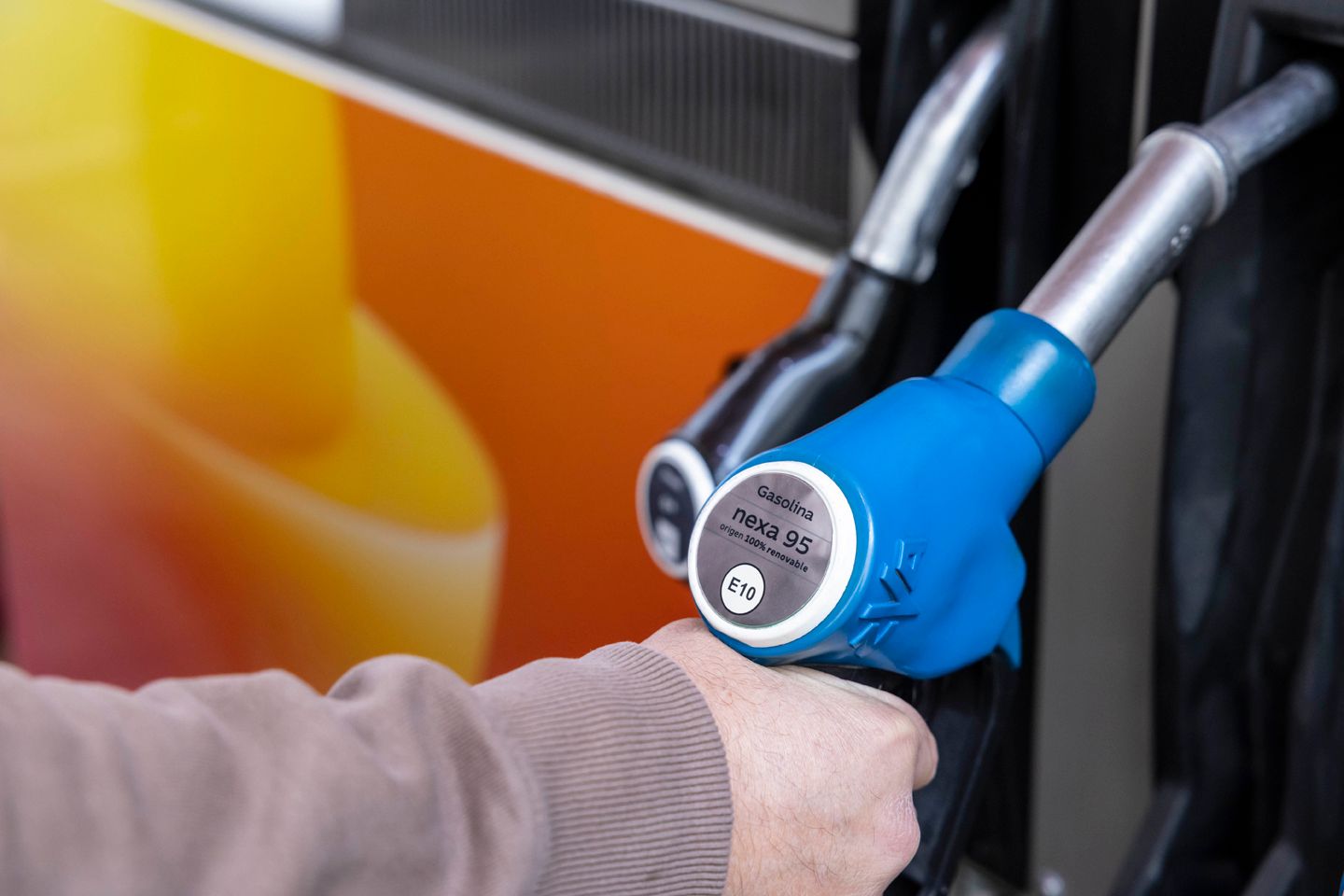
Accordingly, the pilot scheme is less about ‘can’ Nexa 95 work at scale (you pump it the same as any other E10 grade petrol, and it works in any modern engine, after all) but ‘how’ it performs in the real world. So BMW and Toyota supply the 20-vehicle fleet, Repsol supplies the fuel and Bosch supplies a digital fuel tracking system to certify usage for the duration of the six-month scheme. This is important because ultimately the participants want to ‘generate robust data and insights that will support ongoing European policy discussions’. In other words, it’s a lobbying tool.
“We believe renewable fuels can play a key role alongside electrification in reducing CO? emissions. As the transition progresses, it is becoming clear that there is a growing risk that 100% zero-emission vehicles by 2035 may not be fully achieved,” said a Toyota spokesperson. “In such a scenario, renewable fuels can help bridge the gap to deliver carbon neutrality, especially when combined with hybrid and plug-in hybrid technologies. This pilot aims to demonstrate how renewable fuels can make a meaningful and sustainable contribution to decarbonisation today, for both new and existing vehicles.” Fingers crossed, eh?


The UK (and European) Governments need to have a sliding methodology towards phasing our fossil fuels entirely. This seems, on the face of it, a means to do just that, that will (should) also gain support from petrolheads.

The reduction in CO2 during production is the main win, but tailpipe pollution remains the same
"it can manufacture Nexa 95 at an industrial scale "
Enough for the US, which demands 380 million gallons of vehicle fuel per day, or the UK with 30 million gallons per day?
The UK (and European) Governments need to have a sliding methodology towards phasing our fossil fuels entirely. This seems, on the face of it, a means to do just that, that will (should) also gain support from petrolheads.
-4 cents vs Premium 98 Octane Super
Source: https://www.energy-pedia.com/news/spain/repsol-pio...
I'm not sure if 'industrial scale' has a formal definition but I'd say that sounds fair here. Takes more than one refinery do make us enough dinosaur juice so only reasonable to assume we'd need the same here. If every car was suddenly electric tomorrow we wouldn't have enough juice for that either.
So, are they already making enough petrol for the USA? No. For the UK? A little closer. Could it be made in these volumes? I guess that depends on the political will, money, and availability of raw materials. Technically it sounds like they can.
PH - perhaps you could reach out for comment on volumes and scalability? I can see that interesting a few people.
Fuel is expensive in the west because the greedy need more money.
Fuel is expensive in the west because the greedy need more money.
The useful work we get from 5 litres of refined fuel equates to no more than one litre of it.
The other 4 litres goes completely to waste, predominantly as heat.
That waste heat also releases untold amounts of long-sequestered CO2.
5 litres of fuel also cost 5 times as much as 1 litre.
For as long we continue to worship at the altar of energy inefficiency, we will never overcome the fact that ignoring such a fundamental first principle of science is severely harmful to long term prosperity and the environment around us.
I fear however that we are collectively trapped in a Stockholm syndrome like mindset where we worship such wastefulness and create all sorts of illogical reasons to justify it.
The purveyors of synthetic fuels, and hydrogen for that matter, know this and that many cannot resist the spell.
You’d struggle to find any car that is daily driven that wouldn’t be made worse by using an ICE.
Enough people have driven and own EVs now that we all know it’s the way forward and the next step.
Fuel is expensive in the west because the greedy need more money.
The actual fuel cost is a small part of it, bit for the retailer, et voila £1.60 plus a gallon.
Oil companies will always hoover up more cash, but its the government that take the lions share, to pay for stuff we all demand.
Surely that's the very epitome of neutral ?
 so deleted it
it wasn't saying what I thought it was
Fuel is expensive in the west because the greedy need more money.
The useful work we get from 5 litres of refined fuel equates to no more than one litre of it.
The other 4 litres goes completely to waste, predominantly as heat.
That waste heat also releases untold amounts of long-sequestered CO2.
5 litres of fuel also cost 5 times as much as 1 litre.
For as long we continue to worship at the altar of energy inefficiency, we will never overcome the fact that ignoring such a fundamental first principle of science is severely harmful to long term prosperity and the environment around us.
I fear however that we are collectively trapped in a Stockholm syndrome like mindset where we worship such wastefulness and create all sorts of illogical reasons to justify it.
The purveyors of synthetic fuels, and hydrogen for that matter, know this and that many cannot resist the spell.
This is a substitute, but the manufacturing process relies on large amount of expensive energy and then still produces Co2. It makes Hydrogen look almost sensible.
I can't see this ever being cost effective unless the fuel duty element is reduced (unlikely). My guess is they will sell the idea to the EU, allowing cars to be produced. In the real world these car will use with standard Diesel as either the special nectar is too expensive or not available.
Fuel is expensive in the west because the greedy need more money.
The useful work we get from 5 litres of refined fuel equates to no more than one litre of it.
The other 4 litres goes completely to waste, predominantly as heat.
That waste heat also releases untold amounts of long-sequestered CO2.
5 litres of fuel also cost 5 times as much as 1 litre.
For as long we continue to worship at the altar of energy inefficiency, we will never overcome the fact that ignoring such a fundamental first principle of science is severely harmful to long term prosperity and the environment around us.
I fear however that we are collectively trapped in a Stockholm syndrome like mindset where we worship such wastefulness and create all sorts of illogical reasons to justify it.
The purveyors of synthetic fuels, and hydrogen for that matter, know this and that many cannot resist the spell.
Fuel is expensive in the west because the greedy need more money.
Gassing Station | General Gassing | Top of Page | What's New | My Stuff