
Emissions crackdown will target modified cars
The Department of Transport says it wants to improve air quality. Guess what it thinks of your aftermarket exhaust?
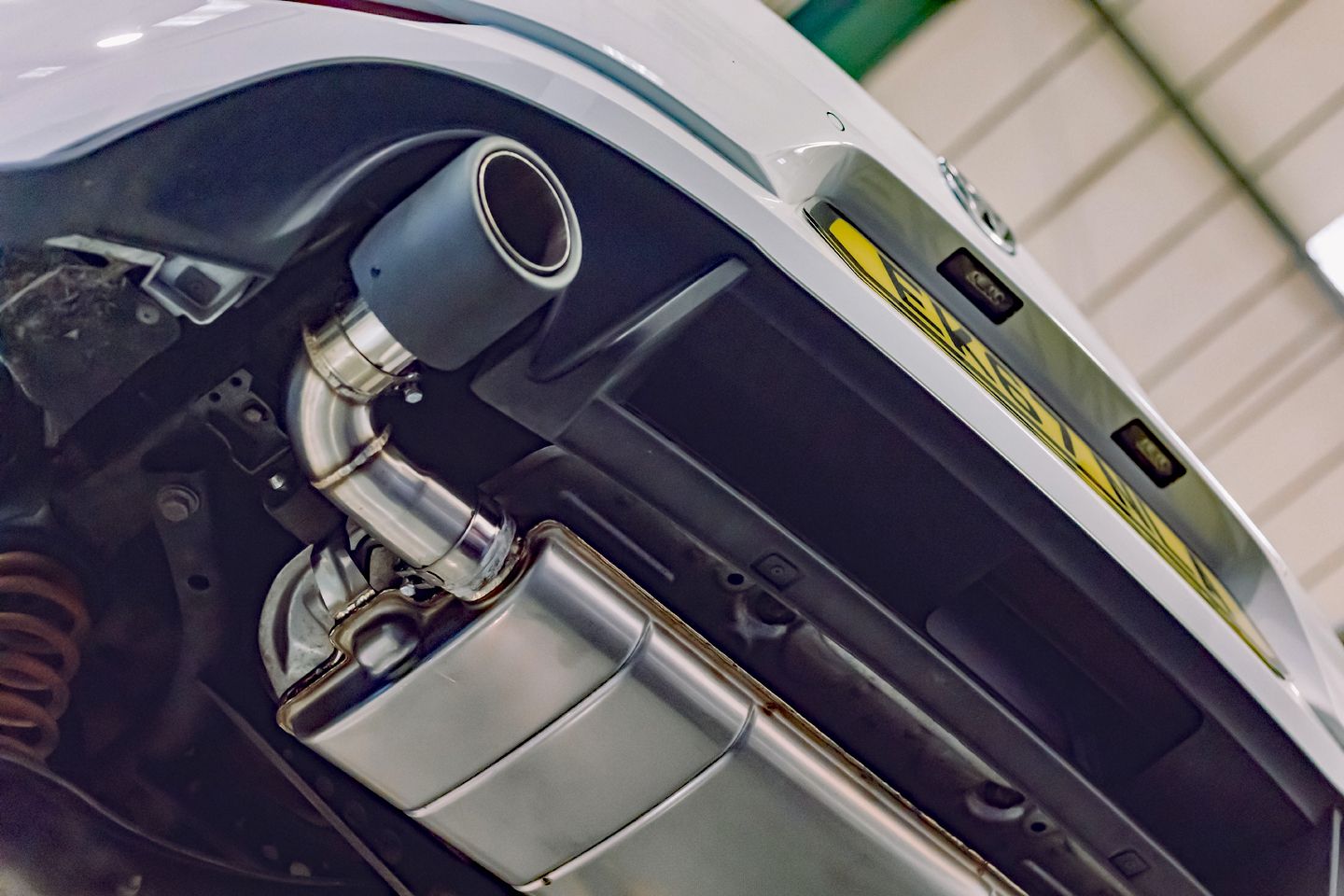
Vehicle emissions, we can all agree, are something of a nuisance. What a wonderful world it would be if a large petrol engine, in the course of its lively combustion process, emitted nothing more consequential than a pleasing fragrance? Of course, were that the case, the UK Government would still find something to complain about (taxing our vices is the one thing it is exceptionally good at), but it would at least provide the powers-that-be with a less ample area of research, and fewer opportunities to financially bonk people over the head.
Its latest wheeze, which it has been building up to for some time, is a proposal to ‘ensure that road vehicles continue to meet the same legal emissions requirements that applied when they were built and first registered for use on the road’. Its reasoning is that road transport is the largest single source of nitrogen oxides and the second largest source of atmospheric fine particles in the country, and that the current rules are not up to snuff when it comes to the job of ‘properly controlling’ such emissions once a car has left the factory.
Forget that nitrogen oxide emissions are around 80 per cent lower than in 1990 (thanks in small part to the escalating Euro standards introduced in 1992), and the nation’s largest source of fine particulate pollution are wood-burning stoves (a much more problematic area to legislate). The Government’s suspicion that this is costing the NHS billions - a problem that it somehow thinks will not be suitably alleviated by the 2035 phase-out of all combustion engines - is basically assumed to be irrefutable.
Accordingly, where there is essentially ‘no requirement to maintain the functioning of the ECS of Euro 5 or 6 light-duty vehicles or Euro VI heavy-duty vehicles’ currently, the Department of Transport reckons there ought to be some, as there was for earlier Euro standards. And especially since its research suggested that around two-thirds of more recent diesel cars were emitting more than 3 times the level permitted, and fewer than 1 in 10 passenger vehicles 'met the official limits for nitrogen oxides’ overall.
There are several moving parts to this, although from where PH sits, the sheer volume of that alleged rule-breaking suggests this has less to do with a minority consciously removing catalytic converters or particulate filters, and more to do with the failure of OEMs to develop so-called emissions control systems (ECS) that continue to work effectively beyond the type approval process. But as you might expect, the Department of Transport is less willing to fry that fish than it is to pounce on owners for shoddy maintenance. Or else modifications.
Thus drivers will be exempted from a situation where ‘the reason for the vehicle having excess emissions is something outside the control of the owner/user’ - i.e. if your car isn’t functioning within the permissible limits, but everything is present and correct and appropriately serviced, you’re home free (or rather in a no-fault grey area where blame does not fall on you or the OEM). For everyone else not off-roading (read: farmers), the Department of Transport proposes that the law will be as blind as Louis Braille - i.e. it will not distinguish between excess emissions caused by lack of upkeep and those triggered by ‘hardware or software’ alterations.
Ostensibly, this is to help simplify enforcement (and doubtless increase the chances of a successful prosecution) rather than clamp down on those of us who like to tinker; in fact, the open consultation document is adamant that ‘vehicle alteration is a legitimate practice’, and that the Government is not seeking to ‘prohibit all vehicle modifications’. Nevertheless, in practice, it suggests that from now on, the legality of any alteration will depend primarily on how it affects the pertinent new-build emission limit - and tellingly, it will not matter whether that effect was intended or not.
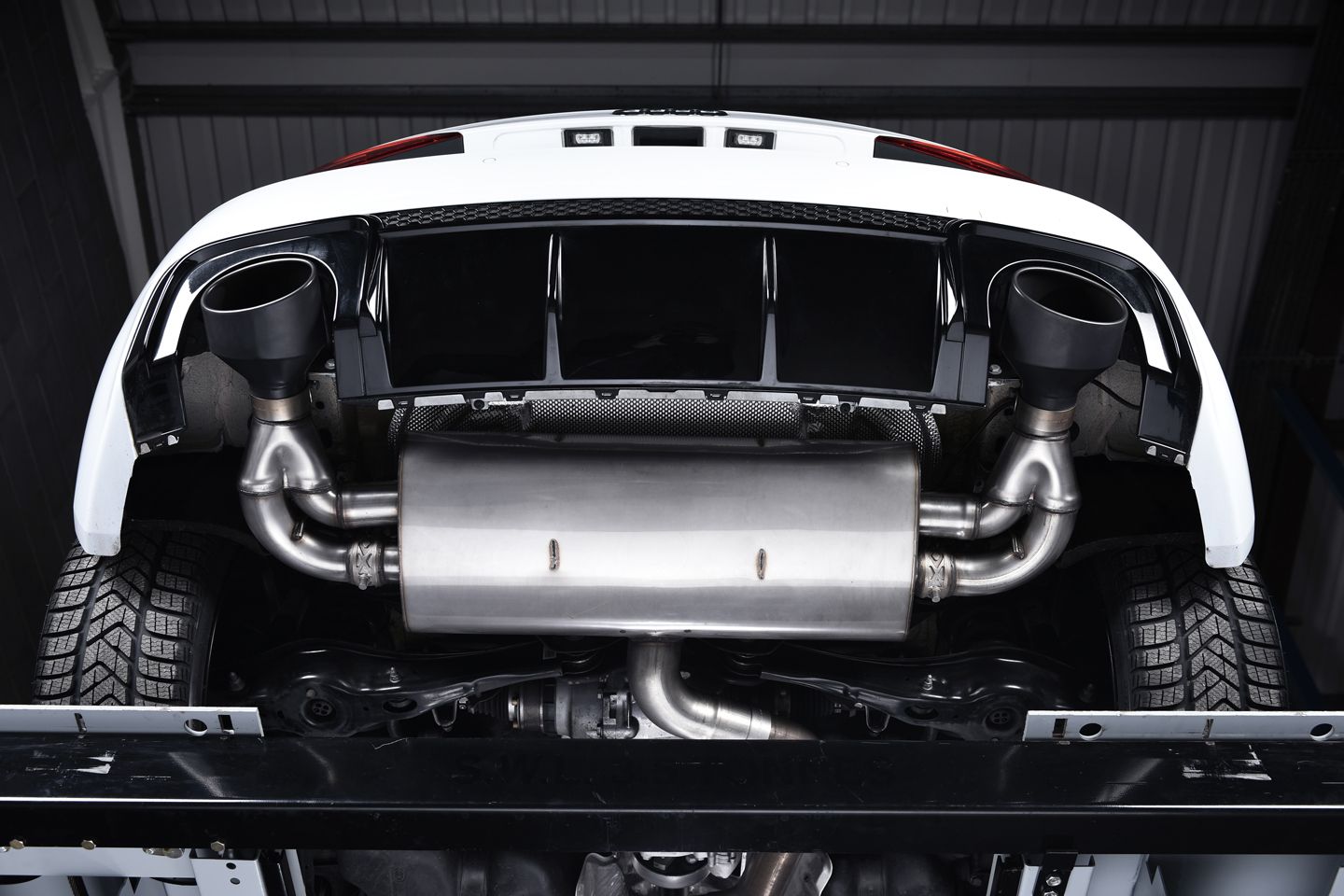
So while it makes clear that the four illegal horseman of its proposed apocalypse would be a) the removal or ‘deletion’ of particulate filters, b) the removal of catalytic converters and associated sensors, c) the manipulation of selective catalyst reduction systems (i.e. AdBlue), and d) the manipulation of exhaust gas recirculation systems - in other words, the Fab Four of many an oil burner workaround - it will not ultimately distinguish between any of them and an otherwise innocent tickle of a petrol engine ECU, if the latter results in the same red flag at the tailpipe.
Is that fair? Well, the purpose of the consultation, as ever, is to gather as many alternative viewpoints as possible. As you might expect, the Performance Automotive Aftermarket Association has some - not least a wariness of the black and white position a politician might choose to adopt on the subject. Which is understandable given the can of worms the Department of Transport intends to kick over for the thriving businesses it represents, not to mention the number of customers who might find themselves in the crosshairs just six months after the legislation is implemented. This, we’re told, is pencilled in for summer 2027 - but you only have till midnight on September 6th (this Sunday) to make your voice heard on the subject. We heartily recommend you go here and do just that.


There's bound to be grey areas either way. For example a cat-back exhaust typically wont change emissions significantly, but if you fit one and your car is then over the homologation limits simply because the car would never have been able to hit those limits in the real world anyway... down that route lies forcing everyone to use OEM parts for everything just to cover themselves.
Read and respond..
https://www.gov.uk/government/consultations/in-use...
Car owners are an easy target, always have been. Whereas the installation of a data centre near a friend of mine will have no grid connection for at least ten years, so It’ll be powered by 11 gas engines and 43, yes, 43 diesel generators and 25 chimneys at 28m high. - This is their idea of "Government is committed to cleaning up our air and protecting the public from the harms of pollution. "
What is PH doing as a response? Is there a PH response being submitted?
Question 1: Do you agree or disagree with amending existing law so that all road vehicles should maintain the same emissions standards throughout life, as applied when they were built and first registered?
Answer: Disagree.
Reason: The proposal is disproportionate, creates legal uncertainty for vehicle owners, and effectively imposes new regulatory obligations on vehicles purchased under a different legal framework. Existing MOT and enforcement mechanisms should be strengthened before imposing new liabilities on all vehicle owners.
Question 2: If you disagree, why do you think this?
Answer:
I disagree because the proposal places an unreasonable burden on vehicle owners to demonstrate compliance with historic emissions standards that may be difficult or impossible to verify. It also risks penalising owners for age-related deterioration, unavailable OEM parts, or historic repairs and modifications that were lawful when undertaken. Less intrusive measures such as enhanced MOT testing and targeted enforcement against proven high-emitting vehicles should be considered first.
Question 3: Do you agree or disagree that poor maintenance should be regulated?
Answer: Disagree.
Reason: Poor maintenance is already regulated through existing roadworthiness and MOT requirements. Introducing further regulation risks duplication of existing legislation without sufficient evidence that current enforcement powers are inadequate.
Question 4: Do you agree or disagree that vehicle modification should be regulated?
Answer: Partially disagree.
Reason: Only modifications proven to increase emissions beyond legal limits should be regulated. A blanket prohibition could unintentionally criminalise legitimate vehicle restoration, repair, tuning, and aftermarket parts usage that do not result in measurable environmental harm.
Question 5: Which exempted situations should be included?
Select:
Faults outside the control of the owner/user.
Vehicles being driven to have an emission-control device repaired.
Vehicles being driven to a port for export.
Vehicles used off-road.
Other circumstances.
Additional circumstances:
Where compliant replacement parts are unavailable.
Where repair costs exceed a reasonable percentage of vehicle value.
Historic/classic vehicles.
Manufacturer defects or software faults.
Owners who can demonstrate reasonable maintenance efforts.
Rural vehicle users with limited alternative transport options.
Vehicle Modification Question:
Do you agree or disagree that modifications known to always result in illegal emissions should be unlawful?
Answer: Disagree.
Reason: Enforcement should be based on measured emissions performance rather than assumptions regarding specific modifications. A modification should only be unlawful where objective testing demonstrates that the vehicle exceeds emissions limits.
Other Categories of Vehicle Question:
Which vehicle types should an updated law apply to?
Answer:
M1 (cars and small vans)
N1 (small goods vehicles)
Do not include:
Category L vehicles (motorcycles, scooters, tricycles and quadricycles)
Reason: The consultation acknowledges limited evidence regarding in-use emissions from Category L vehicles. Regulation should be evidence-based and should not be extended without robust supporting data.
Proposed Timelines Question:
Do you agree or disagree that there should be a 6‑month period of adjustment?
Answer: Disagree with 6 months. The lead-in time should be more than that.
What is your chosen period and why?
Answer:
A minimum of 24 months.
Vehicle owners, garages, fleets and parts suppliers require adequate time to understand the requirements, obtain specialist diagnostics, source compliant components and complete any necessary repairs. A 24-month implementation period would be more proportionate and would reduce the risk of unnecessary financial hardship for vehicle owners.
Overall Comment
While improving air quality is an important objective, the proposed amendments are disproportionate, create legal uncertainty, and are likely to have a disproportionate impact on lower-income households that rely on older vehicles. The Government should focus on enhanced MOT testing, targeted enforcement against demonstrably high-emitting vehicles, and action against deliberate emissions tampering rather than imposing broad new obligations across the entire vehicle fleet
As ever, the lack of consideration from the few will ensure the many ultimately lose out
That is a lengthy article, reads like its been fluffed up by AI.
On the subject, I just want fo be left alone to enjoy my hobby in peace, why is it every hobby I have there's always some
 in the background to tell me its bad, doesnt matter if its cars or bicycles. Someone's always got a problem.
If there is a problem with the current situation then it centres around the 'fitness for purpose' of these pollution control systems, for how long and to what extent can they reasonably be expected to function? How does legal responsibility shift between the car's manufacturer and its owner? Warranties and servicing would have to be considered here and every breach would need be examined on a case-by-case basis.
In summary, this seems like a potential goldmine for the manufacturers and/or the legal profession and with all that's going on in the world, is this really a fight the government wants right now? I think not.
Select:
Faults outside the control of the owner/user.
Vehicles being driven to have an emission-control device repaired.
Vehicles being driven to a port for export.
Vehicles used off-road.
Other circumstances.
Additional circumstances:
Where compliant replacement parts are unavailable. Why is this an acceptable excuse? Vehicles don't have to have a long-term value - they can depreciate to scrap value if they cannot be maintained to be road legal and costs of commissioning compliant solutions cannot be supported by the aftermarket supplychain
Where repair costs exceed a reasonable percentage of vehicle value. Why is this an acceptable excuse? Similar to above, cost shouldn't be a factor here. If it becomes uneconomical to keep roadworthy, then the vehicle should be scrapped - why is this any different to a car whose chassis has rusted through and the owner decides it's not worth / cannot afford to spend the money on repairs.?
Historic/classic vehicles. The proposal only applies to vehicles registered from 1st Jan 2001 onwards, so it already covers this in reality.
Manufacturer defects or software faults.
Owners who can demonstrate reasonable maintenance efforts. Define reasonable - a person removing a DPF so they can avoid repairing properly obviously thinks that is reasonable...
Rural vehicle users with limited alternative transport options. Not an excuse for not keeping a vehicle in good running order - I don't understand the logic here?
At least once on a weekly basis I need to either overtake a car in front of me, or if not safe to do so, pull over and wait for it to drive on.
Why? Because it's belching out the most horrendous blue/white/black smoke, filling my cabin with the stuff


There is no excuse for these cars - fix them, or get them off the road ASAP !
At least once on a weekly basis I need to either overtake a car in front of me, or if not safe to do so, pull over and wait for it to drive on.
Why? Because it's belching out the most horrendous blue/white/black smoke, filling my cabin with the stuff
There is no excuse for these cars - fix them, or get them off the road ASAP !
Don't make the mistake of lending support for something on the ignorant kneejerk reaction to something else.
plus its rather disingenuous to insist on any more of a check than already carried out by the MOT I'd say, our air quality is already pretty good.
this feels like a push to get us all into newer / electric cars and make a ton of cash in VAT / new car sales tax
Given that the re-mapping is very likely to have increased the emissions when it pops and bangs (and as stated above, that is illegal) then surely it should be part of the test.
People near me have asked, why don't the police stop these vehicles. The answer is simple, there are no patrol vehicles anymore, they only go out to attend incidents. To deal with these offenders would require a special roadside operation and the police don't have the funds/resources to do this. In addition they don't have the capability to do a roadside emissions check.
Clearly the MOT test needs to be changed to address this situation.
The consultation appears to be overly complex to address a very simple situation. It smacks of someone (probably loads of them) in an office producing complex stuff because it keeps them in a job.
Gassing Station | General Gassing | Top of Page | What's New | My Stuff