
Polishing brass to a decent finish
Discussion


Morning folks
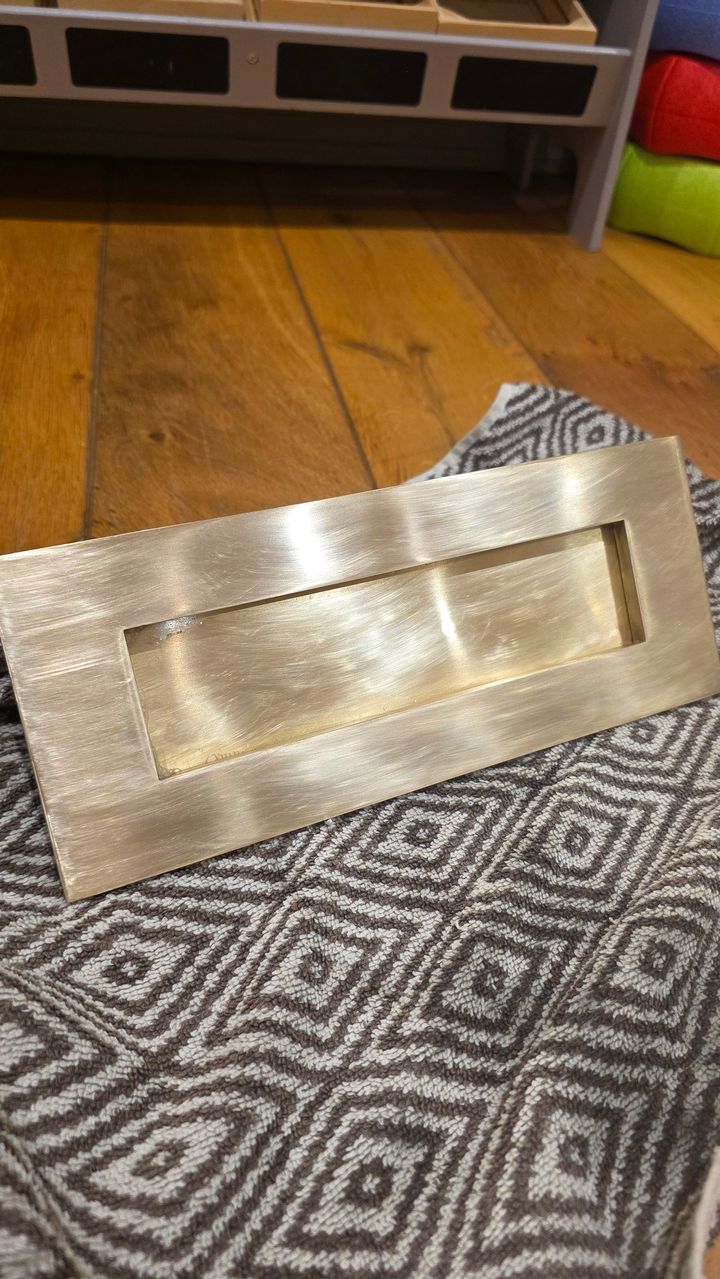
I have a solid brass letter plate which I purchased a couple of years ago. It was heavily tarnished so I used some barkeepers friend to bring it back to life. Rather naively I used a non scratch kitchen scourer too which resulted in lots of fine scratches.
Having done some internet research I decided to use wet and dry paper (wet) to sort it out. Started with 800 grit and worked through the stages until 3000 grit.
It ended up looking like this
I then used my car DA polisher with an ancient pad and some menzerna polish which produced this result
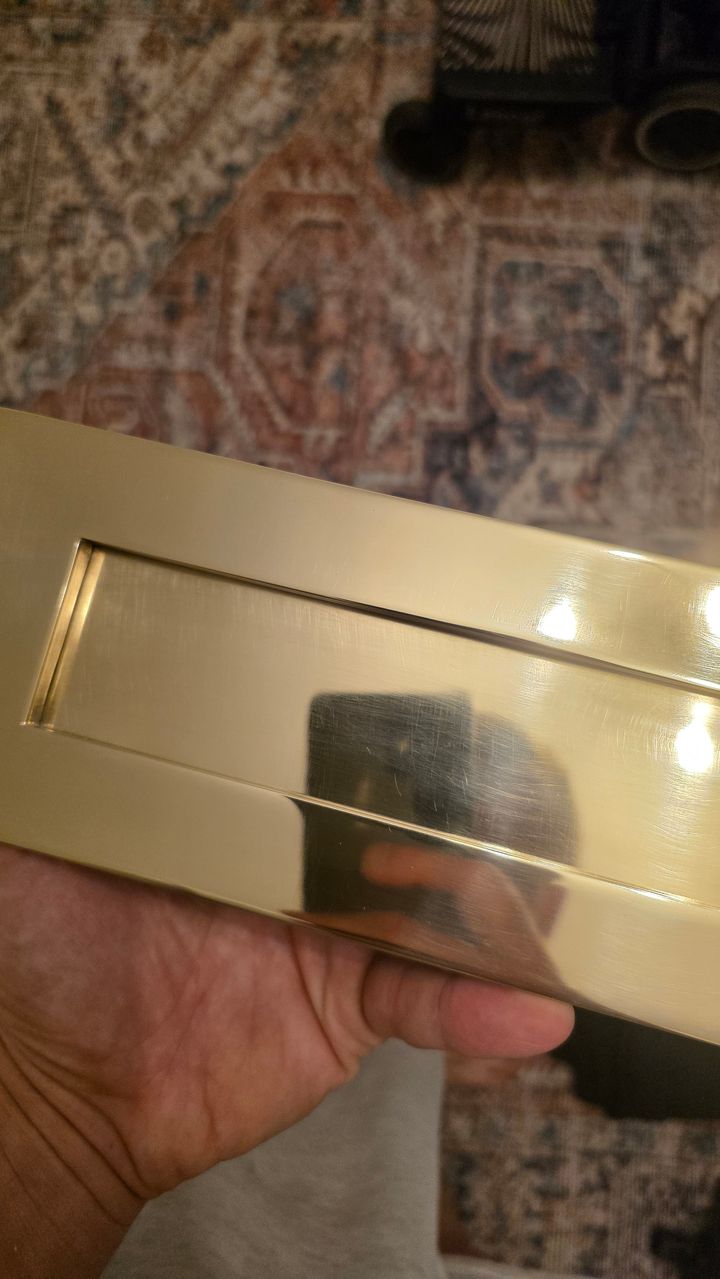
So much better but still lots of fine scratches remaining. Used some brasso wadding to finish which didn't really improve it further. Was really hoping for a mirror finish before I everbright it.
Can anyone suggest where I have gone wrong? More wet sanding needed or a proper polishing wheel/ cutting compound? I saw you can get drill mounted polishing wheels which are probably better than a 6 inch DA pad!
I have a solid brass letter plate which I purchased a couple of years ago. It was heavily tarnished so I used some barkeepers friend to bring it back to life. Rather naively I used a non scratch kitchen scourer too which resulted in lots of fine scratches.
Having done some internet research I decided to use wet and dry paper (wet) to sort it out. Started with 800 grit and worked through the stages until 3000 grit.
It ended up looking like this
I then used my car DA polisher with an ancient pad and some menzerna polish which produced this result
So much better but still lots of fine scratches remaining. Used some brasso wadding to finish which didn't really improve it further. Was really hoping for a mirror finish before I everbright it.
Can anyone suggest where I have gone wrong? More wet sanding needed or a proper polishing wheel/ cutting compound? I saw you can get drill mounted polishing wheels which are probably better than a 6 inch DA pad!
Depending on your postie, Amazon and other delivery folk etc then the opening flap even with all the effort won't stay scratch free for very long.
For Brass polishing unless you have already then look up 'Polishing horse brass' as that looks to result in a some reasonably long proven suggestions.
For Brass polishing unless you have already then look up 'Polishing horse brass' as that looks to result in a some reasonably long proven suggestions.
scot_aln said:
Depending on your postie, Amazon and other delivery folk etc then the opening flap even with all the effort won't stay scratch free for very long.
For Brass polishing unless you have already then look up 'Polishing horse brass' as that looks to result in a some reasonably long proven suggestions.
To be fair you are probably right and they'll trash it!! It looks pretty respectable now so whilst I may try some autosol maybe I'll leave it at that. For Brass polishing unless you have already then look up 'Polishing horse brass' as that looks to result in a some reasonably long proven suggestions.
Apparently the everbrite should keep it from tarnishing for a couple of years or so at least so I can always give it a refresh around then.
Thank you for the response.
You didn't go carefully enough down the grits, and as said wet/dry needs to be used wet. If you want it to be perfect you'll have to take off what shine you've got and go back a bit. Polish can only do so much.
That said, it will quickly scratch and tarnish again as the postman shoves letters and cardboard through it, so in reality what you have will do fine
That said, it will quickly scratch and tarnish again as the postman shoves letters and cardboard through it, so in reality what you have will do fine
said:
What grade do you think I should go back to? Also conflicting info as to whether to switch 90 degrees between grits or keep the same direction.
In truth not sure I have the motivation to do too much more given the intending bashing about it'll get!
TT86 said:
Can anyone suggest where I have gone wrong?
You allowed yourself to be born picky. I recognise the symptoms, having made the same error.No one will see the scratches at more than a couple of feet. No one will care at any distance. You've got six weeks before it's tarnished again. Refit it and find something else to worry about.
Furbo said:
TT86 said:
Can anyone suggest where I have gone wrong?
You allowed yourself to be born picky. I recognise the symptoms, having made the same error.No one will see the scratches at more than a couple of feet. No one will care at any distance. You've got six weeks before it's tarnished again. Refit it and find something else to worry about.
Maybe embrace the tarnished look.
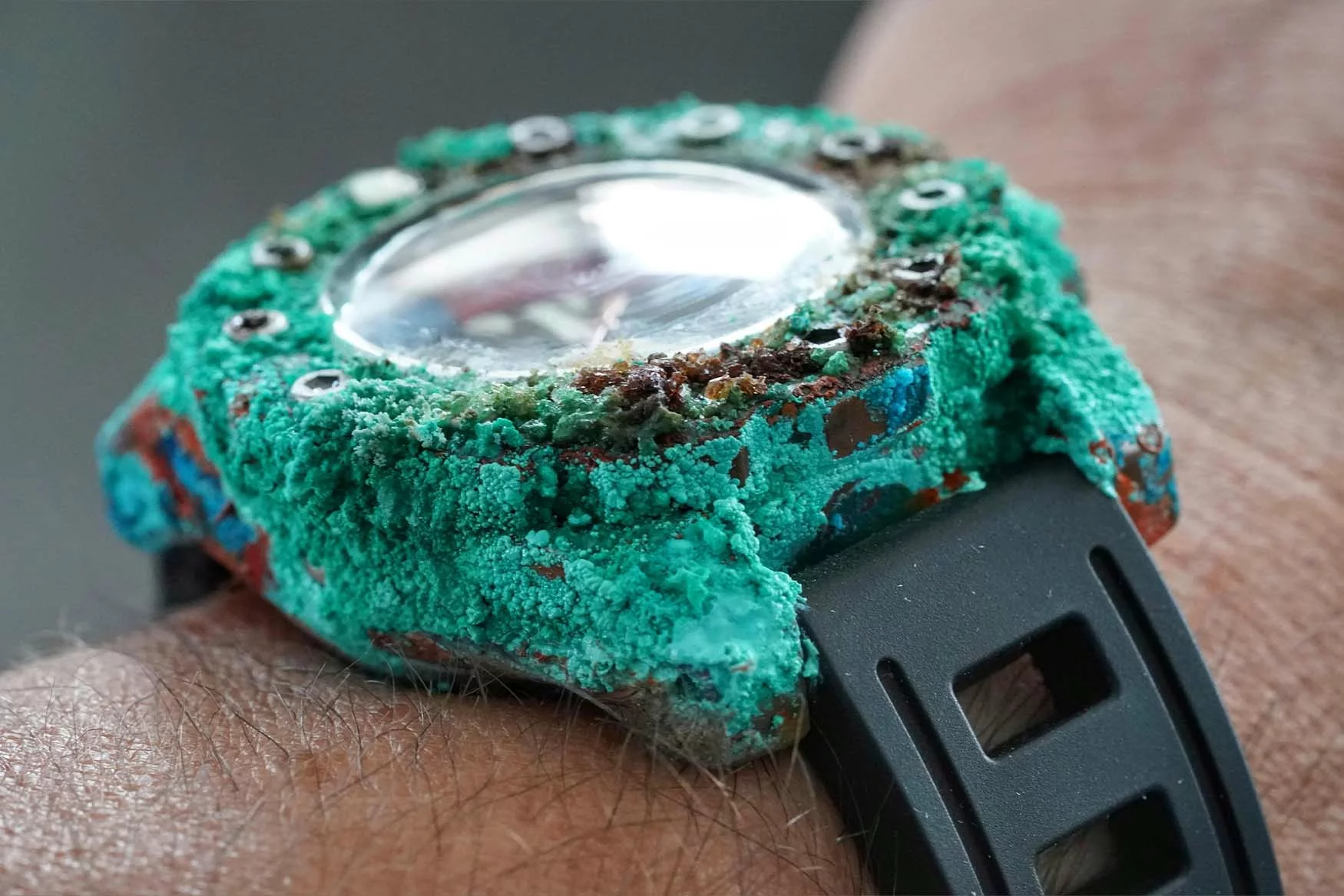
Ok, maybe not that much. Your postie will lose his hand.

Simpo Two said:
You didn't go carefully enough down the grits, and as said wet/dry needs to be used wet. If you want it to be perfect you'll have to take off what shine you've got and go back a bit. Polish can only do so much.
That said, it will quickly scratch and tarnish again as the postman shoves letters and cardboard through it, so in reality what you have will do fine
Possibly also starting with too fine a grade.That said, it will quickly scratch and tarnish again as the postman shoves letters and cardboard through it, so in reality what you have will do fine
A good polished finish often starts with a file!
One tip is to use each grade at 90 degrees to the last, so up/down for one, left/right for the next.
Change to finer grade when you can't see the traces of the previous.
Second tip: Wear gloves!
Practise on scrap.
OutInTheShed said:
Simpo Two said:
You didn't go carefully enough down the grits, and as said wet/dry needs to be used wet. If you want it to be perfect you'll have to take off what shine you've got and go back a bit. Polish can only do so much.
That said, it will quickly scratch and tarnish again as the postman shoves letters and cardboard through it, so in reality what you have will do fine
Possibly also starting with too fine a grade.That said, it will quickly scratch and tarnish again as the postman shoves letters and cardboard through it, so in reality what you have will do fine
A good polished finish often starts with a file!
One tip is to use each grade at 90 degrees to the last, so up/down for one, left/right for the next.
Change to finer grade when you can't see the traces of the previous.
Second tip: Wear gloves!
Practise on scrap.
But as its brass, it will tarnish by the next day, I would put a plastic one in
TT86 said:
I thought I had- 800,1000,1500,2000,2500,3000 but perhaps I applied too much pressure. Kept it very wet with soapy water.
What grade do you think I should go back to? Also conflicting info as to whether to switch 90 degrees between grits or keep the same direction.
In truth not sure I have the motivation to do too much more given the intending bashing about it'll get!
I would have expected 3,000 to do it - and it gets finer as it wears down which helps. There are also grades of wire wool. But my letterbox is exactly the same as yours and I know what happens to the lovely finish so I would leave it if I were you. Even lacquer doesn't last long in use.What grade do you think I should go back to? Also conflicting info as to whether to switch 90 degrees between grits or keep the same direction.
In truth not sure I have the motivation to do too much more given the intending bashing about it'll get!
When I was a metallurgist we prepared metal samples for microscope viewing.
Process was progressive wet and dry to finer grades, creating uniform "scratches" at each stage. Then a 90 deg turn to use the next finer grade and get the surface 100% "scratched again but in a 90 deg direction. Repeat through finer polishing, even down to diamond paste to a few microns.
Basically total surface removal using the "scratches" as a guide to an even surface then removing these to finer scratches.
Short cut moving down to finer grades too soon resulted in scratches showing through when using finer grades.
More haste less speed ( poorer finish).
We aimed for scratch free at 400x magnification for general stuff. Some even better for specific results where higher mag was used.
Brass is relatively soft so polishing needs care.
Process was progressive wet and dry to finer grades, creating uniform "scratches" at each stage. Then a 90 deg turn to use the next finer grade and get the surface 100% "scratched again but in a 90 deg direction. Repeat through finer polishing, even down to diamond paste to a few microns.
Basically total surface removal using the "scratches" as a guide to an even surface then removing these to finer scratches.
Short cut moving down to finer grades too soon resulted in scratches showing through when using finer grades.
More haste less speed ( poorer finish).
We aimed for scratch free at 400x magnification for general stuff. Some even better for specific results where higher mag was used.
Brass is relatively soft so polishing needs care.
Edited by Plus4Four# on Thursday 1st October 13:00
Gassing Station | Homes, Gardens and DIY | Top of Page | What's New | My Stuff