
Discussion


Hi people, I am sure someone here can answer my question. Here it is, HC rule 129 says :-
Double white where the lane nearest you is solid
This means you MUST NOT cross or straddle it unless it is safe and you need to enter adjoining premises or a side road.
I have often wondered if you can exit from the same premises side lane, and cross the solid lines to the other side of the road to turn right?
The rule does not mention exiting, only entering, but on another website I visit views differ on this subject,
Double white where the lane nearest you is solid
This means you MUST NOT cross or straddle it unless it is safe and you need to enter adjoining premises or a side road.
I have often wondered if you can exit from the same premises side lane, and cross the solid lines to the other side of the road to turn right?
The rule does not mention exiting, only entering, but on another website I visit views differ on this subject,
I'd be very surprised if any court accepted the argument that you may legally cross the line to enter your driveway but must remain there forever because the rule doesn't explicitly say you can come back out again. 
The intent of the exemption is almost certainly access to and from premises, subject to safety.
The intent of the exemption is almost certainly access to and from premises, subject to safety.
Pixelpeep Electric said:
I'd be very surprised if any court accepted the argument that you may legally cross the line to enter your driveway but must remain there forever because the rule doesn't explicitly say you can come back out again.
The intent of the exemption is almost certainly access to and from premises, subject to safety.
The intent of the exemption is almost certainly access to and from premises, subject to safety.
Guessing driveways are usually on residential streets where you wouldn’t find solid lines, guessing by the way.
Vipers said:
Nicetobenice said:
Pica-Pica said:
OP. You only quote the Highway Code. What does the associated Road Traffic Act say?
Pretty sure it's the same.You are supposed to turn left.
The relevent wording only mentions entry not exit
Nothing in sub-paragraph (1)(b) is to be taken to prohibit a vehicle from being driven across, or so as to straddle, the continuous line referred to in that paragraph, if it is safe to do so and if necessary to do so—
(a)to enable the vehicle to enter, from the side of the road on which it is proceeding, land or premises adjacent to the length of road on which the line is placed, or another road joining that road;
Nothing in sub-paragraph (1)(b) is to be taken to prohibit a vehicle from being driven across, or so as to straddle, the continuous line referred to in that paragraph, if it is safe to do so and if necessary to do so—
(a)to enable the vehicle to enter, from the side of the road on which it is proceeding, land or premises adjacent to the length of road on which the line is placed, or another road joining that road;
Nicetobenice said:
The relevent wording only mentions entry not exit
Nothing in sub-paragraph (1)(b) is to be taken to prohibit a vehicle from being driven across, or so as to straddle, the continuous line referred to in that paragraph, if it is safe to do so and if necessary to do so
(a)to enable the vehicle to enter, from the side of the road on which it is proceeding, land or premises adjacent to the length of road on which the line is placed, or another road joining that road;
My thoughts, see pic, car turning right into entrance only has only to concentrate on one lane of oncoming traffic, with final mirror check before completing the manoeuvre , but coming out to turn tight they have to concentrate on traffic from both directions, solid lines are for a reason, like volume of traffic so makes me think you can’t cross to turn right.Nothing in sub-paragraph (1)(b) is to be taken to prohibit a vehicle from being driven across, or so as to straddle, the continuous line referred to in that paragraph, if it is safe to do so and if necessary to do so
(a)to enable the vehicle to enter, from the side of the road on which it is proceeding, land or premises adjacent to the length of road on which the line is placed, or another road joining that road;
Vipers said:
My thoughts, see pic, car turning right into entrance only has only to concentrate on one lane of oncoming traffic, with final mirror check before completing the manoeuvre , but coming out to turn tight they have to concentrate on traffic from both directions, solid lines are for a reason, like volume of traffic so makes me think you can t cross to turn right.
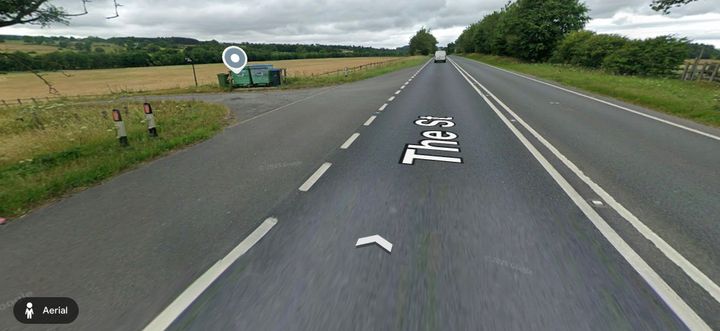
Yes coming from the side road/track- Ok to turn into it but when exiting it's left turn only.Like most people i would ignore that and turn right if I was going that way then be extremely indignant if I got a ticket, moaning about how unfair things are as i sit through 3 hours of online training or pay my increased insurance premiums as a result of the 3 points on my previously pristine licence.
Nicetobenice said:
Vipers said:
My thoughts, see pic, car turning right into entrance only has only to concentrate on one lane of oncoming traffic, with final mirror check before completing the manoeuvre , but coming out to turn tight they have to concentrate on traffic from both directions, solid lines are for a reason, like volume of traffic so makes me think you can t cross to turn right.
Yes coming from the side road/track- Ok to turn into it but when exiting it's left turn only.Like most people i would ignore that and turn right if I was going that way then be extremely indignant if I got a ticket, moaning about how unfair things are as i sit through 3 hours of online training or pay my increased insurance premiums as a result of the 3 points on my previously pristine licence.
Vipers said:
Totally agree, and if you have to do it hope you do t get caught, quite a few exits like this on the A66, hopefully if no one can find it in legislation, I would argue the HC only says to enter not exit and drivers should abide by it, not interpret it to their advantage.
It's in the legislation - I cut and pasted the relevant paragraph from the government website but forgot the linkhttps://www.legislation.gov.uk/uksi/2016/362/sched...
Nicetobenice said:
Vipers said:
Totally agree, and if you have to do it hope you do t get caught, quite a few exits like this on the A66, hopefully if no one can find it in legislation, I would argue the HC only says to enter not exit and drivers should abide by it, not interpret it to their advantage.
It's in the legislation - I cut and pasted the relevant paragraph from the government website but forgot the linkhttps://www.legislation.gov.uk/uksi/2016/362/sched...

The section of the act quoted should not be viewed in isolation.
"No stopping or crossing white line marking
9. (1) The requirements conveyed to vehicular traffic on roads by a road marking provided for at items 23 and 24 of the sign table in Part 6 of this Schedule are that
(a)subject to sub-paragraphs (2) to (4), no vehicle is to stop on any length of road along which the marking has been placed at any point between the ends of the marking; and
(b)subject to sub-paragraph (5), every vehicle proceeding on any length of road along which the marking has been so placed, as viewed in the direction of travel of the vehicle, a continuous line is on the left of a broken line or of another continuous line, must be so driven as to keep the first-mentioned continuous line on the right hand or off side of the vehicle"
9(b) states that "subject to sub-paragraph(5)" - this was the section quoted. However 9(b) is referring to a scenario whereby a vehicle is "proceeding on" a length or road along which the marking has been placed; I would not interpret this this to cover the scenario where a vehicle is emerging from a road perpendicular to a road described in section 9(b). I'm not a legal expert and would welcome a view from anyone who is, however I am a road engineer and am not entirely unfamiliar with various sections of law pertaining to roads and section 9(b) does explicitly refer to "proceeding on". I would not view the manoeuvre of turning right onto a road as being the same as proceeding on it. Once the manoeuvre has been completed, you would then be proceeding on the marked road and the law would apply.
Edit for formatting.
"No stopping or crossing white line marking
9. (1) The requirements conveyed to vehicular traffic on roads by a road marking provided for at items 23 and 24 of the sign table in Part 6 of this Schedule are that
(a)subject to sub-paragraphs (2) to (4), no vehicle is to stop on any length of road along which the marking has been placed at any point between the ends of the marking; and
(b)subject to sub-paragraph (5), every vehicle proceeding on any length of road along which the marking has been so placed, as viewed in the direction of travel of the vehicle, a continuous line is on the left of a broken line or of another continuous line, must be so driven as to keep the first-mentioned continuous line on the right hand or off side of the vehicle"
9(b) states that "subject to sub-paragraph(5)" - this was the section quoted. However 9(b) is referring to a scenario whereby a vehicle is "proceeding on" a length or road along which the marking has been placed; I would not interpret this this to cover the scenario where a vehicle is emerging from a road perpendicular to a road described in section 9(b). I'm not a legal expert and would welcome a view from anyone who is, however I am a road engineer and am not entirely unfamiliar with various sections of law pertaining to roads and section 9(b) does explicitly refer to "proceeding on". I would not view the manoeuvre of turning right onto a road as being the same as proceeding on it. Once the manoeuvre has been completed, you would then be proceeding on the marked road and the law would apply.
Edit for formatting.
Edited by PaulD86 on Wednesday 14th October 09:33
PaulD86 said:
The section of the act quoted should not be viewed in isolation.
"No stopping or crossing white line marking
9. (1) The requirements conveyed to vehicular traffic on roads by a road marking provided for at items 23 and 24 of the sign table in Part 6 of this Schedule are that
(a)subject to sub-paragraphs (2) to (4), no vehicle is to stop on any length of road along which the marking has been placed at any point between the ends of the marking; and
(b)subject to sub-paragraph (5), every vehicle proceeding on any length of road along which the marking has been so placed, as viewed in the direction of travel of the vehicle, a continuous line is on the left of a broken line or of another continuous line, must be so driven as to keep the first-mentioned continuous line on the right hand or off side of the vehicle"
9(b) states that "subject to sub-paragraph(5)" - this was the section quoted. However 9(b) is referring to a scenario whereby a vehicle is "proceeding on" a length or road along which the marking has been placed; I would not interpret this this to cover the scenario where a vehicle is emerging from a road perpendicular to a road described in section 9(b). I'm not a legal expert and would welcome a view from anyone who is, however I am a road engineer and am not entirely unfamiliar with various sections of law pertaining to roads and section 9(b) does explicitly refer to "proceeding on". I would not view the manoeuvre of turning right onto a road as being the same as proceeding on it. Once the manoeuvre has been completed, you would then be proceeding on the marked road and the law would apply.
Edit for formatting.
I would agree with this."No stopping or crossing white line marking
9. (1) The requirements conveyed to vehicular traffic on roads by a road marking provided for at items 23 and 24 of the sign table in Part 6 of this Schedule are that
(a)subject to sub-paragraphs (2) to (4), no vehicle is to stop on any length of road along which the marking has been placed at any point between the ends of the marking; and
(b)subject to sub-paragraph (5), every vehicle proceeding on any length of road along which the marking has been so placed, as viewed in the direction of travel of the vehicle, a continuous line is on the left of a broken line or of another continuous line, must be so driven as to keep the first-mentioned continuous line on the right hand or off side of the vehicle"
9(b) states that "subject to sub-paragraph(5)" - this was the section quoted. However 9(b) is referring to a scenario whereby a vehicle is "proceeding on" a length or road along which the marking has been placed; I would not interpret this this to cover the scenario where a vehicle is emerging from a road perpendicular to a road described in section 9(b). I'm not a legal expert and would welcome a view from anyone who is, however I am a road engineer and am not entirely unfamiliar with various sections of law pertaining to roads and section 9(b) does explicitly refer to "proceeding on". I would not view the manoeuvre of turning right onto a road as being the same as proceeding on it. Once the manoeuvre has been completed, you would then be proceeding on the marked road and the law would apply.
Edit for formatting.
Edited by PaulD86 on Wednesday 14th October 09:33
i.e. I think it would be correct to say that if you are seeking to enter the DWLd carriageway from a side road by turning right onto that carriageway, the requirement to keep to the left of the white lines and not cross them would not be applicable because they are not on the road you are currently exiting from. (If that makes sense...)
RSTurboPaul said:
PaulD86 said:
The section of the act quoted should not be viewed in isolation.
"No stopping or crossing white line marking
9. (1) The requirements conveyed to vehicular traffic on roads by a road marking provided for at items 23 and 24 of the sign table in Part 6 of this Schedule are that
(a)subject to sub-paragraphs (2) to (4), no vehicle is to stop on any length of road along which the marking has been placed at any point between the ends of the marking; and
(b)subject to sub-paragraph (5), every vehicle proceeding on any length of road along which the marking has been so placed, as viewed in the direction of travel of the vehicle, a continuous line is on the left of a broken line or of another continuous line, must be so driven as to keep the first-mentioned continuous line on the right hand or off side of the vehicle"
9(b) states that "subject to sub-paragraph(5)" - this was the section quoted. However 9(b) is referring to a scenario whereby a vehicle is "proceeding on" a length or road along which the marking has been placed; I would not interpret this this to cover the scenario where a vehicle is emerging from a road perpendicular to a road described in section 9(b). I'm not a legal expert and would welcome a view from anyone who is, however I am a road engineer and am not entirely unfamiliar with various sections of law pertaining to roads and section 9(b) does explicitly refer to "proceeding on". I would not view the manoeuvre of turning right onto a road as being the same as proceeding on it. Once the manoeuvre has been completed, you would then be proceeding on the marked road and the law would apply.
Edit for formatting.
I would agree with this."No stopping or crossing white line marking
9. (1) The requirements conveyed to vehicular traffic on roads by a road marking provided for at items 23 and 24 of the sign table in Part 6 of this Schedule are that
(a)subject to sub-paragraphs (2) to (4), no vehicle is to stop on any length of road along which the marking has been placed at any point between the ends of the marking; and
(b)subject to sub-paragraph (5), every vehicle proceeding on any length of road along which the marking has been so placed, as viewed in the direction of travel of the vehicle, a continuous line is on the left of a broken line or of another continuous line, must be so driven as to keep the first-mentioned continuous line on the right hand or off side of the vehicle"
9(b) states that "subject to sub-paragraph(5)" - this was the section quoted. However 9(b) is referring to a scenario whereby a vehicle is "proceeding on" a length or road along which the marking has been placed; I would not interpret this this to cover the scenario where a vehicle is emerging from a road perpendicular to a road described in section 9(b). I'm not a legal expert and would welcome a view from anyone who is, however I am a road engineer and am not entirely unfamiliar with various sections of law pertaining to roads and section 9(b) does explicitly refer to "proceeding on". I would not view the manoeuvre of turning right onto a road as being the same as proceeding on it. Once the manoeuvre has been completed, you would then be proceeding on the marked road and the law would apply.
Edit for formatting.
Edited by PaulD86 on Wednesday 14th October 09:33
i.e. I think it would be correct to say that if you are seeking to enter the DWLd carriageway from a side road by turning right onto that carriageway, the requirement to keep to the left of the white lines and not cross them would not be applicable because they are not on the road you are currently exiting from. (If that makes sense...)
Crossing the double white lines while exiting from a side road, without the specific exemption of exiting a side road being present in either the HC or Road Traffic Act, is a technical offence. On the other hand, if turning right was prohibited, there would have to be a sign to inform drivers explicitly that it is prohibited. Under TSRGD 2016, it is mandatory to have prohibition sign of an approved design to a make a turn prohibition legally enforceable against drivers (in the UK at least, don't know about other countries). The sum total of the two positions is that although turning right is technically not allowed, defective signage means it can't be enforced.
This has probably arisen because line painters forgot/didn't care that they were supposed to have breaks in the double white lines at side roads and farm entrances to stop people being technically trapped. It boils down to poor workmanship and road repairs.
IANAL but this is my understanding of TSRGD, RTA and HC.
QuickQuack said:
Crossing the double white lines while exiting from a side road, without the specific exemption of exiting a side road being present in either the HC or Road Traffic Act, is a technical offence.
Can you explain how? The section of the act discussed in this thread states; "proceeding on any length of road along which the marking has been so placed, as viewed in the direction of travel of the vehicle, a continuous line is on the left of a broken line or of another continuous line, must be so driven as to keep the first-mentioned continuous line on the right hand or off side of the vehicle".
The act of turning right onto such a road would have to be completed before you could to proceed on it, so there would be no offence there. The section of act also refers to the white lines being to the right hand side - before turning right onto a road they are ahead of you (and not on the road you are on), not to your right hand side, and are only to your right AFTER you have joined the road, not before. So unless there is another section of act that would apply, I see no incompatibility with the quoted act and the manoeuvre of turning right from a side road onto a double white lined road.
Edit to add:
The exemption listed below is required as before making a turn into a side road or access, you are proceeding on the double white lined road, where as before turning right onto the double white lined road, you are not.
"(5) Nothing in sub-paragraph (1)(b) is to be taken to prohibit a vehicle from being driven across, or so as to straddle, the continuous line referred to in that paragraph, if it is safe to do so and if necessary to do so—
(a)to enable the vehicle to enter, from the side of the road on which it is proceeding, land or premises adjacent to the length of road on which the line is placed, or another road joining that road"
Edited by PaulD86 on Wednesday 14th October 11:49
PaulD86 said:
QuickQuack said:
Crossing the double white lines while exiting from a side road, without the specific exemption of exiting a side road being present in either the HC or Road Traffic Act, is a technical offence.
Can you explain how? The section of the act discussed in this thread states; "proceeding on any length of road along which the marking has been so placed, as viewed in the direction of travel of the vehicle, a continuous line is on the left of a broken line or of another continuous line, must be so driven as to keep the first-mentioned continuous line on the right hand or off side of the vehicle".
The act of turning right onto such a road would have to be completed before you could to proceed on it, so there would be no offence there. The section of act also refers to the white lines being to the right hand side - before turning right onto a road they are ahead of you (and not on the road you are on), not to your right hand side, and are only to your right AFTER you have joined the road, not before. So unless there is another section of act that would apply, I see no incompatibility with the quoted act and the manoeuvre of turning right from a side road onto a double white lined road.
Edit to add:
The exemption listed below is required as before making a turn into a side road or access, you are proceeding on the double white lined road, where as before turning right onto the double white lined road, you are not.
"(5) Nothing in sub-paragraph (1)(b) is to be taken to prohibit a vehicle from being driven across, or so as to straddle, the continuous line referred to in that paragraph, if it is safe to do so and if necessary to do so
(a)to enable the vehicle to enter, from the side of the road on which it is proceeding, land or premises adjacent to the length of road on which the line is placed, or another road joining that road"
Edited by PaulD86 on Wednesday 14th October 11:49
Gassing Station | Speed, Plod & the Law | Top of Page | What's New | My Stuff