
Meet the Long Range XC90 that'll do 1,000 miles
Volvo's long-serving SUV soldiers on - and on and on
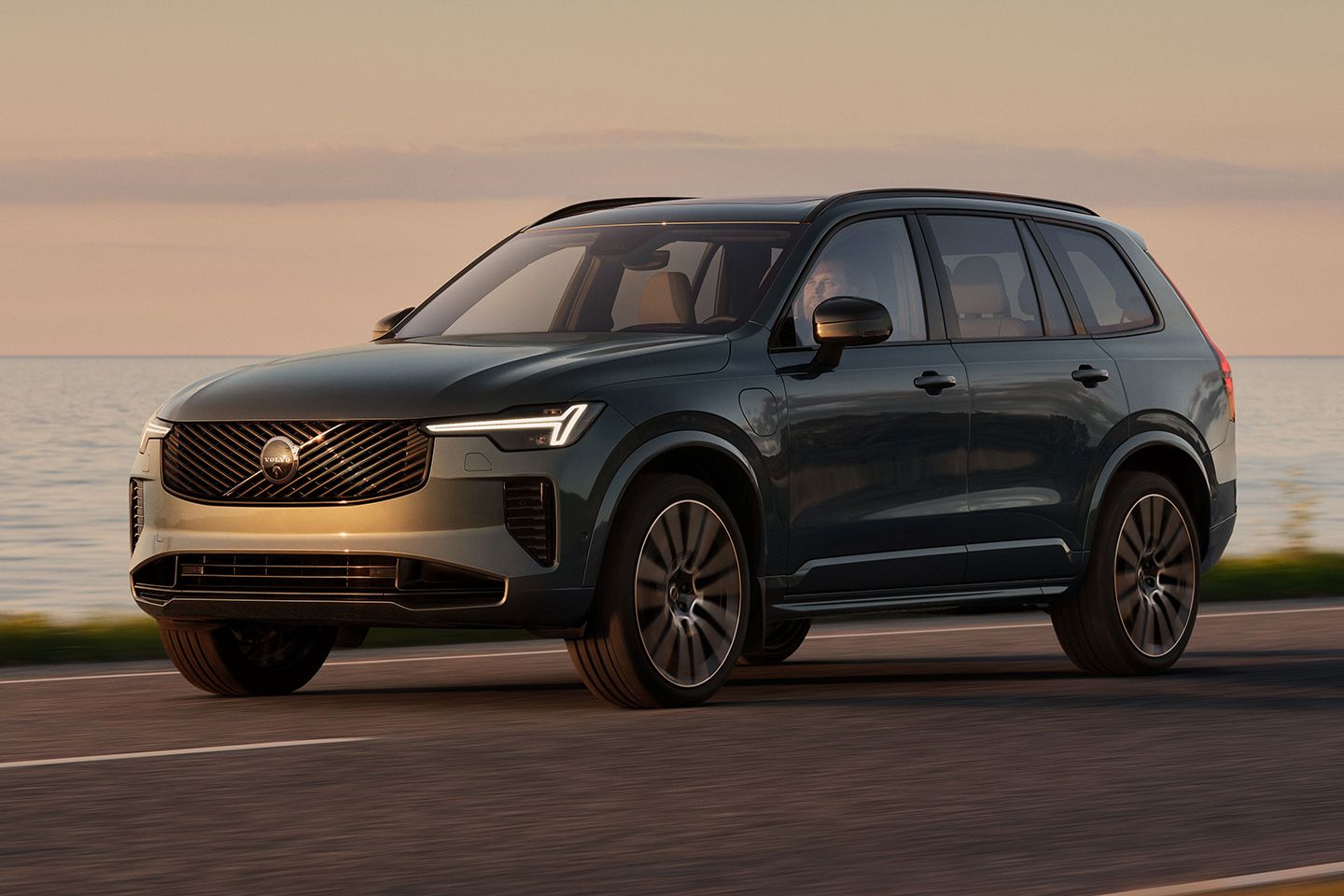
There can’t be many ‘normal’ cars around that have now been on sale longer than Volvo XC90, the first example of the second generation being delivered way back in 2014. But as we discovered recently, it still has a lot to offer as a family hauler, and the latest update is absolutely in keeping with contemporary trends.
Now there’s something called a T8 Long Range plug-in hybrid, which sorta does what it says on the tin: where the old PHEV had less than 50 miles of EV range, this new one has a claimed 101. As new private buyers continue to be unsure about full-on electrification, it’s easy to see why a trusty old Volvo with a significant battery boost might appeal: claimed overall range is now provisionally up to 1,096 miles…
There’s now a 41.2kWh (37.9kWh usable) ‘floor-integrated’ battery pack; allied to the trusty 2.0-litre petrol, there’s 461hp on offer, for 0-62mph in 5.2 seconds. Charging takes four hours, so it’s one for home rather than the local DC rapid. All probably less important numbers than the hearty range claim (and 8g/km), but useful nonetheless. And there’s more than just the battery in this facelift: Google Gemini is now part of the XC90 package (told you it was all up to date now), allowing drivers ‘to interact with the car using natural language’ and which will update over time. Hopefully it still understands what a petrol station is.
The Long Range PHEV sits in the new XC90 lineup alongside the 250hp mild-hybrid B5. That kicks off at £66,270 for a Core, with the plug-in range starting at £75,765 and Plus, Plus Pro, Ultra and Ultra Pro specs offered. There’s a Black Edition at the top, costing £83,765 for the T8. Right in among the all-electric EX90 range, then, only now you wouldn’t bet against the XC proving more popular…


Plus as SDK says...the 112mph top speed was always going to upset/annoy me as well!


I guess when cruising a 4pot is perfectly fine and if the system keeps a level of battery power then the full power is always available for the odd overtake or slip road charge.
it might be the overall (battery included) headline fuel consumption is 64mpge, but that's not measured over a tank - its assuming it'll be plugged in a bunch of times per tank, as per a typical commuter might do overnight
They're great family wagons. Comfortable places to be on long trips.
But their main use case is really towing these days. For everything else, the EX90 is the better car.
Ref an earlier poster, I could be asking for trouble but none of our XC90s have caused us material issues. The first two saw the best part of 120k miles in our care and the latest one will do the same. We'll likely only need one more similar type of car after this one. I'll be pushing harder when that time comes for an EX90 or EV9 (both of which were only just coming to market when we bought the current car).
If you need 7 seats and/or space (especially with a new family), these cannot be beat IMO. Of every car I've owned, these have fit their purpose the best.
it might be the overall (battery included) headline fuel consumption is 64mpge, but that's not measured over a tank - its assuming it'll be plugged in a bunch of times per tank, as per a typical commuter might do overnight
I'd say that it's really poor from PH to not do a basic fact check on the claim and try to dig into how they got it.
The spec sheet on Volvo's website for this car is actually slightly smaller, a 68l tank. Assuming ~35mpg on engine power on the motorway (feels generous for this size of car and the fact it's petrol) and you manage to eek 150 miles out of the battery in low speed town driving, that still only gives a maximum range of about 700 miles, or some 400 short of what's claimed.
And that's being optimistic. Come on PH, let's not let manufacturers get away with claiming complete rubbish.
Unless it’s a Yank-type leviathan with acres of space aft of the 3rd row, I don’t get these 3-row 7-seat SUVs.
OK, so the 3rd row is an extra cost in some shape or form and, in turn, extra profit for the ever-rapacious OEMs. That I get. But…
Parents buy SUVs, Volvos in particular, because they’re robust and safe family cars, right?
Fine, makes perfect sense.
But then they allow the rearmost occupants to sit in what is actually the car’s rear crumple zone.
Never mind NSL and motorway speeds, an urban 20mph rear impact would ensure third-row kiddy purée.
How do parents reconcile that type of risk-reward ‘benefit’?

Gassing Station | General Gassing | Top of Page | What's New | My Stuff