
Tesla Model Y | PH Used Buying Guide
Insanely popular when new and impressively affordable now - should you?
Key considerations
- Available from £15,000
- Single-speed fully electric SUV, battery from 60kWh, rear- or all-wheel drive
- Extremely spacious and capable family vehicle
- Not as good to drive as the Three, but good enough for most
- Build quality not stellar though it has a good reliability record
- A cheap high miler could be a very smart buy
This time we’re looking at the Model Y, Tesla’s all-electric crossover SUV. Based on the Model 3 and built in ‘gigafactories’ in Texas, Shanghai and Berlin as well as a non-giga factory in Fremont, California, the Y went on sale in the US in 2020, although first deliveries in the UK weren’t made until the spring of 2022.
The Model Y’s simple but profound recipe for success was big space, big range, and – in dual-motor all-wheel-drive guise – big performance, all of it complemented by full access to Tesla’s large, mature and generally very stable Supercharger public charging system. Although you still needed 12 hours to fill a Tesla Long Range battery at home via a 7kW charger, publicly rapid-charging it from empty to 80 per cent took just 25 minutes on the Tesla network. That might not sound all that special nowadays, other manufacturers having caught up fast on charging and battery capacity tech, but it’s a measure of the Model Y’s appeal that it still stood head and shoulders above the opposition as recently as 2022.
The Y excelled in the area of safety too, achieving the highest overall score of any car tested under Euro NCAP’s 2022 standards. Its 98 per cent score for safety assistance was the highest ever recorded by that agency. Over-the-air updates reassured owners that the car was always as good as it could be in terms of driver assistance features and overall efficiency.
When production at Tesla’s Berlin gigafactory got up to speed in 2023 the Y was the best-selling car in Europe, irrespective of type. European Y sales had peaked by 2024 but global success continued. As of 2025 and the first five months of 2026 at least the Model Y was the world’s best-selling battery-electric car. Well over two million Ys have been sold so far.
You’ll struggle to find any two information sources giving you the same two answers for Model Y battery capacity, range, and performance figures. After a good deal of head-scratching, we gave up trying to nail definitive data. Different driving styles, charging regimes, and climates mean that any numbers you do see are best treated as general indicators.
For now, we’ll just say that the base RWD model of 2022–24 had a single 290hp, 310lb ft electric motor at the rear powered by a 60kWh battery, of which around 57kWh was useable. WLTP combined ranges for the Model Y started at 283 miles, with a typical real-world range in temperate conditions of between 219 and 237 miles. Long Range cars generally went 15–20 per cent further on a charge than non-LR cars. If 0–60mph results were important to you, even the slowest Y would deliver a time beginning with a 6. Dual motor cars reduced that to 4.1 seconds, Performance models eventually doing it in as little as 3.5 seconds.
Although the Model Y wasn’t cheap initially – starting prices when the order books opened in the UK were £10 short of £55k for the Long Range AWD, which was £6,500 more than the Model 3 – it became more competitive over time. £55k dropped to below £49k for the same variant in the visually revised, quieter, slipperier, more powerful (304hp), comfier-riding, better connected, and slightly more rangey ‘Juniper’ New Model Y that was announced in October 2025.
The vast number of new Model Ys sold obviously translates into plenty of choice on the used market. At the time of writing, there were over 1,400 Ys on sale in the UK, outnumbering the Model 3 by a factor of around three to two. The cheapest one we found in the UK was, unsurprisingly, also the highest mileage one, an early (March 2022) privately owned Long Range dual-motor specimen in red with 164,000 miles on the clock and a price tag of £14,799. The seller of that one said that the battery life was showing as ‘good/healthy’ and that a 100 per cent charge was showing an indicated range of 281 miles.
SPECIFICATION | Tesla Model Y Standard/Long Range/Performance (2022-on)
Engine: single or dual electric motor
Transmission: 1-speed auto, rear- or all-wheel drive
Power (hp): from 290
Torque (lb ft): from 310
0–62 mph (secs): from 6.9
Top speed (mph): from 135
Weight (kg): from 1,979
Range WLTP combined (miles): 283–319
Wheels (in): 19 or 20, 21 (Performance)
Tyres: 255/45 (19), 255/40 (20), 255/35 (21)
On sale: 2022-on
Price new (2022): £55,000
Price now: from £16,000
Note for reference: car weight and power data is hard to pin down with absolute certainty. For consistency, we use the same source for all our guides. We hope the data we use is right more often than it’s wrong. Our advice is to treat it as relative rather than definitive.
ENGINE & GEARBOX
As noted, the claimed range for a RWD single-motor Y was 283 miles, or the distance from London to Newcastle. In normal driving, the reality would probably be nearer to 220 miles, allowing for some higher-speed motorway work, which, as we know, is not the forte of any EV. Take that kind of driving out of the equation and you could easily hoist your Standard Y’s real-world range to 250 miles. In a Long Range, you could add 50 miles to those Standard figures. Either figure should be more than ample for the vast majority of UK owners.
Trust in the longevity of the main battery pack is obviously key to the purchase of any high-mile EV. Although EV batteries naturally degrade over time, we now know that packs are lasting far longer than the 8 years/100,000 miles that most of them were warranted for. That certainly applies to Teslas. After running a 4-year-old Model 3 for 40,000 miles, one well-known UK car mag measured its battery degradation at just 2 per cent.
Conservatively, Tesla batteries should still have at least 70 per cent of their capacity remaining after 200,000 miles. Intelligently charged and driven, they’ll go on for much longer than that. A fleet of Model S taxis based at Gatwick Airport ticked past 300,000 miles on their original packs while retaining at least 82 per cent of their battery health. Tesla itself says that its batteries should last for between 300 and 500,000 miles.
The key to making those numbers real lies in the charging and driving regimen. The battery for the Standard Range rear-wheel-drive Y with a single motor between the back wheels was a 60kWh LFP lithium ferrous (iron) phosphate unit. These LFP batteries are rated for safety, long lifespan and high energy density and were used not just in Ys and Model 3s from late 2021 but also outside of automotive in solar and other energy storage applications. The recommendation for LFP batteries is to charge them all the way to 100 per cent.
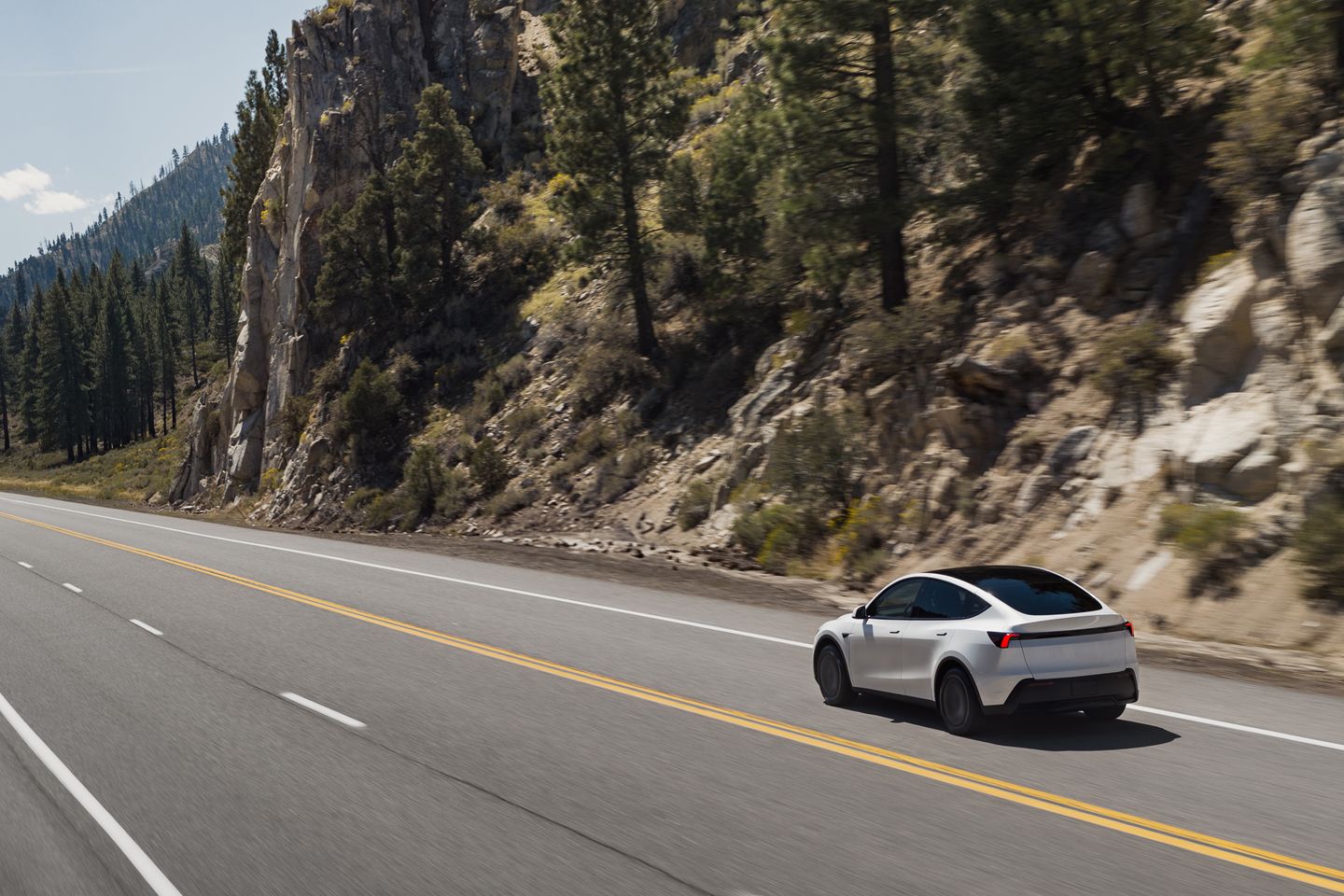
The 75kWh nickel-based NMC/NCA batteries used in Dual Motor (Long Range) and Performance Ys were slightly less efficient than the LFPs. You could go to a 100 per cent charge with them if you needed the extra range, but the recommended charging target for these NMC/NCAs was 80 per cent.
Unlike some manufacturers, Tesla didn’t have a maximum allowable capacity that triggered battery replacement if health dropped below a certain figure (usually 70–75 per cent) but they did have a stated minimum guaranteed battery capacity retention figure of 70 per cent for the Y. Tesla offered an extended 150,000-mile battery warranty on the S and X but not on the Y whose warranty was 8 years/100,000–120,000 depending on the variant.
If you do need to replace the entire battery on a Model Y (or a 3) in the UK it will typically cost you between £8,000 and £12,000, depending on spec. The pack itself accounts for between 60 and 70 per cent of that bill. The rest is for labour, diagnostics, calibration and ancillary costs. Tesla says that one of its design goals is to eliminate the need for servicing. With no regularly required maintenance and fewer moving parts to repair, the cost of a service is typically quoted at between £125 and £300, averaging out at £230, which is roughly what a non-Tesla outfit like Kwik Fit will bill you if you choose to go down that non-dealer route. A service usually involves a general visual inspection, brake fluid check, coolant top-up on the high-voltage cooling loop, software updates as required and a 12-volt battery test. You should be in and out in half a day.
Teslas are still cars at the end of the day and therefore not immune to some of the boring faults that non-Tesla owners have to put up with on a daily basis. CV joints and half shafts can fail. Sorting these out can be expensive. EV axle shafts interface directly with sealed electric drive units. Poor installation work can damage seals and contaminate the joint with gear oil.
CHASSIS
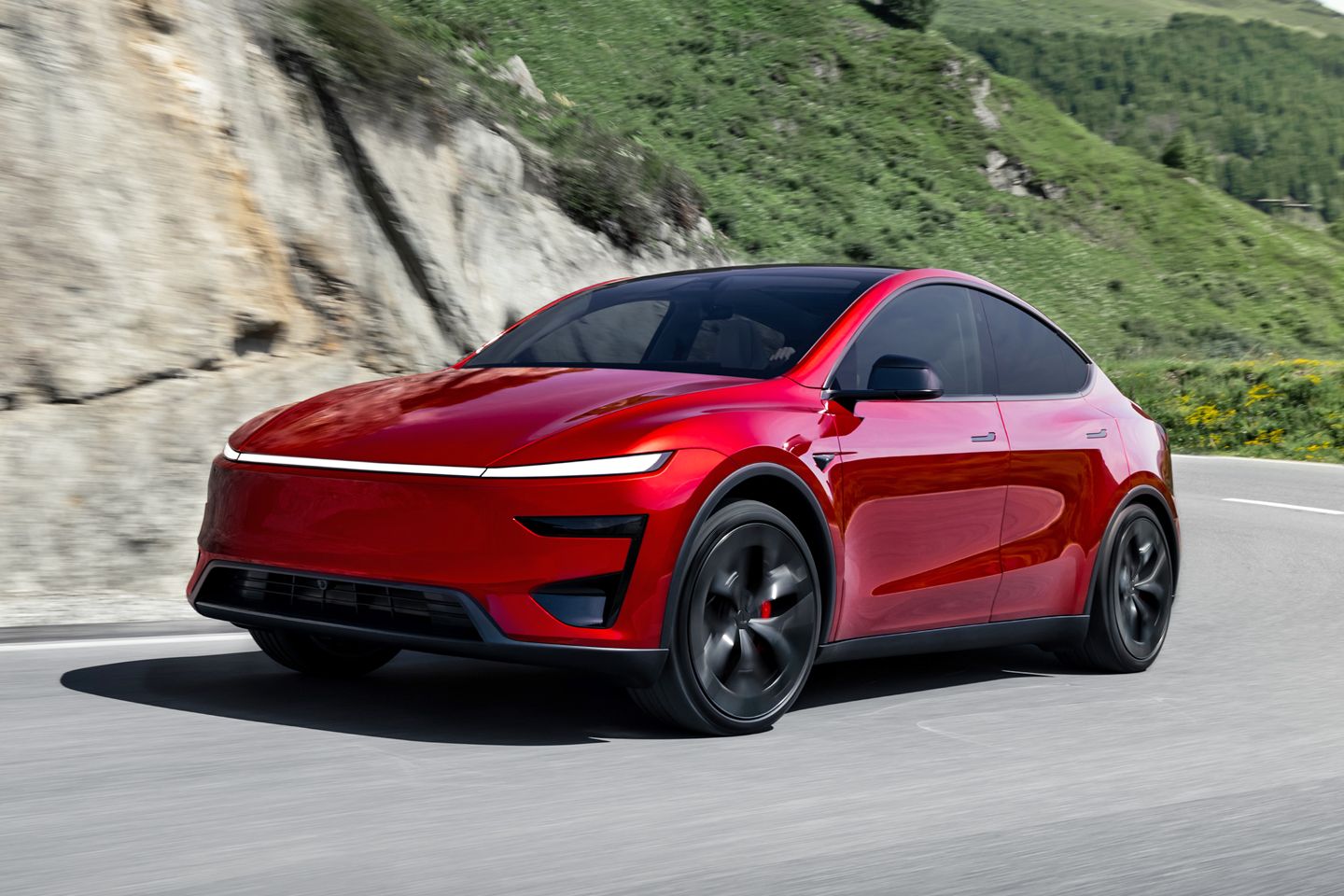
Tesla didn’t offer air suspension on the Y. Instead, you got coils and dampers, continuously variable on the Performance models with regular passive units on the more basic cars. The ride wasn’t super comfy on UK roads. There was meant to be a suspension revision in or around 2023 to de-jiggle it a bit, but if that actually happened, it was hard to notice the difference before and after.
There was a suspension revision with the 2025 Juniper that did bring more refinement to the ride, but even with that, you were more likely to describe the Y’s ride as firm rather than plush, with an overall driving experience that, although better than good, was never spectacular. Grip and traction were always strong, but if driver engagement was more important than family space, you were better off in a Model 3.
The Y didn’t have rear-wheel steering either, but it responded sharply to the helm, just like the Model 3. In fact, given its weight and size, some drivers found the speed of its responses a bit out of kilter with the physical limitations of a big SUV, a sensation that was thrown into extra relief by the high seating position. To calm the sometimes unwanted urgency, the number of steering wheel turns required to go from full left to full right was increased from 2.0 to 2.4 on ’25-on facelift cars. Bolts fastening the front suspension lateral links to the subframe were found to be insufficiently torqued on some early cars. Control arm ball joints and bushings will need looking at on any higher-mileage car you might be thinking of buying.
Clunking, metallic rattling or clicking from the steering on pre-2023 Ys was a known issue, in the US at least. Some 2023MY cars lost their power steering at 0mph, a fault corrected by an over-the-air software release. Notchy steering on cold-climate cars built between May 2022 and September 2024 was also fixed by an OTA update. Assisted cruise control acquired a reputation for occasionally dropping out during motorway lane changes. Tyre pressure monitoring systems have been subject to software updates. Performance cars had 21-inch alloys. Of the 19- and 20-inch options lower down the range, the 20s were more vulnerable to kerb damage.
BODYWORK
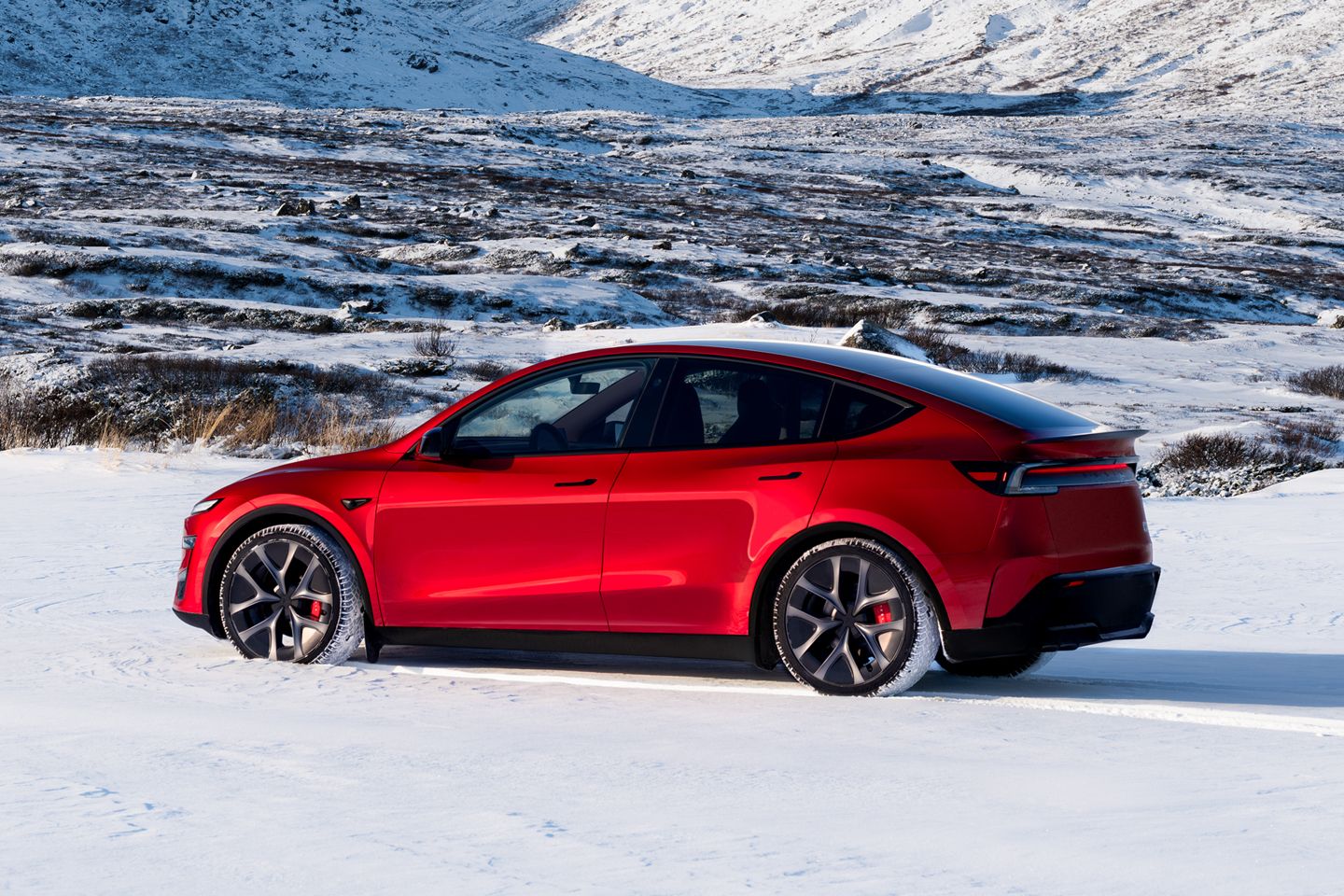
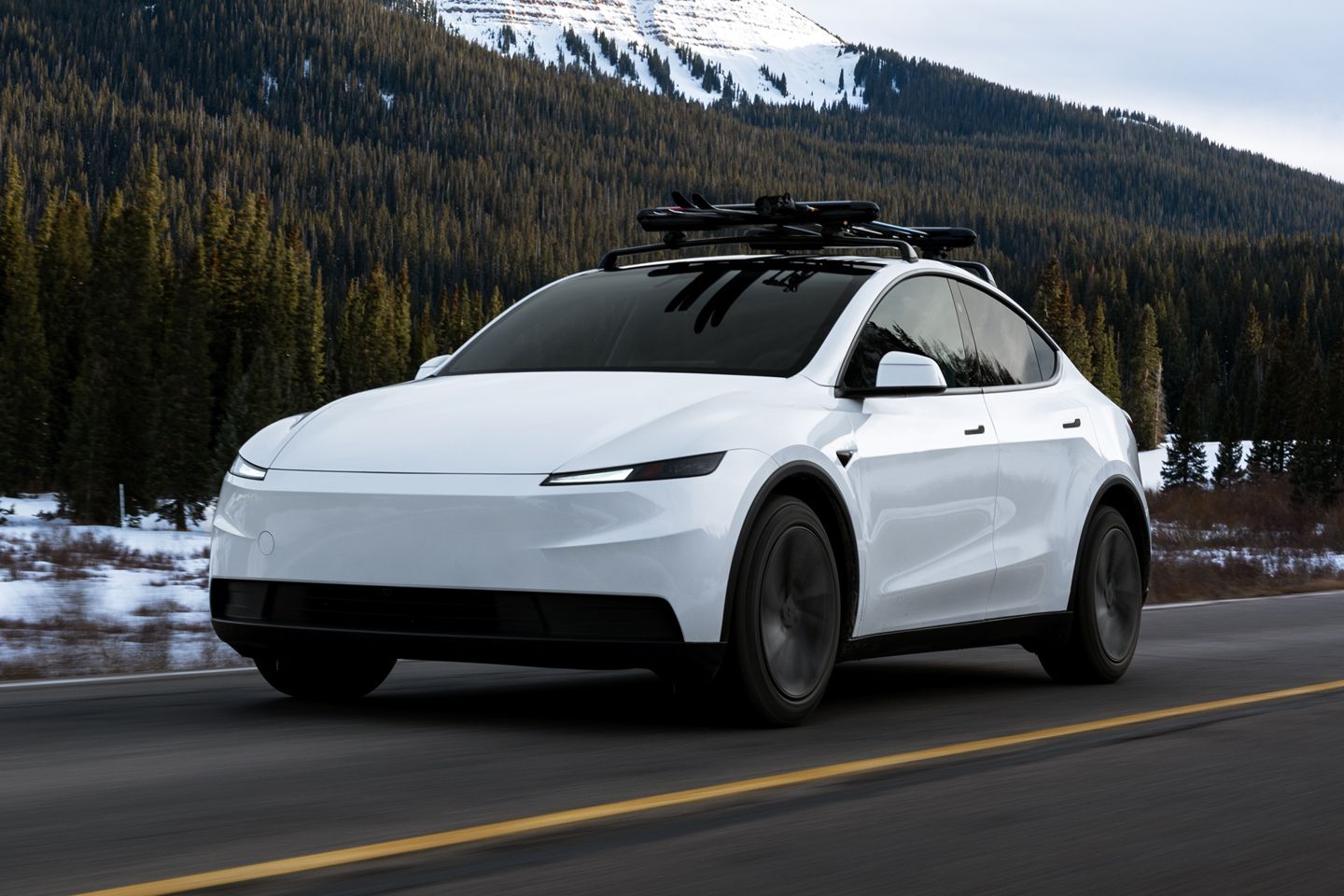
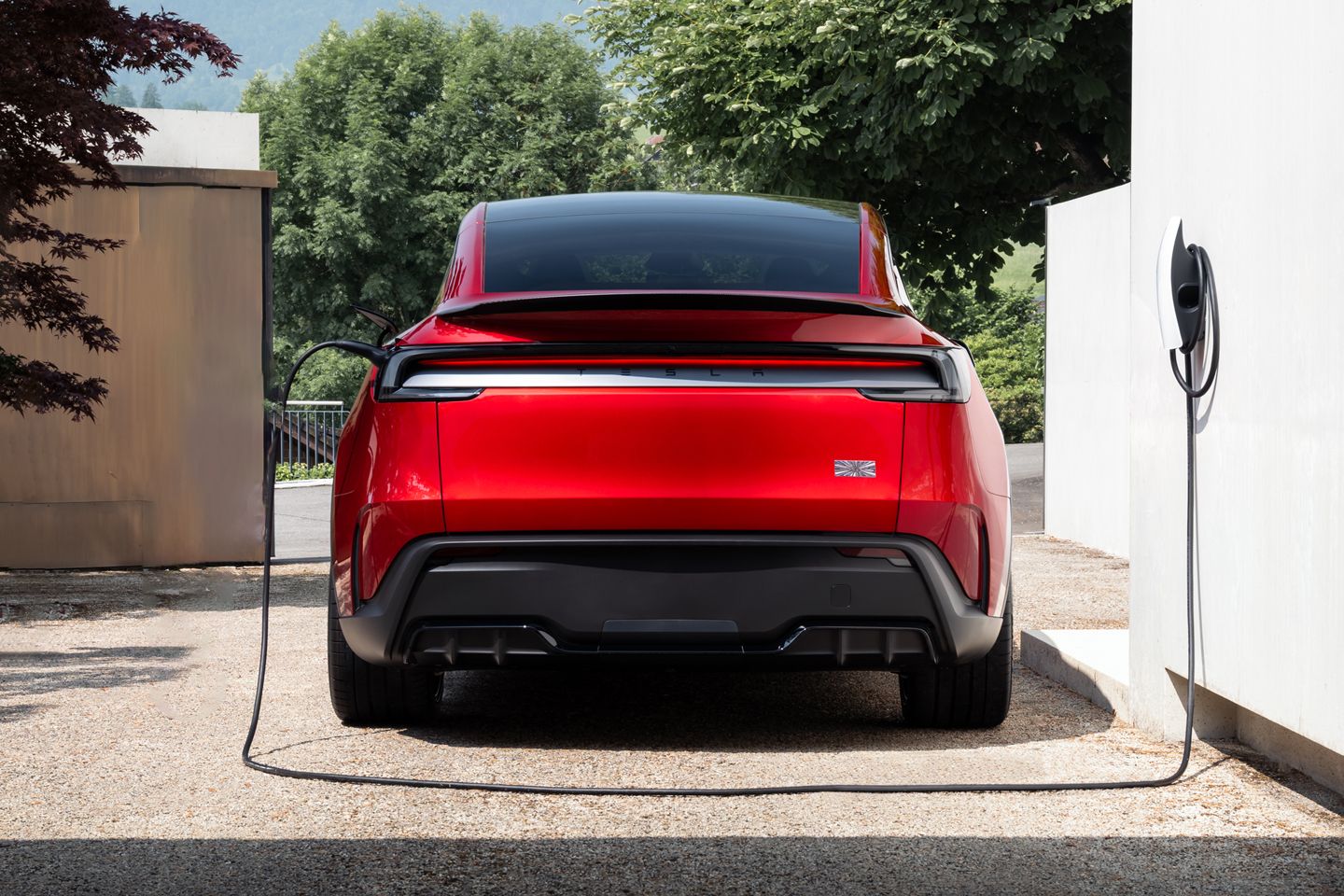
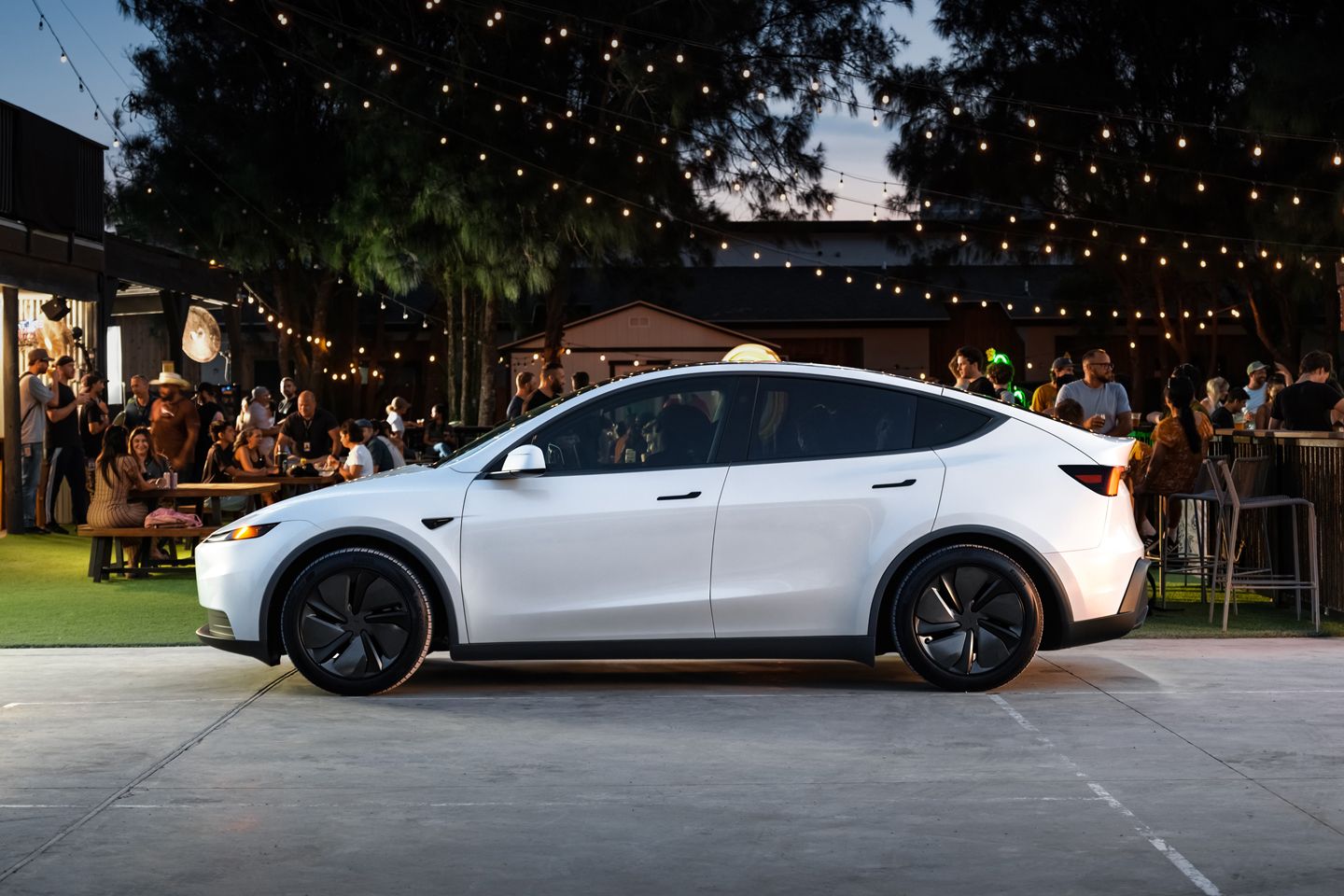
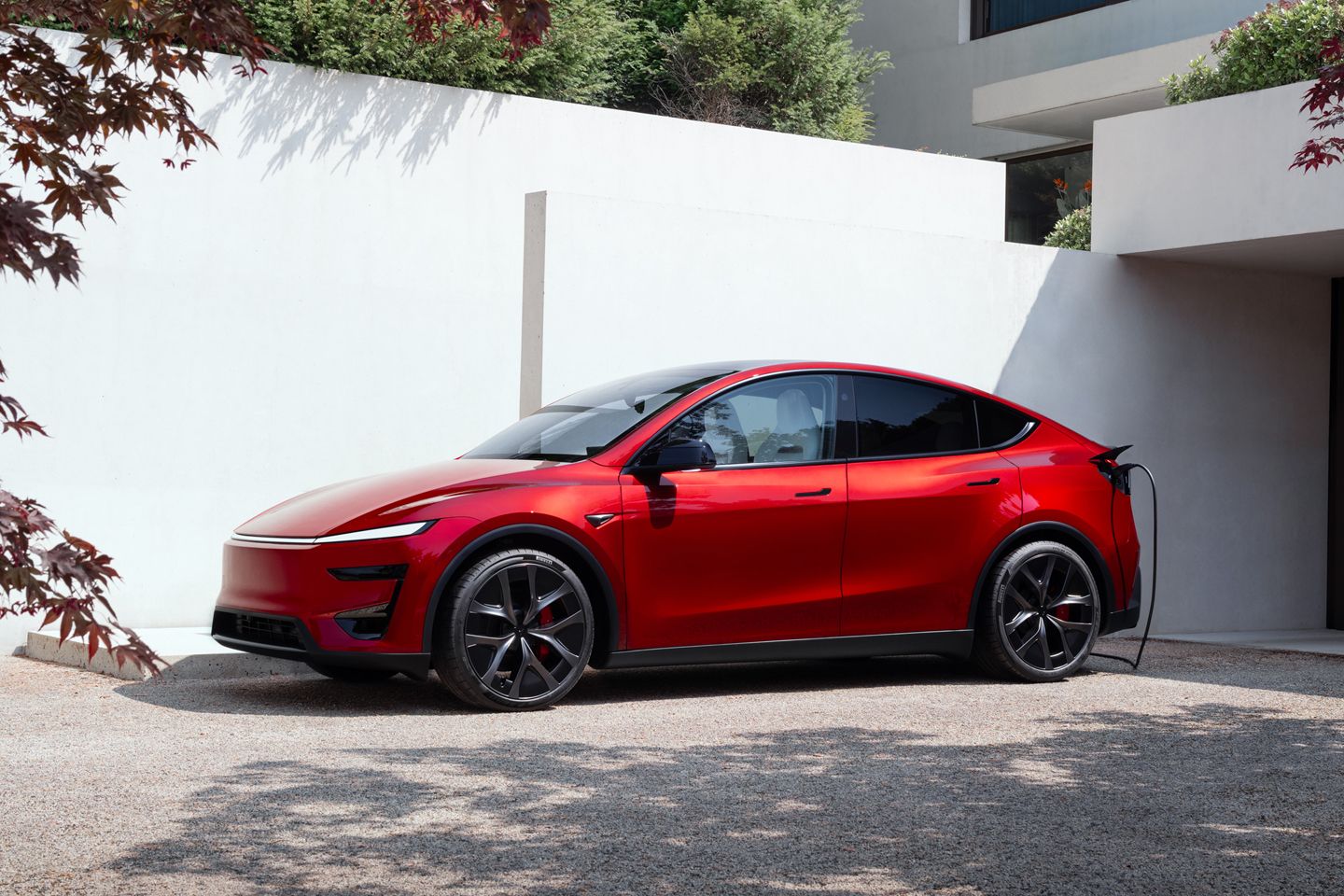
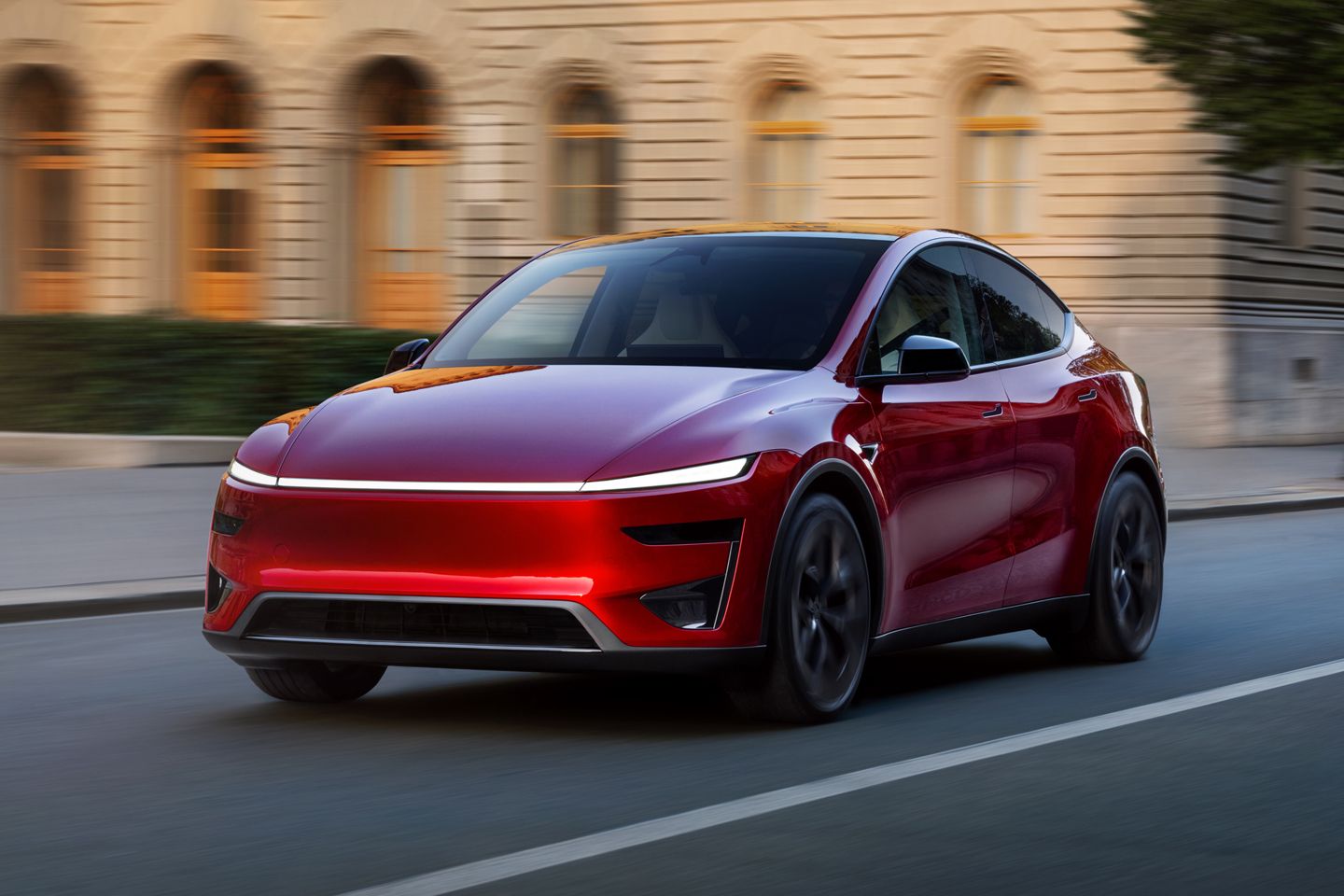
You could distinguish a Standard Model Y from the front by the filled-in black slashes below the headlights. These slashes were filled by foglights on Long Range and Performance Ys. A facelift inspired by the stylistically divisive Cybertruck might not sound a great idea to everyone, but that 2025 revision with new bumpers and LED light bars actually worked well, adding some much-needed sleekness to a design that previously came across as blobby and featureless, especially in the darker hues in which most Ys were finished.
Paint durability was the subject of some complaints on pre-update cars, specifically weak, scratched clearcoats and vulnerability to chipping. Mudflaps on the front wheels went some way towards protecting the flared-out trailing edges of the rear doors from blasting by road grit. Pearlescent white, the only ‘free’ colour, stood up best to everyday use. Grey, blue and black were cost options, with red a rare, even higher cost option that was the most difficult colour to blend in.
There were some old-school build quality issues on Ys, with around one in five suffering from panel alignment problems. Big/irregular gaps combined with imperfect seals at the base of the tailgate could allow water into the underfloor storage area and carpeting. The carbon tailgate spoiler attached by double-sided sticky tape sometimes came loose. Frameless windows were double-skinned, but the rear side windows could flap about, in some cases resulting in service centres replacing regulators and seals.
Active matrix headlights were fitted to Model Ys, but they weren’t set up to work on early cars. A 2024 software update sorted that. We think that rain sensors fell into the same category. Some reversing lamps failed on Model Ys built between February and July 2025, requiring dealer inspection and repair. Others have had moisture accumulate in their rear lights.
INTERIOR
Every Y was supplied with a keycard. To get in and activate the car you put the card in a specific place against the trim section between the front and rear side window and then leave the card on the slippy flat section of the centre cubby, hoping it wouldn’t slide off. A more practical keyfob was available at an extra cost of £170, or you could use your phone which was arguably the best solution as long as you didn’t lose your phone. To prevent phone thieves from nicking your car you were well advised to set up a 4-figure PIN security number on the screen.
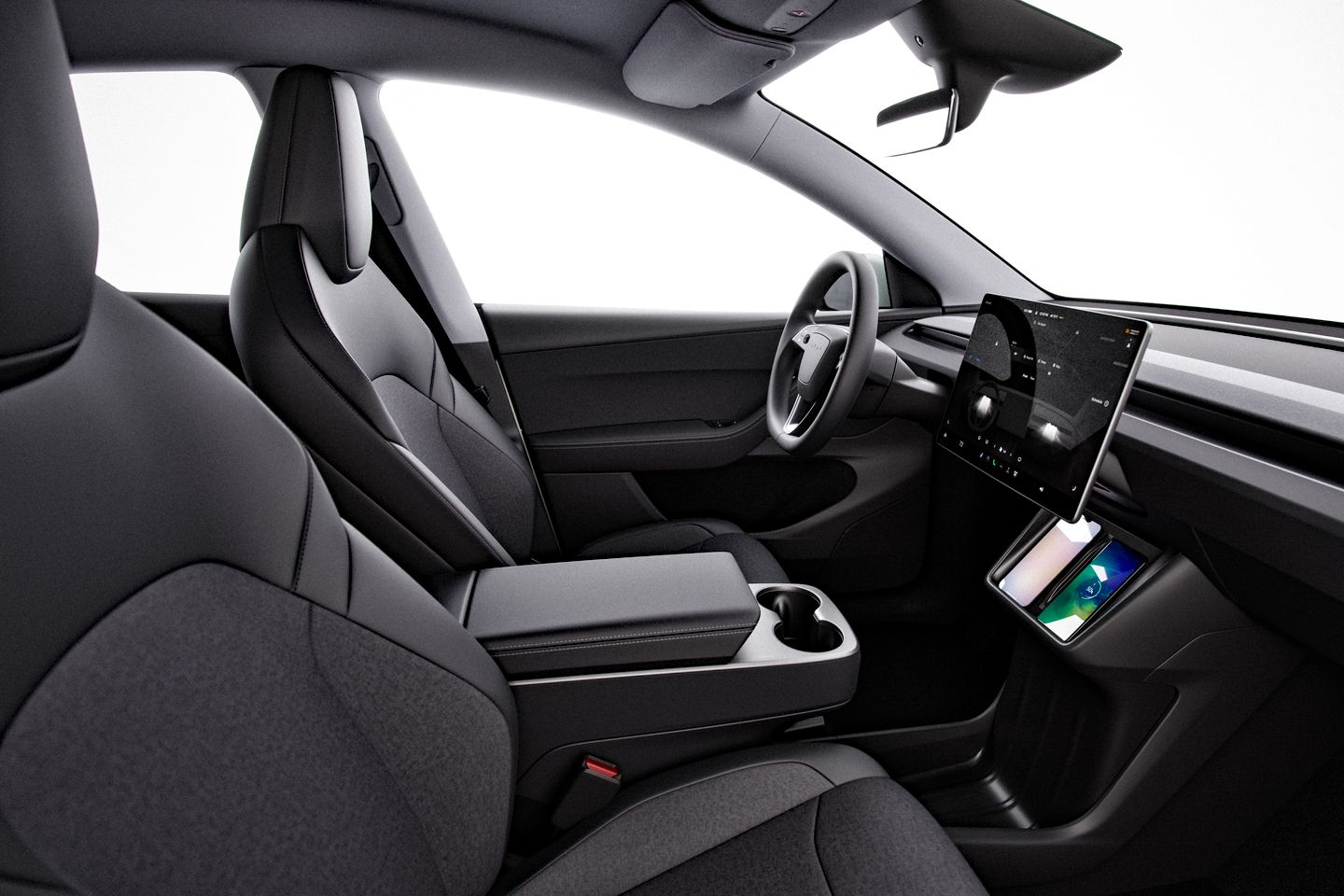
Now that we’ve seen how widely it’s been copied it’s fair to describe Tesla’s big central touchscreen as a pivotal point in car interior design. The 15-inch unit in the Y controlled everything promptly and intuitively and was the hub for over-the-air software updates. You either got on with the list-based presentation of options this design promoted or you didn’t. If you were using the car’s performance while making your way through an unfamiliar or heavily-signposted city, an ability to quickly assimilate choices and visual information and negotiate sub-menus was certainly useful.
Tesla’s refusal to put any information directly ahead of the driver through either a screen or a head-up display could seem perverse, as might the idea of selecting forward or reverse by toggling a screen slider. Fortunately you also had a physical stalk to select reverse, neutral or drive. The stalk was set up to require quite deliberate inputs from the driver, which was understandable if occasionally frustrating from a safety point of view, but at least you had a physical means of engaging drive.
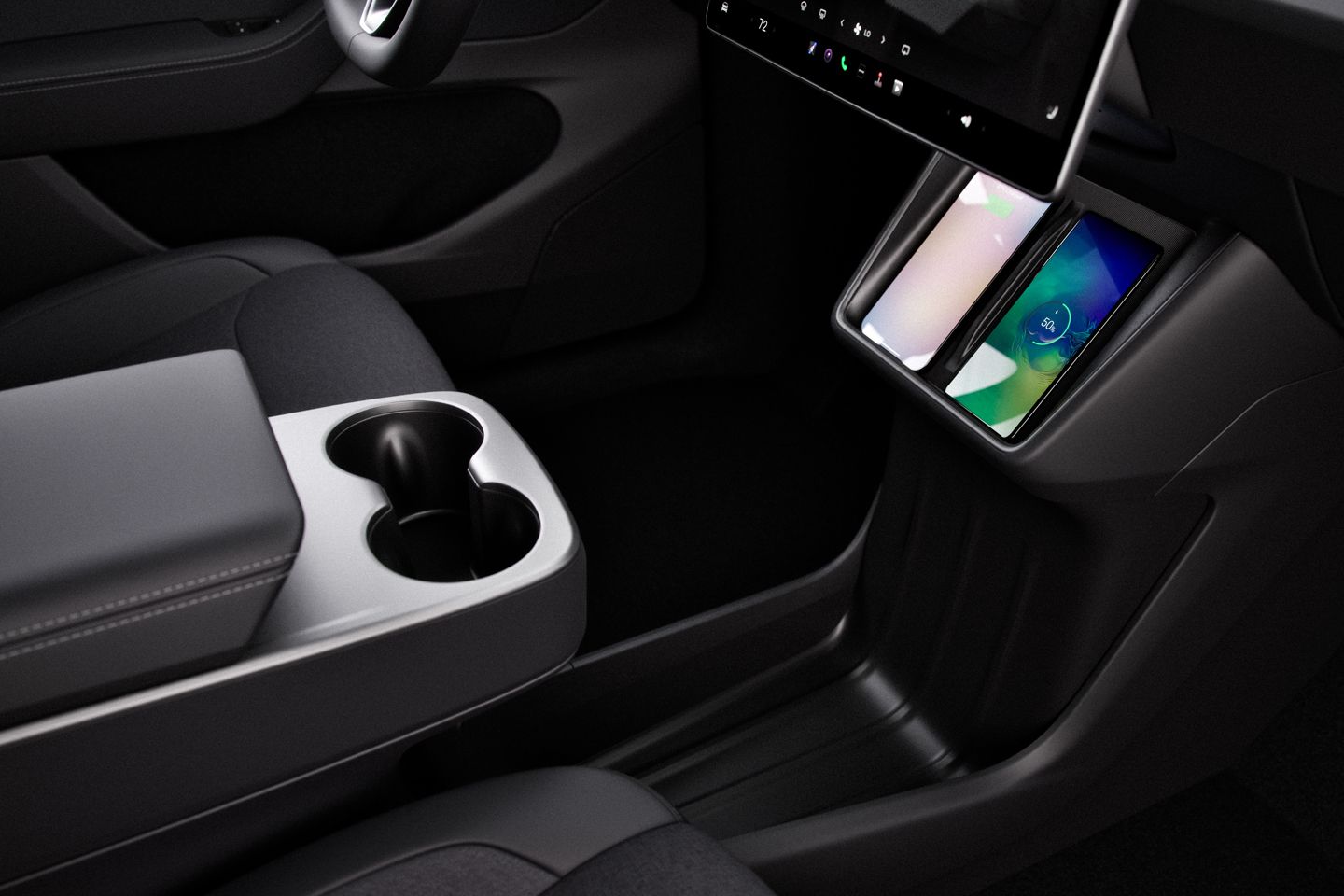
That was handy because a blanking-out of the screen could be a thing on the Y. Losing the screen knocked out many functions including speed readout, indicator noise, the ability to customise wipers or mirror positions, battery level readouts and more. Rebooting it by the recommended method of pressing down and holding both scroll wheels on the steering wheel didn’t always work. Holding the wheels down while pressing the brake pedal for 60 seconds sometimes brought better results, as in a more general way did Tesla’s switch from the early MCU2 computer to the MCU3, but for some owners the only permanent fix to the black screen issue was a new screen. If the screen stayed on when you got out and shut the doors, that usually meant you needed a new seatpad sensor. On the plus side, owners of used Ys should never be unduly bothered by sticky button syndrome because there were so few of them.
In terms of the toys you got, we could write a completely separate story on that. There was little to choose between the three main specs. All of them were comprehensive, although the absence of CarPlay or Android Auto could seem peculiar to non-Tesla owners accustomed to having one or both of those in their cars. There were other ways to skin that particular cat, i.e. paying £9.99 a month for a Tesla connectivity account that gave you access to pretty much any functions requiring an internet connection – web browser, gaming, music, video streaming etc. You also had useful features like remote cabin pre-conditioning and location tracking, along with the usual cutesy Tesla touches like Boombox that could be used to create rude sounds or Dog Mode which let you leave your pooch in the car with a tail-wagging cartoon mutt on the touchscreen next to a note saying ‘My driver will be back soon, don’t worry, the heater is set to (insert reasonable temp)’. Usefully, the Y had not one but two wireless phone charging panels in the front and two USB-C ports in the back.
On Model Ys and Model 3s built after May 2021 Tesla Vision (Tesla’s camera-based autopilot system) replaced the previous radar-based system, which we think Tesla still uses on the Model S and Model X. The disabled radar hardware will still be present in Ys and 3s built before May ‘21. Tesla Vision was a bit dicky to start with, but by 2024 it was working well. The cameras for it could play up though, usually signalled by a slew of random safety feature error messages on the screen. Rebooting sometimes affected a cure, but warranty camera replacements were fairly common. There was a voluntary recall on the loss of rearview camera functionality on 2023–25 model year Ys.
The Y’s vegan leather interior was durable and quiet (quieter still on the facelifts) and very airy too, thanks to the high seating, large expanses of glass and a panoramic roof that was bigger than the Model 3’s. All the seats were heated and comfortable. On the downside, light-coloured Y dash and door trims caused distracting reflections in the windows and door mirrors. Darker Alcantara trim pieces were available on the aftermarket to help resolve that.
Misaligned trim parts and rattles from the rear seat area were a thing on early cars. Sometimes the noises were caused by coins or other hard objects that had dropped into the (oddly) unscreened floor vents under the front seat backs. The twin-amp 14-speaker with subwoofer sound system made up for these untoward noises by delivering a very good audio experience. Hi-fi buffs commented on a certain echoey quality, but less finicky owners shrugged that off as an acceptable consequence of the minimalist and, in parts, hard-surfaced interior.
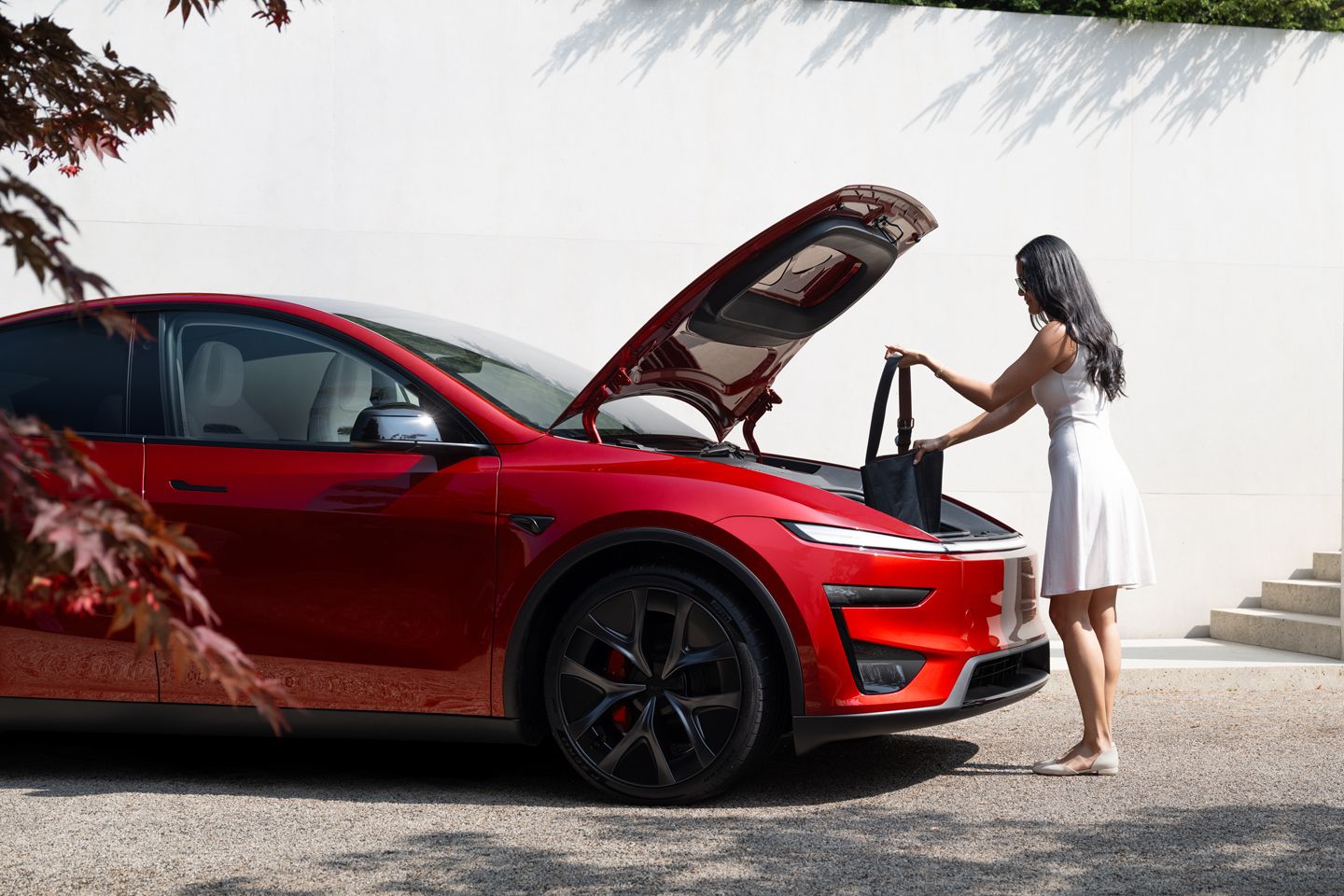
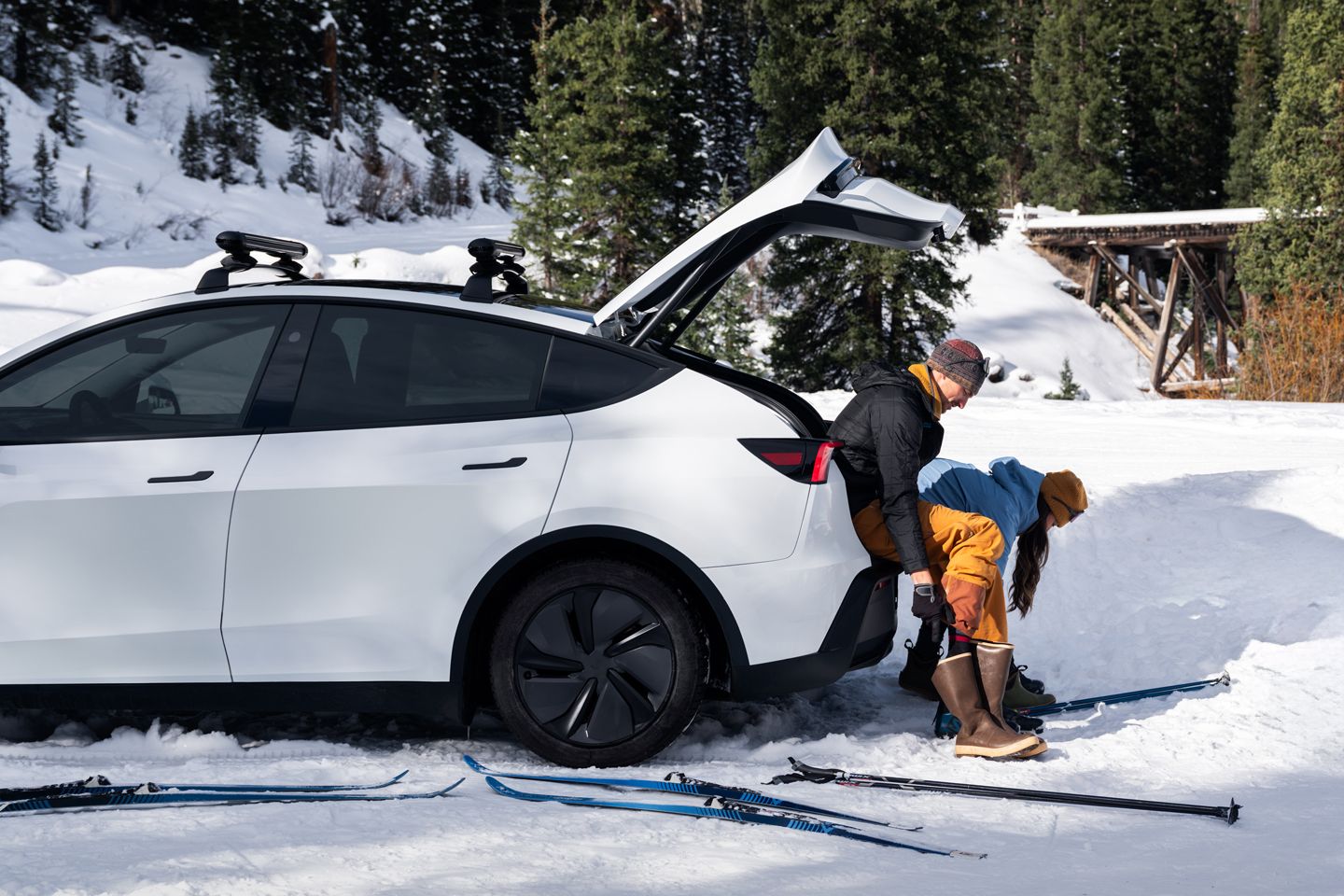
The Model Y was a very roomy car. There was more space in the back of the Y than in the back of the 3, rear seat passengers enjoying the luxury of reclinable seat backs, a flat floor and front seats they could tuck their feet under. For the ’25 update, rear-seat passengers were given a new 8-inch touchscreen to go with the improved materials and ambient lighting. With the rear seats dropped (electronically) and substantial additional space available both under the boot floor and in the 120-litre ‘frunk’ or ‘froot’, the Y offered a potential total cargo space comfortably in excess of 2,100 litres. Even with the back seats in place you still had a very generous 850 litres. The big electronic tailgate made loading large items easy, especially in early UK cars that didn’t come with a parcel shelf, and there was plenty of in-cabin storage. A roof rack was on the options list, as was a towing package for pulling up to 1,600kg – though making use of that could negatively impact your range by as much as 50 per cent.
Moisture in the HVAC system could make the cabin whiffy in very rainy weather or if you forgot to select Car Wash mode. The Sentry alarm mode has been known to be triggered by thunderstorms, loud noises, flashing lights or vibrations from the HVAC system.
PH VERDICT
The Model Y played a huge part in helping Tesla to take a big chunk of the EV high ground. Conceptually, and in actuality for the most part, it was a superb family car. You may have gained the impression from this guide that a fair bit has gone wrong with the Y but most of the stuff we’ve mentioned here hasn’t been serious. The incidence of major, mobility-compromising issues has actually been very low. Imperfect panel fits, rattles here and there and the odd electronics glitch have all been noted by owners, but none of these quibbles are exclusive to Tesla.
Going into Tesla ownership with expectations of Bugatti build quality was a sure route to disappointment. In terms of quality, both perceived and actual, BMW iX3 owners will justifiably look down their noses at the Model Y but Kia EV6 owners probably wouldn’t. If you asked Tesla directly, they probably wouldn’t lay claim to building the most perfect cars on the market. What Tesla has done well with the Model Y is to provide a motoring solution that doesn’t involve much garage downtime, either for fixing faults or for general maintenance. Other car companies have rightly been accused of using their customers as development engineers, issuing recalls for flaws that should have been ironed out before cars went on sale and keeping those cars off the road for weeks or months at a time. By contrast, a large percentage of the problems arising with the Model Y have been resolved by over-the-air updates. It just seems like a more benign, less invasive process.
Nor should we forget that Tesla has only been around for the blink of an eye relative to the other big automotive players. In the Model Y we’re talking about a hell of a lot of cars sold. Not everyone approves of the brand or of its ownership structure, but if you take the politics away and view Tesla products objectively, it’s hard not to be impressed. It’s pretty remarkable what they’ve achieved, even if some of the start-up sheen has gone. Buying a high-mile used Y for an initial outlay of £15k or less and then keeping the number of heat-generating DC rapid charges and passenger-petrifying launches to a sensible minimum could be a recipe for a long and cost-effective ownership experience. By the time you need a new battery, if you ever do need one, prices will have come down and efficiency will have gone up.
In November 2026, there were over 600 examples of the Model Y to choose from in our classified section. Used prices reflect the wide availability, with two RWD single-motor examples coming in at under £16k and a raft of cars between that and £20k. Here’s one of PH’s two cheapies, a ’22 RWD in blue with 111,000 miles and a healthy battery readout for £15,995. Dual motor cars are available for not much more than that but they will have more miles on the clock, like this ’23 Long Range that’s about to cross the 130,000 mark for £16,599. The most affordable Performance we found on PH Classifieds was this 80,000-mile example at £23,495.


Gassing Station | General Gassing | Top of Page | What's New | My Stuff