
Damp issue, what might be causing this?
Discussion


Any damp experts here, or anyone experienced an issue like this before?
There is a completely rotten skirting board in the hallway of our 1930s house (with open sub floor).
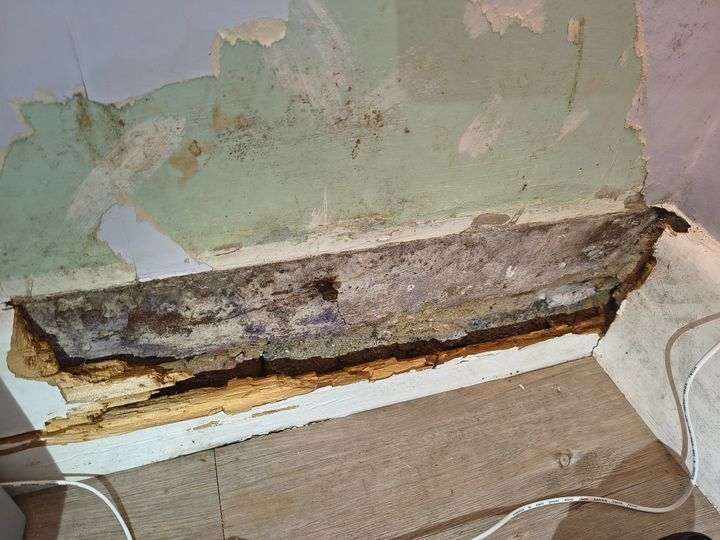
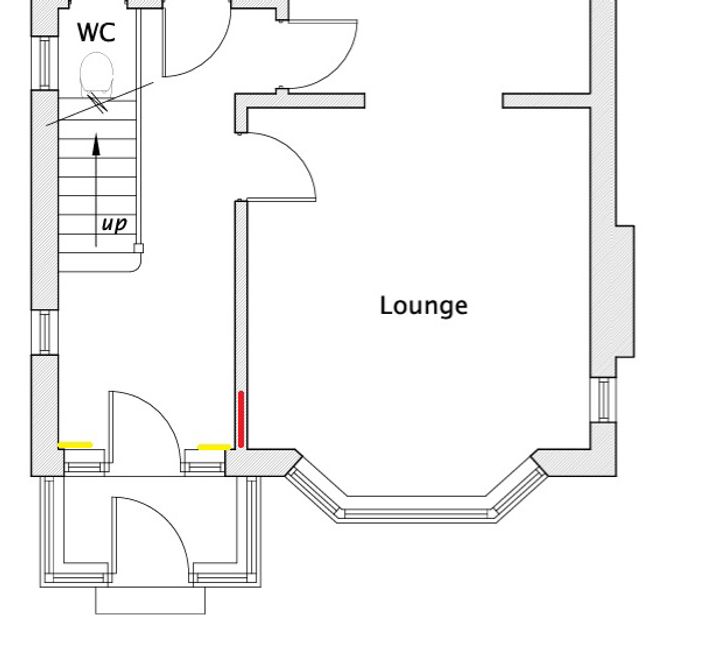
It is an internal wall, marked by the red line on the floor plan below. There are also some lesser damp patches under the windows marked in yellow. The wall is papered and the paper is damp. In the worst section above it has come away from the wall, the skirting is completely soft and rotten and crumbled away (from the back). On the opposite wall in the lounge the same thing appears to be happening, albeit to a lesser extent.
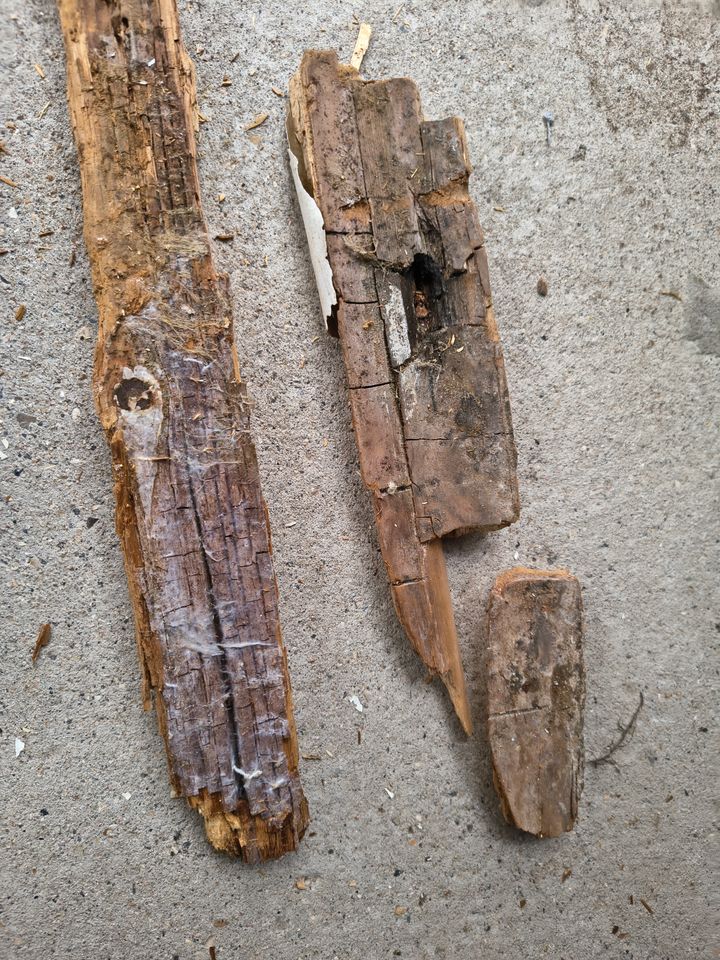
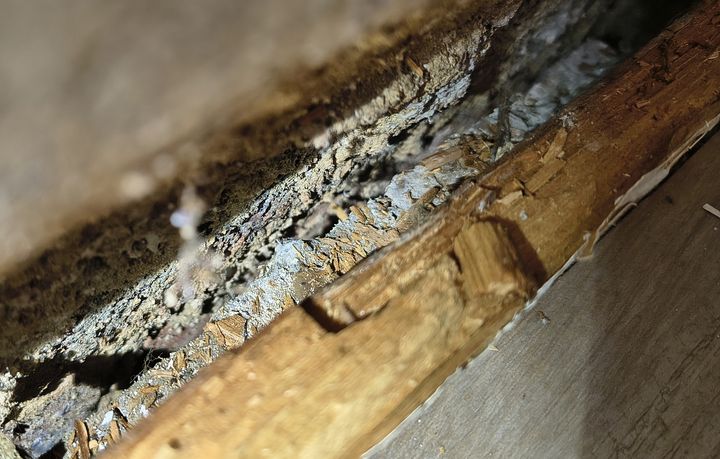
There is noticeable cold air coming up through a gap from under the floor (hard to get a decent pic!). It is quite draughty so underfloor ventilation is working, but could cold dampish air be enough to do that to the skirting? Is it normal to have such a gap behind the skirting to the underfloor?
I have had one person round to look and they just want to cover it up with chemical DPC and a damp proof membrane all over the wall, which seems to me overkill and not really identifying the source of the issue.
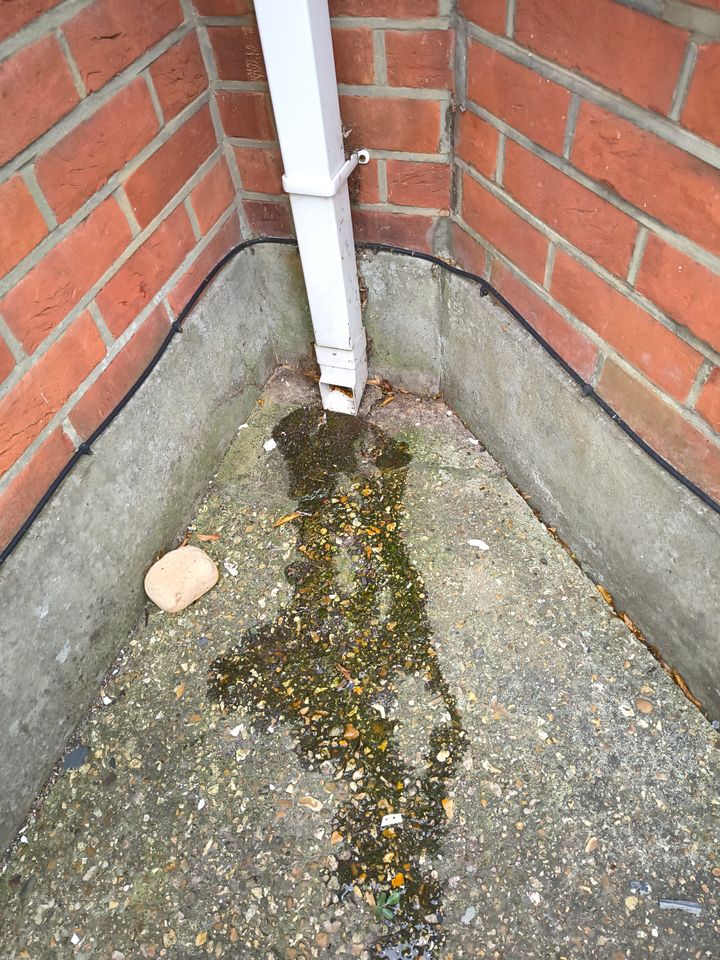
Could it be wet under the floor and the damp air causes this? Or is it the DPC? I'm less sure about penetration through the wall because it is low down, and internal wall (albeit attached to a section of external wall). There is a down pipe at the front of the house which drains the porch roof. It goes out onto concrete, it does drain away as shown although there is some cracking in the concrete around it. The flashing around the porch looks ok but I m not an expert.
How would you approach this? How can I identify the source, any ideas, or would you just cover it up with damp proofing as above?! I could get a damp survey done but it is hard finding someone trustowrthy who is not just selling a solution - but that is likely my next course of action.
There is a completely rotten skirting board in the hallway of our 1930s house (with open sub floor).
It is an internal wall, marked by the red line on the floor plan below. There are also some lesser damp patches under the windows marked in yellow. The wall is papered and the paper is damp. In the worst section above it has come away from the wall, the skirting is completely soft and rotten and crumbled away (from the back). On the opposite wall in the lounge the same thing appears to be happening, albeit to a lesser extent.
There is noticeable cold air coming up through a gap from under the floor (hard to get a decent pic!). It is quite draughty so underfloor ventilation is working, but could cold dampish air be enough to do that to the skirting? Is it normal to have such a gap behind the skirting to the underfloor?
I have had one person round to look and they just want to cover it up with chemical DPC and a damp proof membrane all over the wall, which seems to me overkill and not really identifying the source of the issue.
Could it be wet under the floor and the damp air causes this? Or is it the DPC? I'm less sure about penetration through the wall because it is low down, and internal wall (albeit attached to a section of external wall). There is a down pipe at the front of the house which drains the porch roof. It goes out onto concrete, it does drain away as shown although there is some cracking in the concrete around it. The flashing around the porch looks ok but I m not an expert.
How would you approach this? How can I identify the source, any ideas, or would you just cover it up with damp proofing as above?! I could get a damp survey done but it is hard finding someone trustowrthy who is not just selling a solution - but that is likely my next course of action.
Obviously you would be better having the RWP going into a drain. That cement skirting externally may be bridging the DPC and could be a previous misplaced attempt to resolve the damp that has actually made it worse..
Since the internal plaster will needs to be replaced regardless the first thing I would do is remove a brick or two internally just above floor level and check that the cavity is not blocked/bridging the DPC - this is not uncommon IME in houses of this age and type.
Like this:
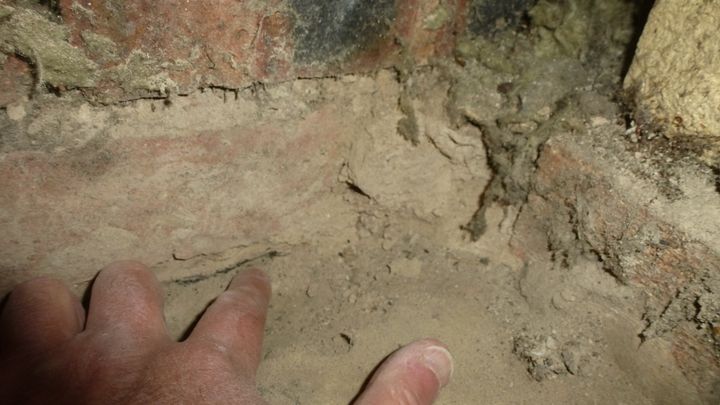
Since the internal plaster will needs to be replaced regardless the first thing I would do is remove a brick or two internally just above floor level and check that the cavity is not blocked/bridging the DPC - this is not uncommon IME in houses of this age and type.
Like this:
Edited by Lotobear on Wednesday 25th November 09:37
Not an expert, just moderate DIY loony.
If the wall above it isn't showing any signs of damp, I would say it's not the porch roof. I would advise getting a better look at the wall under the floor. I would say there is water seeping in and wicking up the wall which would need fixing as any damp proofing will just push it elsewhere.
Edit to add, much more expert advice above...
Edited by GIYess on Wednesday 25th November 09:49
You have significant evidence black mould which pretty much discounts rising damp as a cause.
Next step, if it were mine, would be be to have a look under the floor, firstly to check that the joists are not similarly rotting and to get more information as to the cause.
As above, likely to be blocked cavity, dpc bridged or the external plinth/ drain, or combination of.
You probably have some condensation but that wouldn't rot the skirting.
If the porch floor is concrete that may be bridging the original dpc. It should be below the joists but above any solid floor, so problems can occur when the two meet.

How is the porch roof? In my experience significant damp is usually caused by ingress from above rather than rising damp. Also check your downpipe isn't cracked somewhere, it can be quite hard to see but should be obvious in the rain
Edited by BugLebowski on Wednesday 25th November 11:40
Gassing Station | Homes, Gardens and DIY | Top of Page | What's New | My Stuff