
Toyota shows sports car concept
New FT-HS offers low weight and high performance
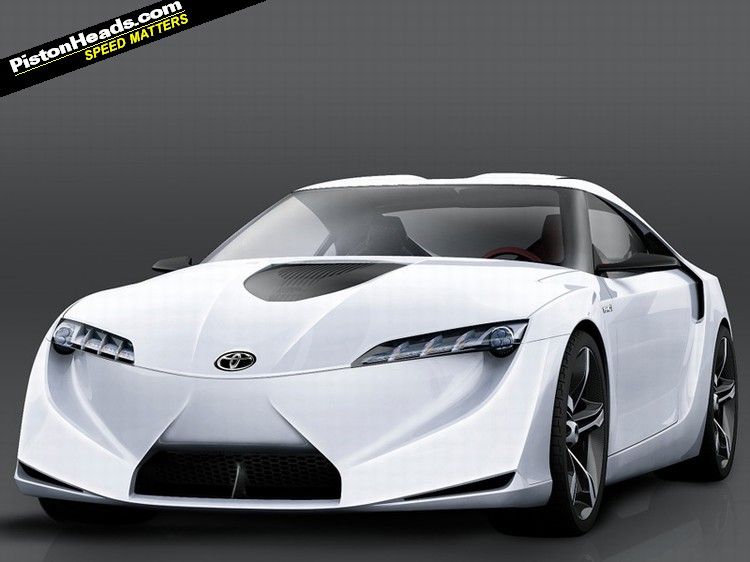 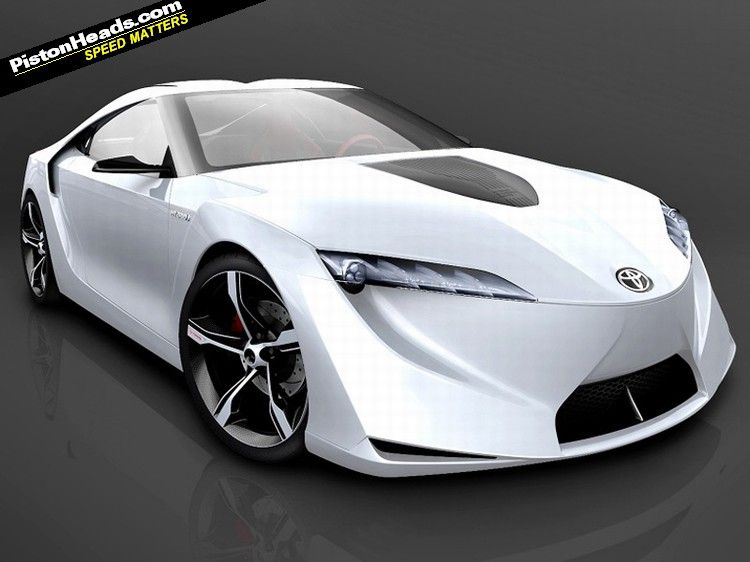   |
Toyota is showing off this FT-HS hybrid sports concept at the Detroit auto show next week. It's intended to be a pointer towards the sports car for the 21st century.
The FT-HS pairs a potent hybrid powertrain with sports car fundamentals, said the Japanese firm, as it marries hybrid technology with lightweight aerodynamic materials. Toyota reckoned that it's designed to be "fun to drive with eco-friendly benefits such as ultra-low emissions and fuel efficiency".
This two-plus-two concept is a front-engine, rear-drive sports car with a projected 0-62mph acceleration in the four-second range. A 3.5-litre V6 outputs about 400bhp.
Toyota's blurb reckons that the FT-HS "expresses the core values of a Toyota Brand design strategy that combines two key elements: J-Factor and Vibrant Clarity. J-Factor refers to the local and global acceptance of Japanese-inspired design and cultural sensibilities. Vibrant Clarity is the design language used to express the J-Factor much in the same way that L-Finesse is the language of the Lexus Division. It is the combination of perfect imbalance, freeform geometrics and integrated component architecture. The result of these three elements is subtractive mass, a minimalist style that is not only lightweight, but also looks lightweight."
The exterior design was led by CALTY designer, Alex Shen. From a design perspective, the theme of the FT-HS achieves sleek, taut surfaces in its exterior features, especially in the doors and body style. The front and rear have been sculpted to remove mass around key functional components. Freeform geometrics define the integration of fluid surfaces contrasting hard-edge “Aero-Corners” which promote smooth airflow and reduce turbulence.
The roof has a scooped-out section designed to reduce aerodynamic drag and provide head room at the key areas. Made from carbon fibre Kevlar, the roof retracts so that the roof panel and back window pivot fluidly in a downward motion to stow in the rear seat space.
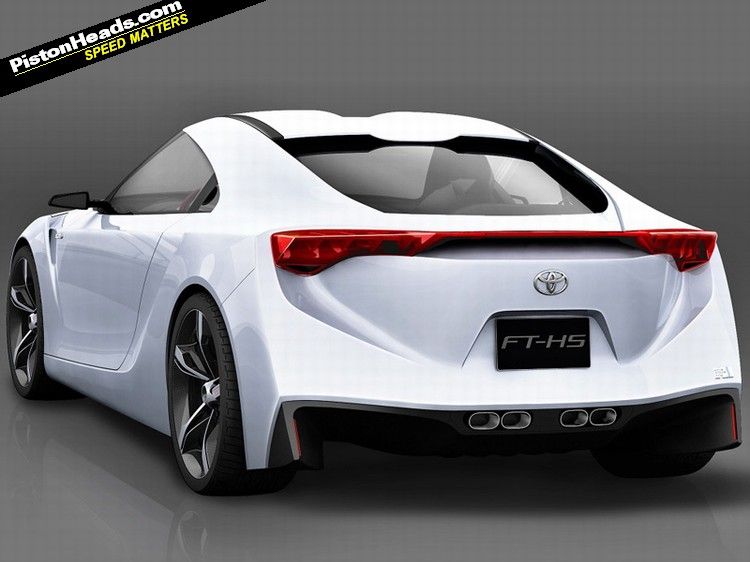
The vehicle’s triangular profile has a floating “C” pillar, aero corners, a full upper-body pan, and innovative open top, said Toyota (with a straight face, apparently). A bonnet features a scalloped channel, exposing the hybrid engine. Integrated component architecture can be seen in the aerospace-inspired lighting. The tail lamp unit spans the entire rear, and has an integrated retractable spoiler. Light-emitting diode (LED) clusters are located in the headlamps and the wing for energy- efficiency and decreased heat loss. Other exterior features include a speed-activated wing that elevates at high speed for additional stability and traction. The rear showcases a carbon fibre lower diffuser with integrated wide exhaust and carbon fibre wheels.
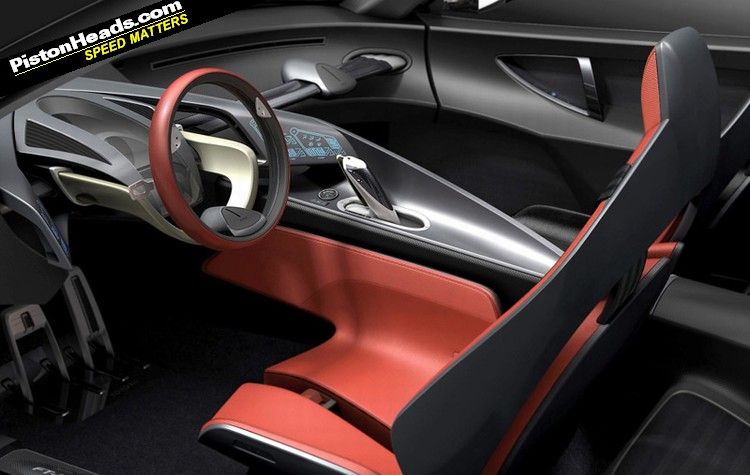
The interior was created by CALTY designer, William Chergosky and exudes sleekness, technology, and performance. The lean skeletal look is achieved with exposed cross-car architecture and high-tech materials such as carbon fibre, and titanium.
FT-HS’s interior features create a dedicated driver’s cockpit and include subtractive mass expressions such as cross-car instrument panel structure and delta wing driver pod. The delta-wing driver’s pod integrates many functions into a lightweight structural unit. The driver gets touch-trace sensors that act as tactile guides for finger controls when travelling at high speeds.
By eliminating the “B” pillar and creating a suspended “C” pillar, the minimalist style works in conjunction with subtractive mass, said Toyota. An integrated instrument panel surrounds the driver, creating an enclosed pod effect.
Seating is optimised for a lightweight appearance and function: the seating accommodates four and then coverts to a two-seater when the roof retracts. The passenger-seat area is open with an exposed airbag on the cross-car beam.
A telescoping hub-less steering wheel incorporates semi-automatic paddle shifters and allows the instruments to be shifted forward in order to shorten the driver’s focus-time between them and the road.
It's a joint undertaking of CALTY, Toyota’s North American-based, research and design centre located in Newport Beach, California, and Toyota’s California-based advanced product strategy group.
"Drivers today are not satisfied with cars that are simply fast,” said CALTY VP Kevin Hunter. “In addition to driving enjoyment, today’s drivers are concerned about safety, ecology and social responsibility.
So the design team was assigned the task of creating a mid-priced sports car that integrates ecology and emotion in a concept that addresses the question, “What is a suitable sports car for the 21st century?”.
Be nice if they built it...


WTF? Did Carcoat Damphands write that copy for them?!?
There is SO much marketing-babble (I so nearly used another b-word) in there that you just want to laugh, not take it seriously...and I'm a major supporter of light-weight cars. That said, a convertible hard-top and modern legislation will mean this 'lightweight' will still be >1,250kg.
In general terms it's OK - right proportions and outline, some nice ideas (I DO like the floating buttress on the 599 that this has shamelessly copied), but it's classic magpie-overkill from an underconfident (or overconfident) designer.
I blame CAD. A simple shape drawn by, say, Marcello Gandini on a piece of paper looks dull rendered in single lines on a computer, but do you think any great artist would use a computer? No, exactly.
Nice to see they're not abandoning the sports car market though. With the Celica, Supra and MR2 gone I thought they were going back to four-wheeled gruel.


 I hope it is the new Celica or Supra and they make it then I shall save the pennies and buy one.

Lexus LF-A at Pistonheads
mm. they never do. I dont know why they bother with interior designers - they rarely change over the years compared to the radical restyling of the outside, and they never look like the proto types.
Drugs..........
Ali.

Gassing Station | Japanese Chat | Top of Page | What's New | My Stuff