
How much of photography is Editing?
Discussion


My opinion is that once you do more than basic level adjustments or the digital equivalent of dark room work you are moving from photography to graphic design. I wouldn't feel the same satisfaction from an image I had to heavily alter in photoshop that I would get from something that looks right straight from the camera.
To me, the whole point of photography is to capture an image, not create one.
To me, the whole point of photography is to capture an image, not create one.
 my sentiments too i tend to bin images that arent right
Gemm said:
Just as much as good old film photography was dependent on the art of printing. 
poah said:
you still need to have a good picture to start with.
tank slapper said:
To me, the whole point of photography is to capture an image, not create one.
All correct. There's nothing wrong with manipulation either, since it's as old as photography itself.
It's said that the ancient Egyptians got close to, and desperately wanted to, have likenesses through chemical means. They were obviously keen that their revered Pharaohs were retained forever.
I bet they would have used Photoshop if they had it.
The answer has to be that, in the context within which the image is viewed, is the manipulation justifiable?

Reddening a sunset - maybe
Cropping in to remove distractions - may be
Cloning out Stalin's enemies - perfectly reasonable
Adding in some pretty fairies - abso-bloody-lutely
Depends on the manipulation. If we're talking about firtling with the RAW image (exposure, fill, gamma correction, etc.) then I think that that's quite justified and, indeed, essential. Because CCDs have a linear response, half of the information in any pixel goes into the top stop of exposure. If your CCD has, say a five-stop range, then the bottom stop gets 1/32nd of the avaiable pixels for all its detail. I'm gradually being won around to the idea that you should slightly over-expose (to get as much of the histogram on the right as you can without blowing anything), and then pull it back in post-processing. That way, you're capturing low- and mid-range information in more bits of the pixel, so you can adjust without losing quality.
As for more extreme manipulation, like cloning to get rid of intrusive objects, why not? I have a perfectly good picture of the manor house at Llechwedd (see the "Your favourite picture thread) that was spoiled by a couple of cars in the mid ground. So I took them out. Again, it's down to what you want - if you just want a straight picture, don't fiddle with it too much, but if you're after something else, then why deny yourself the expression available by manipulating it? as long as you're not deliberately trying to deceive for personal gain, it's all about using the tools available. If Bach were alive today, would he eschew the synthesiser? I doubt it.
As for more extreme manipulation, like cloning to get rid of intrusive objects, why not? I have a perfectly good picture of the manor house at Llechwedd (see the "Your favourite picture thread) that was spoiled by a couple of cars in the mid ground. So I took them out. Again, it's down to what you want - if you just want a straight picture, don't fiddle with it too much, but if you're after something else, then why deny yourself the expression available by manipulating it? as long as you're not deliberately trying to deceive for personal gain, it's all about using the tools available. If Bach were alive today, would he eschew the synthesiser? I doubt it.
I'll often take two or more images knowing that I'll be combining them in PS. This is not 'cos I want the work, or want to fool anyone, it's because I know the camera can't capture what I'm seeing.
This is 3 images. www.stevecarter.com/picaday/2.jpg
(and a right pain it was too - I only just managed to hold the sky (cough) - but as I looked through the lens, that's roughly what it looked like - even my brain has abilities beyond a Nikon - hey, I can tipe and spel.)
This is 3 images. www.stevecarter.com/picaday/2.jpg

(and a right pain it was too - I only just managed to hold the sky (cough) - but as I looked through the lens, that's roughly what it looked like - even my brain has abilities beyond a Nikon - hey, I can tipe and spel.)
Edited by GetCarter on Saturday 3rd March 13:53
GetCarter said:
I'll often take two or more images knowing that I'll be combining them in PS. This is not 'cos I want the work, or want to fool anyone, it's because I know the camera can't capture what I'm seeing.
This is 3 images. www.stevecarter.com/picaday/2.jpg
(and a right pain it was too - I only just managed to hold the sky (cough) - but as I looked, that's roughly what it looked like - even my brain has abilities beyond a Nikon - hey, I can tipe and spel.)
This is 3 images. www.stevecarter.com/picaday/2.jpg
(and a right pain it was too - I only just managed to hold the sky (cough) - but as I looked, that's roughly what it looked like - even my brain has abilities beyond a Nikon - hey, I can tipe and spel.)
Top stuff I like that shot
GetCarter said:
I'll often take two or more images knowing that I'll be combining them in PS. This is not 'cos I want the work, or want to fool anyone, it's because I know the camera can't capture what I'm seeing.
This is 3 images. www.stevecarter.com/picaday/2.jpg
(and a right pain it was too - I only just managed to hold the sky (cough) - but as I looked through the lens, that's roughly what it looked like - even my brain has abilities beyond a Nikon - hey, I can tipe and spel.)
This is 3 images. www.stevecarter.com/picaday/2.jpg
(and a right pain it was too - I only just managed to hold the sky (cough) - but as I looked through the lens, that's roughly what it looked like - even my brain has abilities beyond a Nikon - hey, I can tipe and spel.)
Edited by GetCarter on Saturday 3rd March 13:53
Nice one. Can you show us the component bits, perchance?
GetCarter said:
Major Bloodnok said:
Can you show us the component bits, perchance?
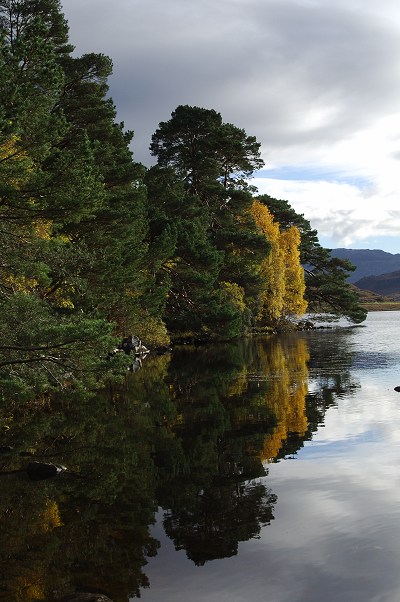
From memory I used the sky from this (under exposed)
the trees from this (over)
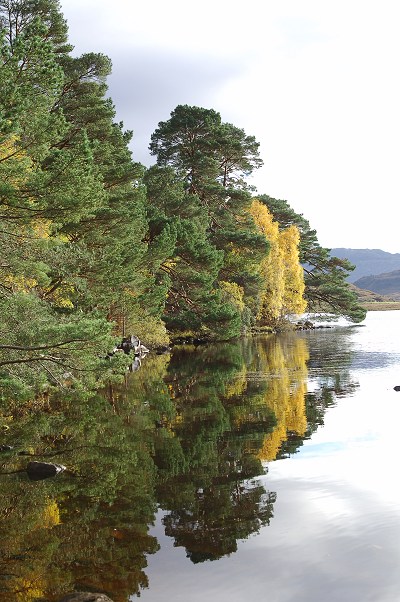
and put them on the loch from the one in the middle - my cameras best guess. I generally bracket either .3 of a stop each side or .7.
That's really impressive. How do you seperate out the components of each photograph that you require?
Thanks, GC. I assume that combining them consists of lengthy periods getting the selections just right...
On the subject of manipulation, I try to always apply sharpening - digital photos really do need it. The technique described here takes a bit of getting used to, but gives really good results.
On the subject of manipulation, I try to always apply sharpening - digital photos really do need it. The technique described here takes a bit of getting used to, but gives really good results.
Been thinking about this one a lot since seeing this thread. I finally decided to post when I saw a group on Flickr that banned any kind of digital processing of images whatsoever.
That to me is ridiculous.
The only controls we have on the camera which are not digital manipulation are shutter speed, aperture and focal length.
There are a number of other settings which immediately do processing of the signals captured on the CCD. At a basic level ISO settings and white balance settings do this and most prosumer cameras allow much more extensive processing, e.g. sharpening, saturation, custom curves, colour space etc.
These settings are either applied in camera (after the shutter is pressed note) or can be applied on the computer afterwards, so if one's position is that any computer processing changes what we do from photography to something else, then we're simply saying that you have to do your processing in the camera using it's limited processing capabilities rather than on a computer with more capability later on.
That's silly - there's no difference. If one therefore accepts that using a computer for some processing after the shot is taken is acceptable, then one cannot then draw an artificial line for some other type of processing and deem that if someone crosses it they are not a photographer anymore.
Photographers have always used a combination of pre-shutter release and post-shutter release work to achieve the result they wish. Now our tools are different and the possibilities are greater. Any line drawn is artificial and does not stand up to logic.
This does not mean that doing lots of post-processing:-
a) is sensible (when taking the shot properly would achieve the same or better result more time efficiently)
OR
b)delivers what any given person views as artistically acceptable results. I'm sure we all have a line where we think an image looks over-processed and therefore unattractive. I'm equally sure that the line is in a different place for many people.
I do believe that if one goes out thinking "it's OK I'll be able to fix it in post-processing" when in fact it IS possible to get the shot right on site, then that is folly and leads to poorer pictures and wasting time (I know because I'm guilty of it). My goal is to learn from the photographers on here who clearer spend more time conceptualising and composing their shots than snapping. The cheapness of digital film does have the drawback (for me at least) of encouraging haste.
My Dad used to tell me that he went out to cover subjects perhaps armed with only 5 glass plates. He had to pick his shots carefully and was limited by what processing he could do. As a result he used to comment on photographers he'd see using motor winders and shooting 5 fps.
Things move on and we need to take advantage of them - the end results are the only thing which can be judged.
Fire away
Stuart
Gassing Station | Photography & Video | Top of Page | What's New | My Stuff