
Underfloor Heating and Solid Wood Floors
Discussion


I'm looking at Flooring Directs website and have been pricing up some solid oak floors, now I realise this is the cheaper end of the scale but am surprised that it can't be used with underfloor heating systems?
IS there a reason for this or a special grade of wood you need to work with it?
Dave!
IS there a reason for this or a special grade of wood you need to work with it?
Dave!
Too thick I should imagine, wood is not a good conductor of heat.
another manufacturers website said:
The maximum board thickness should be no greater than 15mm (or thickness equivalent to a maximum thermal resistance of 0.15m²K/W).
Edited for above quote. Might also have something to do with wood density as well I suppose.Edited by FourWheelDrift on Sunday 30th November 14:58
For what its worth, I have Bruce engineered American Oak. Been down 10 years with no problems. Rather than floating like some, the Bruce is glued down to the chipboard flooring (18mm chipboard plus 11mm Bruce). My system is on a suspended wood floor and not therefore embedded in screed. The Unipipe is laid on 100mm of Kingspan insulation, with just enough gap for the pipe (18mm if I recall), with the wood floor laid on top. Water temp is set at 40C, which is a little higher than screeded systems need, but responds quicker as there is no slab to heat. The house is 800ft up in the Scottish Borders, so pretty much as severe as most locations in the UK.
I have had mixed success with other flooring in the house - a few cracked tiles due to floor movement, and perfectly fitted parquet in the hall which soon developed 3mm gaps due to shrinkage!
I have had mixed success with other flooring in the house - a few cracked tiles due to floor movement, and perfectly fitted parquet in the hall which soon developed 3mm gaps due to shrinkage!
Mine would go above a screed, i've seen the different methods of laying the flooring, even a base layer with adhesive built into it.
Did you manage to find out why the flooring seperated in the problem areas?
The website I linked to mentions kiln dried oak to 10% moisture which I presume affects the shrinkage, growth quite a bit.
Dave!
Did you manage to find out why the flooring seperated in the problem areas?
The website I linked to mentions kiln dried oak to 10% moisture which I presume affects the shrinkage, growth quite a bit.
Dave!
When our house was being built the chippy who fitted our(18mm) floor in the hall suggested locking off the damper vent that controls heat to the hall.
We have forced air heatin(big furnace in the basement with ducting and fans forcing hot air round the house under the floors downstairs and through skirting vents upstairs,using vents and flaps to control each rooms temp) as it would dry out the floor too much but the floor supplier said it was "poppycock",his own words.
Been down two years now looks as good as new still.
If hot air dont damage it a bit of radiant heat from hot pipes underneath should surely be fine.
HTH
We have forced air heatin(big furnace in the basement with ducting and fans forcing hot air round the house under the floors downstairs and through skirting vents upstairs,using vents and flaps to control each rooms temp) as it would dry out the floor too much but the floor supplier said it was "poppycock",his own words.
Been down two years now looks as good as new still.
If hot air dont damage it a bit of radiant heat from hot pipes underneath should surely be fine.
HTH
Howitzer said:
Did you manage to find out why the flooring seperated in the problem areas?
Dave!
Yes. Very expensive "flexible tile adhesive" specifically for laying tiles directly onto wood floors which didn't work. The Parquet I later discovered was not suited to underfloor heating.Dave!
Most of the house is done in Kahrs engineered wood which is floating above the chipboard. Again, it works well but doesn't look as good as the Bruce.
We currently have water based underfloor heating under both a 15mm plywood sub floor with 20mm parquet on top of that and it works well. We have had a tiny bit of movement but nothing to worry about. Our floor was suppplied and fitted by a company called Broadleaf. They have a number of stores around the country. I would recommend them. I have attached a couple od pics of my floor.
This was just after it was varnished, it was still wet, the varnish tried to a matt finish
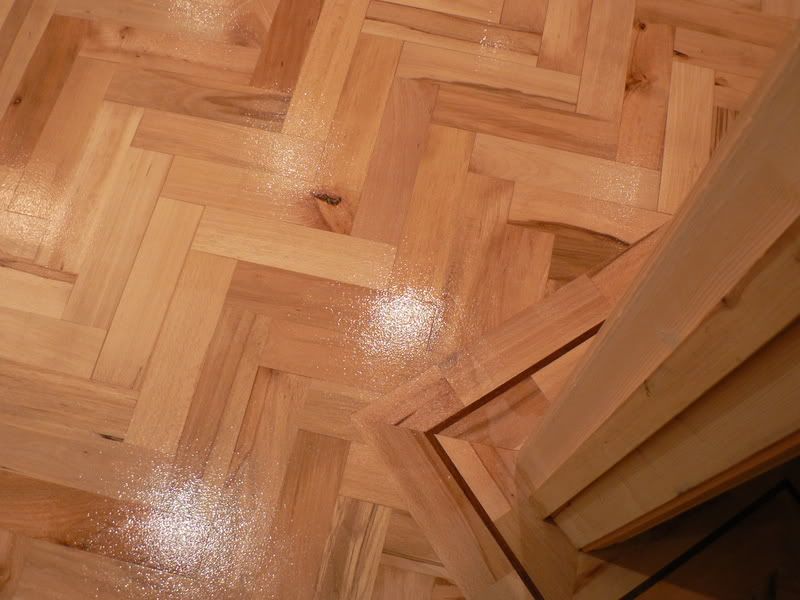


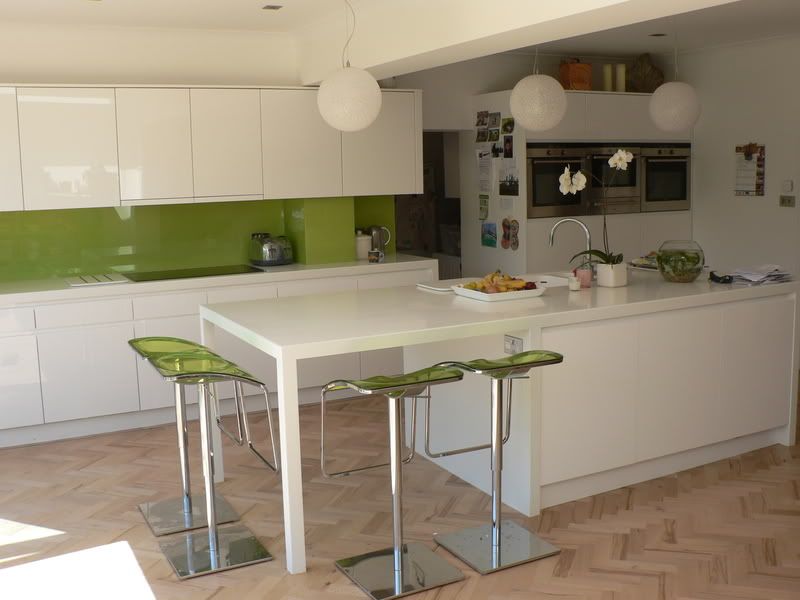
This was just after it was varnished, it was still wet, the varnish tried to a matt finish
That floor looks fantastic.
If you have underfloor heating in other areas of the house with different floors, how do you find it, is there a difference, higher temps needed etc?
I love how solid wood floors look and feel and it's one area I want to get right.
Thanks for all the replies by the way.
Dave!
If you have underfloor heating in other areas of the house with different floors, how do you find it, is there a difference, higher temps needed etc?
I love how solid wood floors look and feel and it's one area I want to get right.
Thanks for all the replies by the way.
Dave!
Howitzer said:
This is promising.
It seems from the site that a lot of it is down to how you let the floor aclimatise to the room.
Do you have underfloor under any other coverings, tiles etc?
Do you notice much difference in how warm the room feels or does it all work as well as you hoped?
Dave!
We have tiles(porcelin,and marble),carpet and amtico flooring we have had no movement or any issues,each room has its own stat so the temp is where we want it,cant say I've noticed if the wood floors appear to stop the heat coming through.i am very pleased with the whole under floor heating concept.It seems from the site that a lot of it is down to how you let the floor aclimatise to the room.
Do you have underfloor under any other coverings, tiles etc?
Do you notice much difference in how warm the room feels or does it all work as well as you hoped?
Dave!
The best part though,is lying on the floor reading the paper....

Problem is "underfloor heating" means different things so there is no straight answer. Warm water under a screed means finished floor temp might never exceed 25c, however electric systems where (with tiles) the heat elements are in the adhesive runs much hotter and are much more likely to cause problems.
A screed system is also generally slow to respond - which is also good as regards thermal movement.
You really need to get past the literature and talk to some manufacturer tech guys - or even previous customers - to see how well it performs, also look at the cost of rectification. If a floating floor and it would just be a case of lifting edges to bang blocks back together then no problem - but - be aware if it's solid wood there might also be an issue with cupping which is much more difficult to fix.
Personally I'd go for an engineered solution - ie laminate base but with a real wood veneer. These can normally be sanded a few times and look excellent so are a good compromise.
DH
(living in a totally UFH house since 2004)
A screed system is also generally slow to respond - which is also good as regards thermal movement.
You really need to get past the literature and talk to some manufacturer tech guys - or even previous customers - to see how well it performs, also look at the cost of rectification. If a floating floor and it would just be a case of lifting edges to bang blocks back together then no problem - but - be aware if it's solid wood there might also be an issue with cupping which is much more difficult to fix.
Personally I'd go for an engineered solution - ie laminate base but with a real wood veneer. These can normally be sanded a few times and look excellent so are a good compromise.
DH
(living in a totally UFH house since 2004)
Gassing Station | The Pie & Piston Archive | Top of Page | What's New | My Stuff