
Port, the traditional British Christmas tipple
Discussion


Afternoon all, just wrote this for Lusso mag in case anyone is interested in reading it:
Portuguese wine was exported to England as long ago as the 12th century. Port, as we know it, began life in the late 17th to early 18th century. Until well into the 18th century the wine was probably dry, not sweet. Then, someone had the idea of adding brandy to fortify the wine for the long sea journey, and at an unknown later date, adding it part way through the fermentation, which stopped the yeasts working further, effectively stopping the fermentation resulting in unfermented residual grape sugar. With the exception of dry white ports, all ports are red, strong and sweet.
There are two basic types of Port: wood aged and bottle aged.
Wood aged Port includes; ruby, tawny, vintage character and late-bottled vintage as well as tawnies and vintage-dated tawnies (colheitas). All of these are made from Ports that have been aged in wood and treated to remove any sediment in the wine before bottling.
Bottle-aged Ports are characterized only as crusted and vintage. As with wood Ports they are also made from Ports aged in wood but they are not fined or filtered before being bottled earlier than wood ports and will throw a sediment whilst improving with age in the bottle.
Ruby Ports are young fruity wines while a tawny is lighter in color and softer in flavor. Both are generally bottled after 3 years in cask. Vintage character is similar to a ruby but is made from richer more powerful wines. Late-bottled vintage is also a ruby but made from a single vintage. Quality improves when stepping up to old tawnies. Many producers pride themselves on these that can be 10, 20 or even 30 years old, all blends of high quality Ports matured in wooden casks. Colheita Ports are old tawnies produced from a single vintage.
The king of Port is clearly vintage Port. In relation to Port ‘vintage’ has a specific meaning; it represents the tip of the port iceberg, a wine of high quality made in an exceptionally good year, bottled after two years in cask and cellared for further maturation. They usually need at least 10 to 15 years of bottle age before even approaching maturity. Port shippers only declare a vintage about three times a decade!
This also means that vintage Port represents a tiny percentage of all Ports made.
Whilst young vintage Port can certainly be attractive, it would be a shame to drink a powerful, well-structured vintage Port before it has reached its maturity or at least 15 years of age. One of the reasons for paying a premium for vintage Port is its ability to improve for decades in the bottle. It’s the difference between a great wine and an ordinary one.
Opening and decanting a mature bottle of vintage Port can be extremely difficult.
Stand the bottle up at least 24 hours before serving so that the sediment has time to fall to the bottom of the bottle.
Often the necks are covered in wax; this has to chipped away slowly without damaging the glass, in order to get to the cork itself. I use a small knife for this practice and gently tap the wax until it breaks and chips away. The cork itself is often nearly impossible to pull intact. The problem is that the cork widens like a Champagne cork in the neck of the bottle and with age, becomes too brittle to pull in its entirety, resulting in cork pieces falling into the wine.
Recently I have resulted to using what I refer to as ‘push down coffee makers’
Simply pour the Port gently into the glass coffee maker until any sediment appears in the neck. Then, insert the coffee ‘plunger’ and slowly push down as you would with a pot of coffee. Pour into your glass decanter with the ‘plunger’ still in place and holding any sediment. Hey presto, perfectly decanted port without using funnels and a piece of muslin. It may not hold the romantics of candle light decanting but it works!
Despite these difficulties, drinking it without decanting is like drinking a cup of coffee with its grounds.
Traditionally, the decanter of Port is placed in front of the host, who serves the guest to his right and passes the decanter to the guests on the left. The Port continues clockwise around the table. It is said this tradition started with the Royal Navy, when members insisted that the Port be passed to the left, or port side.
Personally, I enjoy a fine Havana with a glass of vintage Port. Whilst tradition is with cheese after the meal I enjoy kicking back with my favorite Cuban and savoring the delights, preferably in large winged leather arm chair!
Mature vintage Port is by no means inexpensive – however, if compared to say a first growth Bordeaux of an equally good vintage – it looks like distinctly good value.
Recently I have been selling vintages such as 1912s, 1927s and 1945s at a rather modest £300 to £500 per bottle. Compare that to a bottle of Chateau Mouton-Rothschild 1945 or Chateau Latour 1945 at well over £2500 per bottle. There are certainly bargains to be had and it is perfectly possible to enjoy vintage Ports on a regular basis when considering more modest vintages at say, £30-50 per bottle.
Lastly, one of the more heinous villainies which can be perpetrated after dinner is not to pass the Port decanter, and it is by no means uncommon to hear the misdemeanant asked some questions as ‘Do you know the Bishop of Winchester?’ If the reply should be ‘No’, he is told that ‘he is an awfully good fellow – but he never passes the Port!’

Portuguese wine was exported to England as long ago as the 12th century. Port, as we know it, began life in the late 17th to early 18th century. Until well into the 18th century the wine was probably dry, not sweet. Then, someone had the idea of adding brandy to fortify the wine for the long sea journey, and at an unknown later date, adding it part way through the fermentation, which stopped the yeasts working further, effectively stopping the fermentation resulting in unfermented residual grape sugar. With the exception of dry white ports, all ports are red, strong and sweet.
There are two basic types of Port: wood aged and bottle aged.
Wood aged Port includes; ruby, tawny, vintage character and late-bottled vintage as well as tawnies and vintage-dated tawnies (colheitas). All of these are made from Ports that have been aged in wood and treated to remove any sediment in the wine before bottling.
Bottle-aged Ports are characterized only as crusted and vintage. As with wood Ports they are also made from Ports aged in wood but they are not fined or filtered before being bottled earlier than wood ports and will throw a sediment whilst improving with age in the bottle.
Ruby Ports are young fruity wines while a tawny is lighter in color and softer in flavor. Both are generally bottled after 3 years in cask. Vintage character is similar to a ruby but is made from richer more powerful wines. Late-bottled vintage is also a ruby but made from a single vintage. Quality improves when stepping up to old tawnies. Many producers pride themselves on these that can be 10, 20 or even 30 years old, all blends of high quality Ports matured in wooden casks. Colheita Ports are old tawnies produced from a single vintage.
The king of Port is clearly vintage Port. In relation to Port ‘vintage’ has a specific meaning; it represents the tip of the port iceberg, a wine of high quality made in an exceptionally good year, bottled after two years in cask and cellared for further maturation. They usually need at least 10 to 15 years of bottle age before even approaching maturity. Port shippers only declare a vintage about three times a decade!
This also means that vintage Port represents a tiny percentage of all Ports made.
Whilst young vintage Port can certainly be attractive, it would be a shame to drink a powerful, well-structured vintage Port before it has reached its maturity or at least 15 years of age. One of the reasons for paying a premium for vintage Port is its ability to improve for decades in the bottle. It’s the difference between a great wine and an ordinary one.
Opening and decanting a mature bottle of vintage Port can be extremely difficult.
Stand the bottle up at least 24 hours before serving so that the sediment has time to fall to the bottom of the bottle.
Often the necks are covered in wax; this has to chipped away slowly without damaging the glass, in order to get to the cork itself. I use a small knife for this practice and gently tap the wax until it breaks and chips away. The cork itself is often nearly impossible to pull intact. The problem is that the cork widens like a Champagne cork in the neck of the bottle and with age, becomes too brittle to pull in its entirety, resulting in cork pieces falling into the wine.
Recently I have resulted to using what I refer to as ‘push down coffee makers’
Simply pour the Port gently into the glass coffee maker until any sediment appears in the neck. Then, insert the coffee ‘plunger’ and slowly push down as you would with a pot of coffee. Pour into your glass decanter with the ‘plunger’ still in place and holding any sediment. Hey presto, perfectly decanted port without using funnels and a piece of muslin. It may not hold the romantics of candle light decanting but it works!
Despite these difficulties, drinking it without decanting is like drinking a cup of coffee with its grounds.
Traditionally, the decanter of Port is placed in front of the host, who serves the guest to his right and passes the decanter to the guests on the left. The Port continues clockwise around the table. It is said this tradition started with the Royal Navy, when members insisted that the Port be passed to the left, or port side.
Personally, I enjoy a fine Havana with a glass of vintage Port. Whilst tradition is with cheese after the meal I enjoy kicking back with my favorite Cuban and savoring the delights, preferably in large winged leather arm chair!
Mature vintage Port is by no means inexpensive – however, if compared to say a first growth Bordeaux of an equally good vintage – it looks like distinctly good value.
Recently I have been selling vintages such as 1912s, 1927s and 1945s at a rather modest £300 to £500 per bottle. Compare that to a bottle of Chateau Mouton-Rothschild 1945 or Chateau Latour 1945 at well over £2500 per bottle. There are certainly bargains to be had and it is perfectly possible to enjoy vintage Ports on a regular basis when considering more modest vintages at say, £30-50 per bottle.
Lastly, one of the more heinous villainies which can be perpetrated after dinner is not to pass the Port decanter, and it is by no means uncommon to hear the misdemeanant asked some questions as ‘Do you know the Bishop of Winchester?’ If the reply should be ‘No’, he is told that ‘he is an awfully good fellow – but he never passes the Port!’
Melman Giraffe said:
Thanks for that an interesting read. I do like a drop of port this time of year, however my budget will only be around £20. Can you point me in the right direction? Cheers
Go for something like an unfiltered vintage character port. Should be possible at aorund £20 btl 

Huntsman said:
I've got these two, I was wondering if they might be worth selling? I have been drinking Dows Trademark, its been £6 a bottle all year, if I got £24 for each of those I could have a lot Trademark!!!
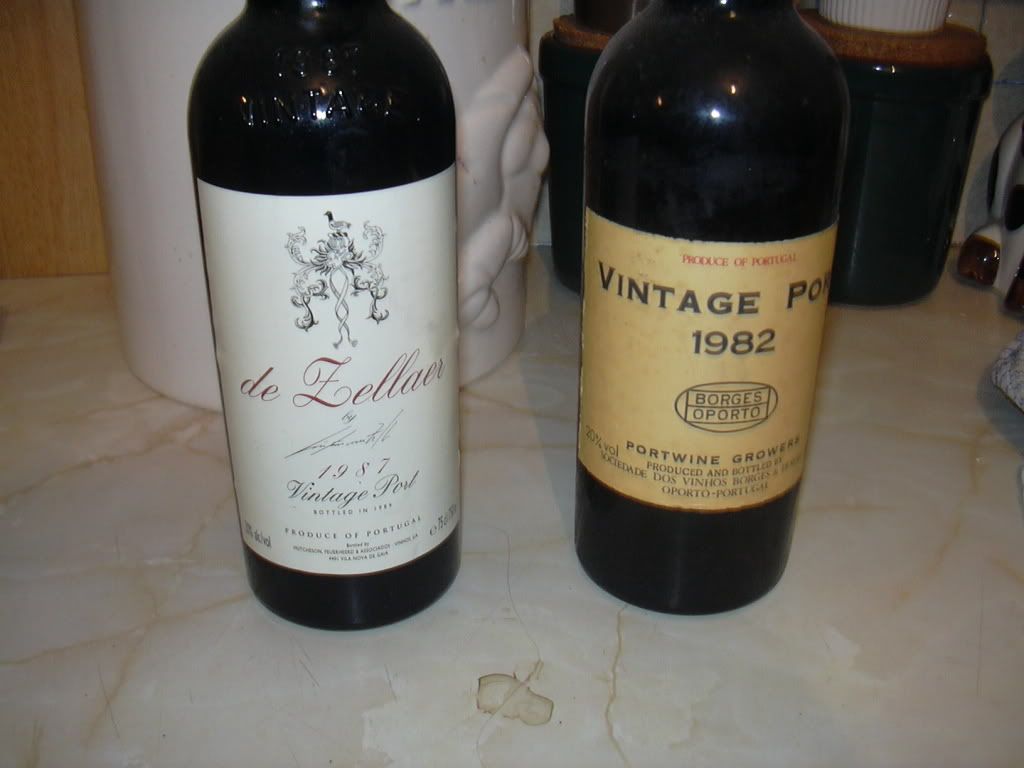
Just drink them mate I think. You won't be able to sell just 2 btls commercially sadly.Out of curiosity I have some of the Borges 1982 in my cellar - nice drinking indeed
Bebs said:
Ranger 6 said:
...how would you rate these in order of quality?
1. Croft Platinum Reserve
2. Grahams Late Bottled Vintage - 1996
3. Sandemans Ruby Porto
2. Grahams Late Bottled Vintage - 19961. Croft Platinum Reserve
2. Grahams Late Bottled Vintage - 1996
3. Sandemans Ruby Porto
1. Croft Platinum Reserve
3. Sandemans Ruby Porto

Yep, I once asked a friend of my Dad (who introduced me to real vintage port) about how long my first proper bottle of vintage would last in the decanter and he said "oh, I'd be surprised if it lasts the entire evening"

My Dad and I did indeed get through the entire bottle!
We've since repeated things, working backwards through the years.
His friend died last month so we shall be repeating the effort in the next couple of days and given that its a proper special occasion, I'm tempted to go and get a good 1963...

This was our Christmas eve treat - finished the whole bottle between four of us - it was deliciously smooth.
However, I was very concerned when it came to opening the bottle. I must have bought it around 15 years ago, and it's always been laid on its side. 24 hours before opening, I stood it upright to allow the sediment to settle. So using a sharp knife, I removed the outer capsule. Inside was another layer of foil, which I also removed, and peered into the neck where the cork should be. There was none! Now I'd noticed that the outside of the capsule was very slightly sticky, indicating a small amount of leakage. The level did not appear to be much (if any) lower than it should be, and I could see the cork inside the bottle, but I suspected the worst and that it would be undrinkable. A small taster proved otherwise, so I decanted it and it was thoroughly enjoyed.
I'm wondering if the cork could have dried and shrunk sufficiently in only 24 hours to allow it to drop into the liquid. The only alternative seems to be that it dropped prior to me buying it, but if that is the case, it seems amazing that so little was lost over the years.
7.

Gassing Station | Food, Drink & Restaurants | Top of Page | What's New | My Stuff