
Attended a Commie gathering in Dublin today!
Discussion


My daughter was bursting for a pee, and there were no toilets at Tara Street Station so we managed to duck in to Liberty Hall or the building next oddor.
Red flags everywhere. The International playing as background music. The Red Brigade banner proudly displayed as well as a huge photo of Bob Doyle:
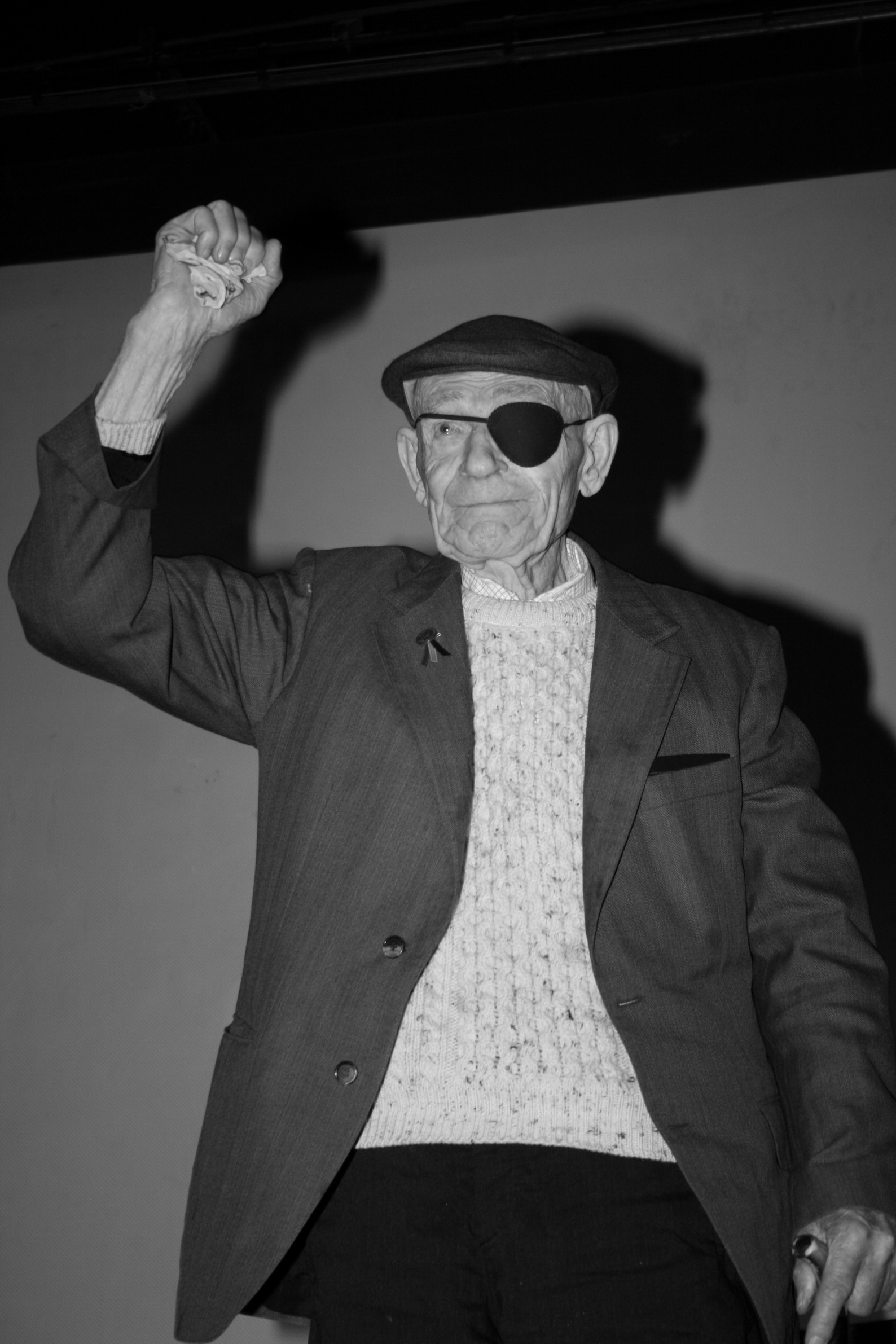
Hell, they even had his ashes there!
I felt like a spy or something. Strange watching all those diehard Commies.
I had a wee myself and left, undetected.
Red flags everywhere. The International playing as background music. The Red Brigade banner proudly displayed as well as a huge photo of Bob Doyle:
Hell, they even had his ashes there!
I felt like a spy or something. Strange watching all those diehard Commies.
I had a wee myself and left, undetected.
Edited by Hammerwerfer on Saturday 14th February 20:35
Wikipedia said:
Biography
Doyle studied physics at Brown University (Sc.B, 1958) and astrophysics at Harvard University (Ph.D., 1968).
Science
Doyle's Ph.D. thesis was on the continuous spectrum of the hydrogen quasi-molecule. He was the secretary of the NASA Astronomy Missions Board from 1969 to 1972. He edited the Long-Range Program in Space Astronomy for NASA in 1970 [1], which led to the HEAO Program, including the Einstein Observatory. He was the coordinator of the Skylab Joint Observing Program, supporting a network of 250 ground-based observatories around the world synchronizing their cameras with space telescopes in the Skylab Apollo Telescope Mount.
As Visiting Professor of Astronomy at University of Washington in 1970, he taught a course on Space Astronomy and developed Project ASTRA (Astronomical and Space Techniques for Research on the Atmosphere. Project ASTRA was funded by the National Science Foundation, winning a special Director's Competition for innovative inter-disciplinary research.
In 2008 Doyle returned to the Harvard Astronomy Department to study the origin of information in the universe.
You wouldn't think it to look at him would ya? Doyle studied physics at Brown University (Sc.B, 1958) and astrophysics at Harvard University (Ph.D., 1968).
Science
Doyle's Ph.D. thesis was on the continuous spectrum of the hydrogen quasi-molecule. He was the secretary of the NASA Astronomy Missions Board from 1969 to 1972. He edited the Long-Range Program in Space Astronomy for NASA in 1970 [1], which led to the HEAO Program, including the Einstein Observatory. He was the coordinator of the Skylab Joint Observing Program, supporting a network of 250 ground-based observatories around the world synchronizing their cameras with space telescopes in the Skylab Apollo Telescope Mount.
As Visiting Professor of Astronomy at University of Washington in 1970, he taught a course on Space Astronomy and developed Project ASTRA (Astronomical and Space Techniques for Research on the Atmosphere. Project ASTRA was funded by the National Science Foundation, winning a special Director's Competition for innovative inter-disciplinary research.
In 2008 Doyle returned to the Harvard Astronomy Department to study the origin of information in the universe.

cazzer said:
Wikipedia said:
Biography
Doyle studied physics at Brown University (Sc.B, 1958) and astrophysics at Harvard University (Ph.D., 1968).
Science
Doyle's Ph.D. thesis was on the continuous spectrum of the hydrogen quasi-molecule. He was the secretary of the NASA Astronomy Missions Board from 1969 to 1972. He edited the Long-Range Program in Space Astronomy for NASA in 1970 [1], which led to the HEAO Program, including the Einstein Observatory. He was the coordinator of the Skylab Joint Observing Program, supporting a network of 250 ground-based observatories around the world synchronizing their cameras with space telescopes in the Skylab Apollo Telescope Mount.
As Visiting Professor of Astronomy at University of Washington in 1970, he taught a course on Space Astronomy and developed Project ASTRA (Astronomical and Space Techniques for Research on the Atmosphere. Project ASTRA was funded by the National Science Foundation, winning a special Director's Competition for innovative inter-disciplinary research.
In 2008 Doyle returned to the Harvard Astronomy Department to study the origin of information in the universe.
You wouldn't think it to look at him would ya? Doyle studied physics at Brown University (Sc.B, 1958) and astrophysics at Harvard University (Ph.D., 1968).
Science
Doyle's Ph.D. thesis was on the continuous spectrum of the hydrogen quasi-molecule. He was the secretary of the NASA Astronomy Missions Board from 1969 to 1972. He edited the Long-Range Program in Space Astronomy for NASA in 1970 [1], which led to the HEAO Program, including the Einstein Observatory. He was the coordinator of the Skylab Joint Observing Program, supporting a network of 250 ground-based observatories around the world synchronizing their cameras with space telescopes in the Skylab Apollo Telescope Mount.
As Visiting Professor of Astronomy at University of Washington in 1970, he taught a course on Space Astronomy and developed Project ASTRA (Astronomical and Space Techniques for Research on the Atmosphere. Project ASTRA was funded by the National Science Foundation, winning a special Director's Competition for innovative inter-disciplinary research.
In 2008 Doyle returned to the Harvard Astronomy Department to study the origin of information in the universe.
Edited by Hammerwerfer on Saturday 14th February 20:55
Hammerwerfer said:
cazzer said:
Wikipedia said:
Biography
Doyle studied physics at Brown University (Sc.B, 1958) and astrophysics at Harvard University (Ph.D., 1968).
Science
Doyle's Ph.D. thesis was on the continuous spectrum of the hydrogen quasi-molecule. He was the secretary of the NASA Astronomy Missions Board from 1969 to 1972. He edited the Long-Range Program in Space Astronomy for NASA in 1970 [1], which led to the HEAO Program, including the Einstein Observatory. He was the coordinator of the Skylab Joint Observing Program, supporting a network of 250 ground-based observatories around the world synchronizing their cameras with space telescopes in the Skylab Apollo Telescope Mount.
As Visiting Professor of Astronomy at University of Washington in 1970, he taught a course on Space Astronomy and developed Project ASTRA (Astronomical and Space Techniques for Research on the Atmosphere. Project ASTRA was funded by the National Science Foundation, winning a special Director's Competition for innovative inter-disciplinary research.
In 2008 Doyle returned to the Harvard Astronomy Department to study the origin of information in the universe.
You wouldn't think it to look at him would ya? Doyle studied physics at Brown University (Sc.B, 1958) and astrophysics at Harvard University (Ph.D., 1968).
Science
Doyle's Ph.D. thesis was on the continuous spectrum of the hydrogen quasi-molecule. He was the secretary of the NASA Astronomy Missions Board from 1969 to 1972. He edited the Long-Range Program in Space Astronomy for NASA in 1970 [1], which led to the HEAO Program, including the Einstein Observatory. He was the coordinator of the Skylab Joint Observing Program, supporting a network of 250 ground-based observatories around the world synchronizing their cameras with space telescopes in the Skylab Apollo Telescope Mount.
As Visiting Professor of Astronomy at University of Washington in 1970, he taught a course on Space Astronomy and developed Project ASTRA (Astronomical and Space Techniques for Research on the Atmosphere. Project ASTRA was funded by the National Science Foundation, winning a special Director's Competition for innovative inter-disciplinary research.
In 2008 Doyle returned to the Harvard Astronomy Department to study the origin of information in the universe.
Edited by Hammerwerfer on Saturday 14th February 20:55
cazzer said:
Hammerwerfer said:
cazzer said:
Wikipedia said:
Biography
Doyle studied physics at Brown University (Sc.B, 1958) and astrophysics at Harvard University (Ph.D., 1968).
Science
Doyle's Ph.D. thesis was on the continuous spectrum of the hydrogen quasi-molecule. He was the secretary of the NASA Astronomy Missions Board from 1969 to 1972. He edited the Long-Range Program in Space Astronomy for NASA in 1970 [1], which led to the HEAO Program, including the Einstein Observatory. He was the coordinator of the Skylab Joint Observing Program, supporting a network of 250 ground-based observatories around the world synchronizing their cameras with space telescopes in the Skylab Apollo Telescope Mount.
As Visiting Professor of Astronomy at University of Washington in 1970, he taught a course on Space Astronomy and developed Project ASTRA (Astronomical and Space Techniques for Research on the Atmosphere. Project ASTRA was funded by the National Science Foundation, winning a special Director's Competition for innovative inter-disciplinary research.
In 2008 Doyle returned to the Harvard Astronomy Department to study the origin of information in the universe.
You wouldn't think it to look at him would ya? Doyle studied physics at Brown University (Sc.B, 1958) and astrophysics at Harvard University (Ph.D., 1968).
Science
Doyle's Ph.D. thesis was on the continuous spectrum of the hydrogen quasi-molecule. He was the secretary of the NASA Astronomy Missions Board from 1969 to 1972. He edited the Long-Range Program in Space Astronomy for NASA in 1970 [1], which led to the HEAO Program, including the Einstein Observatory. He was the coordinator of the Skylab Joint Observing Program, supporting a network of 250 ground-based observatories around the world synchronizing their cameras with space telescopes in the Skylab Apollo Telescope Mount.
As Visiting Professor of Astronomy at University of Washington in 1970, he taught a course on Space Astronomy and developed Project ASTRA (Astronomical and Space Techniques for Research on the Atmosphere. Project ASTRA was funded by the National Science Foundation, winning a special Director's Competition for innovative inter-disciplinary research.
In 2008 Doyle returned to the Harvard Astronomy Department to study the origin of information in the universe.
Edited by Hammerwerfer on Saturday 14th February 20:55
Turns out the whole thing was a memorial service for the fellow. They had a service at the Garden of Rememberance and then marcheed to Liberty Hall.
Reading his obituary yesterday proved entertaining. One of the highlights was where he had taken to raising his own cannabis, but his crop was nicked. He was afraid to report the theft to the police for some reason or other.
Quite a character, and a symbol for a lost cause.
Reading his obituary yesterday proved entertaining. One of the highlights was where he had taken to raising his own cannabis, but his crop was nicked. He was afraid to report the theft to the police for some reason or other.
Quite a character, and a symbol for a lost cause.
Gassing Station | The Pie & Piston Archive | Top of Page | What's New | My Stuff