
The Spitfire thread!
Discussion


Every schoolboy's favourite plane - So pull up a deck chair, unzip your flying jacket and prepare for a drowsy late summer afternoon listening to larks singing over the grass airfield as the ground crew fusses over your Spit. Post pics and bits about Spitfires!
I am a fan of the earlier marks, before the funny shaped wings, pointy tails and long noses altered the classic look. This is a Mk II.
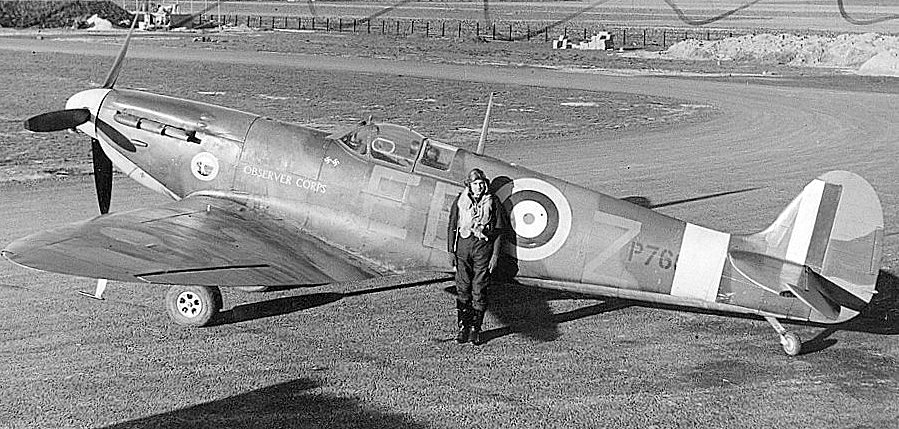
I am a fan of the earlier marks, before the funny shaped wings, pointy tails and long noses altered the classic look. This is a Mk II.


williamp said:
If that;'s the only flying PR Mk9 around, then I've sat in that one...
It isn't. There are at least three - the Battle of Britain Memorial Flight example
the Rolls Royce example
and a third in France
It's a PRXIX (i.e. PR19) by the way. The Mk IX (9) Spitfire was a Merlin powered version.
Mk IX
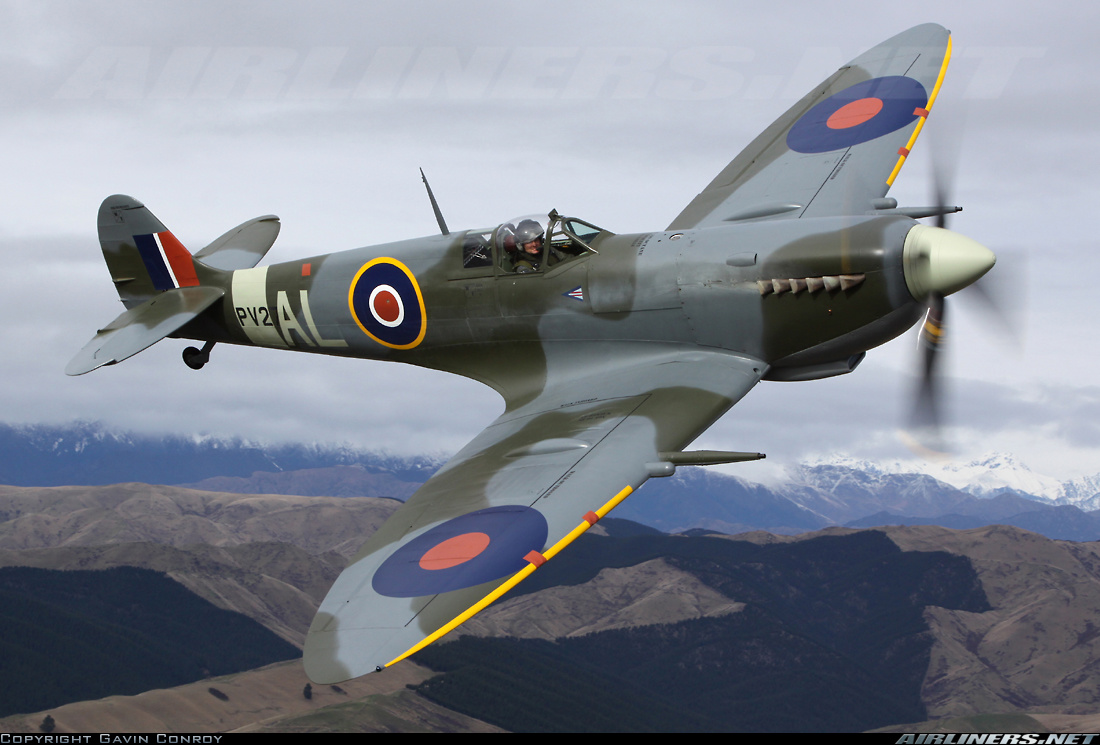
PR. XIX

Edited by Eric Mc on Monday 2nd November 10:10

pacman1 said:
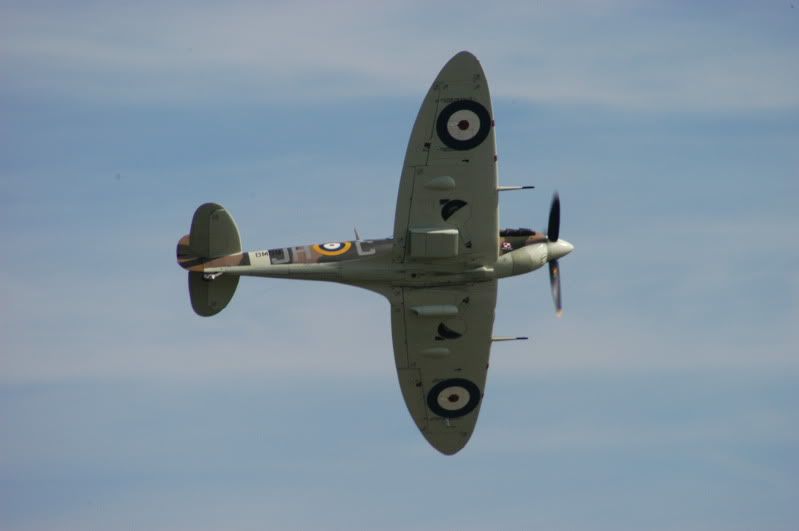
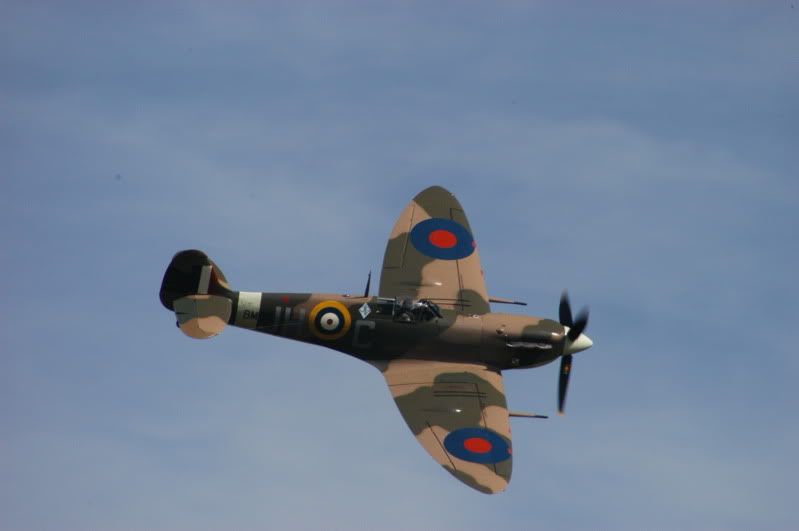
I thought the Mk Vb had clipped wings?
Clipped wings (and extended wings) were available on a number of versions. Whether a Spitfire had clipped, standard or extended wing tips did not, in itself, denote the mark number.Spitfires with clipped wings had an "LF" prefix (for Low Flying)
For instance, the Mk XVI (16) often had clipped wings (although not always) and therefore could be designated LFXVI.

This is the box art from the Heller 1/72 model of the LFXVIe but it clearly shows the cut down wing tips.
Ah, I see.
While I'm at it, can anyone remember the b&w film which starts with the spitfire display? Lasts about 5 minutes, and I remember reading a book about the pilot who did the display for some RAF bigwigs. It was then incorporated into the film. Sorry, pretty vague that lot!
While I'm at it, can anyone remember the b&w film which starts with the spitfire display? Lasts about 5 minutes, and I remember reading a book about the pilot who did the display for some RAF bigwigs. It was then incorporated into the film. Sorry, pretty vague that lot!
Edited by pacman1 on Monday 2nd November 10:47


Eric Mc said:
First of the Few
Alex Henshaw.
Just a guess.
Yes, I think you're right. I have a feeling this was part of it.Alex Henshaw.
Just a guess.
http://www.youtube.com/watch?v=nCmzYccyBYM
williamp said:
Thanks Eric. It was a PR Mk XI, PL965. I sat in it whilst it was being restored at Rochester. Must dig out a photo sometime. I also helped out by leaning on the tailfin whilst the pilot did engine checks.
In all, it was a brilliant work experience!
That PR.XI is unique, I think.In all, it was a brilliant work experience!
Eric Mc said:
The "b" suffix denotes a cannon (as opposed to machine gun) equipped aircraft.
While that is accepted truth, technically it is not totally correct since both the 'c' and 'e' suffixes also denoted cannon equipped aircraft.In actual fact the suffix refers to the wing type fitted.
'b' wings were each fitted with a pair of .303" Browning mgs outboard and a single 20mm Oerlikon cannon inboard. The cannon had a drum magazine hence the wing having large fat bulges on both its upper and lower surfaces. Early trials on late MkI and MkII aircraft showed up problems with the magazine feeds to the cannons and stoppages were frequent, hence most aircraft retained the 'a' wing (4 x Browning .303" mgs). The problem was eventually cured and the 'b' wing saw service almost exclusively on the MkV aircraft.
'c' wings had essentially the same layout as the 'b' wing but the Oerlikon was replaced by the faster firing, harder hitting, Hispano Suiza 20mm cannon. This had a more conventional box magazine and didn't suffer the same stoppage problems. Thus the 'c' wings have much narrower (albeit longer) bulges on the upper and lower wing surfaces It was first introduced on the Mk Vc and superceded the 'b' wing. The 'c' wing remained in service on most later marks of cannon equipped aircraft.
'e' wings were a development of the 'c' wing with an essentially similar layout. However most 'e' wing aircraft had the .303" Browning mgs replaced with the .5" version. There was also an option to fit twin 20mm cannon to each wing. 'e' wings were generally fitted to later MkIX and MkXVI aircraft.
Ginetta G15 Girl said:
Eric Mc said:
The "b" suffix denotes a cannon (as opposed to machine gun) equipped aircraft.
While that is accepted truth, technically it is not totally correct since both the 'c' and 'e' suffixes also denoted cannon equipped aircraft.In actual fact the suffix refers to the wing type fitted.
'b' wings were each fitted with a pair of .303" Browning mgs outboard and a single 20mm Oerlikon cannon inboard. The cannon had a drum magazine hence the wing having large fat bulges on both its upper and lower surfaces. Early trials on late MkI and MkII aircraft showed up problems with the magazine feeds to the cannons and stoppages were frequent, hence most aircraft retained the 'a' wing (4 x Browning .303" mgs). The problem was eventually cured and the 'b' wing saw service almost exclusively on the MkV aircraft.
'c' wings had essentially the same layout as the 'b' wing but the Oerlikon was replaced by the faster firing, harder hitting, Hispano Suiza 20mm cannon. This had a more conventional box magazine and didn't suffer the same stoppage problems. Thus the 'c' wings have much narrower (albeit longer) bulges on the upper and lower wing surfaces It was first introduced on the Mk Vc and superceded the 'b' wing. The 'c' wing remained in service on most later marks of cannon equipped aircraft.
'e' wings were a development of the 'c' wing with an essentially similar layout. However most 'e' wing aircraft had the .303" Browning mgs replaced with the .5" version. There was also an option to fit twin 20mm cannon to each wing. 'e' wings were generally fitted to later MkIX and MkXVI aircraft.

But why were there different wing types in the first place?
To accomodate the different types of armament.
As you describe abopve, the armament evolved over the war so the internal wing structure was adapted to suit. The wing tip changes were made to accomodate different mission requirements. The clipped wing variants were optimised for low level work and the extended wingtips gave the aircraft a higher ceiling and better performance at altitude.
The Spitfire evolved into a myriad of variants, sub-variants and sub-sub-variants from 1936 right through to 1948.
Gassing Station | Boats, Planes & Trains | Top of Page | What's New | My Stuff