
To Airbox or Not to Airbox??
Discussion


Over winter I'm preparing to move to a modified class in the Morgan Sprint Championship. Part of the move has involved changing the intake from a single carb to a set of twin 40's amongst other things.
The engine is a 1630 CVH, balanced, high compression pistons, Ported, big valve Head with balanced combustion chambers and a cam for Torque rather than out and out power running solid lifters. And a Free flow side exit 4-2-1 exhaust.
Now here is the quandary?
There are several different approaches to getting the intake for twin Webers sorted.
Option 1, there is the option to just cut a hole in the bonnet, essentially costing nothing. with or without air cleaner. You can just see the hole in the side of the bonnet just behind the wing.. for me this is shrouded by the airflow over the wing and would be drawing from a high air speed area therefore less dense??

Option 2, get a Morgan Super Sport bonnet with side scoop... there is no back plate or inner ducting, again with or without air cleaner... £1000. This seems a little better than Option 1 but it has no back plate and therefore does not seem to manage the air very well??

In situ:

Option 3, and one I'm interested in the benefits of:
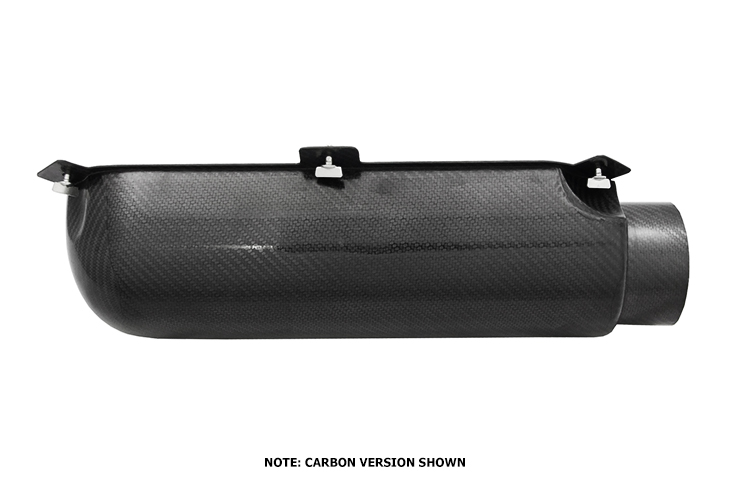
Using an Airbox such as this one from Reverie and putting an intake tube through the off-side inner arch and cutting a whole just below the headlight pod.. therefore getting cold dense air from the very front of the car and possibly aid intake pulse reflection at the individual intake runner???.. Probably £700 all in... and possibly more efficient that either of the above given their locations and airflow/heat characteristics. I can also run a filter as I'm not keen on busting an engine due to dirt, dust and water ingress:
OR!! do I have this all wrong??
P.S. I'm not that fussed about keeping the Vintage look BTW.
The engine is a 1630 CVH, balanced, high compression pistons, Ported, big valve Head with balanced combustion chambers and a cam for Torque rather than out and out power running solid lifters. And a Free flow side exit 4-2-1 exhaust.
Now here is the quandary?
There are several different approaches to getting the intake for twin Webers sorted.
Option 1, there is the option to just cut a hole in the bonnet, essentially costing nothing. with or without air cleaner. You can just see the hole in the side of the bonnet just behind the wing.. for me this is shrouded by the airflow over the wing and would be drawing from a high air speed area therefore less dense??
Option 2, get a Morgan Super Sport bonnet with side scoop... there is no back plate or inner ducting, again with or without air cleaner... £1000. This seems a little better than Option 1 but it has no back plate and therefore does not seem to manage the air very well??
In situ:
Option 3, and one I'm interested in the benefits of:
Using an Airbox such as this one from Reverie and putting an intake tube through the off-side inner arch and cutting a whole just below the headlight pod.. therefore getting cold dense air from the very front of the car and possibly aid intake pulse reflection at the individual intake runner???.. Probably £700 all in... and possibly more efficient that either of the above given their locations and airflow/heat characteristics. I can also run a filter as I'm not keen on busting an engine due to dirt, dust and water ingress:
OR!! do I have this all wrong??
P.S. I'm not that fussed about keeping the Vintage look BTW.
Edited by cerealsurfer on Thursday 31st December 13:55
The air flowing over the wing is no less dense than any other air around the car, density changes with temperature & pressure, it may be travelling at a (marginally) faster speed but the density will remain the same. To get the most out of your proposed setup you need an area that will draw cool air, as all the intakes you have shown draw air from outside the engine bay any will suffice. As for which is best? I think only a dyno comparison of each would reveal where power gains are, and these, at best will be a handful of horsepower.
I would look at what already works on similar cars with the same engine and performance. Or maybe talk to somebody who has specific experience of this car and the options ?
I would suggest 3 is going to be the best bet but it's more hassle than 1 or 2 . . . if the power difference between 1 and 3 is 1 bhp then it's probably not worth the effort. If it's 7 bhp then you might be more keen on 3 . . .
I would suggest 3 is going to be the best bet but it's more hassle than 1 or 2 . . . if the power difference between 1 and 3 is 1 bhp then it's probably not worth the effort. If it's 7 bhp then you might be more keen on 3 . . .
I would also look at the sound limits of certain tracks and events. Open and filtered webers make more noise than an exhaust. I failed a sound test at Castle Coombe, until we threw a jacket over the carbs for the static test. The ducted system may work better for this and will possibly make no difference to power output to be honest.
I'm no expert on this at all but I'm curious about this subject? unlike the simple answers some have given I'm not so sure!
"I recently made an air box, because the exsiting one would not fit under the engine cover, some people cut the engine cover, others cut the air box down and re seal it.
We made a grp mould off the airbox and inserted a tube through it, so a dettachable roll bar can go through it!
Other teams have made what was a sealed air box - no longer air tight by running a roll bar through it buy cutting holes in it. I stuck with an intake size of a normal race air box,rather than make it bigger and a f1 style funnel system."
Any way my freind who is into data loggin etc. for a top level team, went into;
airbox frequency. Apparently an airbox will ressinate with the air inside - being forced in, what the engine does not draw in = what is stored,creates presssure as air is forced in on top stored air etc.. which ressinates, the pulses can aid induction??
A lower frequency hz - will allow more top end, but less low down torque, a higher frequency the opposite, That kind of make sense to me, air speed and all that - So a big feed may not be the best?? Then there is dirty air and turbulent air?? Venturis/trumpets if thats the right word?? Some engines have viarable length (have not seen this yet - but Apparently they change?? at certain rpm -
(hope I've got it a least a bit right from what I've been told)
When your looking for every last bit of performance I think it gets too complicated! I'm not a good enough driver to worry about 1 hp, I'd then have to start worrying every time the ambient went up a deg or two.
I'm not sure how it all works with carbed engines - I expect forced air would effect jetting etc..
I think the basics are simple - cold, clean air!
If some one figures it all out give me a shout!
"I recently made an air box, because the exsiting one would not fit under the engine cover, some people cut the engine cover, others cut the air box down and re seal it.
We made a grp mould off the airbox and inserted a tube through it, so a dettachable roll bar can go through it!
Other teams have made what was a sealed air box - no longer air tight by running a roll bar through it buy cutting holes in it. I stuck with an intake size of a normal race air box,rather than make it bigger and a f1 style funnel system."
Any way my freind who is into data loggin etc. for a top level team, went into;
airbox frequency. Apparently an airbox will ressinate with the air inside - being forced in, what the engine does not draw in = what is stored,creates presssure as air is forced in on top stored air etc.. which ressinates, the pulses can aid induction??
A lower frequency hz - will allow more top end, but less low down torque, a higher frequency the opposite, That kind of make sense to me, air speed and all that - So a big feed may not be the best?? Then there is dirty air and turbulent air?? Venturis/trumpets if thats the right word?? Some engines have viarable length (have not seen this yet - but Apparently they change?? at certain rpm -
(hope I've got it a least a bit right from what I've been told)
When your looking for every last bit of performance I think it gets too complicated! I'm not a good enough driver to worry about 1 hp, I'd then have to start worrying every time the ambient went up a deg or two.
I'm not sure how it all works with carbed engines - I expect forced air would effect jetting etc..
I think the basics are simple - cold, clean air!
If some one figures it all out give me a shout!
The Real Stig said:
unlike the simple answers some have given I'm not so sure!
The Real Stig said:
I think the basics are simple - cold, clean air!
If some one figures it all out give me a shout!
The reason we gave simple answers is that unless you have the benefit of 20 years experience with that engine, or a team of experts like a race team might have - you're not going to get better than an educated guess. If some one figures it all out give me a shout!
Edited by Busa_Rush on Wednesday 6th January 13:27
Thanks for the reply's.
Looks like it might be best to... "stick with the cheap and basic option for now (1 or 2)"... do the development when time and money allows, then I'd have some tangible evidence and be able to do a real benefit assessment.
Anyone have any more scientific advice regards air-boxes then I'm always interested to hear about it.
Looks like it might be best to... "stick with the cheap and basic option for now (1 or 2)"... do the development when time and money allows, then I'd have some tangible evidence and be able to do a real benefit assessment.
Anyone have any more scientific advice regards air-boxes then I'm always interested to hear about it.
Busa Rush - obviously I can not allow for tone or body language in my post, but it was not meant to be insulting in any way! the quotes you high lighted, I feel can be taken out of context when removed from the post in that way!
The I'm not so sure bit! comes from some professional racers I know, who taking about induction, and dirty air - I do think It must make a difference! i.e. location of the intake.(How much of a noticeable difference?)
-I said I'm no expert, I'm curious too (is an area I have played with)
-I said I think it gets complicated - more so than I understand / is necessary
-I said I think the basics are simple (unless some one is that keen to extract every bit of power)
I never set out to offend, and only offer an opinion based on information or experience I have, which is limited in certain areas and I'm also proved wrong some times! However I have some useful information through the trial and area processes I have gone through. -I'm keen to learn from others too as long as it's factual and tested.
I agree with your last comment Busa rush! - nice car too
The I'm not so sure bit! comes from some professional racers I know, who taking about induction, and dirty air - I do think It must make a difference! i.e. location of the intake.(How much of a noticeable difference?)
-I said I'm no expert, I'm curious too (is an area I have played with)
-I said I think it gets complicated - more so than I understand / is necessary
-I said I think the basics are simple (unless some one is that keen to extract every bit of power)
I never set out to offend, and only offer an opinion based on information or experience I have, which is limited in certain areas and I'm also proved wrong some times! However I have some useful information through the trial and area processes I have gone through. -I'm keen to learn from others too as long as it's factual and tested.
I agree with your last comment Busa rush! - nice car too
Edited by The Real Stig on Wednesday 6th January 16:44
Edited by The Real Stig on Wednesday 6th January 16:46
I've run engines with and without plenums- on the dyno- optimising ignition and mixture for each case.
Invariably without some sort of plenum box the Volumetric efficiency curve and therefore the torque curve becomes "spikey" or full of peaks and troughs, although the losses and therefore the ultimate peak values of torque and power were higher. The plenum acts as a damping volume and if you have a low loss entry (specially on an Alpha N or speed density type of system with now restrictive MAF sensor to worry about) you'll have a nice smooth torque curve- a smoother sounding engines with minimal losses.
Invariably without some sort of plenum box the Volumetric efficiency curve and therefore the torque curve becomes "spikey" or full of peaks and troughs, although the losses and therefore the ultimate peak values of torque and power were higher. The plenum acts as a damping volume and if you have a low loss entry (specially on an Alpha N or speed density type of system with now restrictive MAF sensor to worry about) you'll have a nice smooth torque curve- a smoother sounding engines with minimal losses.
Since it has a short cam, you don't really need long manifolds or trumpets, or a straight tract for shockwave tuning.
Have you thought about IDA carbs instead (like vertical DCOE's) you could probably get some steel manifolds to put them in.
Failing that, bike carbs on very short manifolds. If you are running a high lift/short duration cam, you don't need anything racy.
If you are going to chop a hole in the side of it, at least fit twin 48's on 7" manifolds with 60mm trumpets and run a 310/320 deg cam and a 14:1 CR
Have you thought about IDA carbs instead (like vertical DCOE's) you could probably get some steel manifolds to put them in.
Failing that, bike carbs on very short manifolds. If you are running a high lift/short duration cam, you don't need anything racy.
If you are going to chop a hole in the side of it, at least fit twin 48's on 7" manifolds with 60mm trumpets and run a 310/320 deg cam and a 14:1 CR
spend said:
Have you considered investigating the pressures around the front end with tell-tales?
Yes... there is a vintage video of some DIY aerodynamic testing with cotton threads.. there is a high pressure wave at the front of the car as the wings are nearly verticle... pushing all the air basically up over the wings... themselves having negative pressure on the top and +ve under the wheel-arch and running board!The OEM intake comes from the inner wheel-arch pannel which I'm guessing is a high pressure zone.
OK... things have moved further on, the engine is re-built and back in the car... the carbs sit lower than the green TR engined +4 in the first pic and so I think we're going to go for a closed induction system feeding off the high pressure zone at the front of the car.... well be getting our teeth into this over the next few weeks.
The traditional side scoop having looked at things will end up shrouding Cyl's 1&2 and feeding only Cyl's 3&4... I suspect this would mean also that 1&2 would be drawing warm internal air where-as the rear carb would be taking in cool air.
I'll let you know how I get on and the end result.
The traditional side scoop having looked at things will end up shrouding Cyl's 1&2 and feeding only Cyl's 3&4... I suspect this would mean also that 1&2 would be drawing warm internal air where-as the rear carb would be taking in cool air.
I'll let you know how I get on and the end result.
Gassing Station | Engines & Drivetrain | Top of Page | What's New | My Stuff