
Newish house - how is my phone line wired?
Discussion


I live in a small development of six properties built in the late 90's. The properties are accessed by a short new road off an existing street. The telephone exchange is at the end of the existing street, about 200 metres away.
Recent wiring, short distance from the exchange, sounds like perfect ADSL conditions. Well not quite perfect, my router connects at around 12mb, decent enough but roughly half the theoretical maximum.
I was wondering if the likely cause for the speed drop was due to the cabling to the new houses being shared in some way? None of the houses are connected to the telegraph poles in the traditional fashion, there's an inspection cover in the middle of the new road with BT stamped on it and the wiring for my house appears to sprout up out of the ground through a piece of capping under the carport. Oddly none of the phone sockets in my house appear to be master sockets. One of them on the third floor doesn't work, the wiring on the back of the socket appears to be correct but I've no idea where the other end of the cable appears.
I'm not too fussed about the speed or the faulty socket, I was just curious about how new estates are wired, is it common to split an underground cable off to small new developments? Does this usually result in your speed being heavily dependant on your neighbours internet usage?
Just as an aside, my parents who live much further away from their local exchange in an old house with some very unusual telephone wiring get a perfect 21mb connection with excellent response times. Pah!
Recent wiring, short distance from the exchange, sounds like perfect ADSL conditions. Well not quite perfect, my router connects at around 12mb, decent enough but roughly half the theoretical maximum.
I was wondering if the likely cause for the speed drop was due to the cabling to the new houses being shared in some way? None of the houses are connected to the telegraph poles in the traditional fashion, there's an inspection cover in the middle of the new road with BT stamped on it and the wiring for my house appears to sprout up out of the ground through a piece of capping under the carport. Oddly none of the phone sockets in my house appear to be master sockets. One of them on the third floor doesn't work, the wiring on the back of the socket appears to be correct but I've no idea where the other end of the cable appears.
I'm not too fussed about the speed or the faulty socket, I was just curious about how new estates are wired, is it common to split an underground cable off to small new developments? Does this usually result in your speed being heavily dependant on your neighbours internet usage?
Just as an aside, my parents who live much further away from their local exchange in an old house with some very unusual telephone wiring get a perfect 21mb connection with excellent response times. Pah!
"deep breath" where to start ? the "exchange" down the road ,is this actually the exchange building or the green box otherwise known as a cabinet ? all phone lines are coming down large cables with lots of other lines which gradually split down bit by bit until it gets to your house this is normal and does not affect you adsl speed .for your master socket try looking directly inside from where the cable feeds into the property although this is by no means foolproof its a good place to start .a slow adsl speed can be caused by many things including a capped service from the isp !it woukld be best to get the faulty extn looked at as this could be part of the problem .
bimsb6 said:
"deep breath" where to start ? the "exchange" down the road ,is this actually the exchange building or the green box otherwise known as a cabinet ?
Not a cabinet, the big ugly building listed on samknows as the exchange for my area.As far as I can tell the cable runs into the house underground, there are three phone sockets in the house one on each floor. No loft for a master socket to hide in and there are no visible boxes between where the cable enters the property and the downstairs phone socket, although the cable isn't visible so it could be hidden inside the wall. Are the 'master socket' type devices ever separate to the properties in small developments?
I'm not really interested in getting a faster connection, my ISP doesn't apply any capping that they'll own up to, I have a decent contention ratio and hopefully better than average modem, microfilters etc.
I was more intrigued by how the cabling worked between the original road, new road and my house and puzzled by the lack of a visible master socket.
ok ,there must be a "master" socket but it may well look exactly the same as the existing sockets from the front ,the master will have a capacitor ,resistor and a surge protector in it ,logically it will be the one on the ground floor .
"I was more intrigued by how the cabling worked between the original road, new road and my house and puzzled by the lack of a visible master socket."
the development will be fed by i'm guessing a 10 or 20pr cable that will be spurred off a larger cable outside the development ,this will fed into a footway box and cables from the various properties will feed to this box and be joined to the feed cable by scotchlock type crimps within a closure .hope this makes sense .
"I was more intrigued by how the cabling worked between the original road, new road and my house and puzzled by the lack of a visible master socket."
the development will be fed by i'm guessing a 10 or 20pr cable that will be spurred off a larger cable outside the development ,this will fed into a footway box and cables from the various properties will feed to this box and be joined to the feed cable by scotchlock type crimps within a closure .hope this makes sense .
Edited by bimsb6 on Thursday 25th February 19:51
I've had the faceplates off the downstairs and third floor sockets in the past, neither of them contain any resistors. So unless the second floor socket is the master (which wouldn't make much sense logistically, and it looks like a 'normal' faceplate from the front) then I'm still a bit confused.
The equivalent of a master socket wouldn't be under the BT branded inspection cover in the road, where the cable is presumably split off for each property, would it?
The equivalent of a master socket wouldn't be under the BT branded inspection cover in the road, where the cable is presumably split off for each property, would it?
Accelebrate said:
I've had the faceplates off the downstairs and third floor sockets in the past, neither of them contain any resistors. So unless the second floor socket is the master (which wouldn't make much sense logistically, and it looks like a 'normal' faceplate from the front) then I'm still a bit confused.
The equivalent of a master socket wouldn't be under the BT branded inspection cover in the road, where the cable is presumably split off for each property, would it?
no the master will be at the premises,what does the cover over the underground feed at the premises look like ? the older style master and extn sockets look exactly the same from the outside. the nt5 splits into 2 with an obvious split line across the front .The equivalent of a master socket wouldn't be under the BT branded inspection cover in the road, where the cable is presumably split off for each property, would it?
Edited by bimsb6 on Thursday 25th February 20:10
The footway box in the road is rectangular, grey/concrete in colour with BT written on a small metal plate in the middle.
The faceplates in the house appear to be LJU3's, with the BT piper logo branded on them.
Just had more of a poke around outside and I think I might have cracked it, the grey conduit underneath the carport has a squarer section near to the top of it. I always presumed the cable ran from here into the property, but it runs out of the conduit/capping and is surface mounted along the exterior of the property, disappears into the wall roughly where the downstairs phone socket is and reappears to presumably run upstairs to the second floor socket (bit dark outside to check for certain). I'm guessing that the master socket/resistors are inside the chunky conduit/capping.
Classy installation that one.
The faceplates in the house appear to be LJU3's, with the BT piper logo branded on them.
Just had more of a poke around outside and I think I might have cracked it, the grey conduit underneath the carport has a squarer section near to the top of it. I always presumed the cable ran from here into the property, but it runs out of the conduit/capping and is surface mounted along the exterior of the property, disappears into the wall roughly where the downstairs phone socket is and reappears to presumably run upstairs to the second floor socket (bit dark outside to check for certain). I'm guessing that the master socket/resistors are inside the chunky conduit/capping.
Classy installation that one.
Accelebrate said:
The footway box in the road is rectangular, grey/concrete in colour with BT written on a small metal plate in the middle.
The faceplates in the house appear to be LJU3's, with the BT piper logo branded on them.
Just had more of a poke around outside and I think I might have cracked it, the grey conduit underneath the carport has a squarer section near to the top of it. I always presumed the cable ran from here into the property, but it runs out of the conduit/capping and is surface mounted along the exterior of the property, disappears into the wall roughly where the downstairs phone socket is and reappears to presumably run upstairs to the second floor socket (bit dark outside to check for certain). I'm guessing that the master socket/resistors are inside the chunky conduit/capping.
Classy installation that one.
doubt it ,master is still likely to be the one on the ground floor .The faceplates in the house appear to be LJU3's, with the BT piper logo branded on them.
Just had more of a poke around outside and I think I might have cracked it, the grey conduit underneath the carport has a squarer section near to the top of it. I always presumed the cable ran from here into the property, but it runs out of the conduit/capping and is surface mounted along the exterior of the property, disappears into the wall roughly where the downstairs phone socket is and reappears to presumably run upstairs to the second floor socket (bit dark outside to check for certain). I'm guessing that the master socket/resistors are inside the chunky conduit/capping.
Classy installation that one.
Accelebrate said:
Hmm, okay, I shall investigate a bit further over the weekend to satisfy my curiosity. The conduit does seem to be bulky for a reason though.
the standard duct to the premises is approx 100mm diameter,if the plastic cover at the top is grey with 3 screws fixing it to the wall that is a bt101 which will simply cover up the join between the internal cable and the underground cable which are crimp connectors .and you need no access to this as that is openreach property .Edited by bimsb6 on Friday 26th February 10:20
Simples(well sort of!)
1. Find Master Socket, should look like this:
https://adsl24.co.uk/store/filters-sockets-tools/n...
If master socket looks knakered fit a new one (Ok you shouldn't really but some are very damp with knackered connections, only do this if yiu know what you are doing)
Extensions tend not be smaller, but can vary
2. Fit a adsl faceplate filter on master socket:
http://cgi.ebay.co.uk/FACEPLATE-FILTER-NTE-5-V10-B...
Wire all extensions into the adsl faceplate.
3. Plug router into new ADSL faceplate.
The above is the best set-up I found in maximising ADSL speed !
The ADSL faceplate filter stops the broadband signal at the mastersocket. Firstly this means you don't need filters on the extensions or phones. Secondly extensions can "add" to the distance the broadband (ADSL signal) travels and if there is crap wiring it can bring down the speed.
I can give more instructions if required Thats about as mush as you can do, I'm an ex telecoms engineer and you can mess about with other variables but the above gives you the best starting point.
1. Find Master Socket, should look like this:
https://adsl24.co.uk/store/filters-sockets-tools/n...
If master socket looks knakered fit a new one (Ok you shouldn't really but some are very damp with knackered connections, only do this if yiu know what you are doing)
Extensions tend not be smaller, but can vary
2. Fit a adsl faceplate filter on master socket:
http://cgi.ebay.co.uk/FACEPLATE-FILTER-NTE-5-V10-B...
Wire all extensions into the adsl faceplate.
3. Plug router into new ADSL faceplate.
The above is the best set-up I found in maximising ADSL speed !
The ADSL faceplate filter stops the broadband signal at the mastersocket. Firstly this means you don't need filters on the extensions or phones. Secondly extensions can "add" to the distance the broadband (ADSL signal) travels and if there is crap wiring it can bring down the speed.
I can give more instructions if required
Thats about as mush as you can do, I'm an ex telecoms engineer and you can mess about with other variables but the above gives you the best starting point.Edited by TwistingMyMelon on Friday 26th February 10:31
TwistingMyMelon said:
Simples(well sort of!)
1. Find Master Socket, should look like this:
https://adsl24.co.uk/store/filters-sockets-tools/n...
If master socket looks knakered fit a new one (Ok you shouldn't really but some are very damp with knackered connections, only do this if yiu know what you are doing)
Extensions tend not be smaller, but can vary
2. Fit a adsl faceplate filter on master socket:
http://cgi.ebay.co.uk/FACEPLATE-FILTER-NTE-5-V10-B...
Wire all extensions into the adsl faceplate.
3. Plug router into new ADSL faceplate.
The above is the best set-up I found in maximising ADSL speed !
The ADSL faceplate filter stops the broadband signal at the mastersocket. Firstly this means you don't need filters on the extensions or phones. Secondly extensions can "add" to the distance the broadband (ADSL signal) travels and if there is crap wiring it can bring down the speed.
I can give more instructions if required Thats about as mush as you can do, I'm an ex telecoms engineer and you can mess about with other variables but the above gives you the best starting point.
that's all very well if the router is plugged into the nte5 (which the op doesn't seem to have ).if you fit the adsl frontplate with the router elsewhere you lose the adsl signal completely .1. Find Master Socket, should look like this:
https://adsl24.co.uk/store/filters-sockets-tools/n...
If master socket looks knakered fit a new one (Ok you shouldn't really but some are very damp with knackered connections, only do this if yiu know what you are doing)
Extensions tend not be smaller, but can vary
2. Fit a adsl faceplate filter on master socket:
http://cgi.ebay.co.uk/FACEPLATE-FILTER-NTE-5-V10-B...
Wire all extensions into the adsl faceplate.
3. Plug router into new ADSL faceplate.
The above is the best set-up I found in maximising ADSL speed !
The ADSL faceplate filter stops the broadband signal at the mastersocket. Firstly this means you don't need filters on the extensions or phones. Secondly extensions can "add" to the distance the broadband (ADSL signal) travels and if there is crap wiring it can bring down the speed.
I can give more instructions if required
Thats about as mush as you can do, I'm an ex telecoms engineer and you can mess about with other variables but the above gives you the best starting point.Edited by TwistingMyMelon on Friday 26th February 10:31
Edited by bimsb6 on Friday 26th February 11:01
Plotloss said:
Go to the only socket you can find with one wire, work backwards to the next, check it for a capacitor. If its not there follow the wire back to the previous one and check again.
There's a very very slim chance you'll have an external NTE but I very much doubt it.
on a 9 year old house i would say 99.9% unlikely ,that's why i didn't even mention them .There's a very very slim chance you'll have an external NTE but I very much doubt it.
we only see them on new builds and not always then .
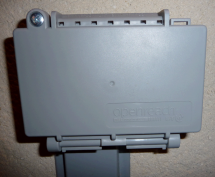
It isn't one of these, it's just a moulded piece of capping with a single screw at the top. There is a protruding rectangular area towards the top of the capping which looks like it was designed to house something other than cables. I'll investigate further tomorrow and double check if any of the house sockets are masters.
bimsb6 said:
Plotloss said:
Go to the only socket you can find with one wire, work backwards to the next, check it for a capacitor. If its not there follow the wire back to the previous one and check again.
There's a very very slim chance you'll have an external NTE but I very much doubt it.
on a 9 year old house i would say 99.9% unlikely ,that's why i didn't even mention them .There's a very very slim chance you'll have an external NTE but I very much doubt it.
we only see them on new builds and not always then .
When you attend for a knackered master are you now fitting them or just replacing the internal master with an NTE5?
Accelebrate said:
It isn't one of these, it's just a moulded piece of capping with a single screw at the top. There is a protruding rectangular area towards the top of the capping which looks like it was designed to house something other than cables. I'll investigate further tomorrow and double check if any of the house sockets are masters.

The socket directly after that will be the Master.
Plotloss said:
bimsb6 said:
Plotloss said:
Go to the only socket you can find with one wire, work backwards to the next, check it for a capacitor. If its not there follow the wire back to the previous one and check again.
There's a very very slim chance you'll have an external NTE but I very much doubt it.
on a 9 year old house i would say 99.9% unlikely ,that's why i didn't even mention them .There's a very very slim chance you'll have an external NTE but I very much doubt it.
we only see them on new builds and not always then .
When you attend for a knackered master are you now fitting them or just replacing the internal master with an NTE5?
Gassing Station | Computers, Gadgets & Stuff | Top of Page | What's New | My Stuff