
Garden Bee hives
Discussion


Anyone got one, I don't mean a natural bee hive more the ones you can buy and nurture? I'd like to have one in in my garden as I love bees and honey, but are they practical in a suburban garden? Will the neighbours get pissed off with bees buzzing about (not everyone likes them) but I think a small hive would be nice!
Any thoughts, experiences or links to such things would be appreciated.
Matt
Any thoughts, experiences or links to such things would be appreciated.
Matt
I'd really like the BeeHaus from Omlet to go with our Eglu... https://www.omlet.co.uk/shop/shop.php?cat=Beekeepi...
I'm planning on getting my first Hive next year, although I don't live in town from what i have read onlinbe keeping bees in town works well. Providing you leave enough room for them to take off and land you should be fine.
http://www.urbanbees.co.uk/
Omlet Hives do look good but are awesomely expensive, but their hen houses do work so well....choices choices.
http://www.urbanbees.co.uk/
Omlet Hives do look good but are awesomely expensive, but their hen houses do work so well....choices choices.

Simpo Two said:
Malx said:
Providing you leave enough room for them to take off and land
'Bee Tower to Bee Leader, clear to land on runway two-niner'
Omlet said:
Choosing a Spot in Your Garden
Keeping bees is a bit like owning an airport - you've got to have a well designed building (the beehaus), easy access for service vehicles (you) and a runway for the planes (the bees).
An ideal spot in a garden is against a hedge or fence. This will protect flying bees from the wind and rain. You should position the hive entrance so that the bees can fly in and out in a straight line. A quiet spot in the garden, away from frequently used paths, is best.
Bees normally fly above head height at about 5m above the ground. You can encourage your bees to reach this height quickly by placing a hedge or fence a couple of meters infront of the hive - see picture above.
http://www.omlet.co.uk/products_services/products_services.php?cat=Beehaus&subcat=Garden+BeesKeeping bees is a bit like owning an airport - you've got to have a well designed building (the beehaus), easy access for service vehicles (you) and a runway for the planes (the bees).
An ideal spot in a garden is against a hedge or fence. This will protect flying bees from the wind and rain. You should position the hive entrance so that the bees can fly in and out in a straight line. A quiet spot in the garden, away from frequently used paths, is best.
Bees normally fly above head height at about 5m above the ground. You can encourage your bees to reach this height quickly by placing a hedge or fence a couple of meters infront of the hive - see picture above.
I can't add much info to the thread but I've had a few friends who've had hives in their gardens and they've been fantasticly successful from the word go.
The OH did say the otehr day that she'd heard that bumble bees are on the decline and almost in jeopardy. Can anyone confirm this?
The OH did say the otehr day that she'd heard that bumble bees are on the decline and almost in jeopardy. Can anyone confirm this?
kelk said:
The OH did say the otehr day that she'd heard that bumble bees are on the decline and almost in jeopardy. Can anyone confirm this?
'tis indeed true 
Bumble Bee Crisis
You do need to consider a few things like swarm prevention ( your neighbours might get worried about a cloud of 30,000 odd bees leaving your hive on a sunny summer afternoon ) and extracting the honey from the comb, extrators are quite pricey. Also how do you react to bee stings, you will get stung, so you need to be sure you're fine with that.
kelk said:
I can't add much info to the thread but I've had a few friends who've had hives in their gardens and they've been fantasticly successful from the word go.
The OH did say the otehr day that she'd heard that bumble bees are on the decline and almost in jeopardy. Can anyone confirm this?
I'm assuming you know that bumble bees don't live in hives though?The OH did say the otehr day that she'd heard that bumble bees are on the decline and almost in jeopardy. Can anyone confirm this?
You can put up bee houses for solitary bees. This will encourage more bees into your garden, along with planting bee-friendly flowers and plants.
I've thought about a hive but we don't really eat that much honey and I do wonder if it will annoy the neighbours if you have one in a relatively small garden like ours.
Thanx for the replies folks, I'm ok with bee stings etc so that shouldn't be a big deal, the swarming thing may be worrying though. I plant flowers which attract bees so the garden usually has a few buzzing about anyway. I've been having a look at these too http://www.thorne.co.uk/thorne7.htm it also has info on keeping a garden hive
Matt Black said:
Thanx for the replies folks, I'm ok with bee stings etc so that shouldn't be a big deal, the swarming thing may be worrying though. I plant flowers which attract bees so the garden usually has a few buzzing about anyway. I've been having a look at these too http://www.thorne.co.uk/thorne7.htm it also has info on keeping a garden hive
The Omlet one looks like much better value - only a few more quid, comes with the suit and a chap to set it all up for you. They can also supply the bees.HereBeMonsters said:
Matt Black said:
Thanx for the replies folks, I'm ok with bee stings etc so that shouldn't be a big deal, the swarming thing may be worrying though. I plant flowers which attract bees so the garden usually has a few buzzing about anyway. I've been having a look at these too http://www.thorne.co.uk/thorne7.htm it also has info on keeping a garden hive
The Omlet one looks like much better value - only a few more quid, comes with the suit and a chap to set it all up for you. They can also supply the bees.Timmy35 said:
HereBeMonsters said:
Matt Black said:
Thanx for the replies folks, I'm ok with bee stings etc so that shouldn't be a big deal, the swarming thing may be worrying though. I plant flowers which attract bees so the garden usually has a few buzzing about anyway. I've been having a look at these too http://www.thorne.co.uk/thorne7.htm it also has info on keeping a garden hive
The Omlet one looks like much better value - only a few more quid, comes with the suit and a chap to set it all up for you. They can also supply the bees.We could have saved about £50-70 by getting a wooden coop, building our own run, sourcing chickens locally etc. etc. but at the end of the day we went for an all in one solution, and glad we did. Also, the coops hold their value pretty well judging by ebay and local freeads, so should we ever need to get rid for any reason, we could get a large portion of our money back. Try that with a homemade mass of chicken wire and a rotting wooden coop infested with red mite!
HereBeMonsters said:
Timmy35 said:
HereBeMonsters said:
Matt Black said:
Thanx for the replies folks, I'm ok with bee stings etc so that shouldn't be a big deal, the swarming thing may be worrying though. I plant flowers which attract bees so the garden usually has a few buzzing about anyway. I've been having a look at these too http://www.thorne.co.uk/thorne7.htm it also has info on keeping a garden hive
The Omlet one looks like much better value - only a few more quid, comes with the suit and a chap to set it all up for you. They can also supply the bees.We could have saved about £50-70 by getting a wooden coop, building our own run, sourcing chickens locally etc. etc. but at the end of the day we went for an all in one solution, and glad we did. Also, the coops hold their value pretty well judging by ebay and local freeads, so should we ever need to get rid for any reason, we could get a large portion of our money back. Try that with a homemade mass of chicken wire and a rotting wooden coop infested with red mite!

my only comment would be that I can't see why they aren't offering a basic plastic extractor for say £200 as well. Becuase there suggestion of decapping the combs then letting the honey 'drip out' made me raise an eyebrow.
Also feeding, it's better to remove all of the honey, then feed the bees sugar syrup ahead of winter.
I'd recommend you buy and carefully read this.
http://www.amazon.co.uk/Guide-Bees-Honey-Selling-B...
Before taking the plunge.
Just looking at the omlet ones atm, yeah they look good, also the link to
urbanbees.co.uk someone posted is great, the videos are interesting and well worth a look, I think I'll order that book so hopefully I'll have half a clue before taking the plunge and getting a hive.
Thanx again for all your input folks :thumb:
urbanbees.co.uk someone posted is great, the videos are interesting and well worth a look, I think I'll order that book so hopefully I'll have half a clue before taking the plunge and getting a hive.
Thanx again for all your input folks :thumb:
get in contact with your local Bee Society as they will already have the kit you need to extract the honey(don't be upset if you don't get any honey the first year), will give you access to insurance and also a breadth of advice. As with most things, everybody has their own way!
Here's a couple of pics of ones a mate has (this is first year, we've experienced a 'blip' since...);
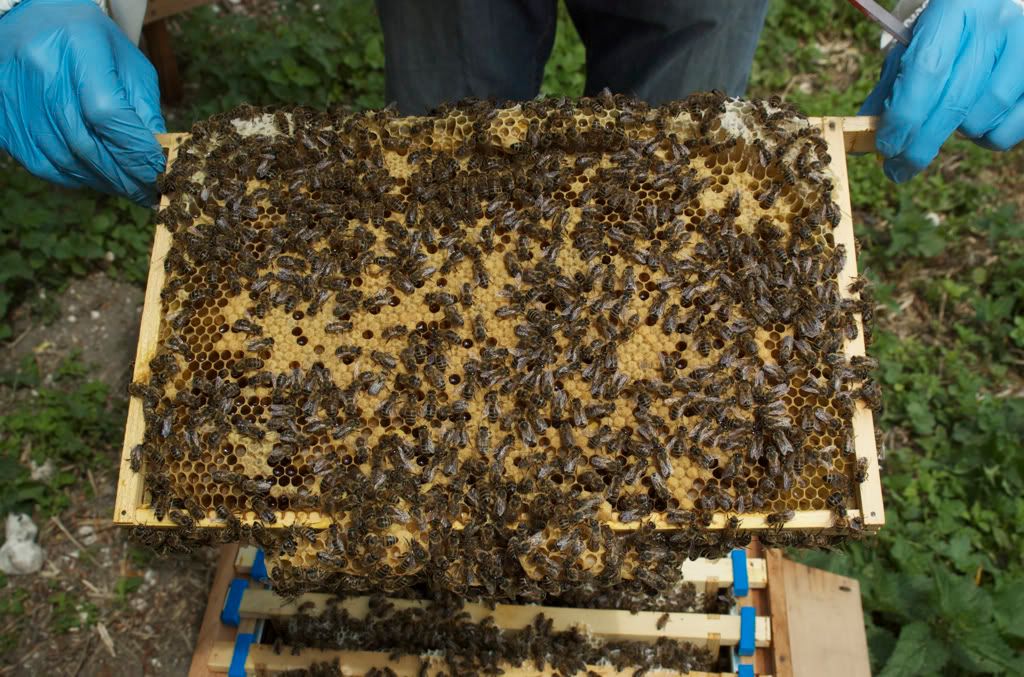
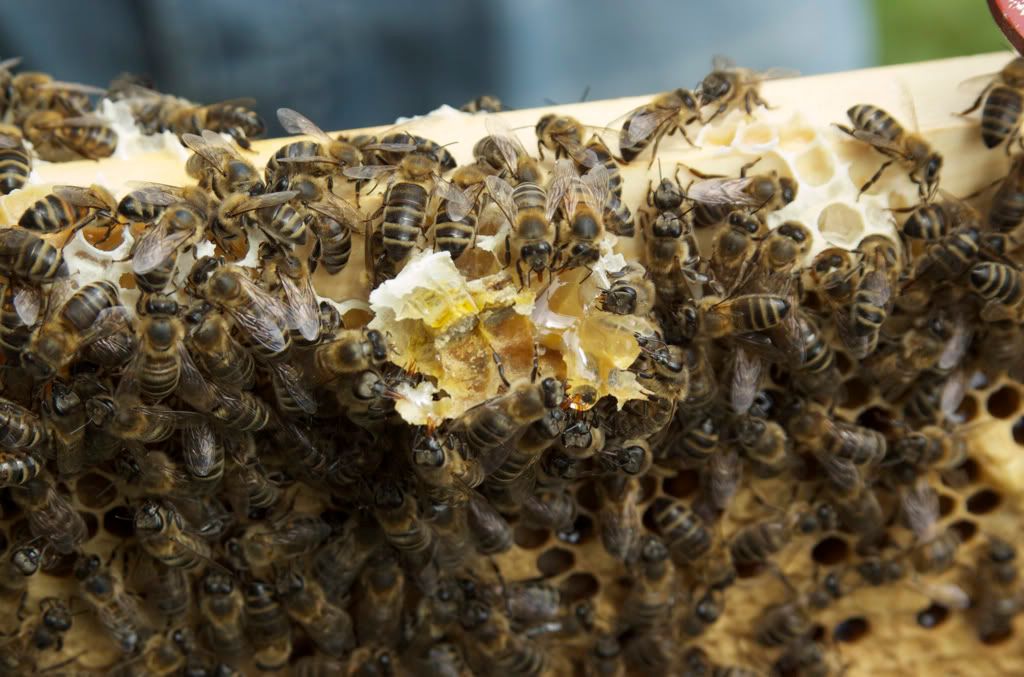
Here's a couple of pics of ones a mate has (this is first year, we've experienced a 'blip' since...);
Edited by Red Firecracker on Wednesday 21st July 13:35
I'm a beeginner as of the start of this year. We thought you could just buy a hive, stick it in the corner of the garden and let the bees get on with it. I suppose we could do, but we wouldn't mind a bit of honey and don't want the bees to be wiped out by disease so there's a lot more to it than we thought. Trying to prevent swarming, disease, keeping them fed, keeping mice and wasps out of the hive are a few of the things to think about - and that's just to keep the colony ticking over.
We've done a course with the local beekeeping society which has been really useful - I don't think we'd have had much success without it. One of Thorne's cheap flat pack hives set us back £135 or so and a colony of bees from a local beekeeper cost £170. Add in the cost of a suit and a few other bits and pieces and the start up costs mount up - and it would be quite easy to lose the bees within a few weeks.
They're fascinating little creatures though and it's good to try and do our bit for them.
I'm sure I've seen a new book about urban beekeeping so this might be a useful guide.
dd
We've done a course with the local beekeeping society which has been really useful - I don't think we'd have had much success without it. One of Thorne's cheap flat pack hives set us back £135 or so and a colony of bees from a local beekeeper cost £170. Add in the cost of a suit and a few other bits and pieces and the start up costs mount up - and it would be quite easy to lose the bees within a few weeks.
They're fascinating little creatures though and it's good to try and do our bit for them.
I'm sure I've seen a new book about urban beekeeping so this might be a useful guide.
dd
daved said:
I'm a beeginner as of the start of this year. We thought you could just buy a hive, stick it in the corner of the garden and let the bees get on with it. I suppose we could do, but we wouldn't mind a bit of honey and don't want the bees to be wiped out by disease so there's a lot more to it than we thought. Trying to prevent swarming, disease, keeping them fed, keeping mice and wasps out of the hive are a few of the things to think about - and that's just to keep the colony ticking over.
We've done a course with the local beekeeping society which has been really useful - I don't think we'd have had much success without it. One of Thorne's cheap flat pack hives set us back £135 or so and a colony of bees from a local beekeeper cost £170. Add in the cost of a suit and a few other bits and pieces and the start up costs mount up - and it would be quite easy to lose the bees within a few weeks.
They're fascinating little creatures though and it's good to try and do our bit for them.
I'm sure I've seen a new book about urban beekeeping so this might be a useful guide.
dd
Thanx for that, I can understand a thread from wasps, but Mice? I'd have thought a mouse wouldn't stand a chance in a hive, what do you have to do to prevent them swarming, I think that would be my biggest worry?We've done a course with the local beekeeping society which has been really useful - I don't think we'd have had much success without it. One of Thorne's cheap flat pack hives set us back £135 or so and a colony of bees from a local beekeeper cost £170. Add in the cost of a suit and a few other bits and pieces and the start up costs mount up - and it would be quite easy to lose the bees within a few weeks.
They're fascinating little creatures though and it's good to try and do our bit for them.
I'm sure I've seen a new book about urban beekeeping so this might be a useful guide.
dd
I'm going to google phone numbers for my local beekeeping society and go see how it's done first hand before I decide what hive type to go for etc.
Nice pics Red Firecracker

Matt Black said:
Thanx for that, I can understand a thread from wasps, but Mice? I'd have thought a mouse wouldn't stand a chance in a hive, what do you have to do to prevent them swarming, I think that would be my biggest worry?
I'm going to google phone numbers for my local beekeeping society and go see how it's done first hand before I decide what hive type to go for etc.
Nice pics Red Firecracker
Oddly enough they do. The little sods get in and wreak havok. I think it's because once something is inside the bees tend to by busy at work, not looking for intruders, and so the mouse can happily go about it's business. I'm going to google phone numbers for my local beekeeping society and go see how it's done first hand before I decide what hive type to go for etc.
Nice pics Red Firecracker
Gassing Station | Homes, Gardens and DIY | Top of Page | What's New | My Stuff