
Photoshop, is it really a photograph?
Discussion


I know absolutely nothing about photography apart from point and click. Yet I have seen some fantastic shots on the web and particularly this forum.
A question always enters my head on seeing such delights, that is, what I'm seeing many times is not really what the lens captured. HDR comes to mind.
Hence is photoshop a photo or just the photographers interpidation of what the photographer wanted to take. If yes, is this a limitation on the photographers skill or kit, or couldn't a skilled photoshoper manipulate a scene of lets say a wheat field in summer and with lots of skill turn that into a stunning portrait of a person or seascape.
Its just something that intrigues me about highly skilled photographers which many of you are.
I know there is no one answer but would be interested in what YOU class as a scene you captured as photo or a photoshop.
Thoughts
A question always enters my head on seeing such delights, that is, what I'm seeing many times is not really what the lens captured. HDR comes to mind.
Hence is photoshop a photo or just the photographers interpidation of what the photographer wanted to take. If yes, is this a limitation on the photographers skill or kit, or couldn't a skilled photoshoper manipulate a scene of lets say a wheat field in summer and with lots of skill turn that into a stunning portrait of a person or seascape.
Its just something that intrigues me about highly skilled photographers which many of you are.
I know there is no one answer but would be interested in what YOU class as a scene you captured as photo or a photoshop.
Thoughts
Edited by 69 coupe on Monday 6th September 22:00

The photographer of olden times were at it as well, forcing film speeds, choosing contasty papers, dodging and burning, adding tints in processing - all the tricks they could. I still have my father's notes on the different chemicals he used to get different coloured tints.
Digital just allows more and faster, and also 'Ctrl-Z'
Digital just allows more and faster, and also 'Ctrl-Z'
I can relate to the OP's question. After I first picked up my camera and I was told that I would have to process every single photo my first thought was 'isn't this taking some of the skill away?'
I personally like to get the photo as right as possible at the time of taking and then adjust the levels if I really need to afterwards, this even includes playing with the white balance while shooting.
I am sure there are benefits that I have not yet discovered with the options available of post-processing though!
I personally like to get the photo as right as possible at the time of taking and then adjust the levels if I really need to afterwards, this even includes playing with the white balance while shooting.
I am sure there are benefits that I have not yet discovered with the options available of post-processing though!
forty-two said:
I can relate to the OP's question. After I first picked up my camera and I was told that I would have to process every single photo my first thought was 'isn't this taking some of the skill away?'
One could argue that the processing (what you do to the image) is where the skill lies (assuming you can do exposure and composition). Anyone can cut down a tree; it takes skill to make a Chippendale chair from it...Ths evening I am mostly processing an awkward sequence taken in a church, no flash allowed, a dark scene with sun blasting in through windows behind. Yes, I'm shooting RAW, recovering highlights, boosting shadows, double processing and compositing using layer masks - because the image looks better that way. And that is what I'm judged by, even though the viewer will have no idea what went on to get it.
If I showed you an 'as shot' JPG, and the alternative, you'd see what I mean.
Edited by Simpo Two on Monday 6th September 21:58
I've thought about this a lot after a number of people have asked me which shots I edit and which I don't...
My view, being great with the camera or being great with photoshop can lead to great results...
Being good at both can lead to great results...
Combining one to make a single vision come through is when you get something exceptional.
So I don't think it takes away from what you can do in-camera, it adds to it. If you ahve something in mind when you click the shutter then Photoshop can help make it a reality.
My view, being great with the camera or being great with photoshop can lead to great results...
Being good at both can lead to great results...
Combining one to make a single vision come through is when you get something exceptional.
So I don't think it takes away from what you can do in-camera, it adds to it. If you ahve something in mind when you click the shutter then Photoshop can help make it a reality.
pernod said:
I've thought about this a lot after a number of people have asked me which shots I edit and which I don't...
My view, being great with the camera or being great with photoshop can lead to great results...
Being good at both can lead to great results...
Combining one to make a single vision come through is when you get something exceptional.
So I don't think it takes away from what you can do in-camera, it adds to it. If you ahve something in mind when you click the shutter then Photoshop can help make it a reality.
So really your making a digital painting?My view, being great with the camera or being great with photoshop can lead to great results...
Being good at both can lead to great results...
Combining one to make a single vision come through is when you get something exceptional.
So I don't think it takes away from what you can do in-camera, it adds to it. If you ahve something in mind when you click the shutter then Photoshop can help make it a reality.
Simpo Two said:
69 coupe said:
So really your making a digital painting?
I'd say not. Painting is making stuff up from scratch. Adding a church spire here, a horse there. Processing in my book is making the best of what you have.Thinking about it, you would also need artistic skills also (painting), otherwse it would be all matchstick men and blue peter drawings.
Could a really good photographer photos be classed as mediocre because he/she is s
 t at photoshop.
Pedantic I know but just for discussion purposes.
forty-two said:
Simpo, I am still very much learning about exposure but with the processing question in mind, the image you mentioned that you are processing, would it be at all possible to have taken the photo in one shot?
Well, the data is recorded in a single expoure (or I couldn't use it) but the image is made afterwards as you process RAW data to JPG. To wring out all the detail from highlights and shadows in a demanding shot in a pleasing way takes effort. Ultimately you're limited by the dynamic range of the sensor. To get the best result you have to apply a tone curve, either automatically in camera or manually afterwards - and the optimum curve is different for each shot; the camera can't guess what you want. Sometimes different areas of the image need different treatment. Which is where you have to step in and make it how you want it. Eyes and brains are jolly clever, cameras aren't!Edited by Simpo Two on Monday 6th September 23:37
69 coupe said:
Hence is photoshop a photo or just the photographers interpidation of what the photographer wanted to take. If yes, is this a limitation on the photographers skill or kit, or couldn't a skilled photoshoper manipulate a scene of lets say a wheat field in summer and with lots of skill turn that into a stunning portrait of a person or seascape.
Interesting philosophical viewpoint. The technology and art symbiosis. Think laterally though - is the photographer using lighting or a flash a false manipulation too? Where do you logically draw the line.
IMHO the line is drawn culturally, and that changes with fashion.
I'll give an example. In the early 18th century the cultural 'Photoshop' was the pianoforte. It was designed not as an instrument to listen to - it was designed as a composition tool which is why it has a tonal range which covers the whole orchestra. It also had keys and hammers to maximise the dynamic range and match that of every orchestral instrument. Finally it was fitted with pedals to among other things sustain out notes to emulate stringed instruments.
When it came out it was as uncouth as Photoshop, but what about today? The piano is as traditional an instrument as you can get!
I think that digital has given us all the ability to do things in post that never would have been possible before. When I first got into photography 20 odd years ago I used to do my own black and white printing, as simpo said there was a lot ot dodging and burning going on 
The difference now is that I use lightroom and photoshop and have a much larger tool kit.
For me thats the bit I enjoy, I am not a good photographer but I love the process of making the best of the pictures I take...
Simpo, it would be good to see the church shots, before and after...
D
The difference now is that I use lightroom and photoshop and have a much larger tool kit.
For me thats the bit I enjoy, I am not a good photographer but I love the process of making the best of the pictures I take...
Simpo, it would be good to see the church shots, before and after...
D

photoshop is a digital darkroom - a lot of the functions you see in there just replicate techniques you employ when developing your own pictures.
if you believe that photographers in pre-digital times were somehow 'doing it properly' then take some time to investigate the manipulations made in the darkroom before deciding if photoshop is a good idea or not. there is a great Helmut Newton photograph of a young Twiggy shot with film, in which Helmut added a flying cat in the background - published in UK Vogue magazine in March 1967. Layers are nothing new.
for me its part of the process. like everyone i try to get as much done in camera as possible. if the photo is important i always shoot in raw so i can decide how i want to process it, just like shooting in manual mode so i can decide how to expose it.
photoshop doesnt take long to learn, and is worth the effort - just like the darkroom.
if you believe that photographers in pre-digital times were somehow 'doing it properly' then take some time to investigate the manipulations made in the darkroom before deciding if photoshop is a good idea or not. there is a great Helmut Newton photograph of a young Twiggy shot with film, in which Helmut added a flying cat in the background - published in UK Vogue magazine in March 1967. Layers are nothing new.
for me its part of the process. like everyone i try to get as much done in camera as possible. if the photo is important i always shoot in raw so i can decide how i want to process it, just like shooting in manual mode so i can decide how to expose it.
photoshop doesnt take long to learn, and is worth the effort - just like the darkroom.
My 2ps worth.
I try to get my photos to look like I saw them, not how the camera saw them. (This is 90% realism 10% me adding a bit of my own artistic feel).
Also - cameras are VERY stupid. Post processing can help.
Take this photo for example (taken with a point and shoot). It was always going to confuse the camera as the background was really bright and the foreground dark (and point and shoots are rubbish in such circumstances). The first shot is how it came out of the camera. But that's not what I saw with my eyes. I knew that I could 'recover' the shot and get it back to what I saw.
Post processing done it's nearly exactly how my eyes saw it. (With that 10% artistic thing that I hope, get's a bit of 'me' into the photo)
I chose this photo as it's the most extreme example I could find.
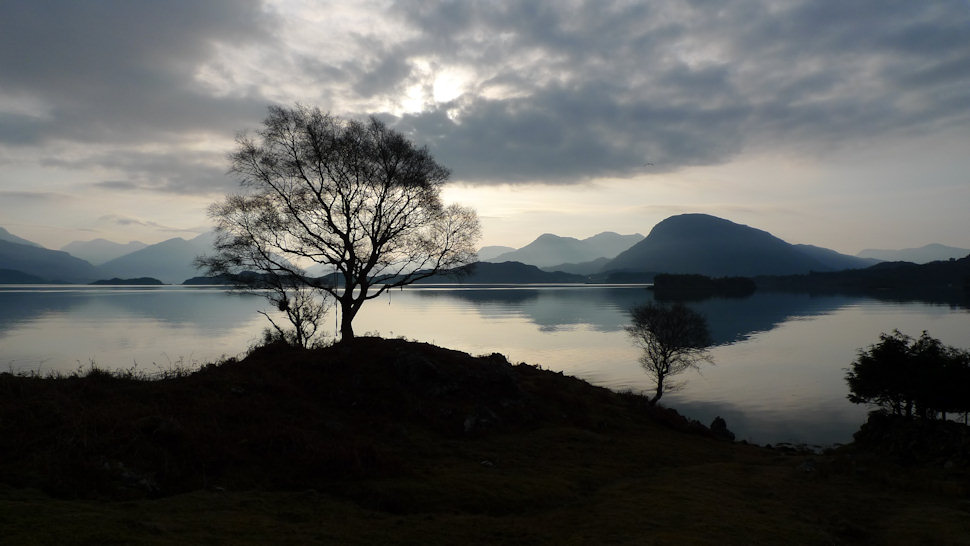
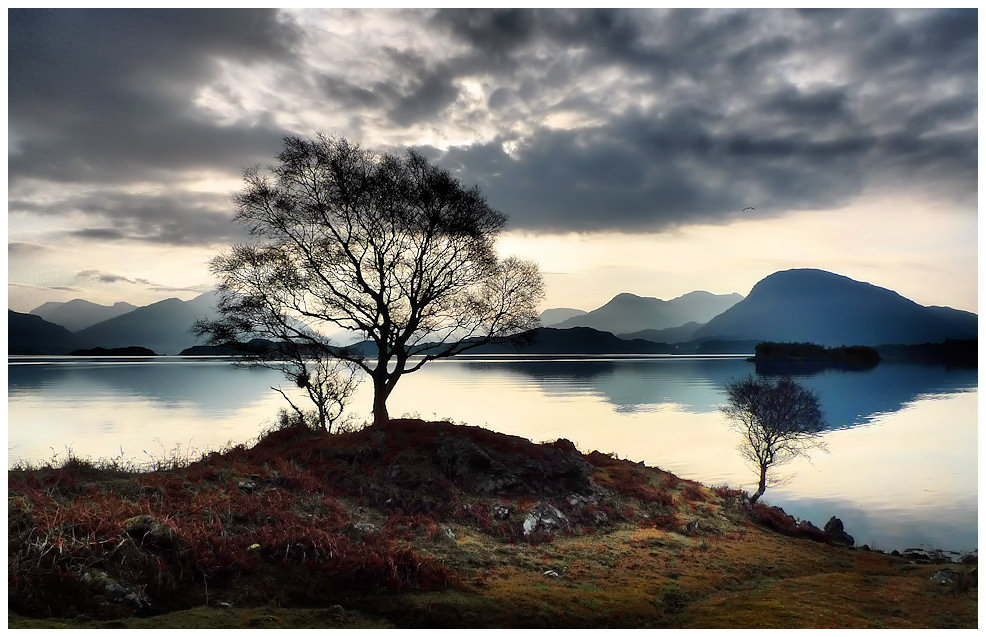
I try to get my photos to look like I saw them, not how the camera saw them. (This is 90% realism 10% me adding a bit of my own artistic feel).
Also - cameras are VERY stupid. Post processing can help.
Take this photo for example (taken with a point and shoot). It was always going to confuse the camera as the background was really bright and the foreground dark (and point and shoots are rubbish in such circumstances). The first shot is how it came out of the camera. But that's not what I saw with my eyes. I knew that I could 'recover' the shot and get it back to what I saw.
Post processing done it's nearly exactly how my eyes saw it. (With that 10% artistic thing that I hope, get's a bit of 'me' into the photo)
I chose this photo as it's the most extreme example I could find.
The editing is what makes all the difference. Here's a quick example from another forum; a member posts their shots after editing, not particularly happy with them. They send me one of the originals to edit myself, and I'd like to think that there is a fair bit of improvement! I'm not proclaiming to be any kind of genius in Photoshop (far from it), just that I've been using it for a while now.
Here are the shots:
Original edit:

My edit:

It really can make or break a photo!
Here are the shots:
Original edit:
My edit:
It really can make or break a photo!
Gassing Station | Photography & Video | Top of Page | What's New | My Stuff