
Un-sprung Mass
Discussion


Can someone please explain the physics behind reducing un-sprung mass making a car better at tackling corners and such.
I have heard many stories about trying to keep these masses down to improve a cars feel and performance when driving and I just wondered why this happened.
I think this is the correct section to put this question in as it is about cars and driving.
Cheers,
Bob
I have heard many stories about trying to keep these masses down to improve a cars feel and performance when driving and I just wondered why this happened.
I think this is the correct section to put this question in as it is about cars and driving.
Cheers,
Bob
The easiest terms I can put it in is that the unsprung mass is held against the road by the sprung mass, so the lighter the unsprung mass, and the heavier the sprung mass, the more the wheel will track against the road rather than lifting the body up, and the faster the body can push the wheel back down after a bump.
It's like an 8 stone skinny lad trying to lift a sumo wrestler vs the other way around.
It's a bit more involved and I've not explained it very well, but I'm just on my way so it'll have to wait.
It's like an 8 stone skinny lad trying to lift a sumo wrestler vs the other way around.
It's a bit more involved and I've not explained it very well, but I'm just on my way so it'll have to wait.
Edited by PhillipM on Saturday 4th December 15:34
Think in terms of the tyre-wheel unit itself, although that is just part of the UM.
As the vehicle moves, the discontinuities in the road surface will cause the tyre to move up and down. The higher the speed, the greater the movement. As it moves up and down, the tyre will not stay in perfect interface ("contact patch") with the road surface. Whenever that contact patch is compromised, grip is compromised.
The heavier the wheel, the more difficult it will be for the damper to control the movement of that tyre, and the worse the compromises in the contact patch will become. Reducing UM reduces the difficulty that the damper has in keeping that contact patch in its ideal size and shape.
As the vehicle moves, the discontinuities in the road surface will cause the tyre to move up and down. The higher the speed, the greater the movement. As it moves up and down, the tyre will not stay in perfect interface ("contact patch") with the road surface. Whenever that contact patch is compromised, grip is compromised.
The heavier the wheel, the more difficult it will be for the damper to control the movement of that tyre, and the worse the compromises in the contact patch will become. Reducing UM reduces the difficulty that the damper has in keeping that contact patch in its ideal size and shape.

5 USA said:
Eggman said:
Imagine waving your hand around empty, then doing the same thing holding a tin of beans. Which is easier?
Then imagine the effect on your car when you make it more "sporty" by fitting bigger wheels, bigger tyres, bigger brake discs and bigger calipers....AnotherClarkey said:
5 USA said:
Eggman said:
Imagine waving your hand around empty, then doing the same thing holding a tin of beans. Which is easier?
Then imagine the effect on your car when you make it more "sporty" by fitting bigger wheels, bigger tyres, bigger brake discs and bigger calipers....5 USA said:
Eggman said:
Imagine waving your hand around empty, then doing the same thing holding a tin of beans. Which is easier?
Then imagine the effect on your car when you make it more "sporty" by fitting bigger wheels, bigger tyres, bigger brake discs and bigger calipers....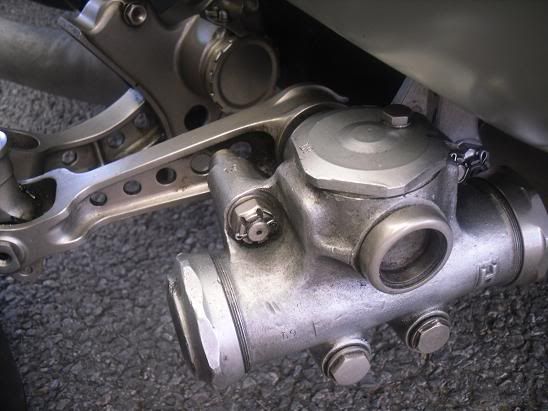
flemke said:
Also, damping technology has come far...
On the other hand, even the most perfect damper in the world would still have to arrest the momentum of the unsprung mass by transmitting that force to the chassis in something close to one cycle of the suspension deflection.No matter how good your dampers are, unsprung mass will always be a bad thing in terms of both ride quality and grip.
Wheels, tyres, and brakes should be as big (and as heavy) as they need to be, and no more.
Sam_68 said:
flemke said:
Also, damping technology has come far...
On the other hand, even the most perfect damper in the world would still have to arrest the momentum of the unsprung mass by transmitting that force to the chassis in something close to one cycle of the suspension deflection.No matter how good your dampers are, unsprung mass will always be a bad thing in terms of both ride quality and grip.
Wheels, tyres, and brakes should be as big (and as heavy) as they need to be, and no more.
As has been pointed out wrt to query about whether pressed steel can result in a lighter wheel than cast/forged ally might do, however, there are many factors that go into optimising the package, and in practice UM will never be as light as it could possibly be.
flemke said:
in practice UM will never be as light as it could possibly be.
Particularly since "inboard disc brakes" have gone notably out of fashion, perhaps due to a combination of cooling and styling issues. And the sheer size of modern brakes - which brings us back where we started!Gassing Station | General Gassing [Archive] | Top of Page | What's New | My Stuff