
Audi RS5 (8T) | PH Used Buying Guide
One of Audi's best designs, powered by one of its greatest engines, is now supermini money - here's how to get one

Key considerations
- Available for £16,000
- 4.2-litre, naturally aspirated V8, all-wheel drive
- Four-second 0-62 performance in a classy four-seat body
- One of the last non-turbo V8s, it needs revs
- Not much goes wrong...
- ... but it's worth getting a warranty in case something does
Search for an Audi RS5 here
OVERVIEW
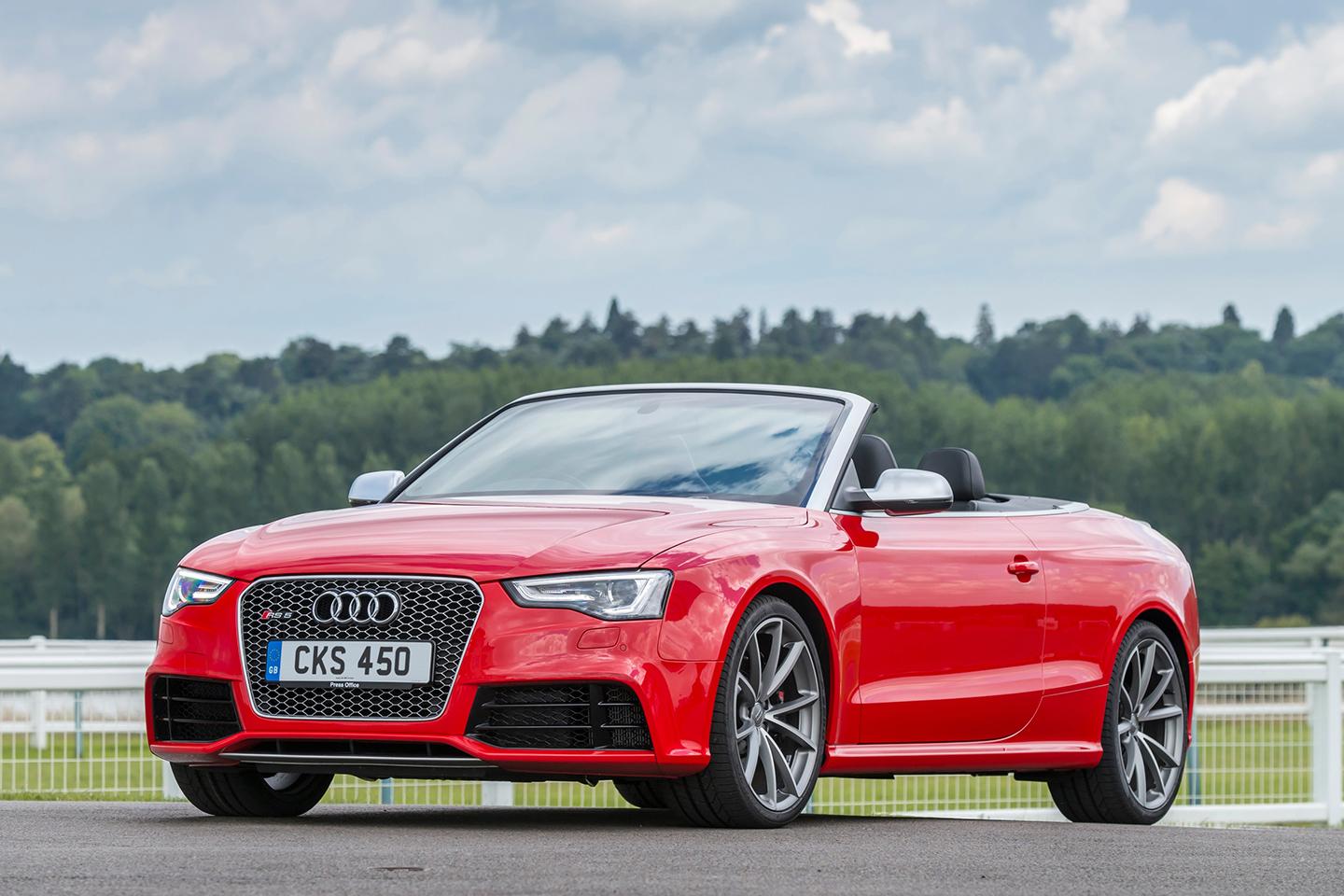
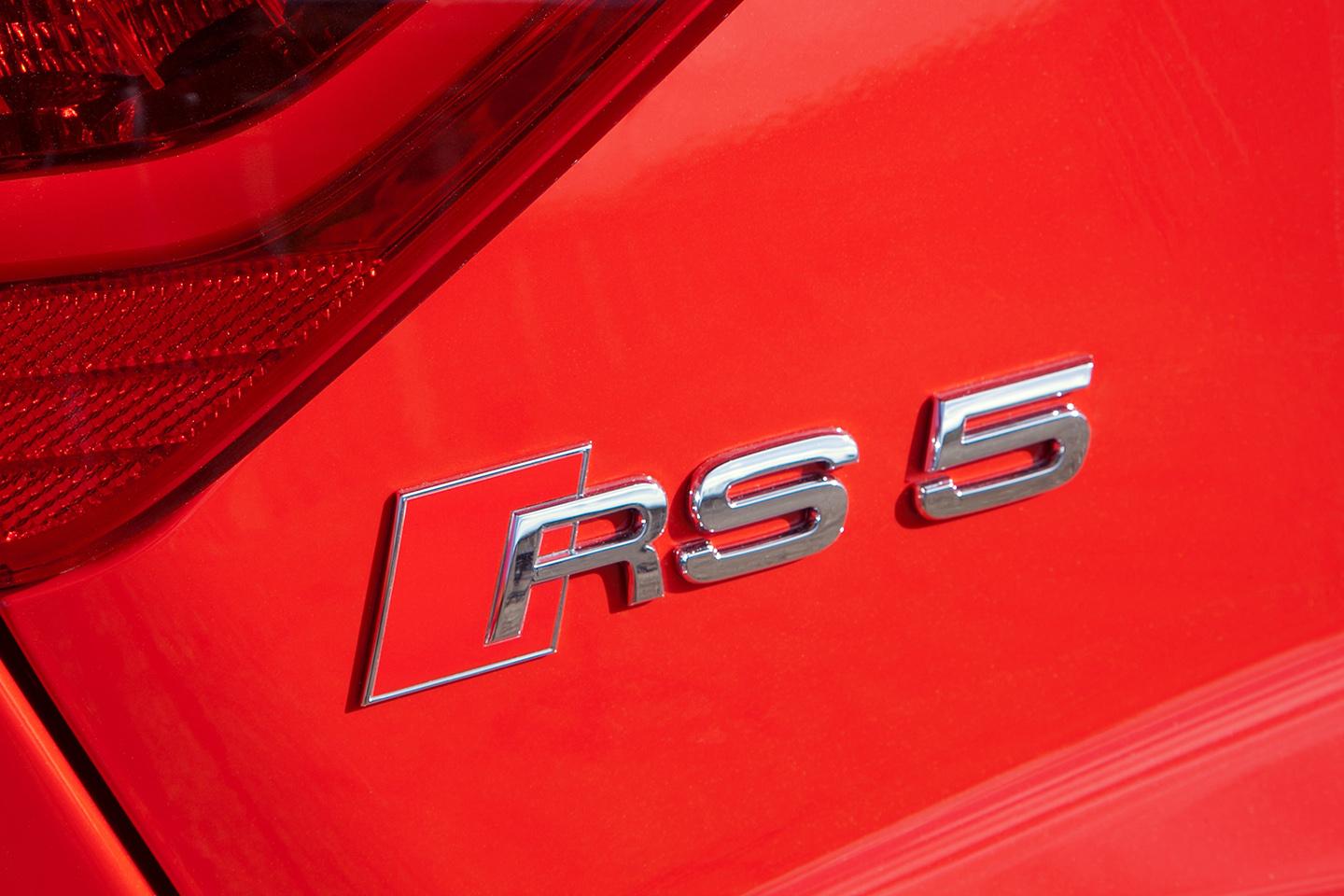
An iconic, naturally aspirated V8 engine with 450hp, in a well-built, dependable, superbly equipped, and handsome four-seater coupe or convertible with four rings on the grille, all for the same money as a base model Kia Rio 1.2. Really, what's not to like about the original Audi RS5?
The hot RS5 coupe version of the 2007 B8 A5 was put on sale in the spring of 2010 after its unveil at that year's Geneva motor show. It was powered by a 4.2 litre FSI V8. Not the same 4.2 V8 as had been seen in earlier Audis, but a new one that was to all intents and purposes four-fifths of the 5.2 FSI V10 engine used in the D3 Audi S8 and Audi R8. The new normally-aspirated motor produced 450hp and 317 lb ft, making it 30hp more powerful than the B7 RS4's unit. As a bonus it was 72g/km less polluting, with 252g/km of CO2.
The V8 was hooked up to Audi's seven-speed S-Tronic transmission and quattro permanent all-wheel-drive system, featuring a new and more compact crown-gear centre differential that could direct up to 70 per cent of torque to the front wheels and reputedly up to 85 per cent to the rears.
The RS5 was no featherweight at 1,715 kg, and more than 56 per cent of that was stacked at the front end. To counteract the understeer that would be a natural consequence of that sort of nose-heaviness, Audi added electronic torque vectoring to apply braking to inside wheels that were struggling for traction.

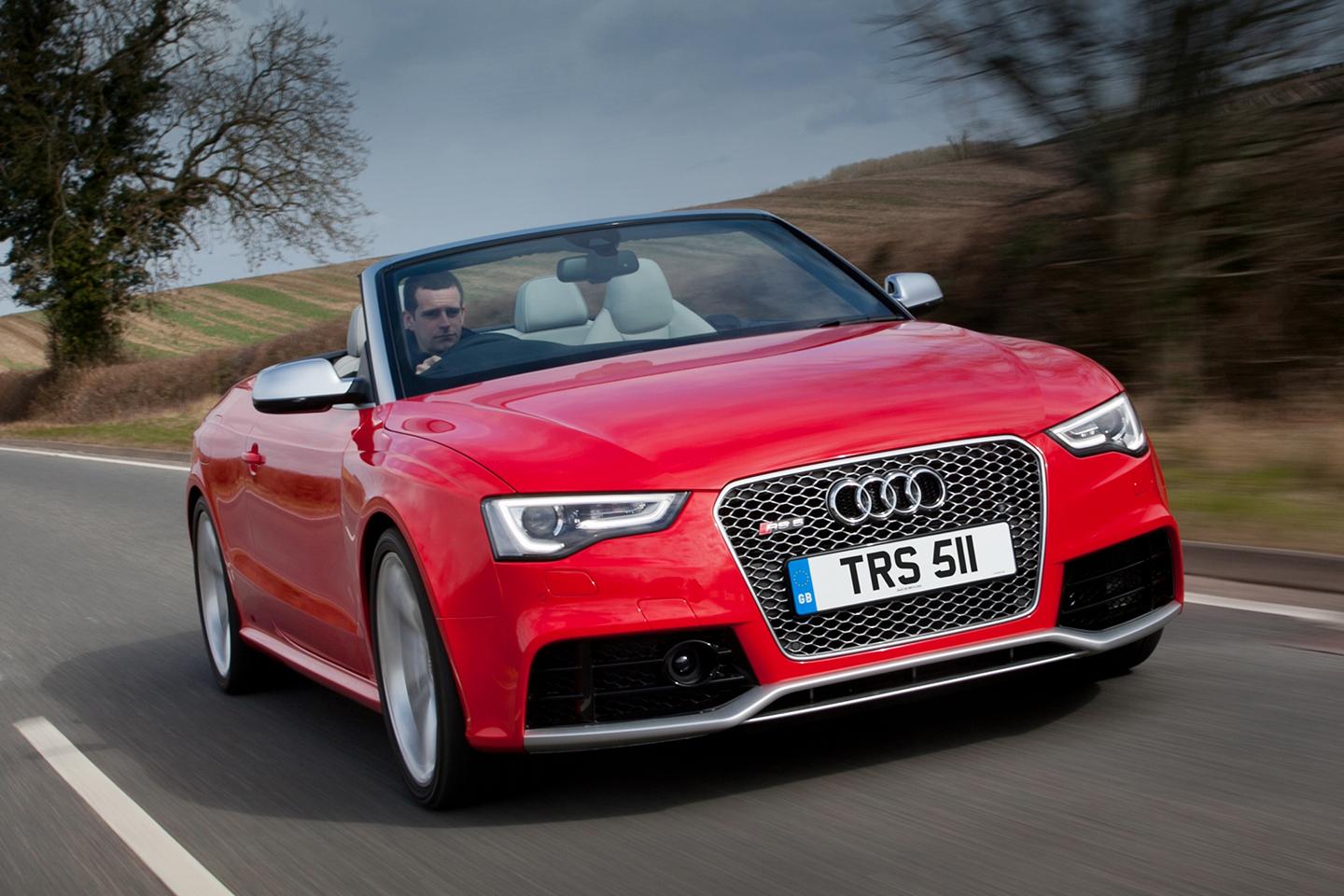
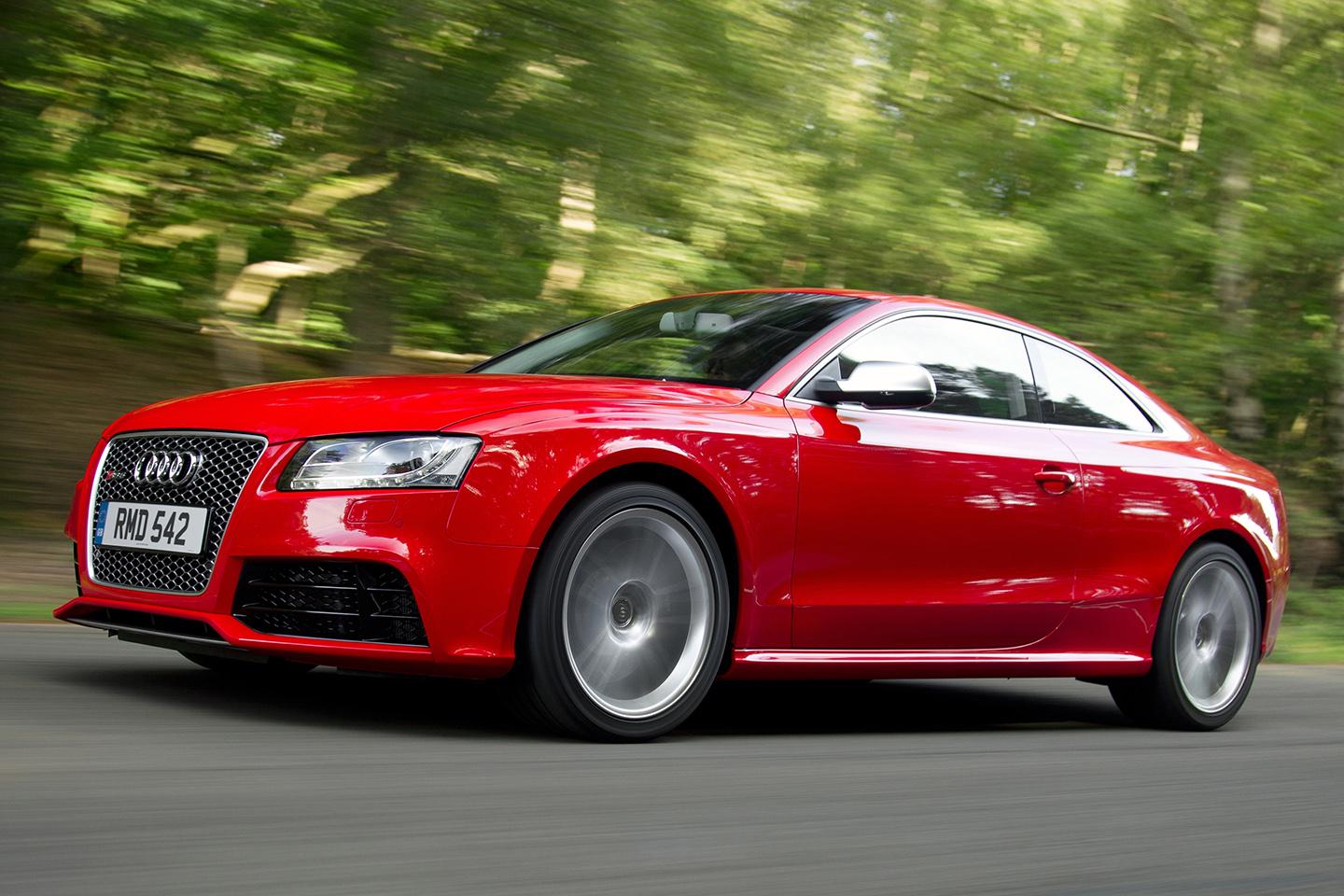
A range facelift at the end of 2011 didn't bring monumental changes to the RS5. Audi's latest multimedia interface system was a useful upgrade, but externally the mods amounted to little more than a bigger grille, a new bumper that narrowed the headlights towards the grille, and 10-spoke, 19-inch wheels. For around £1,500, Audi would decouple the 155mph governor to uncork a new top speed of 174mph.
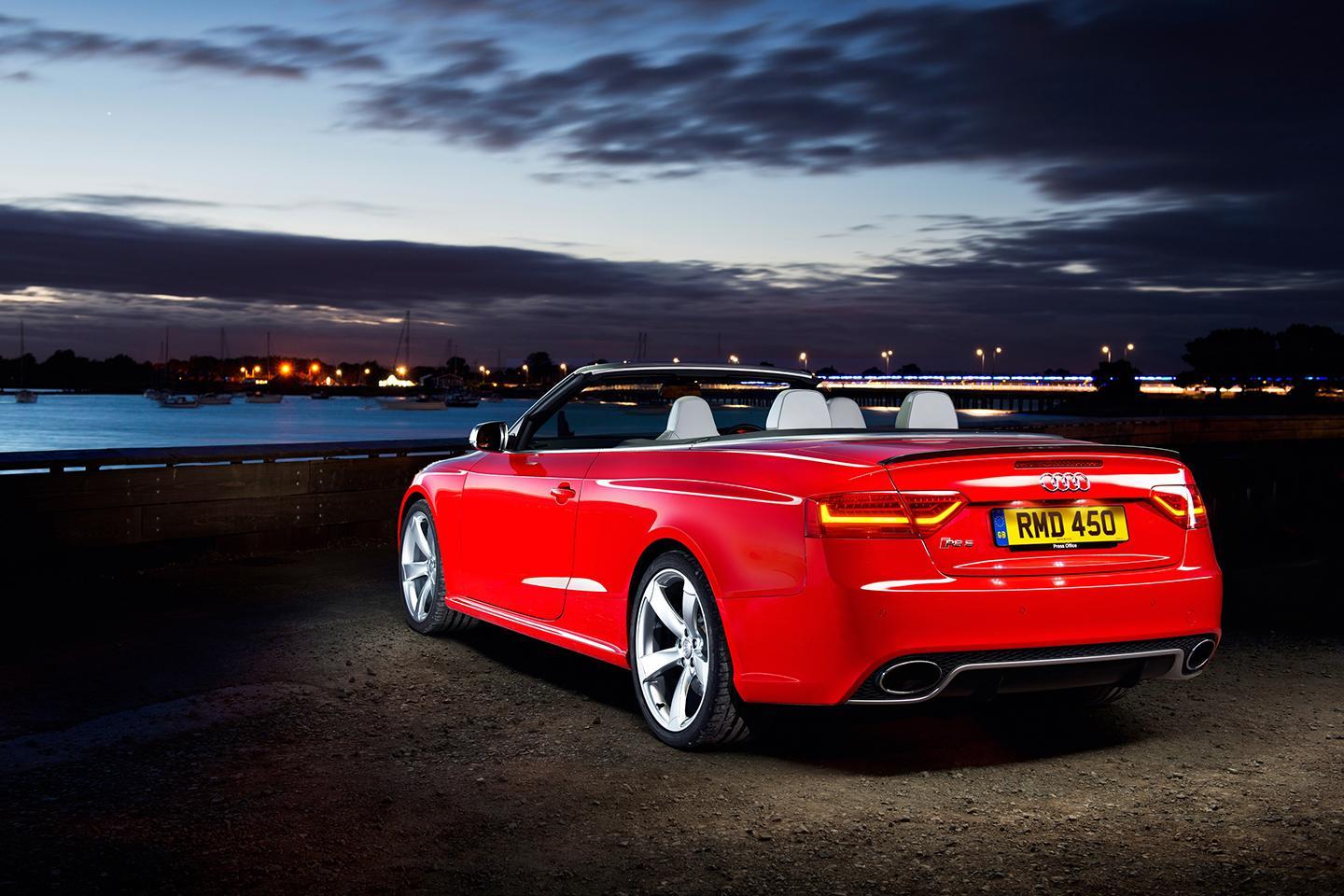
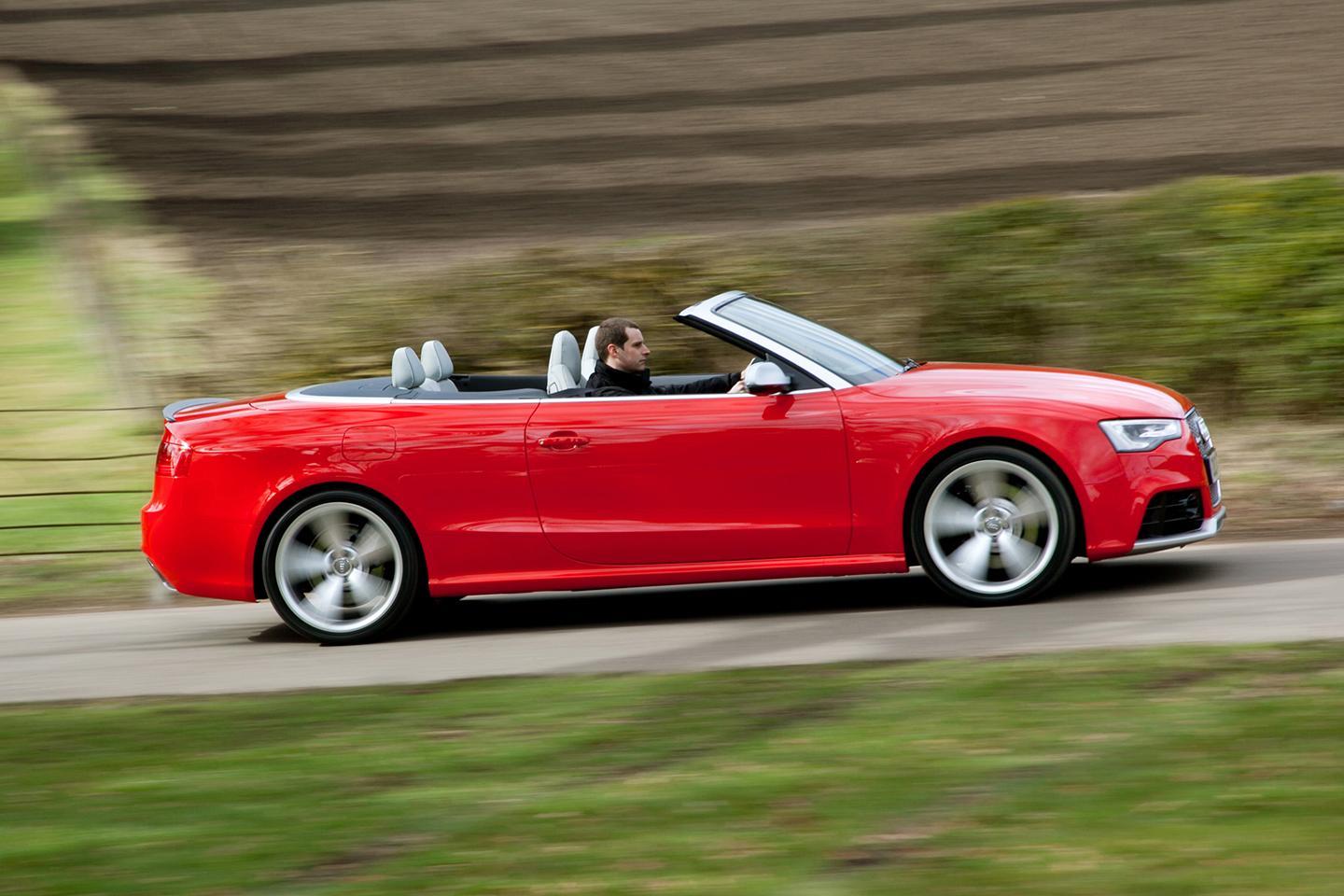
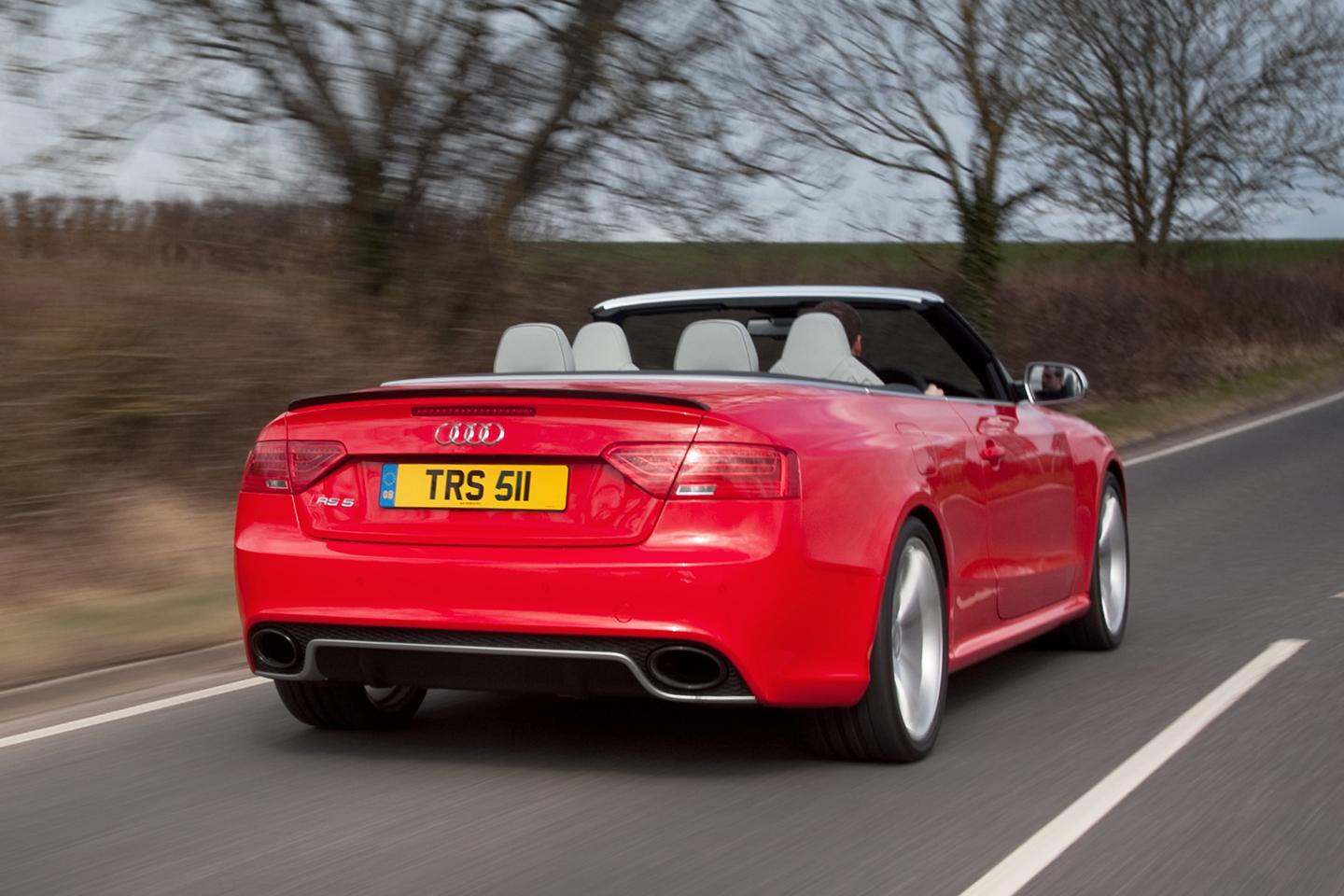
In 2013, a year after its debut at the Paris show, a Cabriolet version doubled the size of the RS5 range. It had the same drivetrain and all-wheel drive chassis as the coupe, but once the usual drop-top stiffening measures had been put in place both the weight and the 0-62mph time went up to 1,920kg and 4.9sec respectively. Prices for the Cab started at £68,985, which was about £7k more than an M3 convertible.
Early tests of the RS5 coupe were lukewarm, especially when it was put up against the more 'alive' BMW M3. Some serial Audi buyers said they preferred the old B7 RS4 to the B8 RS5. Whatever your view, depreciation has now turned the RS5 into a brilliant under-the-radar prospect for people who don't plan on spending too much time blasting around tracks or airfields in search of dynamic flaws.
Three years ago, the entry point for an RS5 was around £25k. In 2021, it's £16,000. Instead of sitting there scratching your chin, use your digit to scroll through our buyer's guide to work out why you're not getting into one of these. Make sure it's an actual RS5 you're getting into, by the way. There are an awful lot of 'RS5 replicas' about with 2.0 diesel engines under the bonnet. You can see why. A real RS5 cost at least £57,500 new and specced-up cars were knocking on the door of £70k. The running costs of a used example will reflect these prices and, inconveniently, they won't reduce in line with the value of the car.
SPECIFICATION | AUDI RS5 (2010-2016)
Engine: 4,163cc V8 32v
Transmission: 7-speed dual-clutch automatic, all-wheel drive
Power (hp): 450@8,250rpm
Torque (lb ft): 317@4,000rpm
0-62mph (secs): 4.6
Top speed (mph): 155
Weight (kg): 1,715
MPG: 26.2 (official combined)
CO2: 252 (g/km)
Wheels (in): 19-inch
Tyres: 265/35
On sale: 2010 - 2016
Price new: £57,500
Price now: from £16,000
Note for reference: car weight and power data are hard to pin down with absolute certainty. For consistency, we use the same source for all our guides. We hope the data we use is right more often than it's wrong. Our advice is to treat it as relative rather than definitive.
ENGINE & GEARBOX
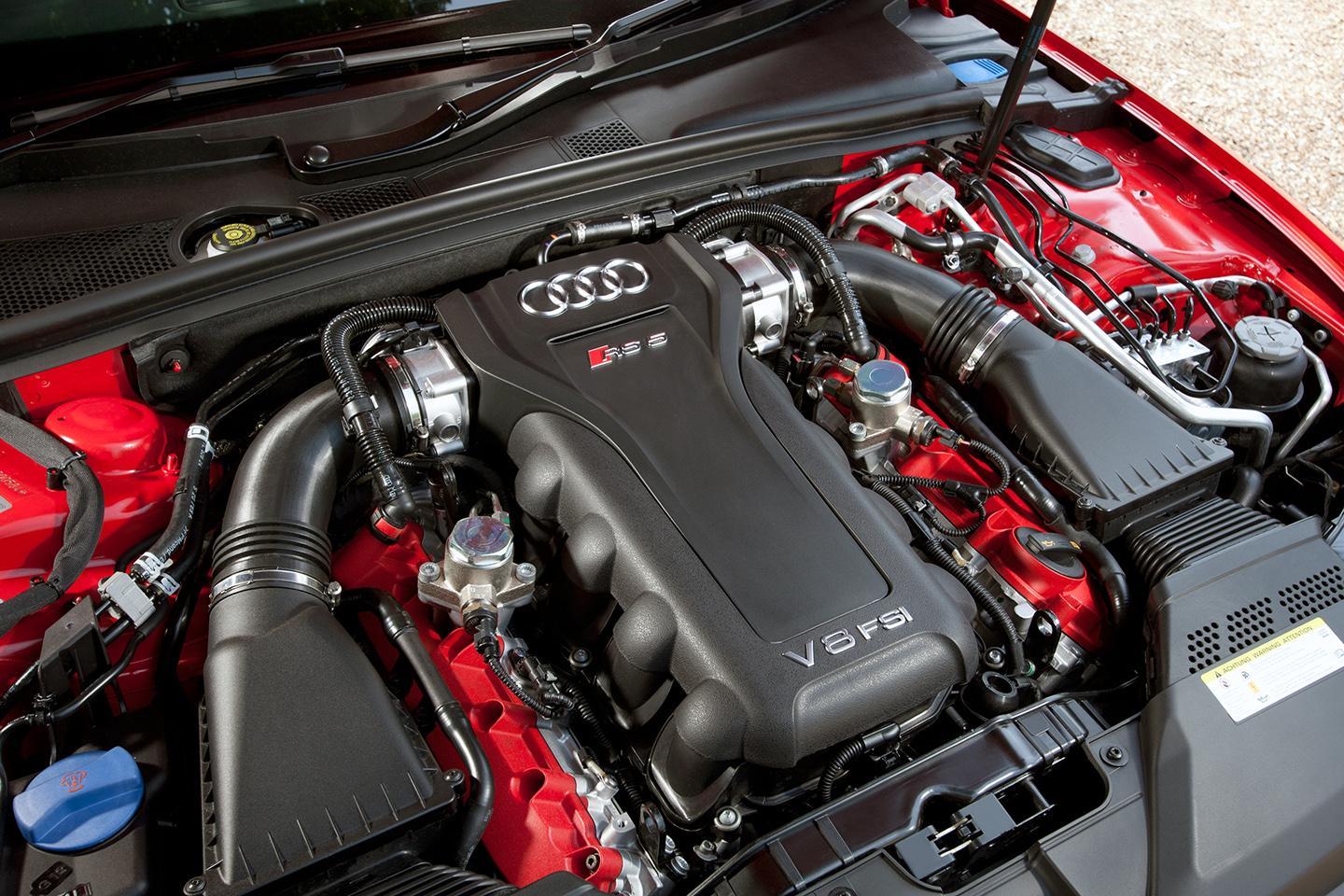
The RS5's handbuilt, aluminium-crankcased 450hp V8 took the car over the magical 100hp per litre performance benchmark. The absence of a turbo meant that you needed to work it to get at that 450hp, however. Peak power didn't arrive until 8,250rpm, which was practically the redline. On torque, the RS5's maximum of 317lb ft began at 4,000rpm and, to its credit, it managed to stay on that plateau all the way through to 6,000rpm, but if you wanted an easy mid-range rush at the twitch of a big toe then you needed to be looking at turbocharged cars. Today you can get that in an MLB Evo-platformed RS5. It has the same 450hp as the old car, but more importantly there's 442lb ft at just 1,900rpm, which is quite a difference. The tradeoff is that it comes from a 2.9 litre V6 instead of a bloodcurdling V8 with a valved sports exhaust system as standard. The new 2.9 RS5's price ticket of nearly £63,000 is a bit of a dampener too, and that's before you start going mad on the options.
Back on the B8 RS5, drive went to all four wheels via a seven-speed S-Tronic dual-clutch gearbox and a locking mechanical centre differential that routed up to 85 per cent of the power to the back wheels, where an electronic rear differential divvied up the poke from side to side as required. The default apportionment was 40/60 front/rear, with up to 70/85 front/rear available (not at the same time, obviously). Some testers queried the 60 per cent at the rear claim, but it didn't really matter what the actual percentages were. The reality on the road was crampon-grade grip irrespective of how clumsily you leant on the throttle.
Audi's seven-speed S-Tronic transmission has been praised many times in these buying guides and that tradition isn't going to stop here. Longer ratios in the RS5 blunted intermediate acceleration slightly, but the payoff was more relaxed cruising and at the end of the day it was still as quick as an M3 over the 0-62mph run. No manual option was ever offered. Standard Audi drive select let the driver choose between three modes of operation - Comfort, Auto, and Dynamic - to adjust the operation of the S-Tronic, the engine, the damping, and the exhaust system.
As long as the car's service requirements are properly met, this is a strong and trustworthy drivetrain. The V8 will drink a little oil and filling it up from dry will take around ten litres of the best stuff. If the age and condition of a car you're thinking of buying indicates that the third service is overdue, you should certainly quibble on the price as this is when the fluids in the gearbox and the diffs are due for renewal. The official condition-based servicing gaps are long at up to 19,000 miles or two years, but you'd be a fool to yourself if you didn't change the oil every year as, apart from being good practice generally, fresh oil will play a part in delaying the onset of chain tensioner problems which these engines can experience.
If a car you're interested in is at operating temperature when you arrive to look at it, be suspicious, because the rattling of a floppy tensioner will be much more obvious on a cold engine. This rattling generally afflicts cars with 70,000 miles or more, which coincidentally is the same point beyond which when valve coking tends to occur. Although the RS5's V8 is a relation of the B7 RS4 engine and not a straight reprise, it shares the RS4's direct injection quirk of allowing carbon buildup in the inlet valve area. You'll know this is happening if RS5 starting gets more difficult, idling becomes erratic, the engine light comes on, the performance goes off, or your mate travelling in the car behind tells you that small particles of flaming matter appear to be shooting out of your exhaust. Confining your RS5 to a lifestyle of short runs will accelerate carbon buildup. Decoking can cost around £700 if the traditional 'Italian service' method of thramping it up the dual carriageway doesn't work.
Sometimes an RS5 will misfire. The cause isn't always easy to pin down. If you're having this problem you could ask your friendly local diagnostician to check the alternator regulator. The cost of the part is only £30-£40 but it could be a quick and easy answer to a confounded nuisance.
The S-Tronic transmission is tough, but some owners do enjoy testing that on a regular basis, so when you're looking at a car check that all its gears engage smoothly in both directions and at a variety of speeds in both auto and manual mode - a replacement S-Tronic gearbox from Audi will cost you £14,000. The torque converter box on the later twin-turbo V6 RS5 is a relative bargain at around £10k if you buy from a specialist. You will need one of these if a hard launch results in a very nasty grinding noise and no drive. This indicates that you have destroyed gearbox internals, some of which will not be available to buy on an individual component basis. That won't be the end of the expense either. The oil required by that 'box is £100 a litre and like the engine it will take many litres of it.
Some RS5 owners have reported faults with the electronic diff and leaks from the rear driveshafts. Obviously, nobody should be expecting the same sort of fuel efficiency in the RS5 as you get in more modern twin-turbo cars. The V8's official figure was 26mpg, but 18-19mpg is the real-world norm.
CHASSIS
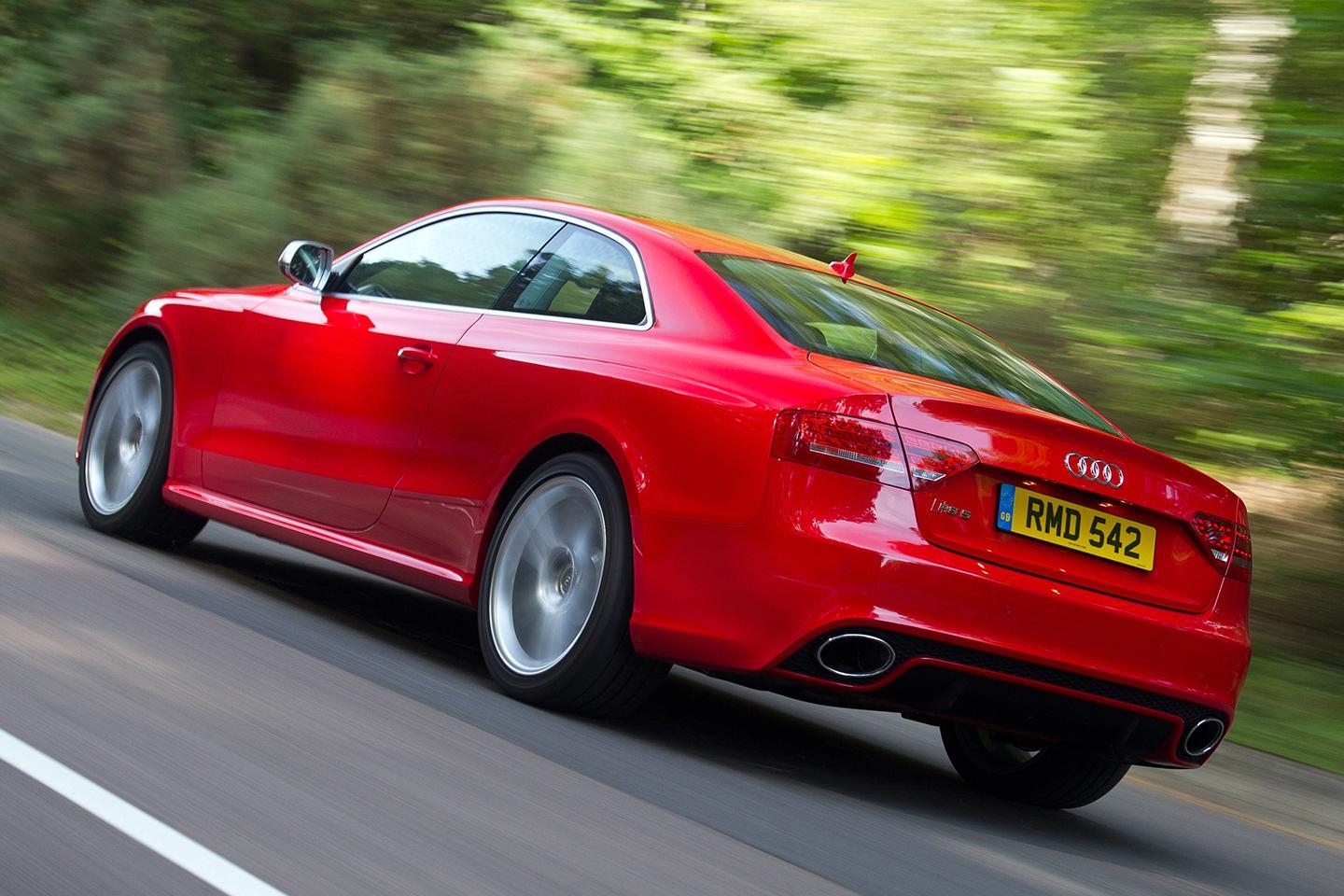
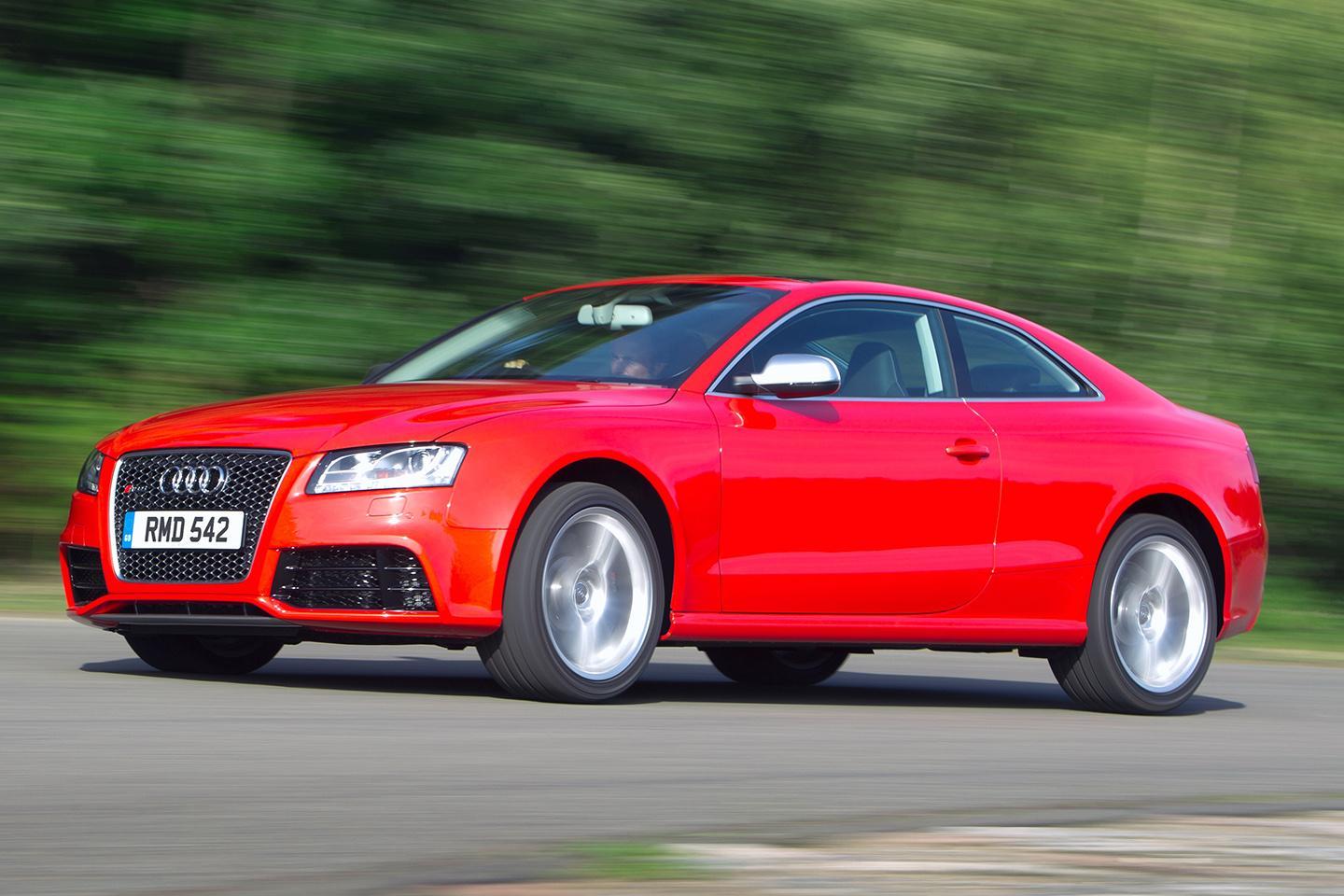
The RS5 sat 20mm lower than the normal A5 on 19-inch five-spoke wheels that were fitted with 265/35 tyres. 20-inch wheels with 275/30 tyres were a factory option. Standard UK suspension was steel springs with three-way adjustable Dynamic Ride Control dampers offering Comfort, Automatic and Dynamic, the two 'extremes' being 20 per cent softer or harder than the Automatic default.
Some would find Dynamic too firm, especially in a Cabriolet running 20-inch wheels when body shivers will become evident. Automatic was a good compromise in most markets, but Comfort also appealed to any UK owners who were more concerned about their battered behinds than they were by any reduction in driving excitement. The speed dependent Servotronic steering and the electronic sport differential were also adjustable via the drive select system. A fourth Individual mode was available on cars equipped with the MMI navigation system.
DRC works well on the RS5, but it's not faultless. If the inner edges of the tyres seem to be wearing more quickly, that could be down to worn bushes that tend to be finished by the 80,000-mile mark, along with ball joints. However, the clonking on bad roads that you might think would be the giveaway to that could also be down to a software update not having been done on the wheel damping control unit. Also, the fluid in the DRC adaptive suspension system runs at 20 bar and leaks are not unknown. Overly bouncy suspension in any of the three modes signals trouble, but a recharge to full factory pressure will often improve or even cure any knocking. If it worries you, it's possible to replace the adaptive system with passive Bilsteins. Generally speaking though the factory DRC setup does a good job of hiding the RS5's heft. The mech centre diff helps a lot, its responses untainted by electronic sensors, and the torque vectoring is an effective layer of icing on the cake.
The standard brakes are vented and drilled 360mm discs at the front with eight-piston calipers and 324mm rears. This is a common area of complaint among RS5 owners. Squeaking from the front brakes is not rare, nor is disc warping, vibrations through the steering wheel under braking being the main warning sign. If your car has that problem, new discs can be up to £400 each. You might be charged the same amount for a new set of brake pads. 380mm carbon-ceramic discs were a £6,250 option. They were more about bragging rights than any real need, as an RS5 would hardly be the track day fiend's first choice, but at least if you had them you wouldn't be open to warped discs.
Considering their weight and power, RS5s seemed to do pretty well on tyre wear. In fairly enthusiastic use you can expect 12,000 miles from a set. One owner reported only having to change his fronts after two years at a cost of £250 each, at which point the rears were still good. Less cheerily, front suspension arms are known to wear, causing tramlining. An RS5 has four of these on each side at £100 a go.
BODY
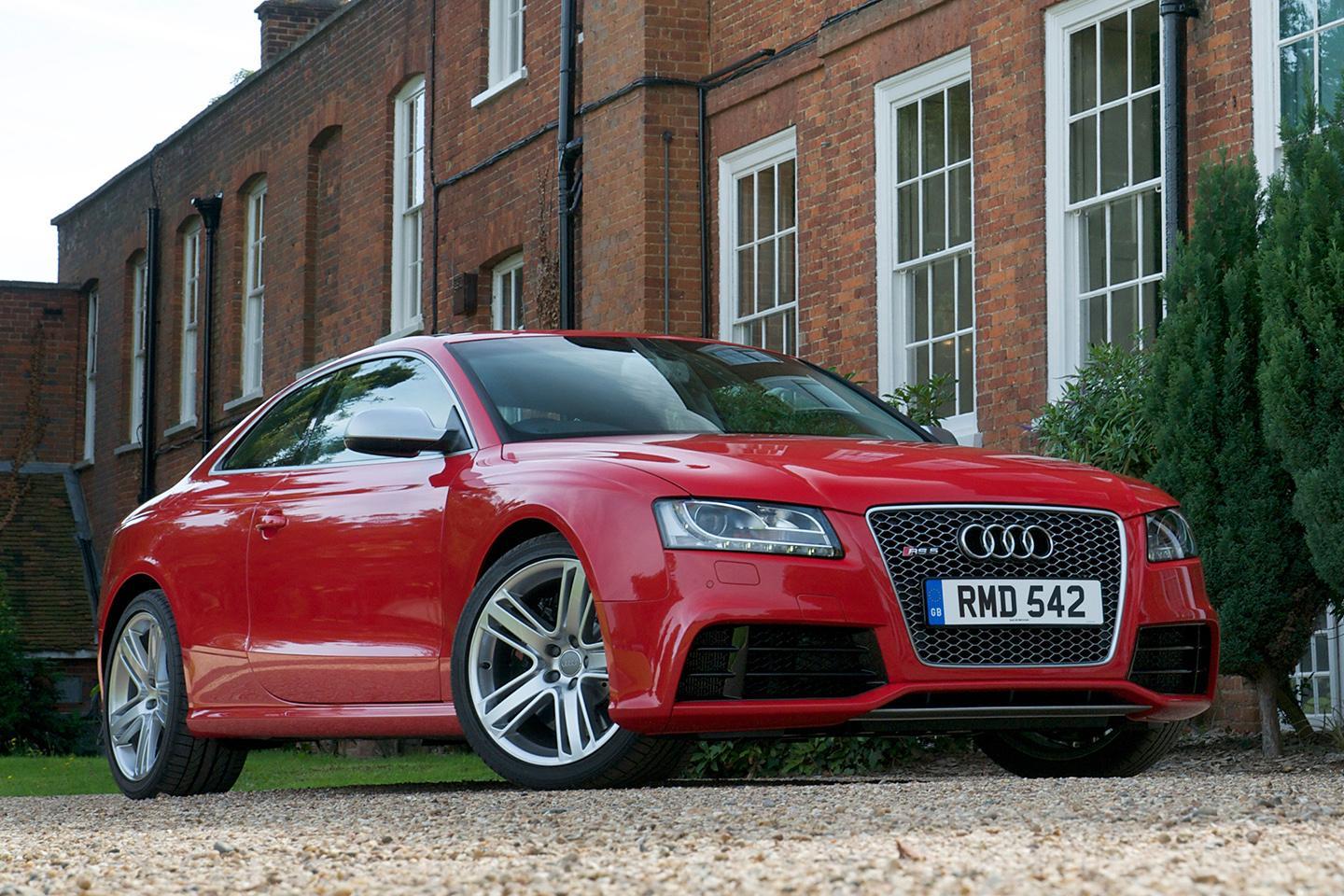
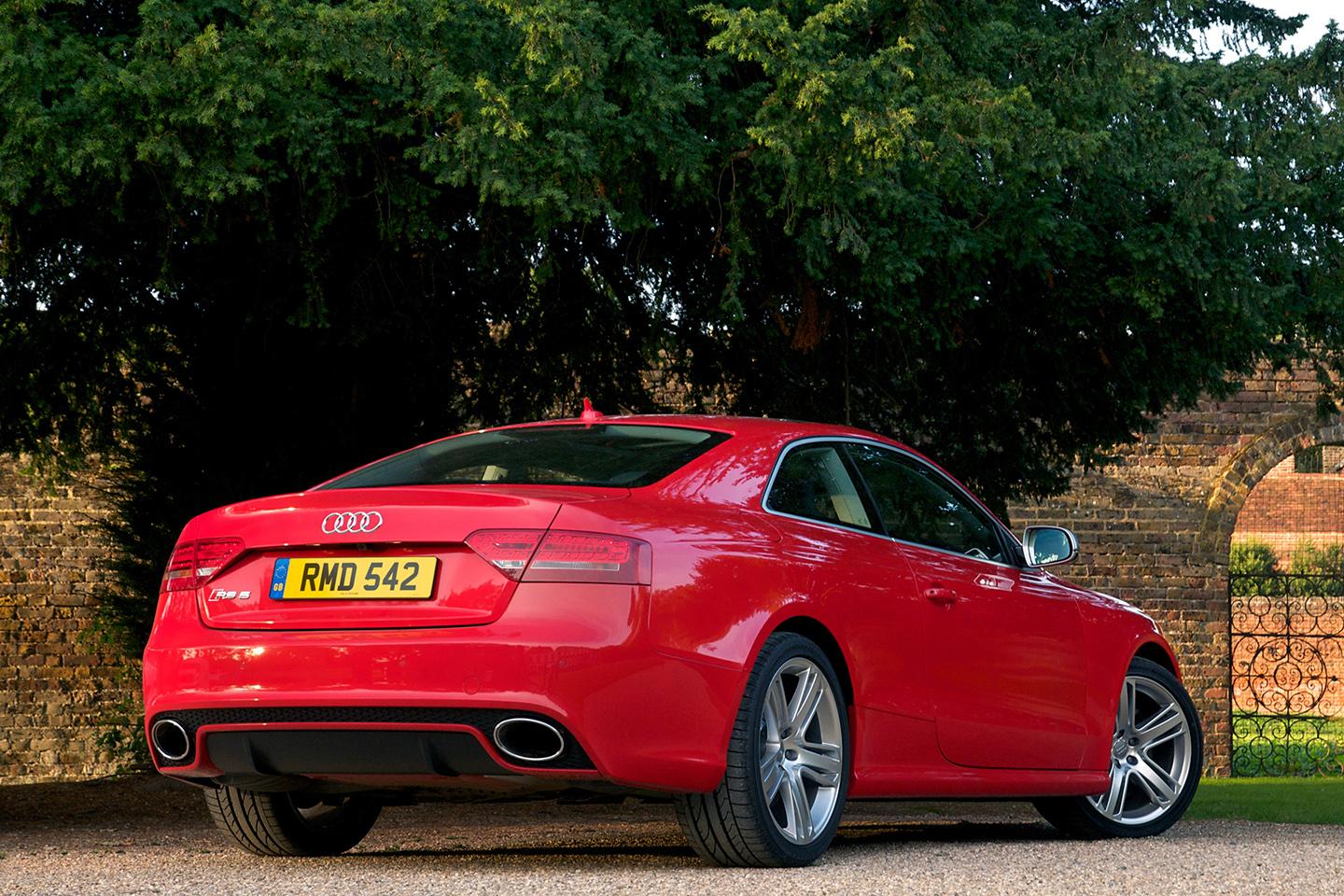
The RS5's flared arches were inspired by the original Audi Ur-Quattro of 1980. There aren't many of those left nowadays, but even the oldest RS5 is still only going to be a little over ten years old, so if you see any rust anywhere on the body it's almost certainly there because of poorly repaired accident damage. It's all too easy to bash the door edges in a modern UK car park tightly packed in among SUVs and pickups because the RS5's doors are long.
There's a deep chin spoiler and a tailgate spoiler that automatically extends at 120km/h (75mph) and retracts at 80km/h (50mph). To check the function you can activate it manually via a button on the central console. Carbon packages were available for the engine compartment as well as for the body aero addenda.
INTERIOR
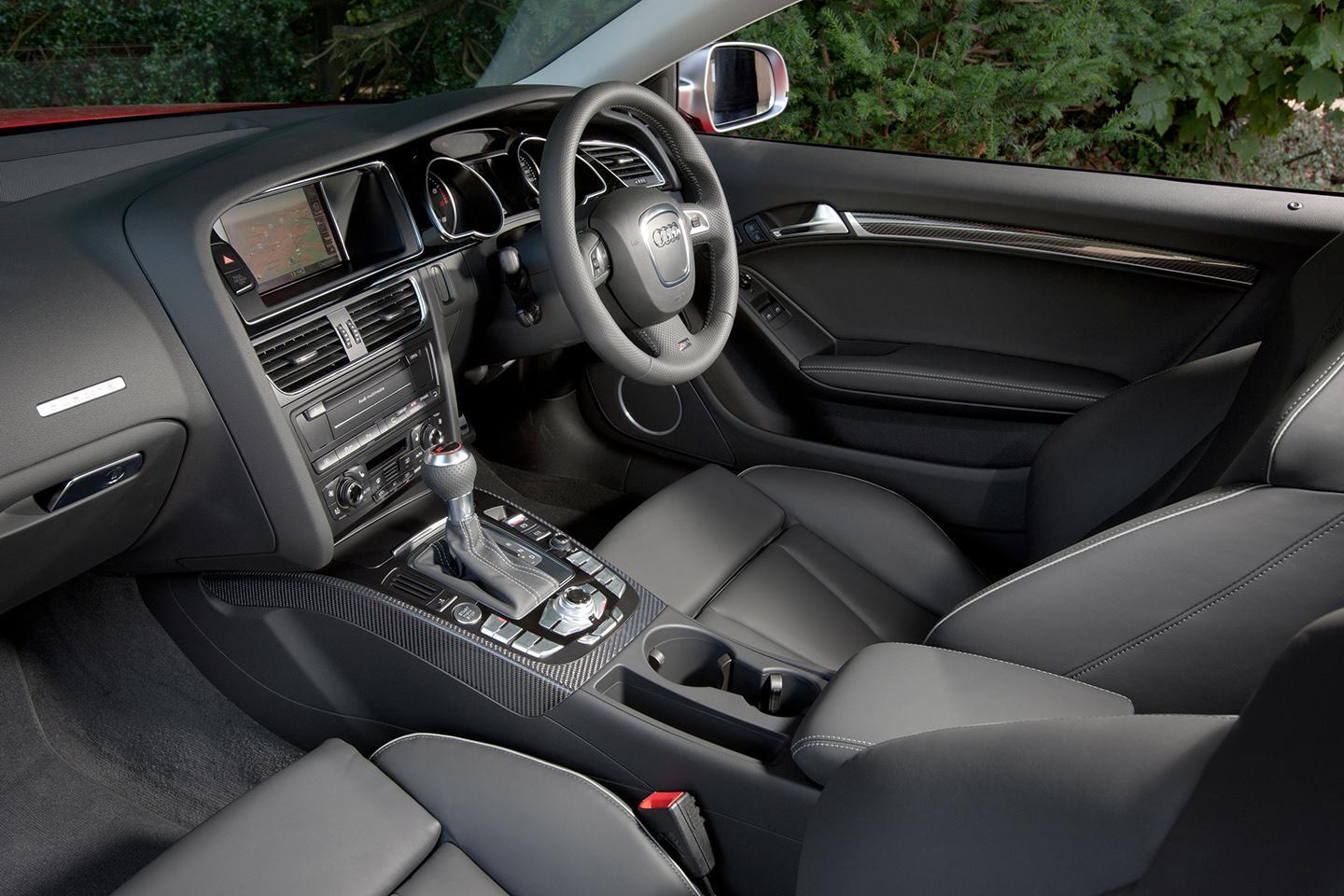
RS5 cabin ambience is predictably classy and high quality. Standard gear included the Audi Concert nine-speaker plus subwoofer audio system, a colour centre console screen for the Driver's Information System (DIS), three-zone climate control, adaptive/xenon headlights, LED front and rear running lights, heated mirrors, various carbon inlays, and a bunch more stuff.
Electrically adjustable leather RS Super Sports seats were standard, too, and came with extendable thigh rests, integrated headrests, RS5 logos embossed in the backrests and a high level of comfort and support. Options included climate-controlled ventilated 'comfort' seats in perforated black Milano leather or manually adjustable deep-bucket seats with folding backrests.
There were plenty of interior styles for the new RS5 buyer to pick through, most of them in black or shades thereof. Decorative inlays could be had in the same carbon fibre as the centre console, or in dark stainless steel mesh, or piano black. Brushed aluminum provided optional relief in the MMI navigation system control buttons and door sill trims, while Alcantara could be added to controls such as the drive selector.
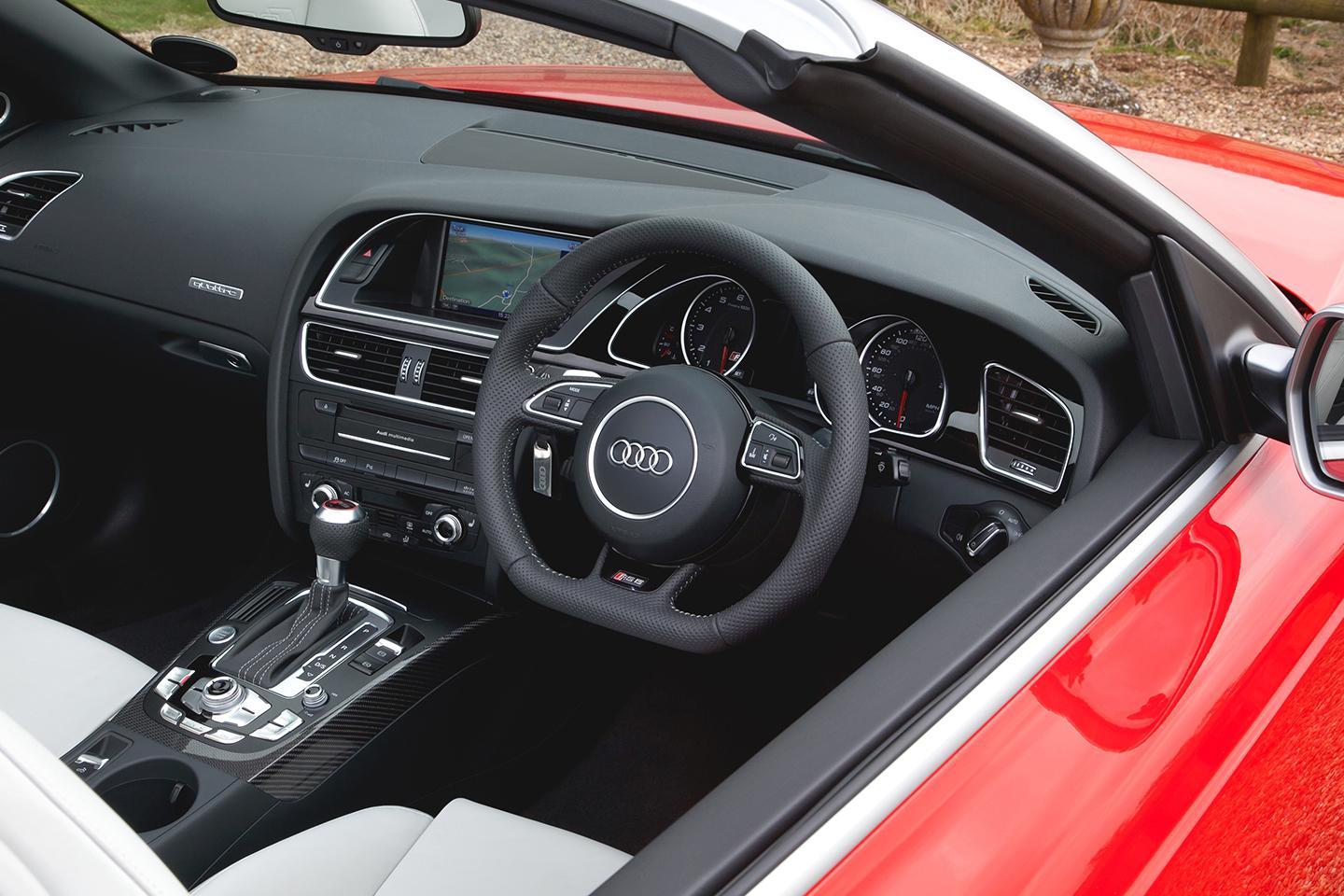
If there was one person at VW who was responsible for designing the drainage systems in their cars, let's hope they now live in a house with permanently blocked drains. Who doesn't know someone who has had trouble with these? The windscreen scuttle drains on RS5s clog up, allowing water into the pollen filter and from there to the carpets, beneath which lives the 'comfort' ECU for the central locking and windows. That ECU location has been so since the B5 Passat at least, and probably before that. Testing all the electrical functionality is essential. Audi's parking system plus with front and rear sensors was standard, as were automatic headlights and windscreen wipers.
The coupe was usefully practical with up to 829 litres of cargo space available when the rear seats were down, enough for two mountain bikes, but if you were carrying four bods and the front seats were cranked back to the max the folks in the back wouldn't be comfortable for long.
Valued options in an RS5 included the B&O hi-fi that (we think) was part of the Cabriolet's spec from new, the buckety sports seats and the 20-inch alloys, but that last one only applied if you didn't mind adding extra firmness to an already firm ride that over time would help to generate some un-Audi-like cabin rattles, many of them hard to track down. Breaking door card clips can be a thing.
PH VERDICT
An RS5 might not be as dynamically adept as an M3, but if your interests lie more in booming around the neighbourhood in a relaxed fashion than they do in the more esoteric area of on-the-limit handling, then one of these Audis should do you nicely.
To be fair the RS5 was nearer to a C63 AMG than it was to an M3, and although the AMG engine was motoring's equivalent of Hulk's baseball bat the Audi countered hard with nadger-clamping grip via its quattro all-wheel drive. This made it very well suited to UK driving. An RS4 might be more engaging in some ways, but it's an older car and that can trip you up when it comes to running costs.
By no stretch of the imagination can you call a V8 RS5 slow. The long intermediate gearing that didn't endear the RS5 to road testers who were paid to get impressive acceleration numbers made perfect sense to real-life owners who appreciated the enhanced cruising refinement it provided.
Don't wade in on any RS5 unless the vendor can show you a fully stamped up service book that also details the important transmission fluid changes. Then consider investing in a warranty. Official Audi ones could well be over £175 a month but you might well think it's worth it for the peace of mind.
As mentioned in the overview, the entry price for an early (2010 or 2011) RS5 with under 100,000 miles on the clock currently stands at £16,000. Twin-turbo 2.9 RS5s haven't dropped below £40k yet, but even the most expensive V8s rarely go over the £35k mark. Here's a 65,000-mile 2014 car in Daytona Grey for a round £25k. A DRC recharge and trans fluid services appear in the full history.
At the affordable end, this fully-historied 92,000-mile 2011 car was going for £16,950 at the time of writing. For £22,450 you could be behind the wheel of this 85,000-mile facelift cabriolet, riding on 20-inch wheels and with the B&O sound system that we think was standard equipment for these cars. Add £2k to that and you'll be able to knock nearly 30,000 miles off by going for this 2013 example.
Towards the top end of the V8 range is this 2014 coupe in the rather spiffing Suzuka Grey colour. With 27,000 miles, B&O sound and all the carbon you could want it has a £31,995 price tag.
Search for an Audi RS5 here



Not being funny, but a Lexus ISF would be where my money would go. Plenty quick enough, but the car will last forever, and Audi can stick their stupid bills where the sun don't shine.
Not being funny, but a Lexus ISF would be where my money would go. Plenty quick enough, but the car will last forever, and Audi can stick their stupid bills where the sun don't shine.

If none of this matters, then fill your boots!!!
Do love an ISF tho.....
https://www.youtube.com/watch?v=_Kf-2D1vge8
Not being funny, but a Lexus ISF would be where my money would go. Plenty quick enough, but the car will last forever, and Audi can stick their stupid bills where the sun don't shine.
I never really considered the ISF as not 4WD, but having just had a quick look, the F only seems available in the old shape IS which looks too ordinary to my eyes. I’d be more tempted by the RCF.
Most are limited to 155 mph, the 0 - 60 sprint is similar and if you have the dual clutch box .... ?
With the dreadful state of the UK roads what’s the point?
The other thing worth considering is residuals. RS models tend to hold their gap pretty well over the equivalent S model too.
I found my B9 S5 better on tyres than my B8 S4 from a few years before, but the mileage was different (less motorway l, more twisty roads) and so were the tyres.
Most are limited to 155 mph, the 0 - 60 sprint is similar and if you have the dual clutch box .... ?
With the dreadful state of the UK roads what’s the point?
Even the updated V6T is a fair amount off the pace…
https://zeperfs.com/en/duel4814-3281.htm
As for S3 vs RS3 it’s a simple one for me, I find it really hard to be interested in anything 4 cylinder.
The Audi still looks the part and For Venice and back the audi every time the others would all be more fun to drive but you would need a holiday to recover!
Gassing Station | General Gassing | Top of Page | What's New | My Stuff