
Ferrari F8 Tributo | PH Used Buying Guide
The last mid-engined, exclusively V8-powered Ferrari really needed to be good - it was
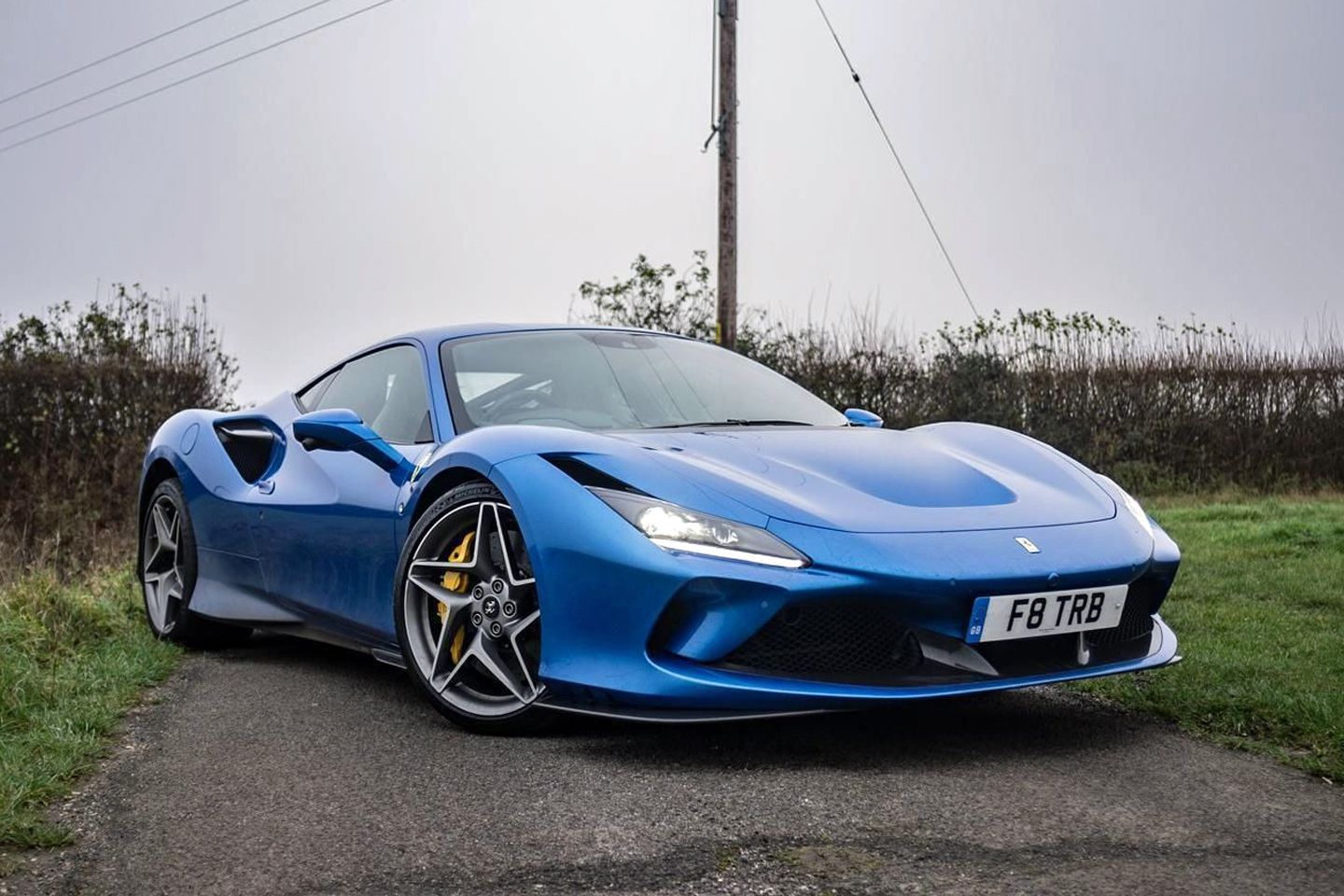
Key considerations
- Available for £205,000
- 3.9-litre V8 petrol twin-turbo, rear-wheel drive
- 720hp in a car weighing the same as a Focus 1.0
- Incredible transmission, chassis tech and ride
- Flat-plane V8 pulls hard but is not a screamer
- Reliability so far is top-notch
Not every manufacturer has the historic credentials or chutzpah to pay tribute to its own engineering heritage, but Ferrari has earned a comfortable place in that group. What they were referencing in the launch of their F8 Tributo at the 2019 Geneva show was the start of Ferrari mid-engined V8 production, as embodied by the 308 and 208 GT4s of the early '70s.
Even in the auto world where anniversaries are routinely dragged out as an excuse to build pretty much anything, 45ths aren’t celebrated that often. In fact, the GT4s came out in '73 so the 2019 launch was actually marking the even less celebrated 46th anniversary (standing by for corrections). Anyway, we’ll forgive Ferrari all that because in this case the self-homage resulted in the creation of the very wonderful F8 Tributo. Ferrari described it as a replacement for the 488 GTB. Others said it was more like a substantial refresh of that car, and a blend of the 488 Pista’s gobsmackery with the school-run friendliness of the 488 GTB.
Whatever it may have been, it definitely was a spectacularly capable vehicle. There were across-the-board improvements in both comfort and on-the-limit handling, with new aerodynamics playing a big part in the latter as you might reasonably expect from any high-performance car capable of exceeding 200mph – and easily so in the case of the 211mph Tributo. Compared to the 488 GTB, Tributo downforce was up (or upforce was down) by 15 per cent, while overall aero efficiency was 10 per cent up. The Trib was rear-wheel drive only, but despite that few doubted Ferrari’s claim of 2.9 seconds for the 0-62mph time because of the powertrain spec and the car’s light weight. Not only was the engine Ferrari’s most powerful V8 ever for a non-special series car, it was mated to the company’s legendarily quick 7-speed twin-clutch gearbox. We’ll get into the numbers a bit more in the next segment of this guide.
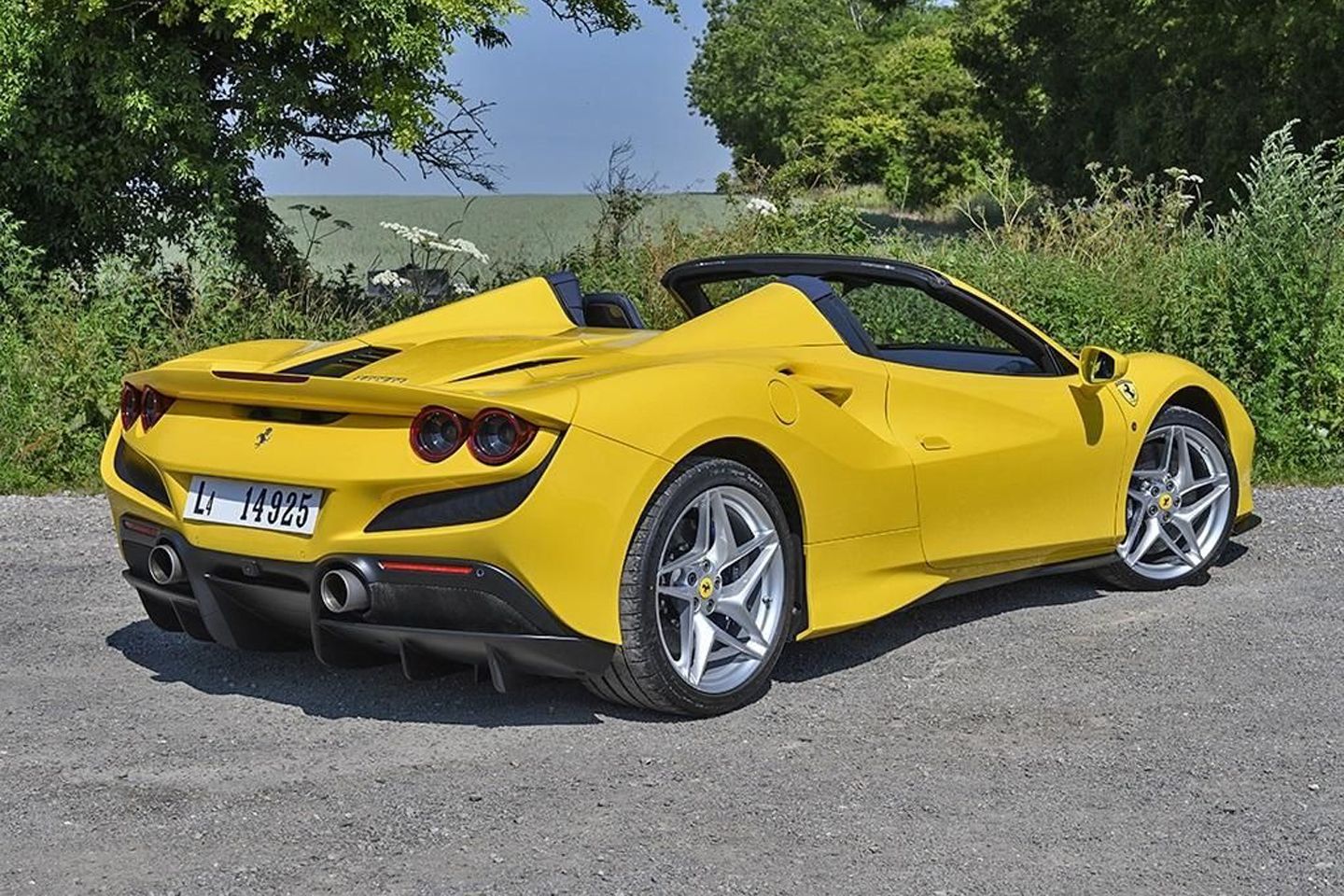
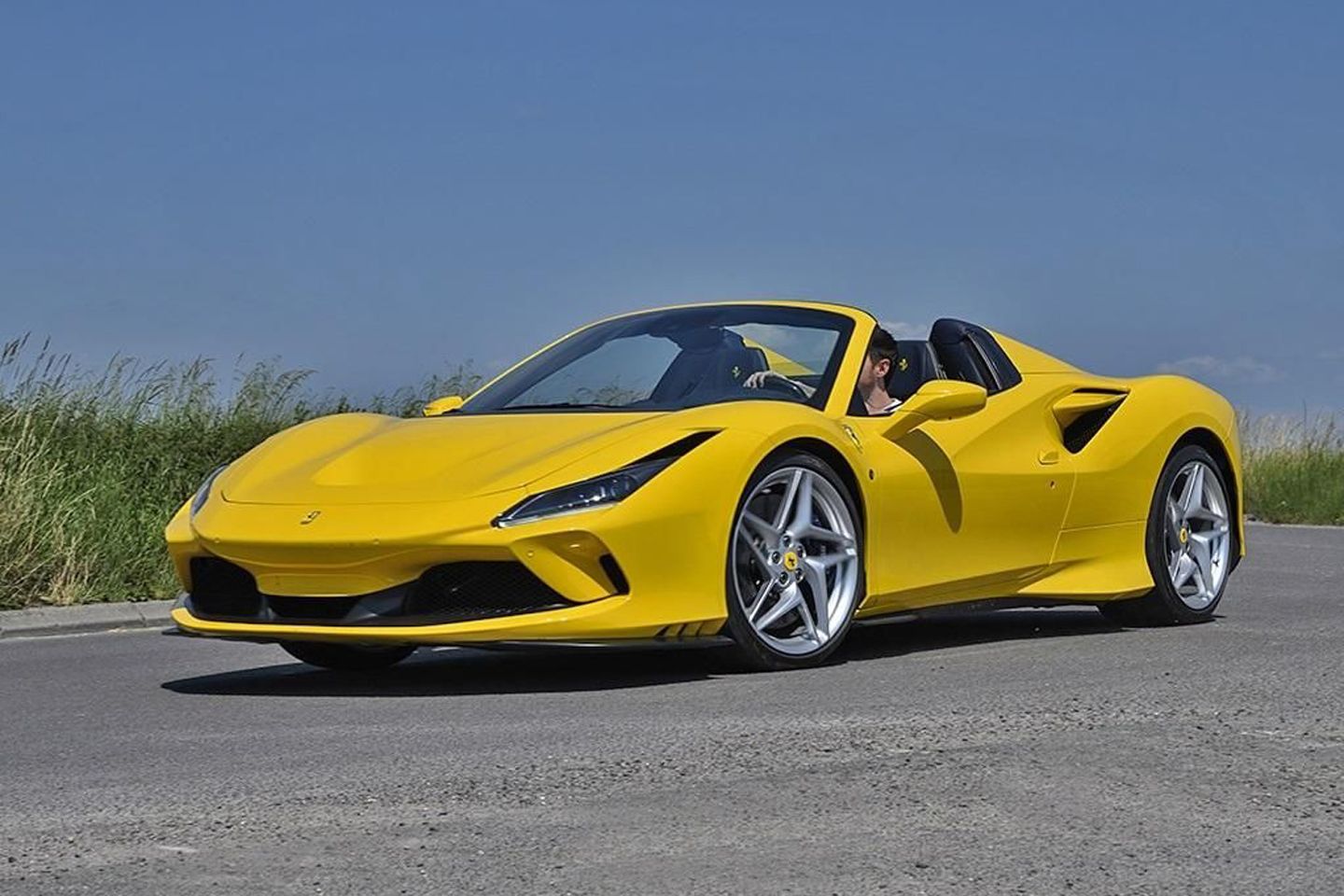
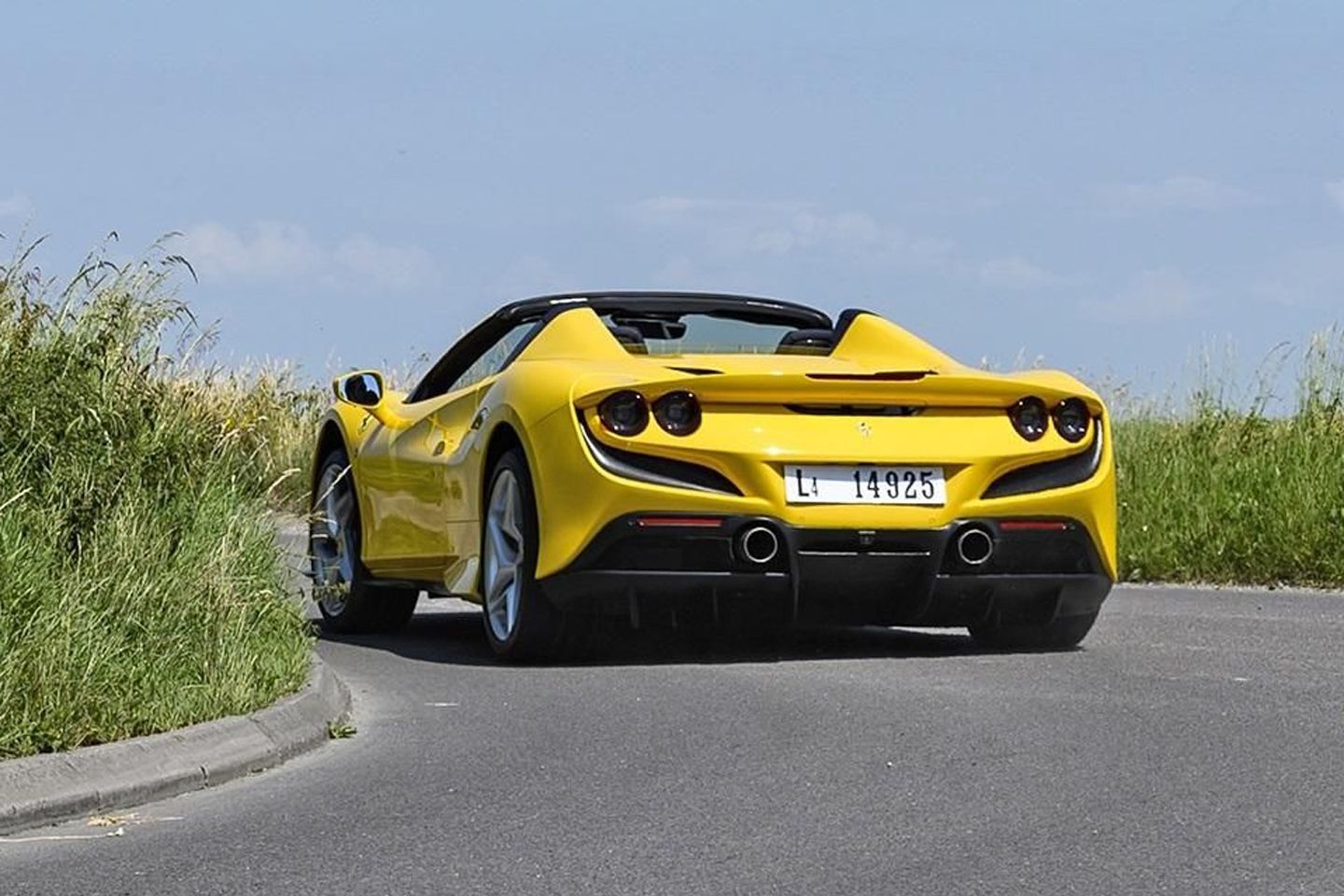
A slightly slower, 70kg heavier folding hardtop Spider version was available. The top was deployable in 14 seconds on the move at speeds of up to 28mph. Although the Spider was still technically in production in 2023 the Tributo coupe wasn’t. The number of Tributos delivered in 2023 was very small, so we’re saying that 2022 was effectively the car’s last year of production.
There wasn’t the normal Ferrari fan stampede for these cars. Slots remained available right up to mid-2022, when the price before options was £203,000. Those options could easily add another £130,000 to the invoice, and indeed did so on Ferrari UK’s test vehicle. In the real world, around £250k would get you into a sensible spec.
Today, in mid-2024, £205k is about what you’ll need for the cheapest used Tributo on the UK market. That car is likely to be out of the three-year warranty period but extended warranties were available and there was also a transferable ‘Power15’ deal covering engine, gearbox and all other major mechanical and electronic components.
SPECIFICATION | Ferrari F8 Tributo (2019-22)
Engine: 3,902cc V8 twin-turbo petrol 32v
Transmission: 7-speed twin-clutch automatic, rear-wheel drive
Power (hp): 720@8,000rpm
Torque (lb ft): 568@3,250rpm
0-62mph (secs): 2.9
Top speed (mph): 211
Weight (kg): 1,330
MPG (WLTP average): 18.2
CO2 (g/km): 292
Wheels (in): 9 x 20 (f), 11 x 20 (r)
Tyres: 245/35 (f), 305/30 (r)
On sale: 2019 - on
Price new (2022): £203,000
Price now: from £205,000
Note for reference: car weight and power data is hard to pin down with absolute certainty. For consistency, we use the same source for all our guides. We hope the data we use is right more often than it’s wrong. Our advice is to treat it as relative rather than definitive.
ENGINE & GEARBOX
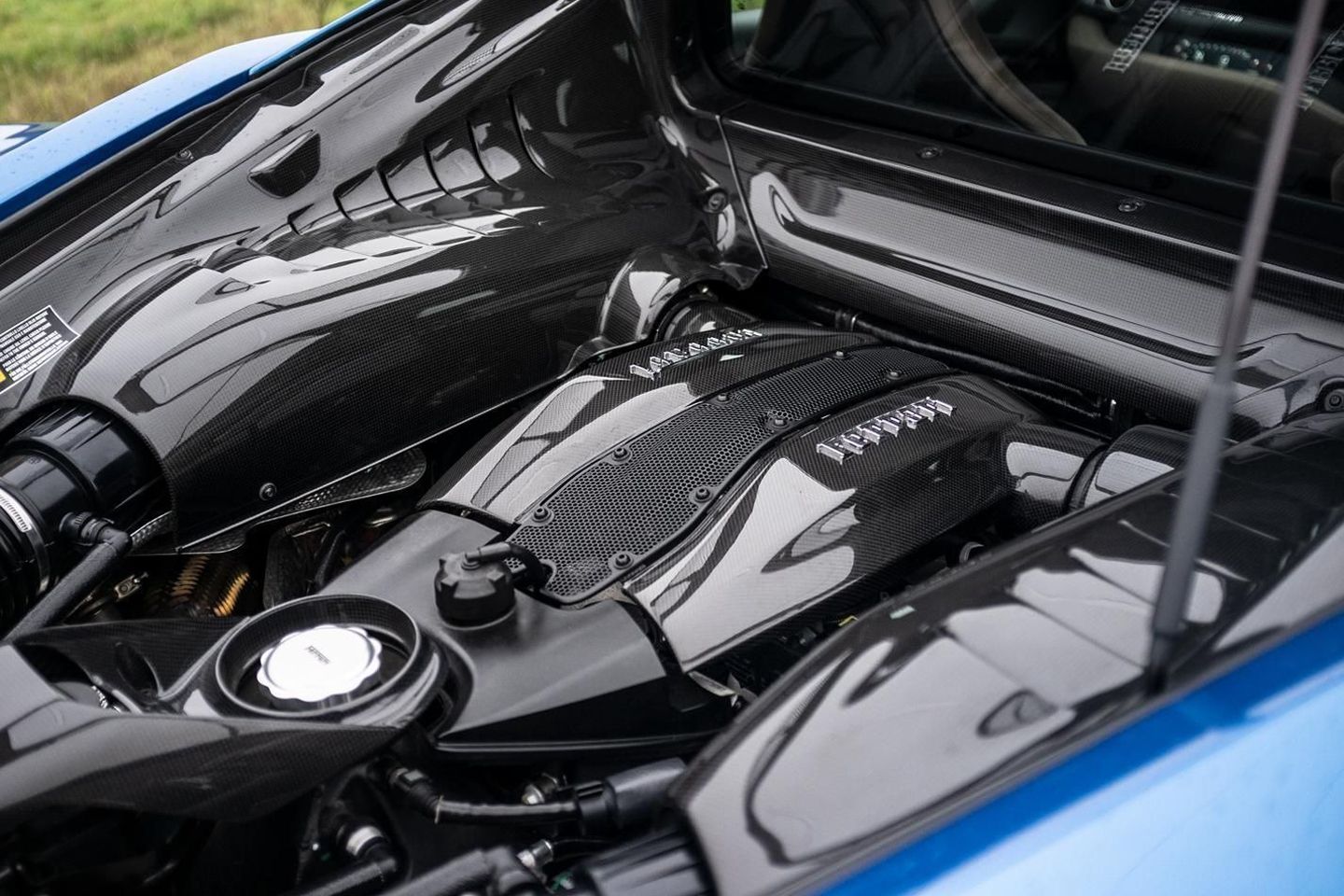
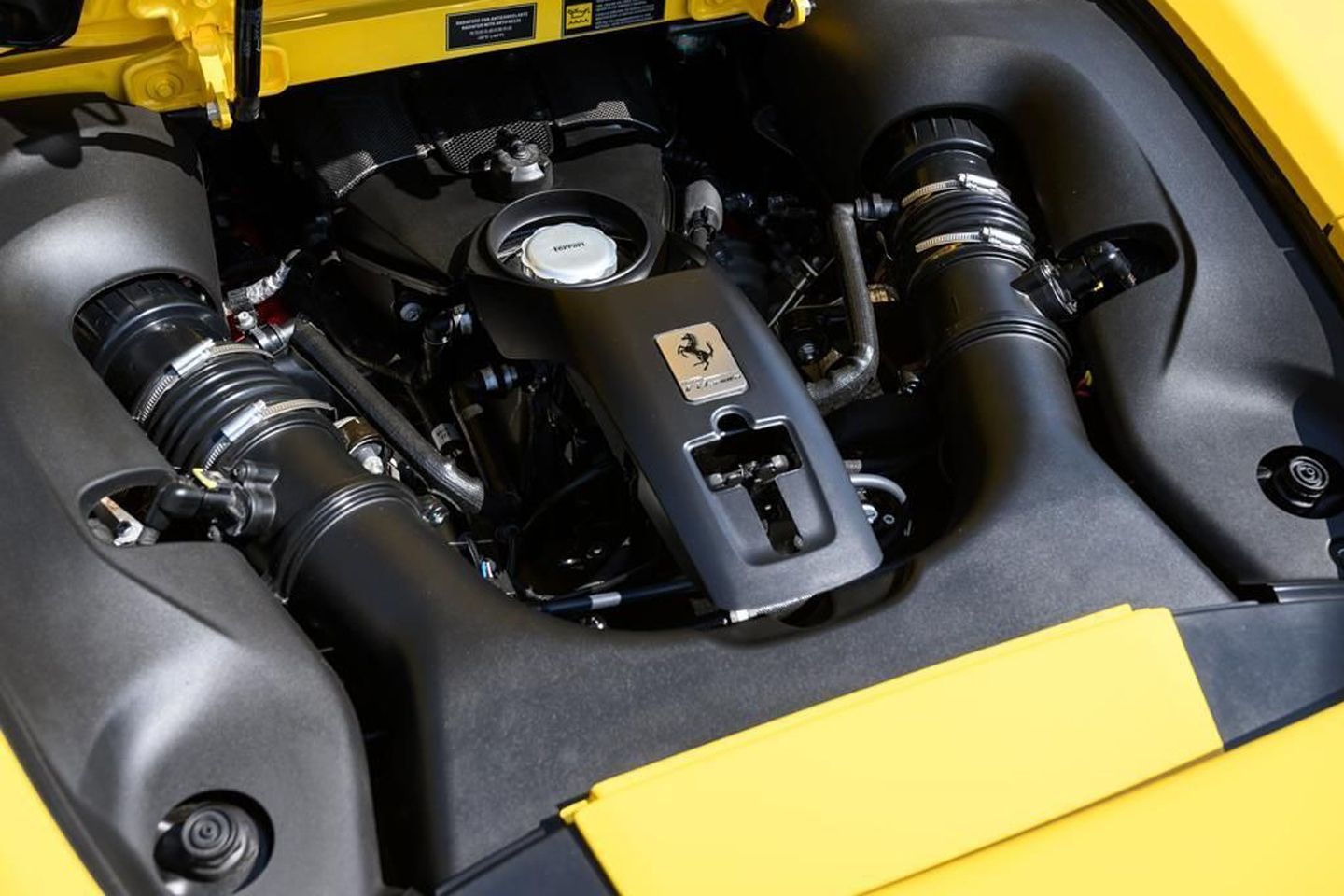
The Tributo’s dry-sump twin-turbo F154 3.9-litre V8 engine was effectively the same unit as the 488 Pista’s. It shared that car’s 720hp output. Coincidentally (or not), so did the McLaren 720S. This titanium-conrodded V8 (internally strengthened and with better airflow for the Tributo) won the Best Engine prize in the International Engine of the Year awards three years running from 2016 to 2018.
While its torque advantage over the 488 GTB was only 9lb ft, the Tributo was nearly 50hp more powerful than the GTB. You had to give it the gun to feel the full benefit of that though because peak power didn’t arrive until 8,000rpm. The 5,750rpm gap between the Tributo’s power and torque peaks could well have been the widest in automotive history.
We can’t confirm that bit of would-be geekery, but the magnitude of the outputs combined with (to quote Ferrari) ‘not the slightest hint of turbo lag’ plus the car’s dry weight of 1,330kg (40kg less than the 488 GTB) and the sheer brilliance of the transmission and traction control systems meant that Tributo performance was never short of electrifying.
If you said that Ferrari’s seven-speed twin-clutch transmission was the best automatic gearbox ever made there wouldn’t be too many arguing with you about it. We’re not sure if any independent tester ever achieved the factory’s 2.9-second 0-62mph claim (again, the same as the McLaren 720S) but we can say that no tester had any bother getting the Tributo into the low three-second range. That was plenty quick enough not only for the public roads but also for the world’s fastest circuits. The Ferrari was 1mph slower (sic) than the 720S at 211mph, but it was claimed to be marginally quicker over the 0-124mph run (7.8sec v 7.9sec), pretty good when you remembered the carbon fibre-structured McLaren’s 47kg weight advantage over the Ferrari.
The Spider’s 0-62mph claimed time was identical to the coupe’s, as was its top speed, but the extra weight of its hood mechanism added around 0.4 seconds to the 0-124mph time. All of this high-speed stuff could be seen as more relevant to Top Trumps players than to actual owners, but the monumental performance in extremis was an accurate pointer to the intensity of the thrills that were available at lesser speeds. 70mph was a nice 2,600rpm amble in top gear and there was very little road or wind roar at that speed.
Seven years’ free maintenance was included on the Tributo, although Ferrari said that no actual maintenance was required unless the car’s brain asked for it. Those who felt that an annual oil change was always a good idea took the view that this was a cynical cost-saving scheme on Ferrari’s part, proving that you couldn’t please all the people all of the time.
Interestingly, the owner’s manual for the Tributo gave you all sorts of advice on what to do if the things that you would normally never worry about began to go wrong. There are sections in there covering alarms for overheating in the exhaust system and clutch and for checking the battery, electrical contacts or fuel pump fuses if startups were becoming an issue. As we’ve often mentioned in these guides, less-than-perfect batteries can have far-reaching effects on modern cars. Owners of exotics like the F8 know the importance of keeping them on trickle charge. For £1,920 you could upgrade the F8 to a lithium battery.
The manual also cautioned against overdoing the number of track days. Whether owners paid any attention to that advice we don’t know, but despite the scaremongering the car’s overall reliability record has been exemplary.
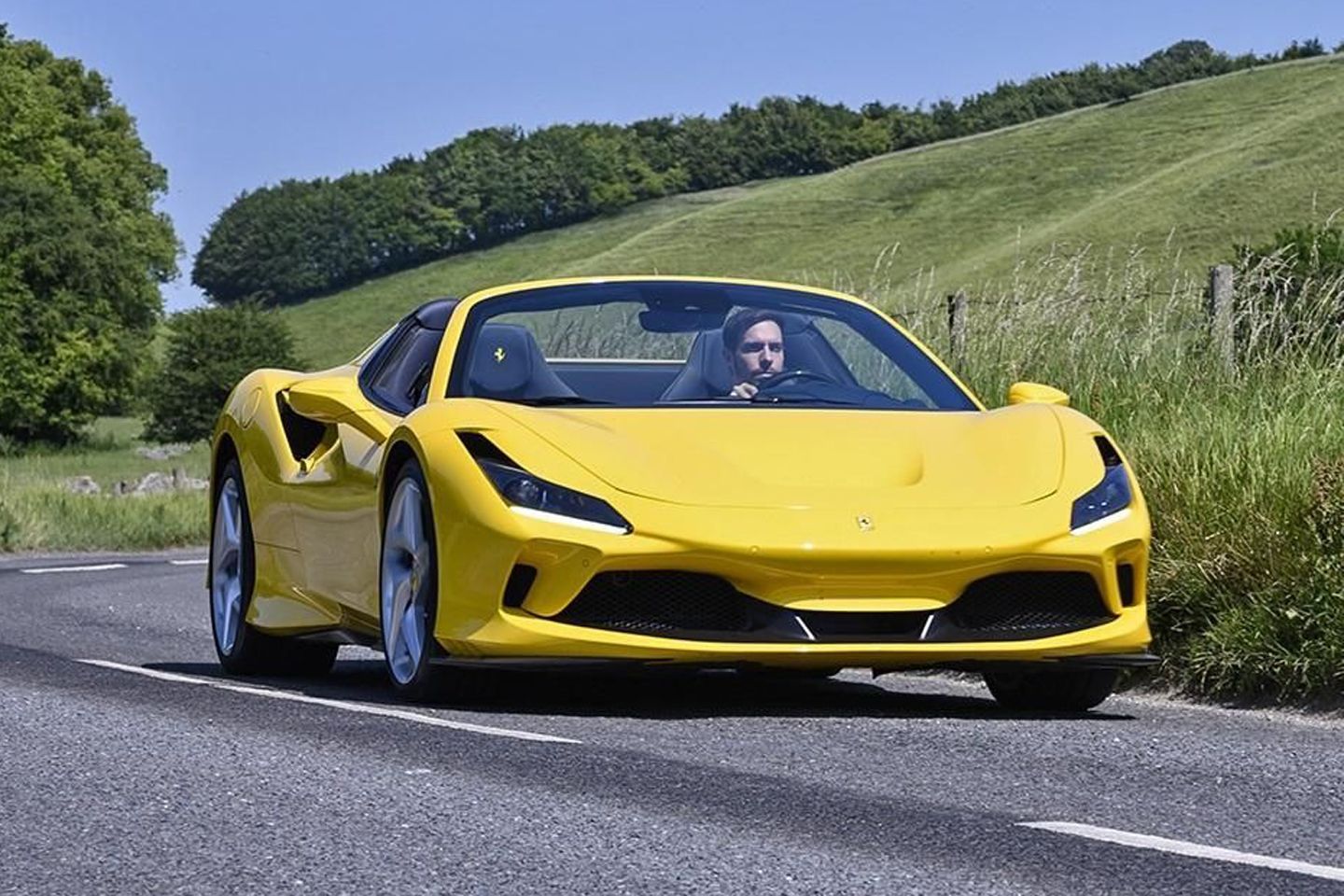
CHASSIS
If, as the engineer responsible for any other sports car’s construction, you had access to the newest (or even the oldest) iteration of Ferrari’s e-diff, F1-Track and 6.1 Side Slip Angle Control driver aids, you would be thinking all your birthdays had come at once. These were fantastic tools that made it possible for your granny to bang out controlled slides all day long, or until it was time for her pottery class anyway. Having said that, one American mag wasn’t impressed by what they called snap oversteer around Laguna Seca, brought on (they thought) by a too-quick and too-light steering rack. Their tame racing driver concluded that CT-Off was the safest mode.
Extra security at mad speeds was provided by the latest Plus version of the FDE (Ferrari Dynamic Enhancer) gizmo that had already featured on the Pista. Using a boggling combo of electronics and algorithms that you’ll need someone else to explain, FDE+ (which could for the first time also be activated in the manettino’s Race position) predicted the exact moment of yaw at any given moment and provided exactly the right amount of individual wheel braking to deliver perfect balance.
A few testers felt that they could detect a reduction in rigidity when the Spider’s top was down, resulting in the odd very slight wobble on bumpy roads. Generally though the Spider’s ride and steering were as accomplished as the coupe’s and both variants were as easy to drive in town as a common or garden hatch. Some YouTube owners felt the need to fit lowering springs, presumably for appearance’s sake rather than a belief that they knew more about suspension setup than Ferrari’s engineers. Without those in place the ride provided by the ‘magnetic’ (can’t be bothered to write magnetorheological) dampers was remarkably supple, helping to make the Tributo one of the most useable supercars you could buy.
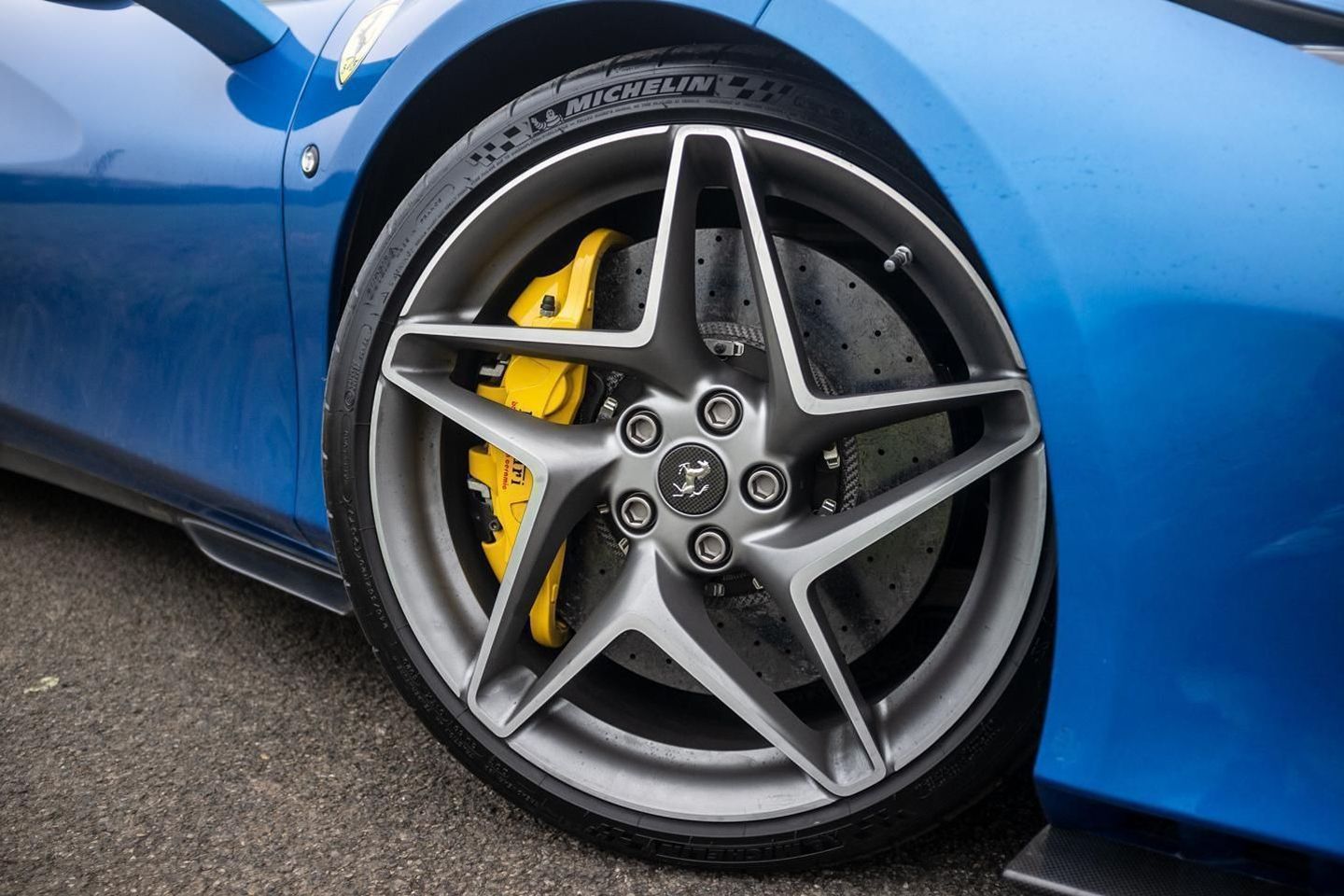
Carbon ceramic brakes (398mm discs at the front) were standard. Feel was OK although some drivers detected a reduction in feel on harder use. Despite the ceramics’ excellent reputation for power and longevity, the owner’s manual surprisingly recommended using engine braking to protect the actual brakes on mountain roads. You’d also find a section in there about how to rebuild the parking brake, a fascinating inclusion given that the only recall we could find for the Tributo was for an inadequately venting parking brake fluid reservoir cap. This could create a vacuum inside the reservoir and a fluid leak that could lead to a partial or total loss of brake function. Forged wheels were an extra £4,600. Carbon fibre wheels could be had at a predictably bonkers price of over £30,000. Titanium wheel bolts were £960 a set.
BODYWORK
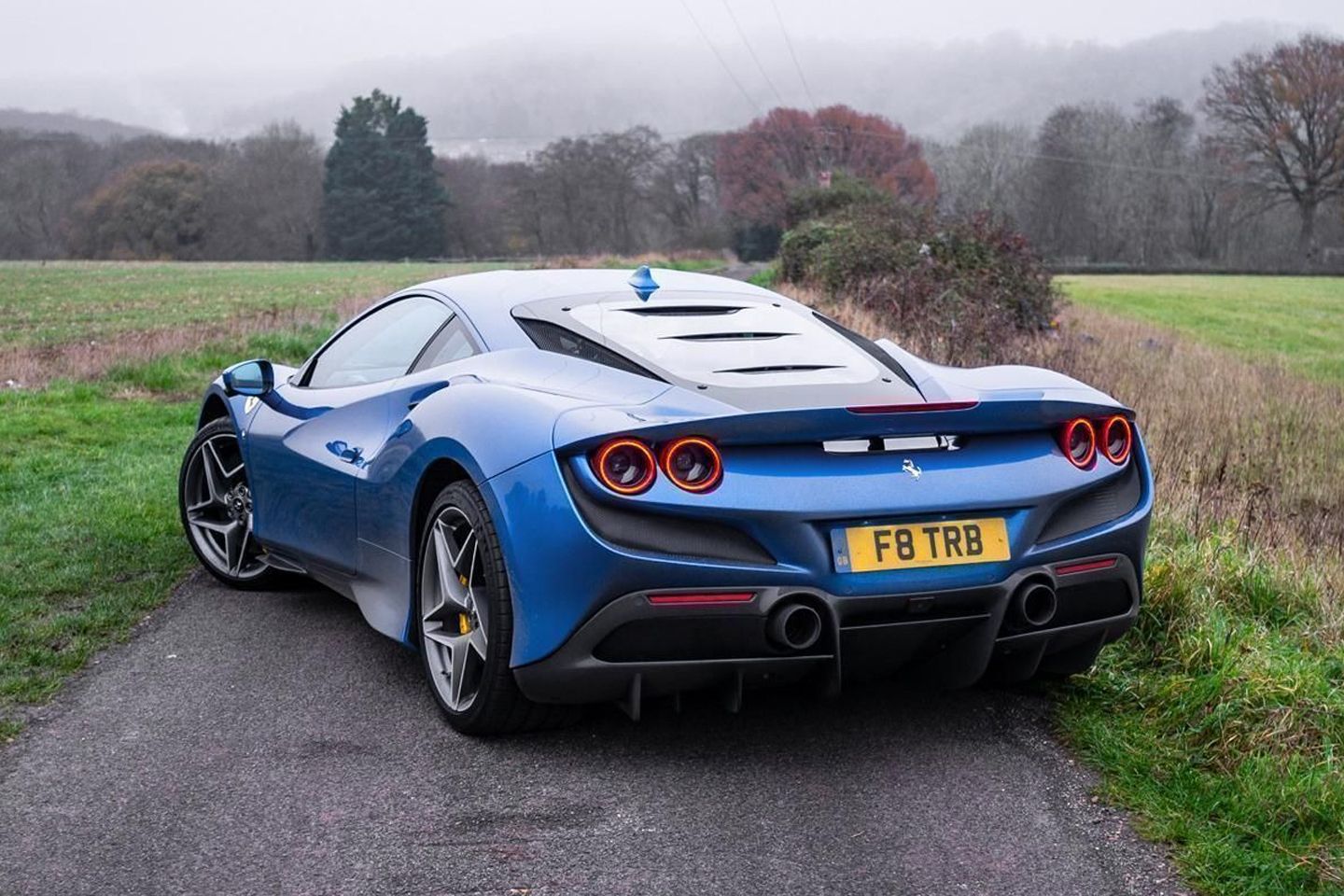
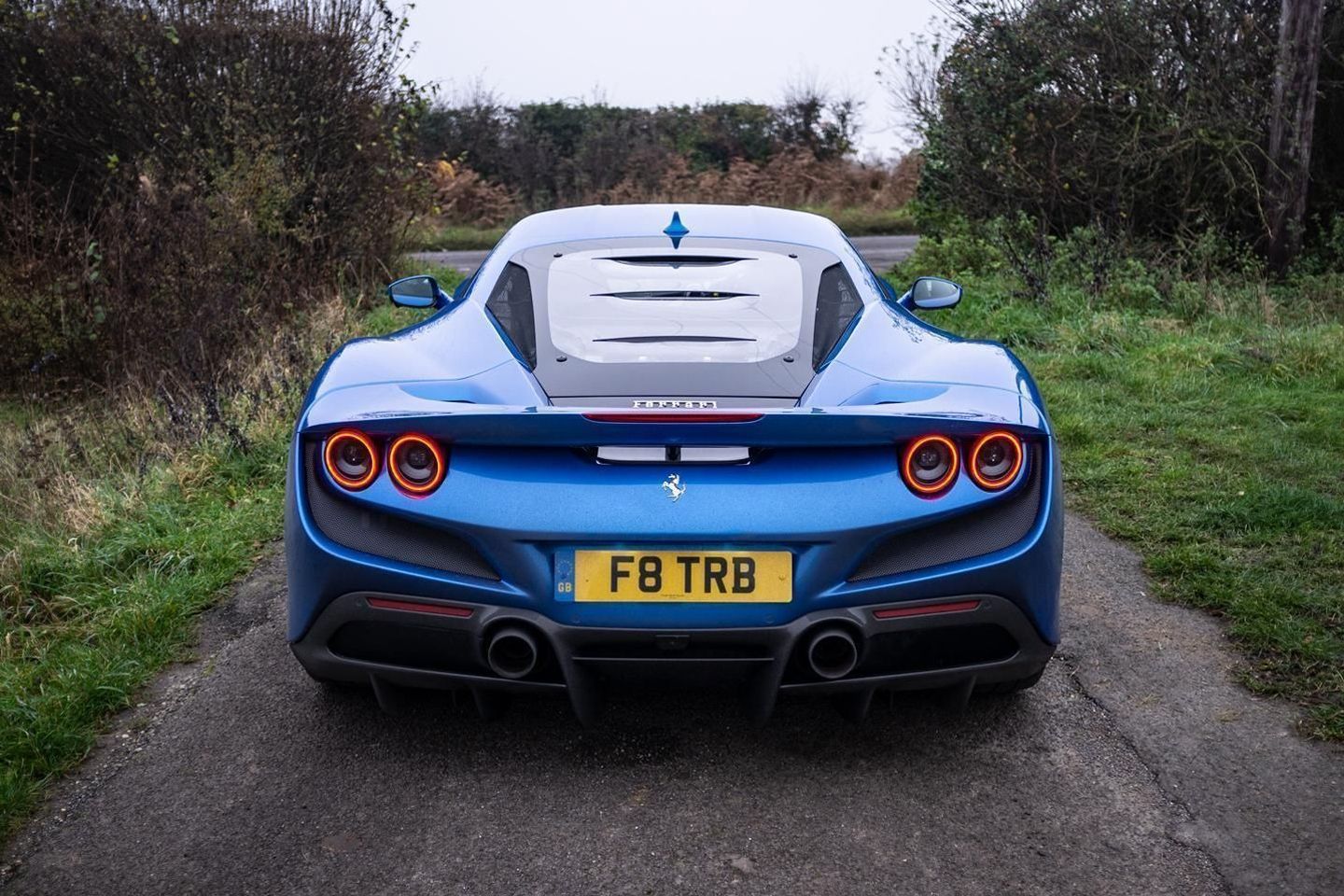
As befitting a tribute car there were lots of stylistic nudges in the Flavio Manzoni-designed berlinetta (‘little saloon’) bodywork. The design of the front rads and rear intakes was pure Pista, the louvred Lexan polycarbonate engine cover referenced the F40, and the double-circle rear lights put you in mind of the F430, although you could say that they went right back to the 308 GTB of the mid-'70s.
The footprint was nearly two metres wide, and over 2.2 metres if you included the mirrors, but the prominent wheelarch tops were a useful help in placing the car on the road. The underbody was flat with a new front diffuser. A 40mm front suspension lift was a cost option, but Ferrari made very little effort to sell those as they reckoned the car was fine without it.
New headlamp housings boosted the F8’s ability to cool its brakes, consequentially doing away with the need to fit bigger (and heavier) discs. The rear screen was concave and the boot space was a thought-provoking 200 litres.
Naturally you could spend a small fortune carbonising the body parts like the rear diffuser (£6,700), front spoiler (£4,300) and exterior sill covers (£4,900), to name but a few. Or you could go for the old favourites without which no used Ferrari is complete, viz Scuderia wing shields at £1,050. Special paint options started at £7,100.
INTERIOR
The quality of the noise inside an F8 Tributo was a step up from that of the 488 GTB, Ferrari using a ‘hot tube resonator’ to pipe more authentic engine noise into the passenger compartment, but the aural experience was still limited by the potentially droney nature of the flat-plane V8.
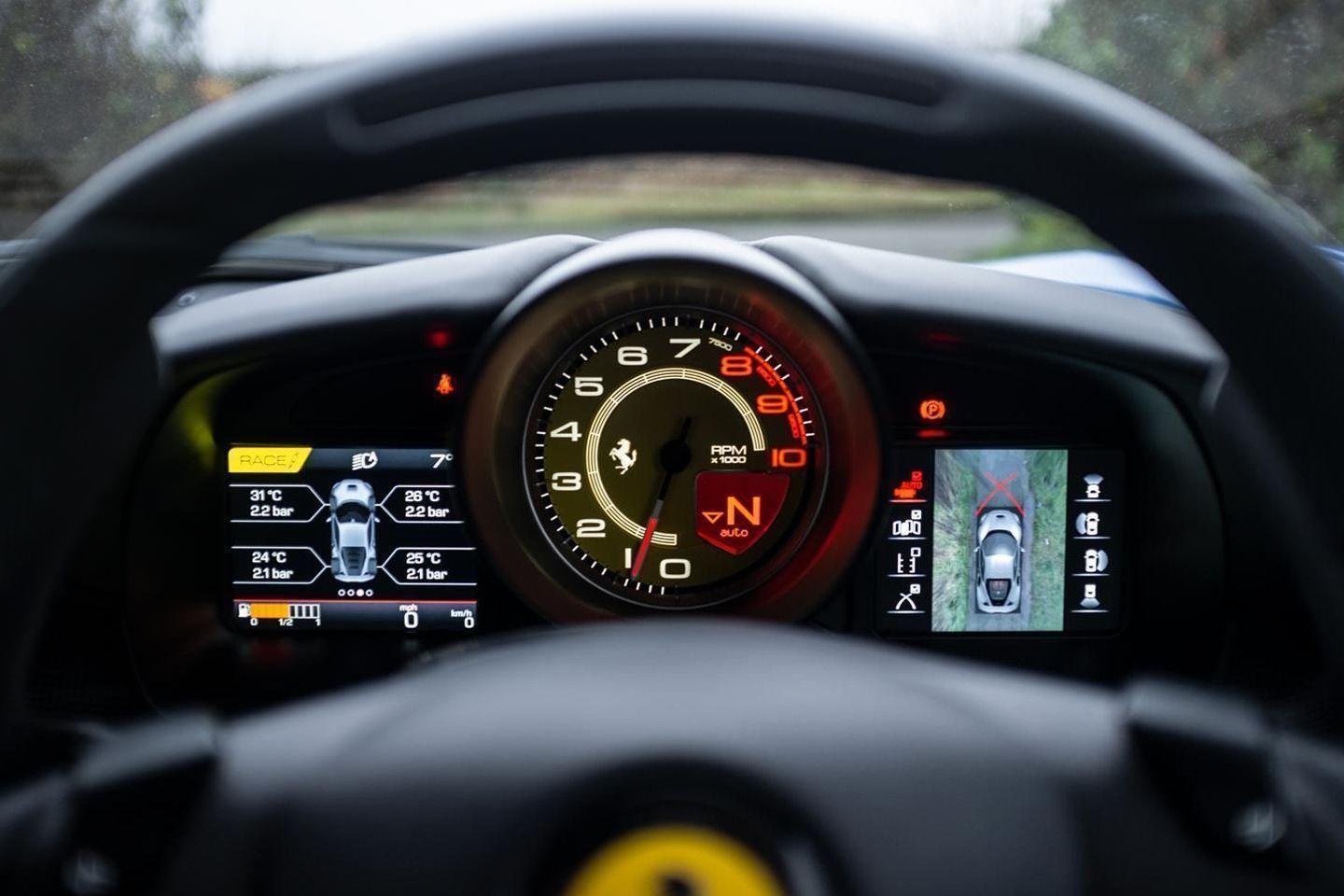
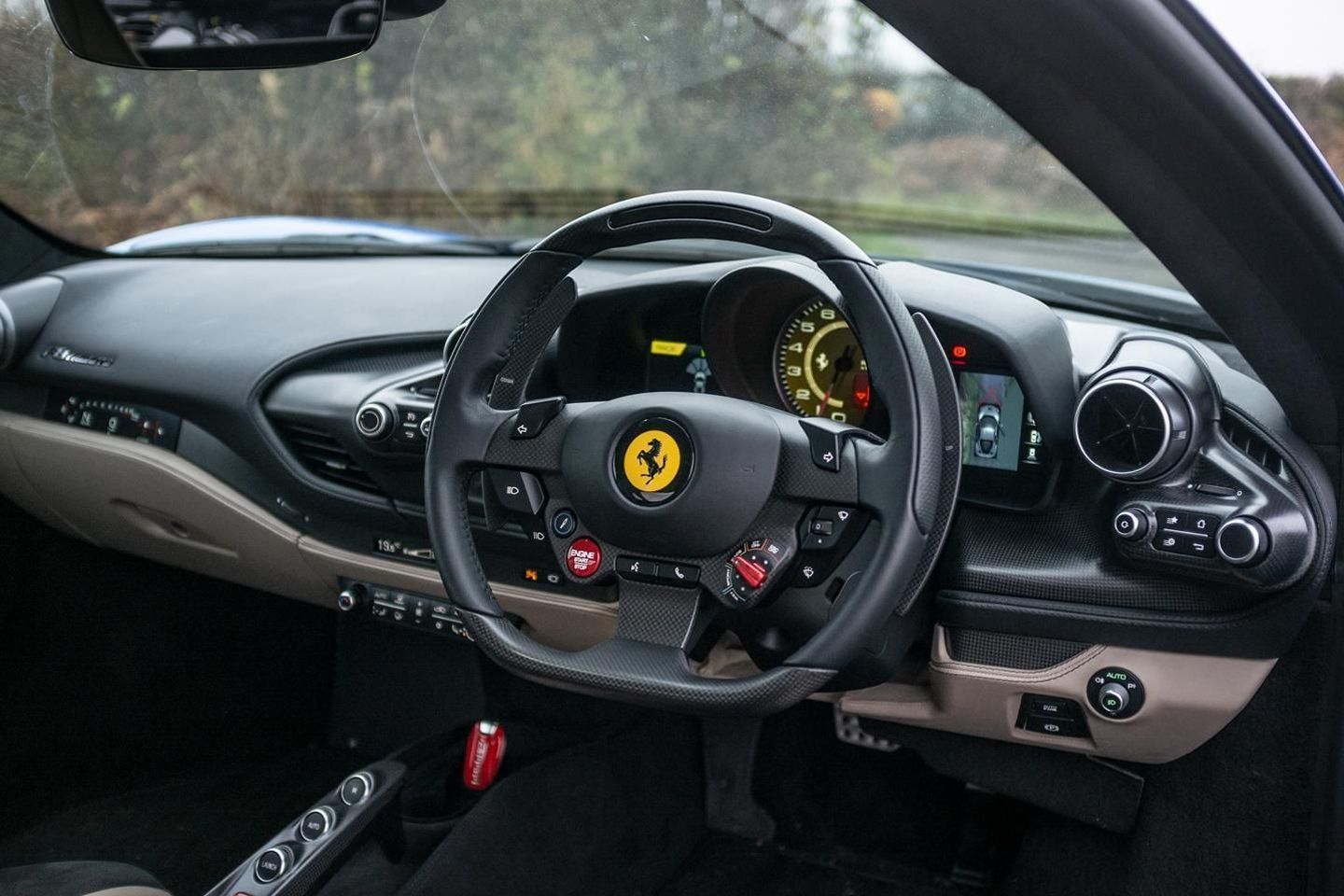
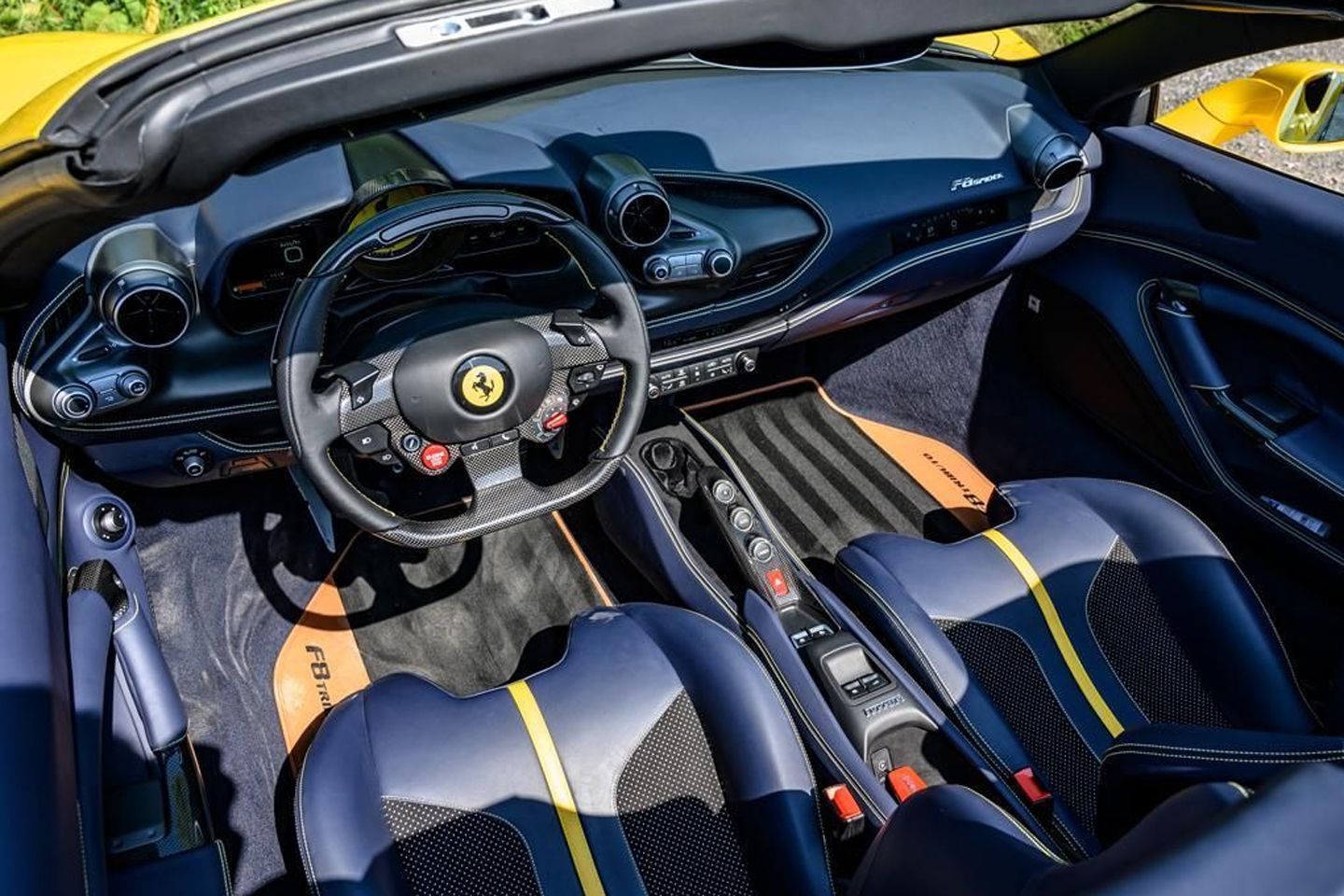
A new infotainment touchscreen and revamped wheel controls were brought in for the Tributo. The seats were restyled too. Daytona carbon-back seats were a £6,100 option. A surround-view camera was nearly £3,500. A couple of Ferrari mats were, remarkably, £800.
To improve driver sensation Ferrari took some meat out of the steering wheel rim. An 8.5-inch passenger side touchscreen was available as a £2,600 option, and there was a JBL high-power audio. If you didn’t want to chuck loads of cash at either of those there was a catalogue-full of carbon to browse through. Headline items included door panels (£4,000), door handles (£2,400), gearshift paddles (£960), instrument cluster (£2,900). Ask for a matt finish on all your interior carbon and that would be another £2,400. Nice work if you can get it. Not so nice when you came to sell your F8 though as just about all the carbon cost was lost on resale.
PH VERDICT
If you’re in the market for an F8 Tributo you might also be wondering whether you should be buying some form of McLaren instead. As you may have noticed from this guide the most obvious competitor in the Woking outfit’s range from an all-round performance and handling perspective would be the 720S, a car that was technically more ‘advanced’ in terms of the materials used in its construction and that was to all intents and purposes at least as quick across the ground as the Ferrari. The F8 responded with genius-level electronics that gave the lie to the old saw that you had to have 50/50 front/rear weight distribution for the best handling.
All other things being equal, or as near to equal as makes no difference, your decision between these two might boil down to which one gives you the most joy. Obviously that’s going to be a subjective thing. There will always be a significant number of buyers who will justifiably take great pleasure from the cool engineering efficiency of the McLaren, but we’d venture that there might be a bigger number who would savour the magical mix of metal and mastery that is a great Ferrari – and the F8 Tributo is most definitely a fully paid up member of that club.
Not everyone is a fan of the styling. Some called it a mess. Others reckoned the Tributo was clear evidence of Ferrari having lost its way, but the beauty of being able to afford a car like this is that you can also afford not to give two hoots about what others think. At the time of writing in June 2024 the cheapest Tributo on the UK used car market was this heavily (or lightly) carboned-up 2020 Blu Corsa car with 8,000 miles at just under £205,000. That car had gone on the market in January ’24 at just under £210k, which is the more usual used Tributo entry price. Another car that was put on sale at £229k in December ’23 had been reduced to £215k by May. There’s a fair choice of cars between £210k and £220k.
The highest priced Tributo we saw was a 2021 car with reportedly £140k’s worth of extras and 900 miles on the clock at a fiver short of £280k. Less optioned cars with three-figure mileages are currently typically priced at £250k-£270k depending on seller optimism. The Spider is outnumbered on the used market by the Tributo by a factor of around two to one. Prices for the convertible start at around £220k but most sit in the £235k+ bracket.


...
All other things being equal, or as near to equal as makes no difference, your decision between these two might boil down to which one gives you the most joy. Obviously that’s going to be a subjective thing. There will always be a significant number of buyers who will justifiably take great pleasure from the cool engineering efficiency of the McLaren, but we’d venture that there might be a bigger number who would savour the magical mix of metal and mastery that is a great Ferrari
I suspect that the biggest difference to drive is the steering. McLaren's HPAS is traditional in its weight, feel and rate of response, feeling a bit like an old 306 down a good B-road. I've not driven the Ferrari but every review describes very light, quick EPAS, optimised for rapid inputs. It's quite personal which you prefer, but it's a pretty significant factor in enjoyment even at modest speeds.
For those with the talent, budget and opportunity to take these cars to the limit frequently, the Ferrari's traditional LSD probably makes a difference.
Finally and most obviously, the 720S is available for half the money of an F8, which seems extraordinary value considering how close they are in all other regards!


IMO the F8 is nowhere near as good as the 296 so with the depreciated prices on those that would be my recommendation.
Looks better in the metal compared to pics / vids: less fussy and very low. And very wide.
And in reality, it’s almost too wide to be enjoyed on anything other than Calif. canyon roads or similar. FFS, it’s wider than an 812.
It’s also the last Ferrari model line with physical buttons ‘n’ knobs, which I bet is another reason why used values are so strong?

F8 is a fantastic thing
F8 is a fantastic thing

I do like the low eight just above 1300kg for a V8 supercar, not bad.
Whereas in Maranello 1 Ferrarikilo = 1050 grammes .....

Gassing Station | General Gassing | Top of Page | What's New | My Stuff