
A different view on running in an engine...
Discussion


This guy swears these pictures are real...
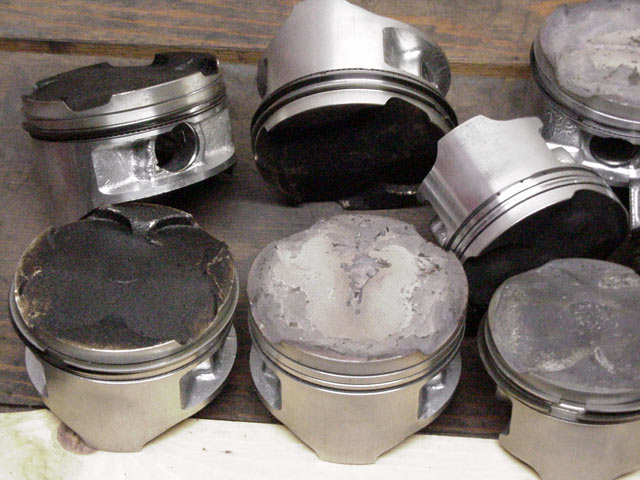
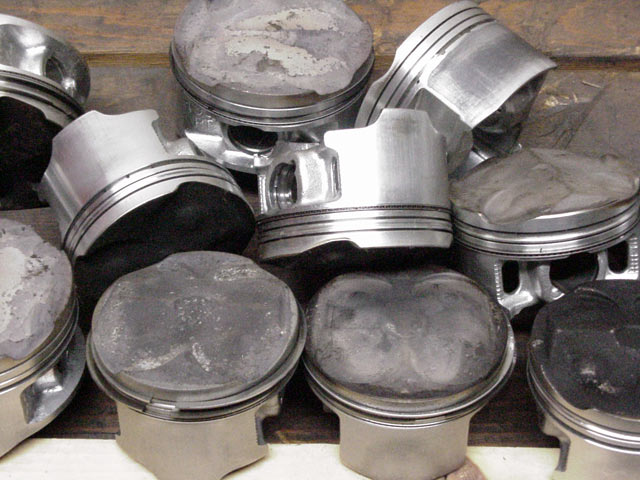
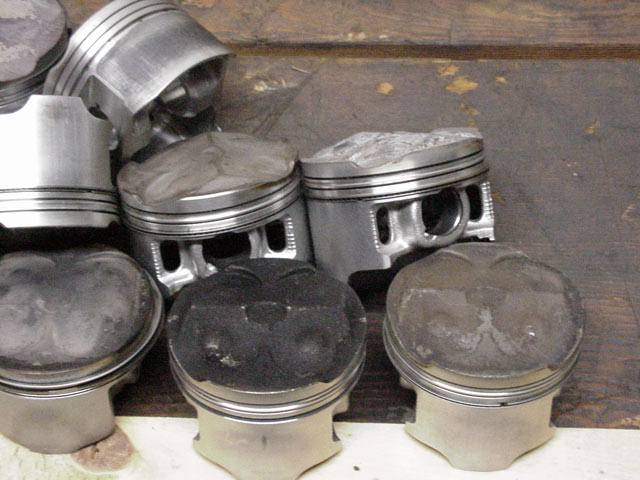
Soooooooooooooo, how come they're ALL shiny ABOVE the top ring if they haven't been messed with? Huh?
What a fraud.
Motoman said:
Some have felt that the piston which was broken in hard in the above photo is too clean to be true !!
"That piston is impossible, there must be some trick going on."
So, here I present: "The Impossible Piston Museum"
Here are 14 pistons from 14 different bikes, with several manufacturers represented. Some are from streetbikes and some from racebikes.
All of the engines had the correct jetting, the reason some have black carbon deposits is because they were run on "pump gas", which burns dark regardless of the jetting. Whereas the lighter ones were run on oxygenated race fuel, which gives a very light tan to gray color. (Many of the black-carboned pistons were from racebikes.)
Disclaimer:
Absolutely no photo altering or physical cleaning of the pistons is allowed in the museum !!
We run a legit exhibit, and all the artifacts on display are 100% genuine.
Note:
The controversial piston in the above picture is the last one in the middle row,
and it's indicated by the arrows.
You can take a closer look by clicking on the photos to see the full sized versions:
"That piston is impossible, there must be some trick going on."
So, here I present: "The Impossible Piston Museum"
Here are 14 pistons from 14 different bikes, with several manufacturers represented. Some are from streetbikes and some from racebikes.
All of the engines had the correct jetting, the reason some have black carbon deposits is because they were run on "pump gas", which burns dark regardless of the jetting. Whereas the lighter ones were run on oxygenated race fuel, which gives a very light tan to gray color. (Many of the black-carboned pistons were from racebikes.)
Disclaimer:
Absolutely no photo altering or physical cleaning of the pistons is allowed in the museum !!
We run a legit exhibit, and all the artifacts on display are 100% genuine.
Note:
The controversial piston in the above picture is the last one in the middle row,
and it's indicated by the arrows.
You can take a closer look by clicking on the photos to see the full sized versions:
Soooooooooooooo, how come they're ALL shiny ABOVE the top ring if they haven't been messed with? Huh?
What a fraud.
You would hear similar things when talking to some sports bike riders.
As I understand it, yes the engine will produce more power at the start of it's life, but the overall life will be significantly reduced.
If you run in an engine as recommended by the manufacturer, the engine will take longer to produce its peak power, but the engine life will be longer and, potentially, overall peak power would be higher.
Who do you trust? The people who built the engine, or some 'web warrior'?
As I understand it, yes the engine will produce more power at the start of it's life, but the overall life will be significantly reduced.
If you run in an engine as recommended by the manufacturer, the engine will take longer to produce its peak power, but the engine life will be longer and, potentially, overall peak power would be higher.
Who do you trust? The people who built the engine, or some 'web warrior'?
carl_w said:
Nee_Naw said:
Who do you trust? The people who built the engine, or some 'web warrior'?
The people who built my engine ran it up to the rev limiter several times at the factory. Presumably the same applies to yours.Folks look carefully at some of the pistons, there is some carbon forming on the top ring lands. These are new pistons so there will be carbon on the crowns where combustion takes place but there's not much combustion taking place in the crevice area of a ring land hence why you don't get carbon deposits there for quite some time. The guy's talking a lot of sense so a proper read of his site could be useful.
As an aside, I believe new engines have already had the maximum revs applied before they get shipped. Nobody's going to sell a car without testing the engine first. They'll use gas instead of petrol iirc. Once the rings are bedded in the engine's sound and the sooner that's done the better imo. Also manufacturers do piston scuff tests on a regular basis so know that revs are safe on a brand new engine. So, you should be able to thrash it or certainly give it load from early on.
As an aside, I believe new engines have already had the maximum revs applied before they get shipped. Nobody's going to sell a car without testing the engine first. They'll use gas instead of petrol iirc. Once the rings are bedded in the engine's sound and the sooner that's done the better imo. Also manufacturers do piston scuff tests on a regular basis so know that revs are safe on a brand new engine. So, you should be able to thrash it or certainly give it load from early on.
OnTheOverrun said:
I'm a bit puzzled by all his references to 'wearing' the 'peaks' down on the bores during running in.
I thought the vast majority of enigines built within the last decade or two had plateau honed bores which don't have any peaks for the rings to wear off?
Whether that's correct or not you still need to bed the rings in to the bores. Plateau honed bore give the rings a greater friction area to act upon so they may bed in quicker.I thought the vast majority of enigines built within the last decade or two had plateau honed bores which don't have any peaks for the rings to wear off?
I once had a smart BRABUS roadster from new. I ran that in using a similar method to that site, warm it up gently, rag it and then allow it to cool. That car flew, but I couldnt live with it for other reasons. I traded it in and the sales manager used it for a while. She then said that it was much faster than her run in carefully smart BRABUS roadster - both had similar mileage, run on OptiVpower etc.
I dont keep cars that long, so have no real concern for the longevity of the engine, but i've always believed that "start as you mean to go on" works wonders.
I dont keep cars that long, so have no real concern for the longevity of the engine, but i've always believed that "start as you mean to go on" works wonders.
eldar said:
carl_w said:
Nee_Naw said:
Who do you trust? The people who built the engine, or some 'web warrior'?
The people who built my engine ran it up to the rev limiter several times at the factory. Presumably the same applies to yours.And I definitely agree with the 'run it hard' when breaking in.
I've been a truck driver for the last 17 years and I get a new truck every 3 years and I give it death from the get-go.
If you don't you'll end up with a 'lazy motor', one that doesn't want to work and I've never blown or damaged an engine yet. And truck engines, especially the V8's are very, very expensive.
I always drive the crap out of new engines.
Anecdotal evidence, but here it is anyway.
1.2 16v Corsa, 75hp standard. Drove it like I stole it from new, rolling roaded at 83hp with 3000 miles on the clock.
1.8VVT Vectra, 140hp standard. Rental car for it's first 16k, so obviously had it's s t kicked in - rolling roaded at 161hp with 18k on the clock.
Grew up on a farm, and the tractors that were worked hard from day 1 always went better, less oil consumption, less reek. One tractor was used lightly from new (trailer work), and before it was a year old had to have the engine stripped and the bore reground, thankfully Ford picked up the bill for that under warranty.
Anecdotal evidence, but here it is anyway.
1.2 16v Corsa, 75hp standard. Drove it like I stole it from new, rolling roaded at 83hp with 3000 miles on the clock.
1.8VVT Vectra, 140hp standard. Rental car for it's first 16k, so obviously had it's s
t kicked in - rolling roaded at 161hp with 18k on the clock.Grew up on a farm, and the tractors that were worked hard from day 1 always went better, less oil consumption, less reek. One tractor was used lightly from new (trailer work), and before it was a year old had to have the engine stripped and the bore reground, thankfully Ford picked up the bill for that under warranty.
The other thing to bear in mind is that most modern engines will either be killed by lack of maintenance or out-live the car they are installed in. If this method increases power but reduces the potential engine lifespan from 300,000 miles to 200,000 miles then it isn't really much of a loss, is it?
mp3manager said:
I recall reading somewhere that Honda benched the B16 engines in the DC2 for 60 minutes at 11,000rpm before they were installed.
Only a couple of issues with that...1) The B16 never found its way into the DC2 and
2) If you ran it a 11000rpm for any length of time it would most likely be usefull only as a coffee table
HellDiver said:
1.8VVT Vectra, 140hp standard. Rental car for it's first 16k, so obviously had it's st kicked in - rolling roaded at 161hp with 18k on the clock.
Yeah, that's right, a 1.8 Vectra is going to gain 15% power over the manufacturers optimistic power rating because it wasn't run in. t kicked in - rolling roaded at 161hp with 18k on the clock.I don't believe you.

Gassing Station | General Gassing [Archive] | Top of Page | What's New | My Stuff